Why can the first city in central China position itself as the "third pole"?
The concept of commercial space has been continuously booming. On January 12th, satellite ETFs, E Fund Satellite ETF, and Satellite Industry ETF all hit their daily limit up.
The temperature of the capital market reflects the popularity of the industry. The latest information on the official website of the International Telecommunication Union (ITU) shows that in December 2025, China applied to the ITU for frequency and orbital resources for over 200,000 satellites, of which more than 190,000 satellites are from the newly - established Radio Innovation Institute.
This move at the "national team" level is expected to significantly promote the expansion process of China's satellite constellations and further open up the imagination space for the commercial space market. A research report by Guotai Junan and Haitong Securities pointed out that driven by rocket reuse and constellation networking, China's commercial space industry is entering a critical turning point from engineering breakthroughs to large - scale industrial implementation.
From the central to local governments, efforts are being intensified to make strategic deployments. Not long ago, the proposal for the 15th Five - Year Plan clearly stated that China will accelerate the development of strategic emerging industrial clusters in new energy, new materials, aerospace, and low - altitude economy. Nationwide, Beijing and Shanghai are undoubtedly the two major centers, but the competition for the "third pole" is becoming increasingly fierce.
As early as a decade ago, Wuhan gave birth to China's first national - level commercial space base. It set its sights on becoming the "third pole of China's space industry" early on and is now building an industrial cluster worth hundreds of billions. Recently, Guangzhou also proposed to "strive to become a new pole in China's commercial space industry." Hainan, relying on the Wenchang Space City, aims to become a "new high - ground for commercial space."
What new signals are being conveyed behind this? In this multi - party competition, who can stand firm as the "third pole of China's commercial space industry"?
01
The Turning Point Arrives
In 2014, the door to China's commercial space industry opened. Now, it has risen from a new emerging field to a strategic high - ground in global technological competition and industrial layout.
In the vast industrial chain of commercial space, satellite spectrum and orbital resources are scarce resources and have always been the focus of international competition for space resources. Data from Zhongyou Securities shows that currently, the United States leads the world in the number of on - orbit spacecraft, accounting for 75.94%, while China accounts for about 9.43% of the global total.
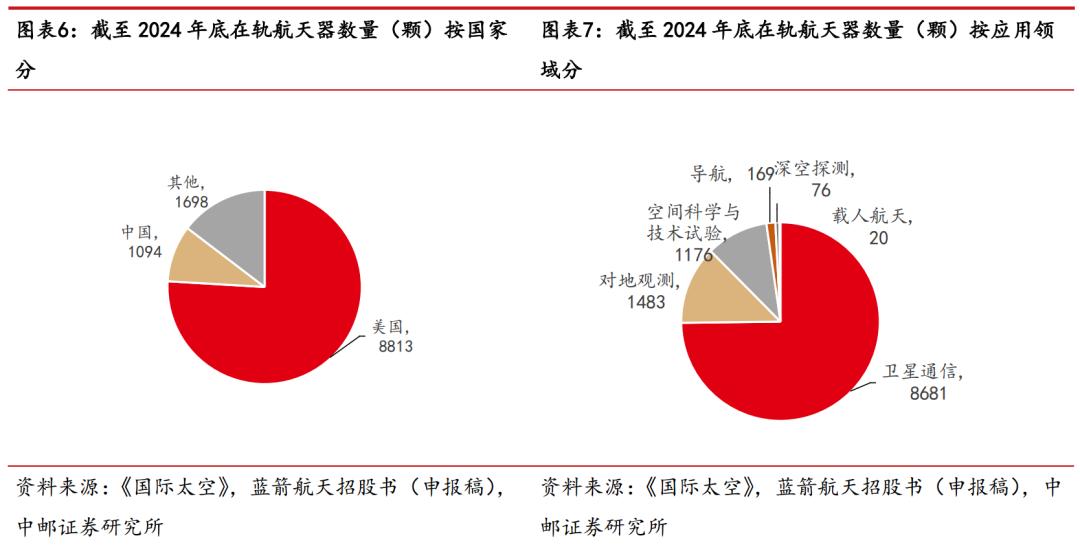
A prominent example is that before the ITU released the news of China's application for frequency and orbital resources for 200,000 satellites, the US Federal Communications Commission (FCC) approved the next - generation satellite constellation plan, allowing SpaceX to operate a total of 15,000 second - generation satellites.
This round of satellite constellation expansion is an inevitable result of the combined effect of national strategic layout and the upgrading of market demand. As a scarce strategic asset in the space field, large - scale pre - application for frequency and orbital resources is a key measure to seize the initiative in global space competition, which can lay a solid foundation for China to build an independent and controllable satellite Internet system and safeguard national information and communication security and space - air rights and interests.
Zhu Keli, the founding dean of the Guoyan New Economy Research Institute, analyzed for Urban Evolution that the booming development of the digital economy has spawned a huge demand for services such as wide - area communication and high - precision remote sensing. As a new type of information infrastructure, satellite constellations can make up for the shortcomings of ground network coverage and empower multiple fields such as low - altitude economy, smart agriculture, and emergency rescue, creating new economic growth points.
This has also become the "catalyst" for the explosion of the commercial space industry. Many brokerage research reports have defined 2026 as the "Alpha Year" of China's commercial space industry - it is entering a critical turning point from engineering breakthroughs to large - scale industrial implementation.
According to the "Research Report on China's Commercial Space Industry", the scale of China's commercial space industry is expected to reach 2.5 trillion to 2.8 trillion yuan in 2025, with an average annual compound growth rate of over 20%. The number of commercial space enterprises will exceed 600. In 2025, China completed a total of 87 space launch missions, of which private commercial rocket enterprises undertook 23 missions.
Entering the first year of the 15th Five - Year Plan, the commercial space industry has been elevated to the same important level as new energy vehicles and integrated circuits as a pillar industry. The establishment of the Commercial Space Department and the release of special plans have further accelerated the large - scale implementation of the commercial space industry.
This is also a window period that many places are scrambling to seize: from Shanghai's goal of achieving a commercial space industry scale of about 100 billion yuan by 2027, to Shandong's plan to reach a commercial space scale of 50 billion yuan by 2027, and to Beijing's announcement of setting up a 10 - billion - yuan industrial investment fund...
The commercial space industry is increasingly regarded by more and more local governments as a new "growth engine".
02
Seize the Advantage
"As a strategic emerging industry, commercial space is not only an important carrier of new - quality productivity but also a trillion - level track with a long industrial chain and high added value," Zhu Keli believes. "The commercial space industry has a significant radiation effect and can drive the coordinated development of multiple fields such as new materials, high - end manufacturing, electronic information, and artificial intelligence, helping local industrial structures transform towards high - end and intelligent development."
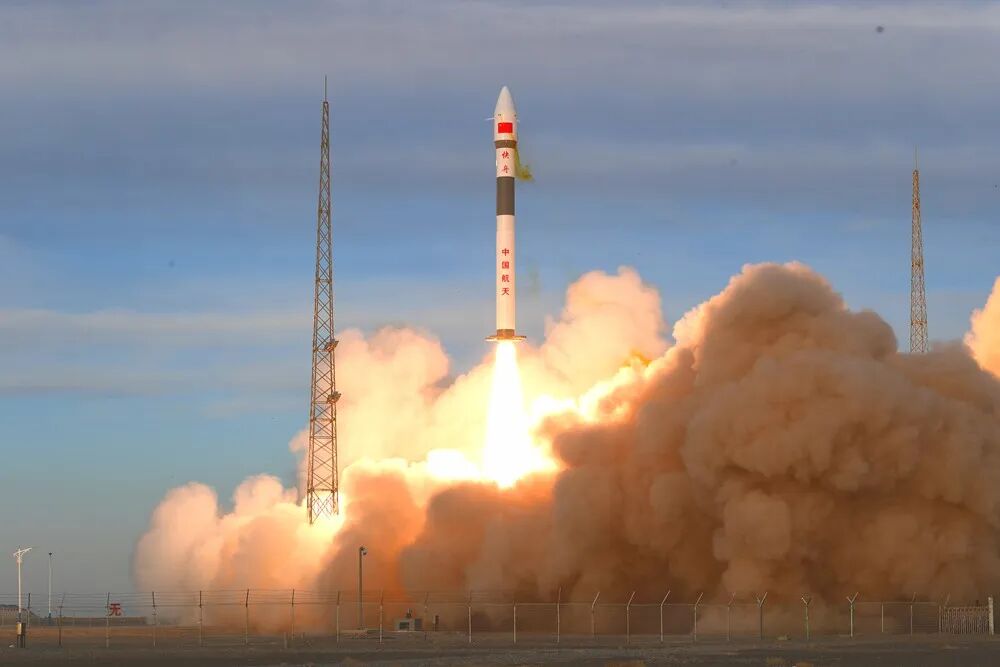
Photo source: Xinhua News Agency
According to incomplete statistics, more than 20 provincial - level regions across the country have issued over 40 support policies to promote the large - scale development of the commercial space industry.
Among them, Beijing aims to expand the commercial space industrial cluster worth hundreds of billions by 2028 and then build a globally influential innovation and development high - ground for commercial space in the next five years. Shanghai proposes to strive to build a globally influential commercial space city, with the industry scale expected to reach about 100 billion yuan by 2027.
This means that the top - tier cities in the national commercial space map have set their sights on an industrial scale of hundreds of billions.
Currently, under the industrial pattern of "rockets in the south and satellites in the north", Beijing has gathered more than 70% of the country's commercial rocket - making enterprises and leads the country in the ability to develop complete satellites. Shanghai, relying on the integrated development of the entire industrial chain of "rocket - satellite - terminal - service", has an obvious leading role in the industrial ecosystem.
Behind Beijing and Shanghai, the competition in the commercial space industry is quite fierce.
At the recent Wuhan Two Sessions, topics related to commercial space attracted much attention. In fact, relying on advantageous resources such as the Fourth Academy of CASIC, the 42nd Institute of CASC, Wuhan University, Huazhong University of Science and Technology, and the Wuhan Branch of the Chinese Academy of Sciences, Wuhan has already seized an early advantage in the commercial space field.
In January 2017, the "Kuaizhou - 1A" small solid - propellant carrier rocket developed by the Fourth Academy of CASIC, a central enterprise in Wuhan, successfully launched three satellites into orbit from the Jiuquan Satellite Launch Center.
This was the first "purely commercial" launch order for the Kuaizhou rocket and even for Chinese space enterprises. Wuhan's commercial space industry also witnessed its "singularity moment". Since then, Wuhan has frequently mentioned its goal of becoming the "third pole of China's space industry", which shows its ambition.
In December last year, at the 2025 Commercial Space Forum, the main leader of the Hubei Provincial Party Committee said that Hubei will aim to build a strong space - power province, take the construction of the "China Star Valley" as a starting point, make breakthroughs in the development of the commercial space industry, strive to build an industrial agglomeration area for the commercial space industry, and accelerate the creation of a nationally influential innovation and development high - ground for commercial space.
The "China Star Valley", namely the Wuhan National Space Industry Base, is the third national - level space industry base after Shanghai and Xi'an, and also China's first commercial space industry base.
Currently, the four industrial parks of rockets, satellites, magnetoelectricity, and Xingyun in the Wuhan National Space Industry Base have all been completed and put into operation, with the capacity to produce 50 rockets and 240 satellites annually. It has initially formed a complete industrial chain layout covering the upstream supply of material components, the mid - stream satellites, rockets, and ground facilities, and the downstream satellite operation and application, and is accelerating the construction of an industrial cluster worth hundreds of billions.
03
A Larger Ecosystem
Of course, Wuhan is not the only city aiming to become a new "pole" in China's commercial space industry.
For example, Guangzhou focuses on tackling the technology of reusable rockets, promotes the aggregation of commercial space talents, capital, and enterprises in Guangzhou, and builds a complete commercial space industrial ecosystem.
Hainan takes advantage of the country's first commercial space launch site, mobilizes the whole province to build the Wenchang International Space City, and expands "space +" integrated industries such as space tourism, satellite data, and low - altitude economy.
Chengdu proposes to become a leading domestic and first - class regional source of scientific and technological innovation, a high - end manufacturing agglomeration area, a demonstration area for application scenarios, and a new high - ground for the industrial ecosystem in the commercial space field by 2027...
In Zhu Keli's view, even in the face of competition from many places, Wuhan still has the confidence to compete for the position of the "third pole of China's commercial space industry".
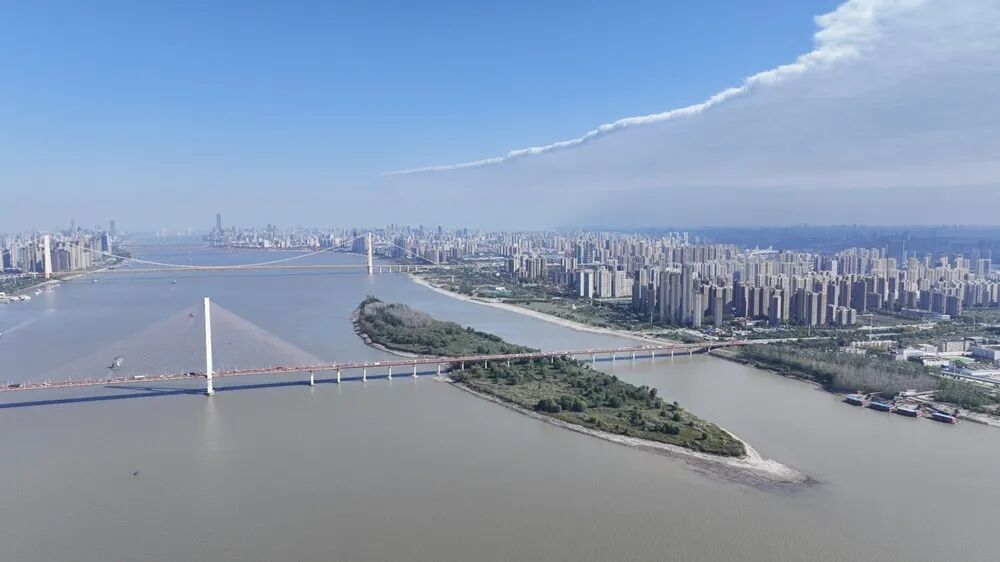
Photo source: Photorack_700862786
Currently, Wuhan has formed a complete industrial pattern with the co - existence of satellites, rockets, and applications, and has built a complete industrial chain from core materials to terminal applications, with a significant industrial agglomeration effect. For example, the unique technical path and mature application of the "Kuaizhou" series of carrier rockets have formed a differentiated competitive advantage, and the "shelf - style" supply model of satellite - rocket matching has greatly improved industrial efficiency.
"As long as Wuhan continues to leverage its advantages of a complete industrial ecosystem, deep technological accumulation, and rich application scenarios, and deepen the collaborative innovation of industry, academia, and research, it can consolidate and strengthen its position as the 'third pole' in the fierce competition," he said.
From a broader perspective, this also concerns Wuhan's future urban and industrial status.
Not long ago, the proposal for Wuhan's 15th Five - Year Plan stated that by 2030, the city's GDP will exceed 3 trillion yuan, and it will basically build the "Five Centers", making decisive progress in the construction of a modern Wuhan.
The development path for Wuhan behind this is gradually becoming clear, that is, to activate development momentum with the "Five Valleys Flourishing". The main leader of the Wuhan Municipal Party Committee previously said that Wuhan should coordinate the upgrading of traditional industries, the growth of emerging industries, and the cultivation of future industries in a "three - pronged approach", and build the World Optics Valley, the World Automobile Valley, the China Internet Valley, the China Star Valley, and the China Medicine Valley at a high level, promote the agglomeration of key industries, and accelerate the construction of a modern industrial system that reflects Wuhan's advantages.
For example, CICT Mobile in the "Optics Valley" has established the entire industrial chain of the satellite Internet, and its solutions can systematically support the construction and operation of satellite networks. As local media said, lighting up one "star" may illuminate several "valleys" and several future industries.
This further opens up the imagination space for Wuhan. Whether it is to build a modern industrial system or to "occupy a position" in the global commercial space map, Wuhan needs to position itself in a larger ecosystem and find a higher and larger urban coordinate in collaborative development. This is also the key to the new round of industrial competition.
This article is from the WeChat official account "Urban Evolution", author: Dan Zhongkui. Republished by 36Kr with permission.