Will the detonation of 200,000 satellites in the A-share market bring huge wealth?
The biggest news last weekend still belongs to the aerospace industry.
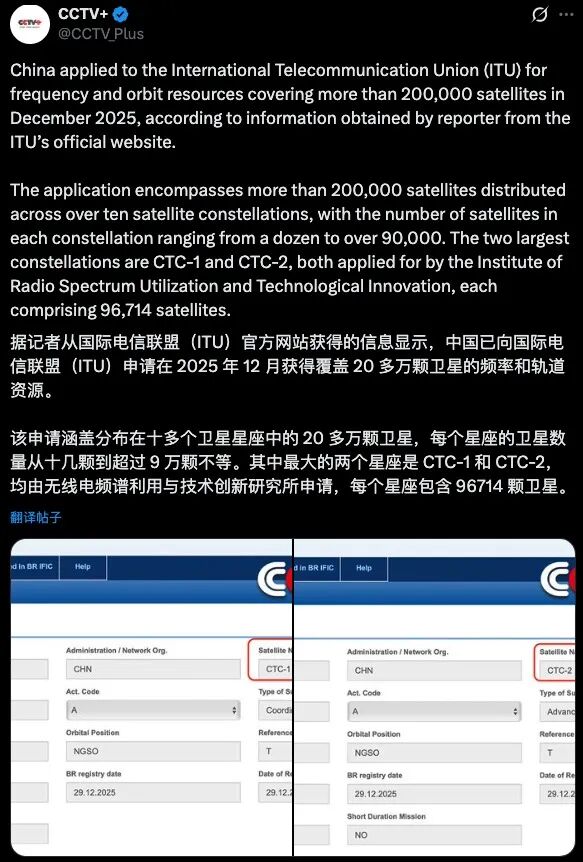
It's not about who launched another rocket, but rather: China has applied for over 200,000 satellites in one go!
If you guys have no concept of this number, let me put it this way. Elon Musk's final planned number is only 42,000. Our current application is directly 4.6 times that of his...
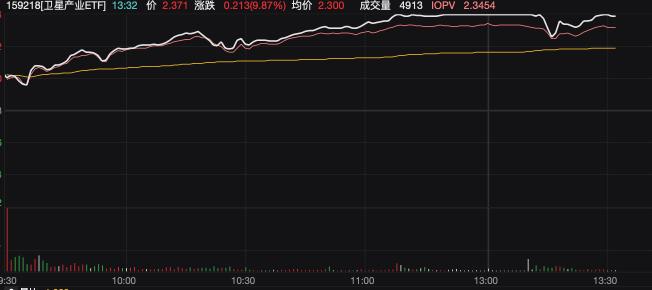
Although the richest man Musk hasn't made a statement yet, as soon as the news came out yesterday, the A-share market went crazy today. The sectors related to satellites and commercial aerospace soared collectively. Even funds like the "Satellite ETF" hit the daily limit.
The stock investors in the editorial department all expressed great regret. If they had invested earlier, they would have made a fortune!
To be honest, we can understand everyone's enthusiasm. Musk launched tens of thousands of satellites, and the valuation of SpaceX skyrocketed. So if we double the scale here, isn't this like a large - scale infrastructure project in space? The national team is going to step in and compete directly.
When I first heard this news, I was really excited. But after I spent some time looking into this matter thoroughly, I found...
It seems that everyone is indeed a bit over - excited because these 200,000 satellites may not be exactly what we think.
Let me say in advance that we're only talking about technology today, and this does not constitute investment advice! The stock market is risky, and investment should be cautious, guys. An old colleague in the editorial department still hasn't recovered his losses from the last investment!

To understand the specific situation, we have to start from the beginning.
First of all, launching satellites is not something you can do whenever you want. Even if you've built the rocket and packed the satellite, before ignition, you must apply to the International Telecommunication Union (ITU) first.
This is the same as getting a land permit before building a house or getting a license plate before driving. You have to tell the ITU at what orbital altitude you want to fly and which radio frequency band you want to use for communication. Only after they approve and allocate the slot to you can you really launch the satellite into space.

In the past, although our country often applied for satellite launches, most of them were scattered scientific research satellites or small - scale constellations. But the exact words of last weekend's news were:
From December 25th to 31st, 2025, China officially submitted an application to the International Telecommunication Union (ITU) for the frequency and orbital resources of 203,000 new satellites, covering 14 satellite constellations, including medium - and low - orbit satellites.
One of the main reasons for this sudden increase is that this application mainly covers satellite constellations.
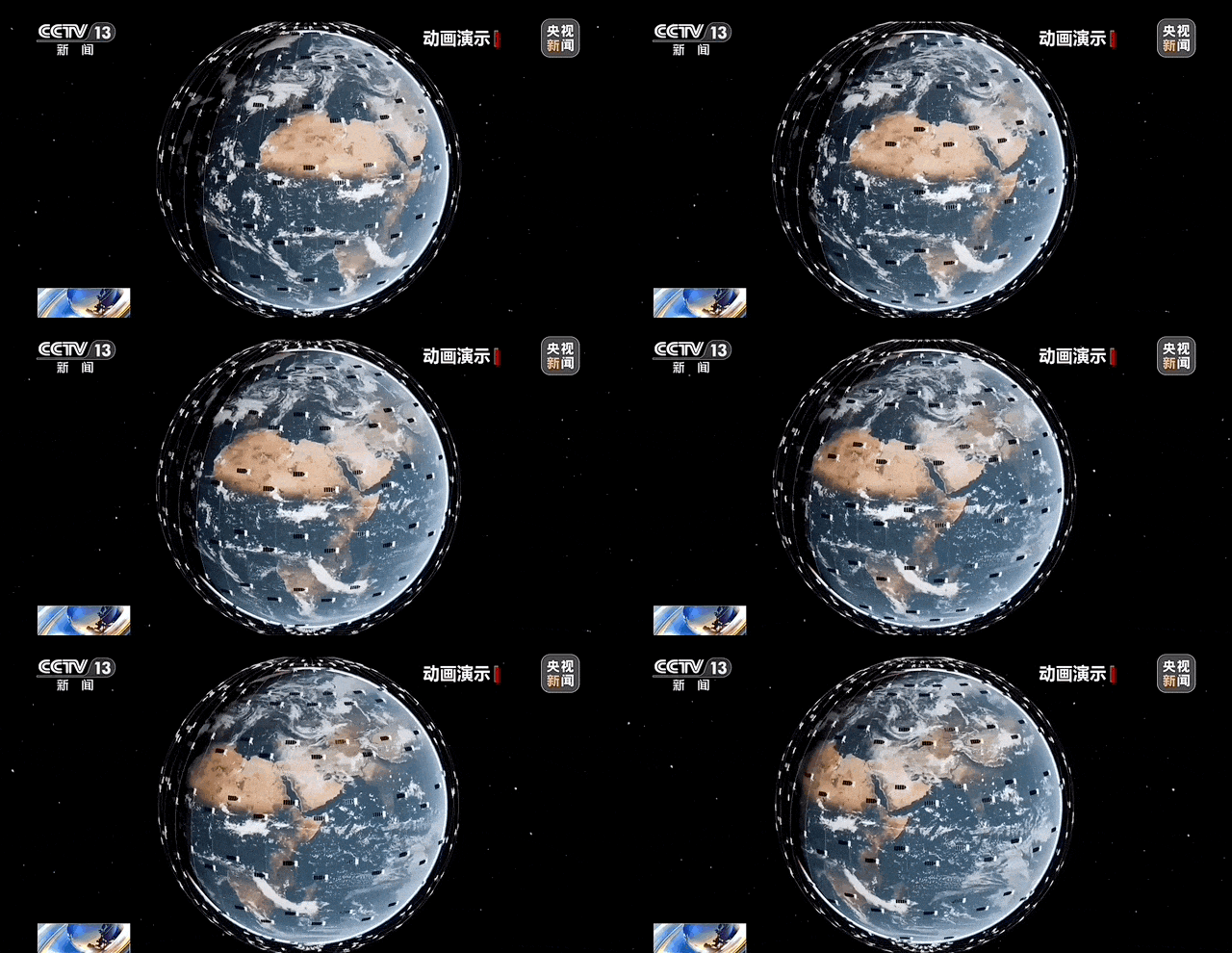
This satellite constellation is not like the constellations of Scorpio or Sagittarius. It refers to a network composed of a large number of satellites. Simply put, it's like sending base stations into space to surround the Earth. If any one satellite fails, there's a backup, enabling global seamless communication coverage, similar to Musk's SpaceX satellite communication.
Since this is designed for large - scale communication and services, it usually starts with tens of thousands of satellites. For example, China's GW constellation also applied for over 10,000 satellites with the ITU before.
But applying for 200,000 satellites this time is indeed the largest - scale application action in China so far...
More importantly, nearly 190,000 of the nearly 200,000 satellites in this application, that is, more than 95%, come from a new institution established at the end of December, the Research Institute for Radio Spectrum Development, Utilization and Technological Innovation.
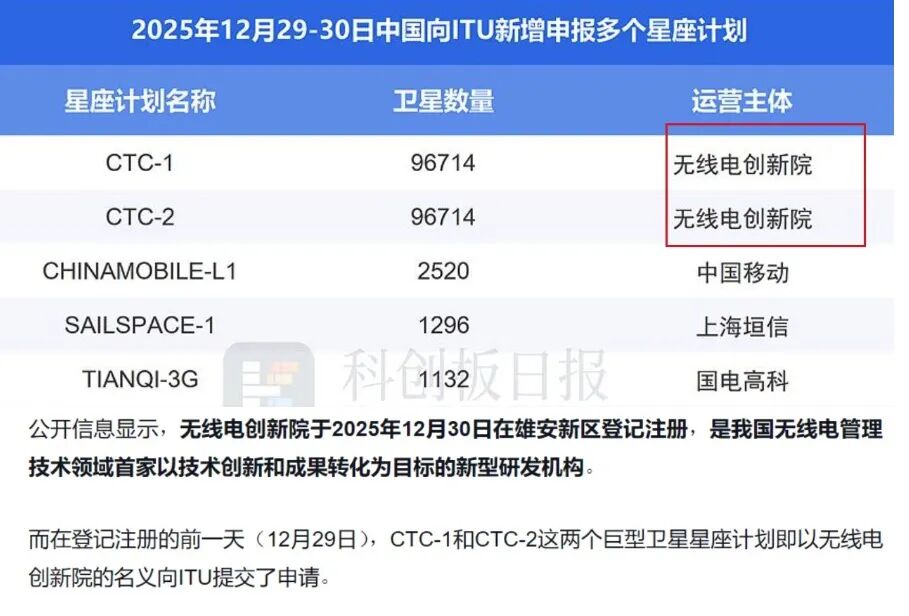
The name sounds long, but when you look at its shareholder background, you'll find that it's purely a national - level team.
The initiating units include the State Radio Monitoring Center, China Satellite Network Group Co., Ltd., and professional research institutes in relevant fields, as well as top - tier universities like Nanjing University of Aeronautics and Astronautics and Beijing Jiaotong University, which focus on aerospace, military, and communication.
What's more interesting is that the application for these more than 190,000 satellites (mainly the CTC - 1 and CTC - 2 constellations) was made on December 29th. And on December 30th, the day after the application, this research institute was officially registered in Xiong'an New Area, Hebei Province.
Being able to coordinate so many top - level units and complete the application for 200,000 satellites before being officially established, it seems that this is really driven by the national will.
Moreover, handling the business first and then getting officially established highlights the urgency of this move.

Then why does it start with such a large - scale plan?
This has to do with a rule of the International Telecommunication Union (ITU). Because the orbits and spectra of low - orbit satellites are non - renewable and scarce strategic resources, whoever occupies them first can use them first.
For example, in recent years, Musk's SpaceX has launched 10,000 satellites and is planning to launch tens of thousands more. The frequency bands they occupy are mainly the Ku band (12 - 18 GHz) and the Ka band.
The technology of the Ku band has been developed for decades and is the most mature in the industry. The terminal equipment is also the cheapest. Broadcast and television satellites in space and even the satellite dishes at home used to work in this range.
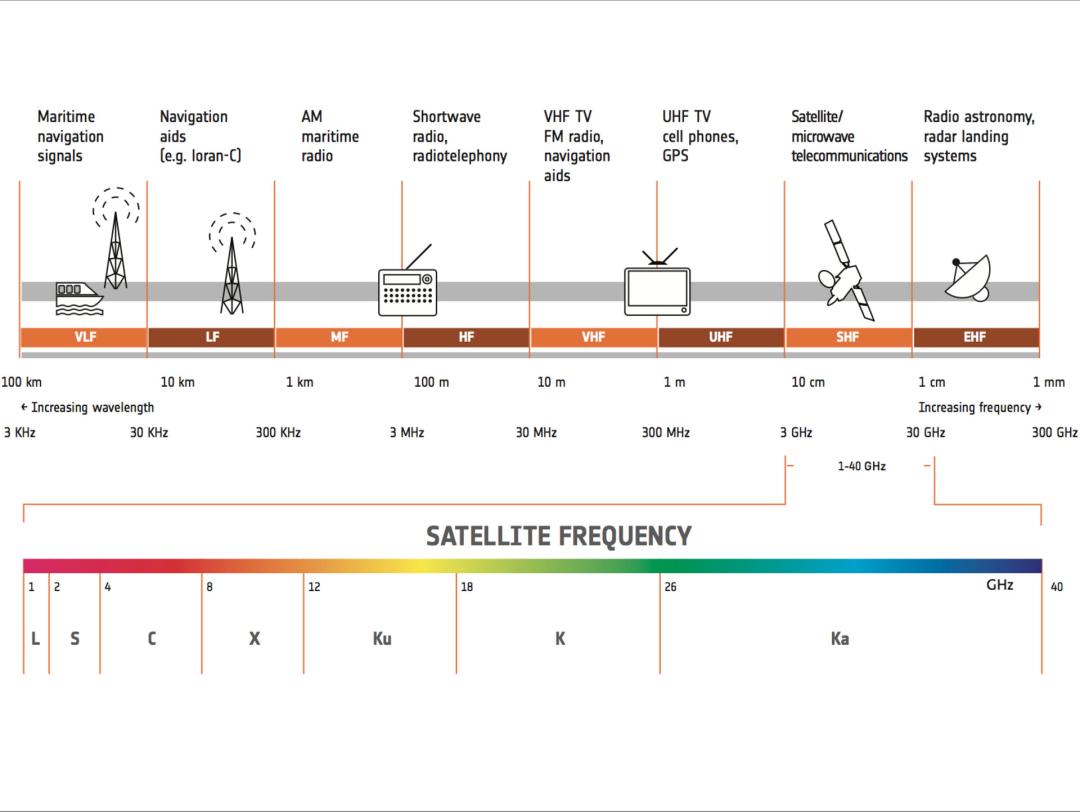
This frequency band is already widely used, and if Musk launches tens of thousands of satellites to occupy it, it will be difficult for later satellites to use this frequency band.
According to international rules, if we apply for this frequency band later, when our satellites encounter Musk's satellites, our satellites have to adjust the frequency or even turn off the signal to make way for them; otherwise, the signals will interfere with each other.
The problem is that he has so much equipment. If we always let them use the resources first, even if we have 100% of the bandwidth, we'll lose half of it due to making way. What's the point of doing this?
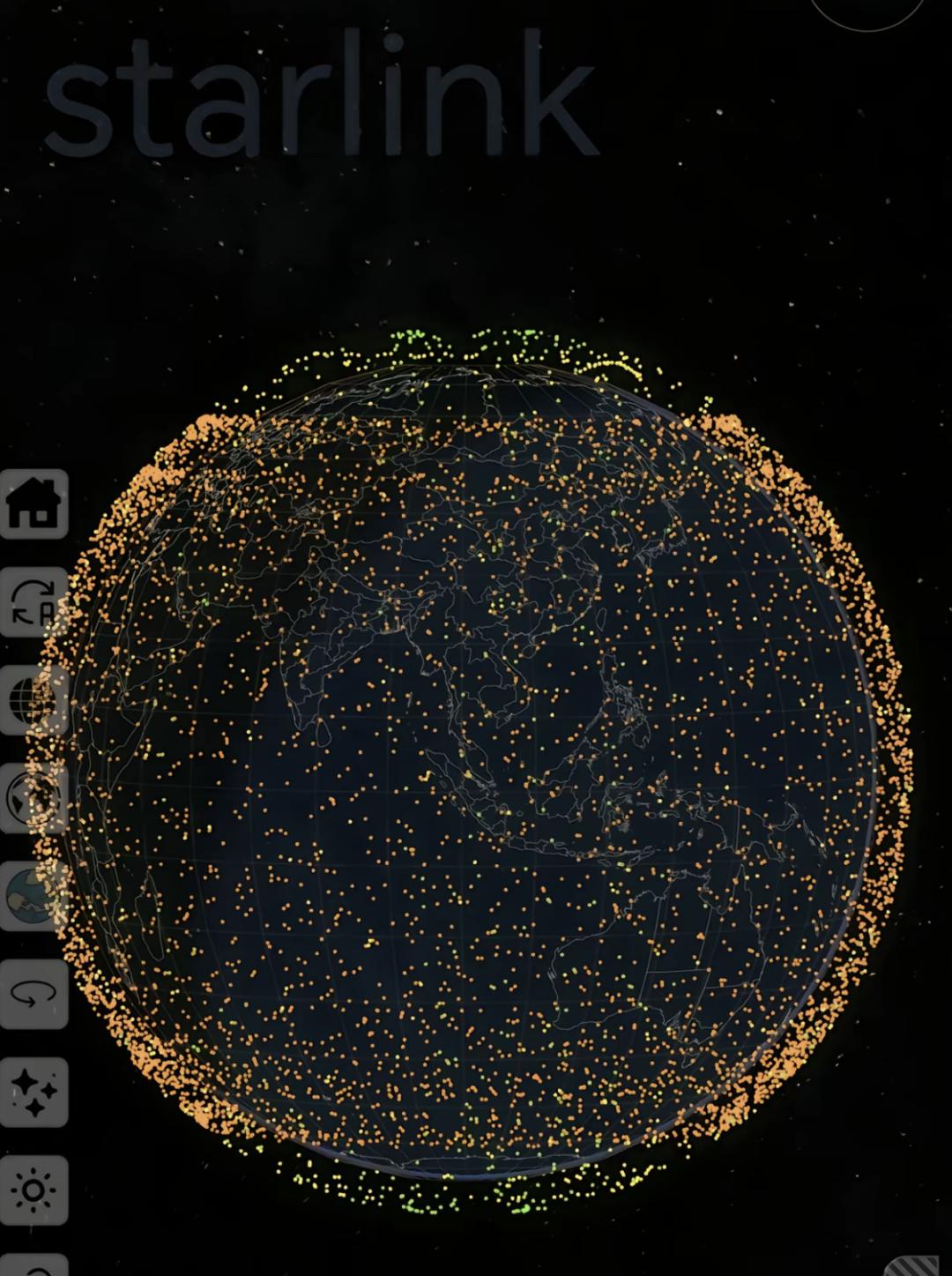
Therefore, for our own satellite constellations, we have to make early arrangements. This is like an enclosing movement in space.
We should apply for those unoccupied frequency bands as early as possible so that we'll be the first in line, and others will have to rely on us if they want to use them in the future.
Actually, this strategic positioning is also very particular.
Although the specific technical documents of this application have not been fully disclosed yet, considering the large scale of 200,000 satellites, the industry speculates that this operation is surely aiming for full coverage. It aims to occupy both the current mature frequency bands and the future 6G frequency bands.
What does this mean? It's like Musk has almost occupied the "old road" of the Ku band. Well, I'll also squeeze into this old road, but more importantly, I'll occupy the "new roads" that haven't been built yet first.
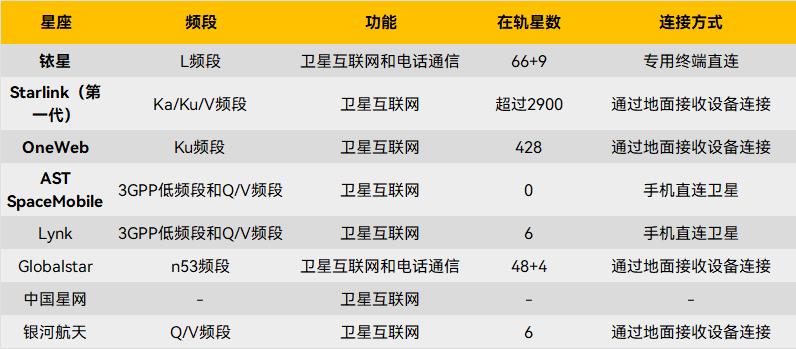
For example, the higher Ka band (26.5 - 40 GHz) is the current mainstream expansion area. It has a larger bandwidth than the previous Ku band and can support faster internet speeds. The Q/V band (33 - 75 GHz) and even the E band are the future battlefields for all countries.
They are like a super - highway with dozens of lanes. They are the key to achieving Tbps - level speeds in the future and the admission ticket to the integration of space and ground in the 6G era.
So by occupying these positions now, whether we use current technology or future technology, we'll have the initiative in our hands.

This way of occupying positions is not new internationally.
In 2021, France applied for 337,000 satellites through Rwanda, and SpaceX also applies for tens of thousands at a time. According to the statistics of the foreign institution Science Policy Forum, by the end of 2022, more than one million satellites had been applied for globally, and the number must be even higher now.
Seeing this, some of you may ask, saying that Rwanda, a small country, applied for 300,000 satellites. Then why don't other countries just keep applying?
That's true in theory, but in fact, the International Telecommunication Union is not stupid. It's not like a "call - the - landlord" game where anyone can shout.

You can make plans to the ITU, but to prevent people from just occupying resources without using them, the ITU has set up a set of rather strict rules.
To put it simply, for satellites like the giant constellations we applied for this time, the rules are as follows:
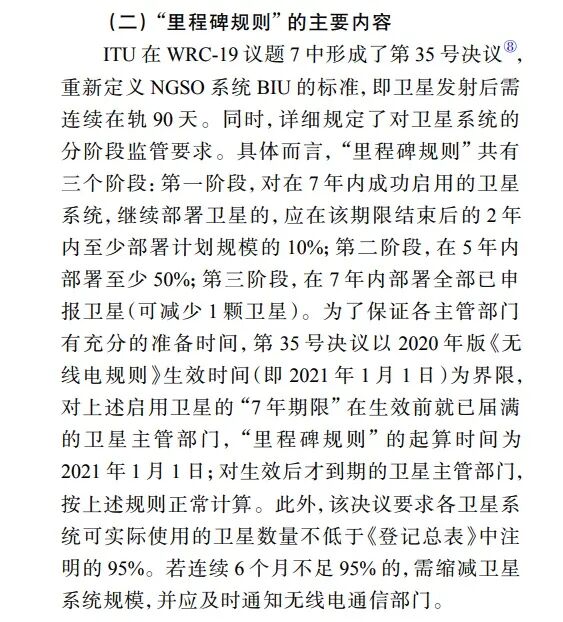
First, within 7 years, you have to launch one satellite and let it work continuously for 90 days to prove that you indeed have the ability to launch satellites and are not just boasting. Then, within 9 years, you must deploy and operate 10% of the total constellation, 50% within 12 years, and 100% within 14 years.
If you can't meet these requirements by the deadline, the ITU will cut down the total number of your application according to the actual number of deployed satellites and free up the positions for others.
Take the two main constellations, CTC - 1 and CTC - 2, in our current application, with a total application of nearly 200,000 satellites. This means that our closest KPI is not to launch all 200,000 satellites now, but to launch 20,000 by the end of 2034 and have the ability to operate them.
Now you know why the commercial aerospace sector has been soaring these days.
If we need to deploy 20,000 satellites in 9 years, it means an average of 2,200 satellites per year. It may not sound like a lot, but when it comes to actual launches...