Affordable foldable phones are coming. Who approves and who opposes?
Recently, moto voluntarily revealed their first "large foldable" device, the Razr Fold, during CES 2026.
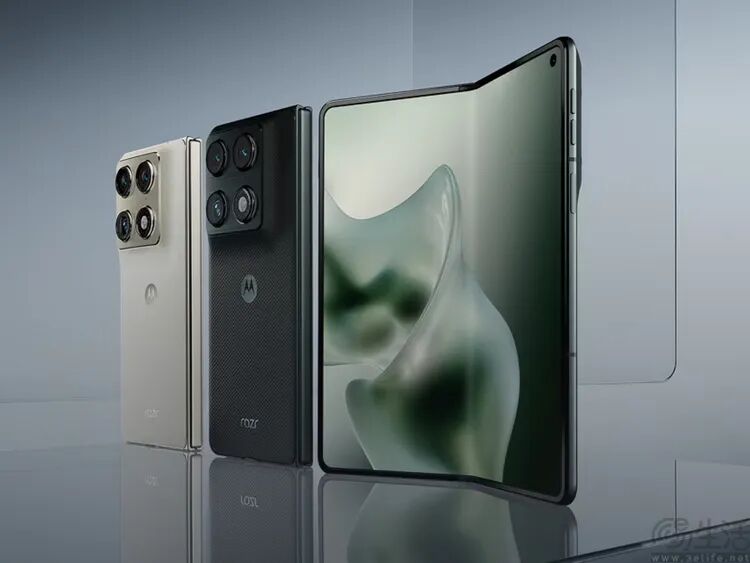
In fact, this is a very unusual device, mainly manifested in two aspects. First, moto chose CES instead of MWC, which is more familiar to mobile phone manufacturers, for the debut. Second, moto only announced the appearance of the new product, without revealing any information about the hardware configuration or detailed parameters.
Thanks to the resourceful netizens, we still learned the real "special feature" of the Razr Fold. Simply put, it may be the first "affordable large foldable" device in the history of the smartphone industry. It is reported that this model will not use the top - of - the - line Snapdragon platform, and its price will be significantly lower than other "large foldable" competitors.
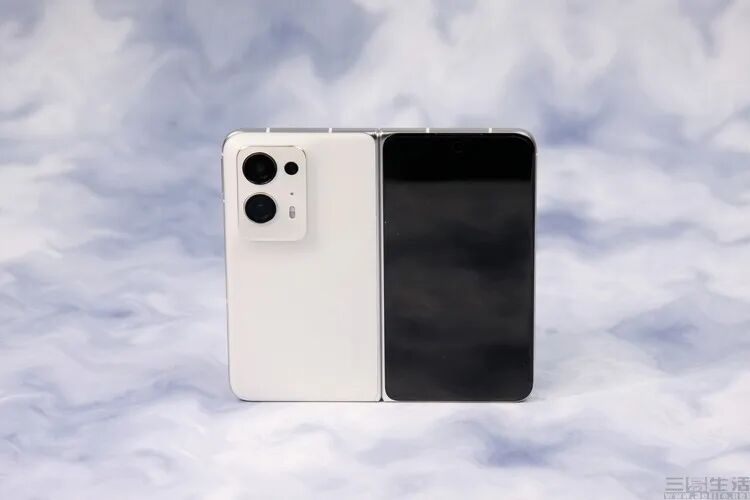
Some friends may say that OPPO's Find N and Find N2, as well as Honor's Magic V Purse, can also be considered "affordable large foldable" devices. So what's so special about moto's Razr Fold?
Please note that OPPO's first two generations of the Find N series are not strictly "large foldable" devices. Moreover, neither they nor Honor's Magic V Purse used the latest generation of SoC at that time. Therefore, their product positioning is quite different from the public's perception of "flagship large foldable" devices.
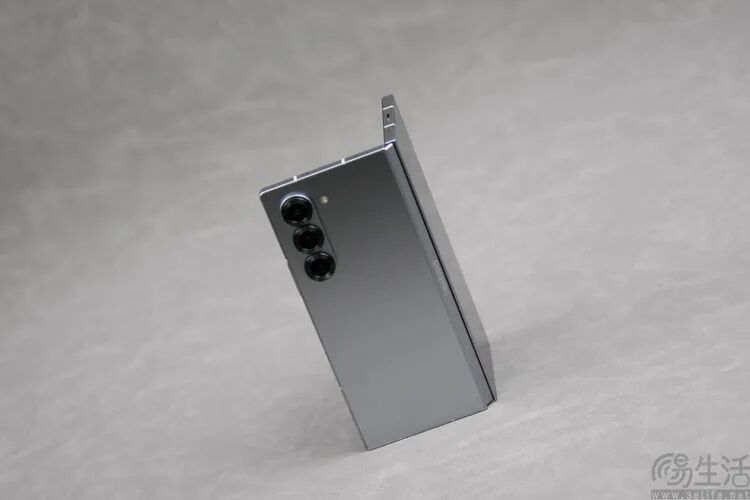
However, the moto Razr Fold and the rumored Samsung "SM - F971", which is also expected to be launched in 2026, are different. According to various current leaks, these two models are comparable to the "flagship large foldable" devices of the same era in terms of appearance, peripheral functions, and internal technology generation. The only difference may be that they use a less "flagship" SoC and have a significantly lower price.
So why do there need to be less - flagship and more affordable models of "large foldable" devices?
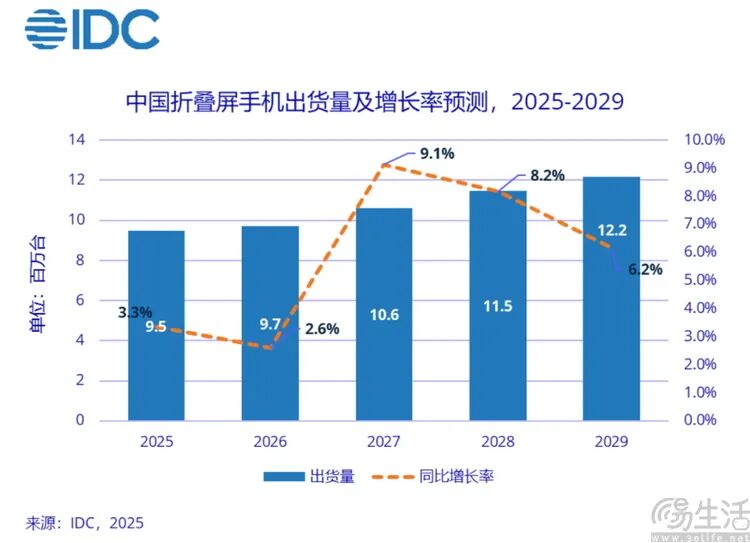
There are probably three main reasons. First, in 2025, when the overall global mobile phone market shipments declined, foldable screens still achieved a 6% growth. However, this growth rate has shrunk by more than 60% compared to two years ago.
Second, according to the data released by a second - hand platform, the trading volume of second - hand foldable mobile phones increased significantly by 73% in 2025, and the "average holding time" was significantly reduced to 13 months, far lower than the 22 months of traditional bar - style phones.
Finally, after years of seemingly "high - speed growth", the user penetration rate of global foldable mobile phones still remains stable at less than 2%.
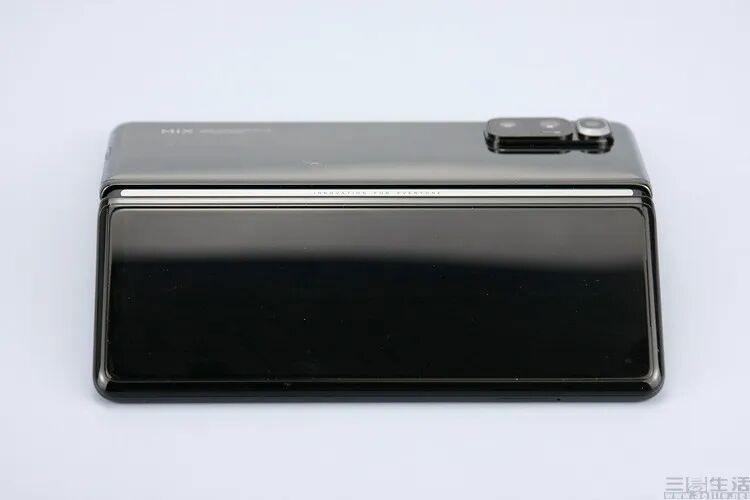
From these three sets of data, it is not difficult to draw a conclusion: there are indeed people willing to buy foldable mobile phones, but the scope of these "people" still belongs to a very niche user group. Moreover, the "purpose" of these consumers buying foldable mobile phones may not necessarily be for daily use. It is more likely that they just want to try something new or use it as a "status symbol".
In this case, if we follow the logic of "where there is demand, there is supply", in order to meet the "needs" of this user group for foldable mobile phones, future foldable mobile phones should be more luxurious in appearance and more expensive in price.
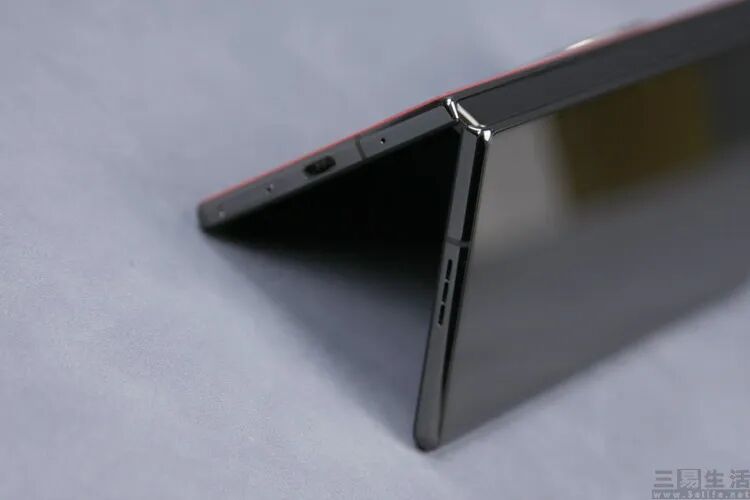
However, it is obvious that this is not a "sustainable development" path. So, if manufacturers want to "break the deadlock", the only way is to launch large - sized, full - featured foldable mobile phones with significantly lower prices. Only such models can attract more users to buy and use. Especially when most users really use foldable mobile phones for "daily purposes" instead of simply showing off to others, the various improvements in the software level of foldable mobile phones will become more practical and can attract more developers to build the software ecosystem.
However, this will create a new problem. That is, for users who "originally" bought foldable mobile phones for the sake of face, will these foldable mobile phones, which may be a bit simpler in appearance but have almost the same practical value, "hurt" them? Will it even make the existing flagship foldable devices seem less "high - end"?
Whether with a serious attitude or just for "fun", this may be a problem worthy of long - term attention.
[Some of the pictures in this article are from the Internet]
This article is from the WeChat public account "3eLife" (ID: IT - 3eLife), written by 3eJun, and is published by 36Kr with authorization.