Why is this year's CES worth the attention of every ordinary person?
“You get into an electric car, press a button, and a city-wide map appears on the driving panel screen. You point your finger at the destination and then press the autopilot button. The electric car then speeds automatically towards the destination.”
This seemingly ordinary passage is from a “prophecy book” 35 years ago. In 1995, when the strategy of rejuvenating the country through science and education was just proposed, Academician Ni Guangnan, a computer expert, was invited by the magazine “We Love Science” to write “A Day in the 21st Century” for young readers. In an era when mobile phones were still a rarity, Ni Guangnan wrote about prophecies for the 21st century, including voice interaction, autonomous driving, video conferencing, and instant retail.
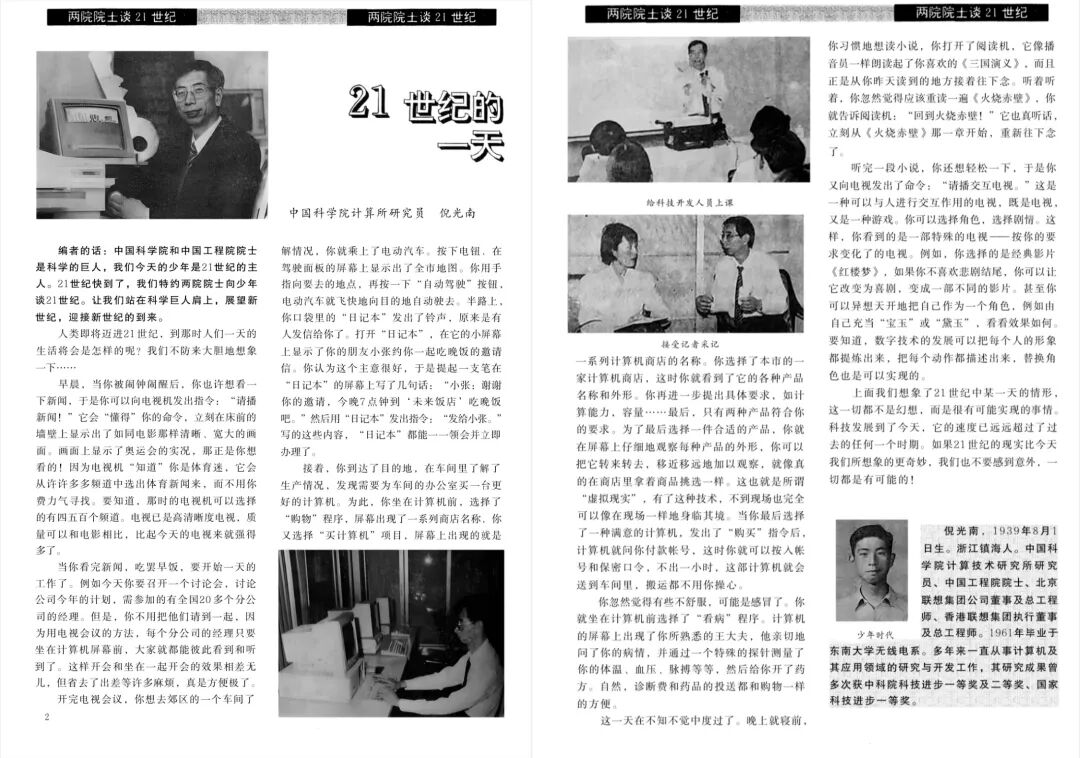
The full text of “A Day in the 21st Century”
Most of those seemingly science - fiction imaginations back then have become a reality today.
Now, with the development of AI technology, a new wave of prophecies is sweeping in. Last June, Kevin Kelly (KK), known as the “Father of the Silicon Valley Spirit,” outlined the future deeply penetrated by AI on a 25 - year scale in his new book “2024: Possibilities in the Next 10,000 Days.”
Recently, the new - session CES (Consumer Electronics Show) is being held in Las Vegas. It is recognized in the industry as a “technology trendsetter.” The technological products on display and the speeches of the industry leaders are all hints of the next major turning point in human civilization. Just half a year after the release of KK's new book, this CES technology feast has added real - world evidence to many of his prophecies.
Next, this article will combine KK's prophecies in “2024: Possibilities in the Next 10,000 Days” and CES 2026 to discuss six predictions that may change the world. These predictions may help us discover more opportunities or make us clearer about how to face the world reshaped by AI.
1. AI itself is not a tool but an infrastructure like electricity
2. Smart glasses are the best AI carriers and may replace smartphones
3. The year of AI agents has arrived, and AI personal butlers will be everywhere
4. Physical AI is about to enter the ChatGPT moment, and AI will move from the chat box into the real world
5. Humanoid robots are at the door of the real world and will give rise to new professions
6. The general direction of AI entering our lives is to enable ordinary people to enjoy the expensive services that only the rich can afford now
AI is an infrastructure like electricity
This year's CES attracted more than 4,000 exhibitors and hundreds of thousands of participants. The most popular technological products, such as robots, smart glasses, and AI PCs, were showcased here.
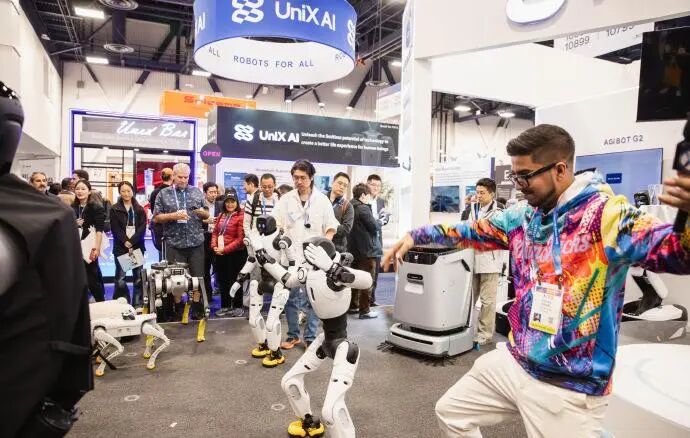
The picture is from the official Weibo of Zhiyuan Robotics
Perhaps the most impressive thing about this CES is not a particular cool AI product itself but a trend - AI is penetrating the hardware world in a more invisible way.
AI is everywhere at the CES site. There are smart door locks integrated with AI assistants, small excavators with AI capabilities, smart blind - guiding glasses that use AI to detect safe paths ahead, flying AI companion pets, and bird - feeding cameras integrated with AI image recognition algorithms...
This shows us a trend. AI itself is not a cool tool that is directly “used” but an invisible infrastructure for the future world.
As KK emphasized in his book, this wave of AI, represented by generative AI, is a disruptive general - purpose technology. It will change all industries, just like the steam engine, electricity, and the Internet.
KK gave 10 keywords for the next 25 years, and the first keyword is “invisible.” Electricity is the most important general - purpose technology after the industrial revolution, but it is invisible, and few people pay attention to it today. In the next 25 years, AI will also become more invisible. By then, ordinary people may no longer notice its existence or think about it, but it will be everywhere in our lives.
Smart glasses may replace smartphones
Smart glasses made a full - scale breakthrough at CES 2026, becoming a highlight of this exhibition. Sixteen Chinese companies, including Alibaba, Rokid, XGIMI, and INMO, participated in the exhibition, competing with their distinctive smart glasses and making in - depth progress in technologies such as lightweight design and independent communication.
LeiBird put a slogan on its product poster: “The next phone doesn't have to be a phone,” which is also KK's prediction.
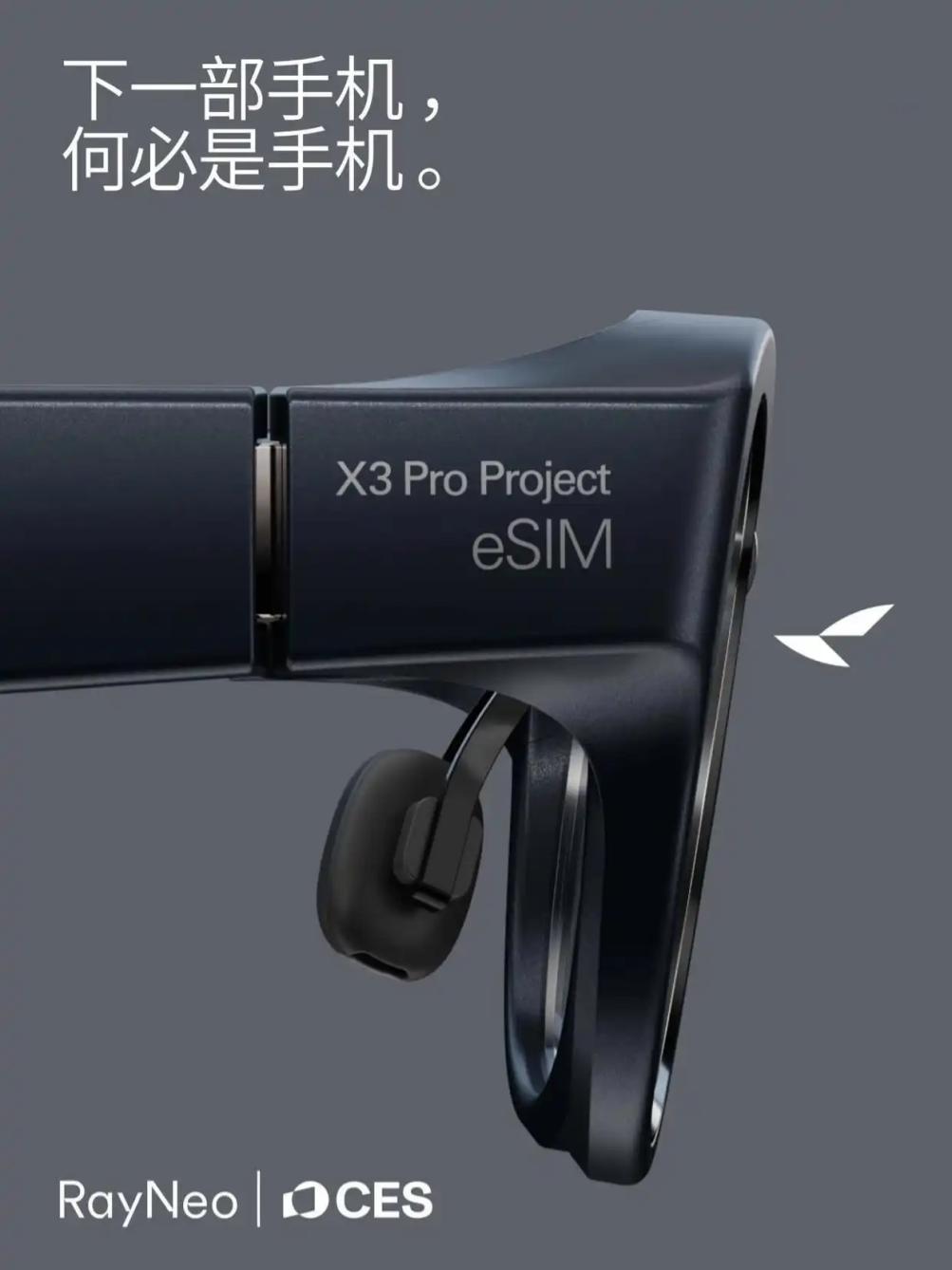
The product poster of LeiBird RayNeo X3 Pro Project eSIM
KK said bluntly, “By 2049, most smartphones will be replaced by smart glasses.” When users wear smart glasses, they will see a superposition of the real world and the virtual world, which will be a new world where the real world and digital twins are seamlessly connected.
By then, the way of human - machine interaction will shift from using keyboards, mice, and touch screens to more natural interaction methods. Everyone will interact with machines through language, gestures, and even eye contact. Under such changes, immersive experiences will become fast - moving consumer goods and will also give rise to new tracks such as first - person adventure live - streaming.
Everyone may have an AI assistant
Major manufacturers, including NVIDIA and Qualcomm, are emphasizing that 2026 will be the year of large - scale commercial implementation of “embodied intelligence” and “agent - type AI.” AI is evolving from a tool that responds passively to questions to an “agent” that can autonomously plan, disassemble, and execute complete tasks.
KK's prophecy resonates highly with this. In his vision, everyone will have an AI assistant like a personal secretary in the future, which will be as common as navigation software today.
In fact, earlier, AI assistants had become a major area of concern for major companies, but they haven't exploded yet. There are three reasons for the lack of large - scale development: First, AI assistants are not very reliable. Once they make mistakes or malfunction, trust in them will decline. Second, when people train AI assistants, they tend to let them learn average data, so it's difficult to meet personalized needs, and they are not good at handling complex problems. Third, to make AI assistants work better, some skills and optimization abilities are required, and users haven't generally mastered these abilities yet.
Regarding the future of AI assistants, KK envisions a B2B (bot to bot) era. In the future, each of us will have an AI assistant (similar to a mobile phone system), and various enterprises will provide services to users by designing vertical - domain bots (similar to mobile phone applications). As AI assistants become more intelligent, users won't need to decide which professional bot to use. The AI assistant will connect with various bots and manage users' lives in an orderly manner.
Just as the Internet wave has reshaped the business world, the future development of AI will also bring a new pattern to the business world. KK predicts that in the future, AI assistants (AI operating systems) will have a natural monopoly situation, similar to mobile phone systems, and two (at most three) enterprises will dominate the market. And professional bots covering different fields such as healthcare, education, travel, and entertainment will also bring huge entrepreneurial opportunities.
AI with physical knowledge will move from the chat box to real life
The concept of “physical AI,” which Huang Renxun emphasized in his keynote speech at CES, became one of the focuses of this exhibition. Physical AI is not a new term, but this time he judged that the ChatGPT moment of physical AI is coming.

Huang Renxun's NVIDIA Live broadcast at CES 2026
When AI understands and applies the rules of the physical world (gravity, friction, inertia, etc.), it means that it is no longer confined to the virtual world but can interact with the real physical environment and move into the real world.
At CES, NVIDIA launched Alpamayo, the world's first autonomous driving car AI that can think and reason. This is a pioneer product of the implementation of physical AI. It can not only receive sensor inputs and control the steering wheel, brakes, and accelerator but also reason about what actions it will take and tell you the reasons for taking those actions, enabling the assisted driving system to think like a human.
As KK observed, similar to today's large - language models, there will also be large - scale physical models in the future. If language models, physical models, and neural networks are superimposed and combined in various ways, which is what many industry insiders emphasize as “multi - modality,” AI can continue to make progress.
Humanoid robots will give rise to new professions
The robot exhibition area at CES 2026 was a star - studded event. Humanoid robots, in particular, caught people's attention. Different from the somewhat clumsy “Cyber Grandma” at last year's Spring Festival Gala, the humanoid robots at CES can move smoothly and even perform delicate operations, such as dancing, handing drinks to the audience, doing radio gymnastics, fighting, and sorting parts.
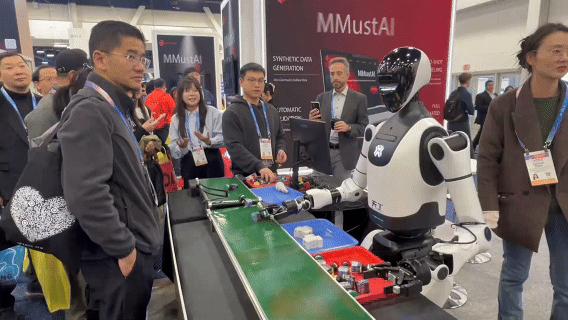
The picture is from the official WeChat account of the Beijing Humanoid Robot Innovation Center. “Embodied Heavenly Work 2.0” demonstrates autonomous part sorting.
In KK's vision, robots will replace humans on a large scale in the future, and Foxconn factories that employ hundreds of thousands of people will become a thing of the past within the next 25 years.
KK pointed out that the development of humanoid robots faces two challenges: AI and engineering. Many people think that AI is the biggest challenge for humanoid robots, but KK believes that the greater challenge is actually in engineering.
The first problem humanoid robots face is power supply. Whether it's the energy consumption for computing or for robot movement, it's beyond imagination. The average energy consumption for human movement is about 0.25 horsepower, while that of robots is as high as 6.8 horsepower. Battery development basically follows Moore's Law, and it will soon reach a bottleneck with the current linear development.
The second problem is wear and tear. Humans and animals have very good self - repair and energy - supply mechanisms, but robots don't. Therefore, the parts of robots need to be constantly checked, repaired, and updated.
KK predicts that the after - market for robots, that is, the parts market, after - sales market, and repair market, may be a huge growth market in the future.
As humanoid robots enter households, a brand - new profession - humanoid robot repairer - will emerge. History has proven that any technological change will eliminate many job positions, and at the same time, it will create more new jobs that people have never seen before.
Technology will bring the expensive services enjoyed by the rich to the masses
KK's way of looking into the future is not to make wild and baseless imaginations but to observe what expensive services the rich are currently consuming and then imagine how such services can enter the lives of ordinary people.
AI and automation technologies essentially encode and replicate the “human time and professional skills” condensed in services, thus sharply reducing their costs.
The CES was full of innovative products that followed this concept. For example, there were lawn - mowing robots, pool - cleaning robots, AI child - companion robots with emotional interaction capabilities, pocket AI assistants, etc. Even private coaches that cost $100 per hour are being replaced by AI hardware in large numbers. These products are all committed to transforming the expensive services that were once only available to the rich into products that ordinary people can afford through AI and robot technologies.
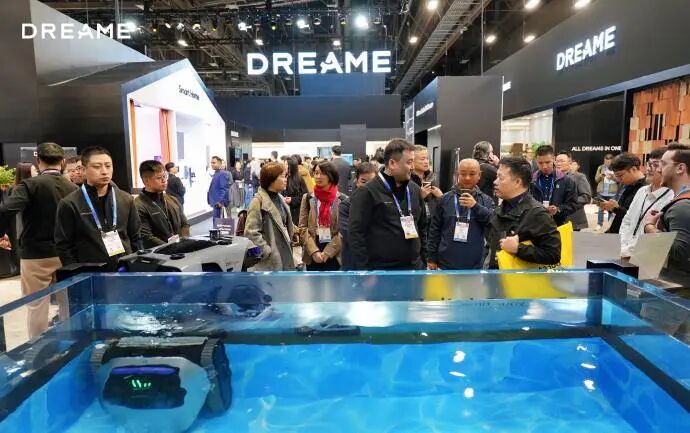
The Dreame pool - cleaning robot. The picture is from Dreame's official Weibo.
This reminds us that the general direction of AI entering our lives is not to create cool and expensive toys but to empower people's daily lives with technology. Following this idea, we may discover more untapped innovation and entrepreneurship directions.
Epilogue: The most important preparation is to admit our ignorance
Standing in the hustle and bustle of CES 2026 and looking back at the “science - fiction” daily life described by Academician Ni Guangnan 35 years ago, we are amazed at the foresight of human imagination and, more importantly, at the unpredictability of technological development.
The introduction of “2024: Possibilities in the Next 10,000 Days” says, “In my 50 years of interacting with futurists, I've learned that almost all predictions, including mine, are wrong.”
Most of the time, the meaning of prophecy is not to “reveal the plot” but to better prepare and participate.
AI becoming an invisible infrastructure, smart glasses replacing mobile phones, AI assistants taking over our lives, physical AI integrating with reality, robots giving rise to new professions, and technology benefiting the masses - these are more like the directions of ocean currents inferred from the existing waves. The real future will be shaped by countless technologies we haven't invented yet, social needs that haven't emerged, and ethical challenges we haven't anticipated. The result is bound to exceed our imagination today.
The most important preparation for facing the future world is not to draw a completely accurate map in advance but to admit our ignorance.
This article is from the WeChat public account “Advancing Wave Finance”. Author: Guan Shanyue. Republished by 36Kr with permission.