Why has Chinese tech surrounded CES?

Some people say that Apple's autumn product launch event is the "Technology Spring Festival Gala," while others claim that Huawei's autumn product launch event deserves this title. Even Luo Yonghao's "Annual Science and Technology Innovation Sharing Conference" at the end of last month was dubbed the "Technology Spring Festival Gala."
However, in terms of global influence, penetration, and event scale, the CES - Consumer Electronics Show, held in Las Vegas, USA, at the beginning of each year, is undoubtedly the real "Technology Spring Festival Gala."
This global technology feast, hosted by the Consumer Technology Association of the United States, began in 1967, and this year marks its 60th edition.
The total exhibition area of CES 2026 exceeds 2.6 million square feet, and there are a total of 4,100 exhibitors. Top - tier technology companies from around the world are eager to showcase their best technologies and products at this global technology show.
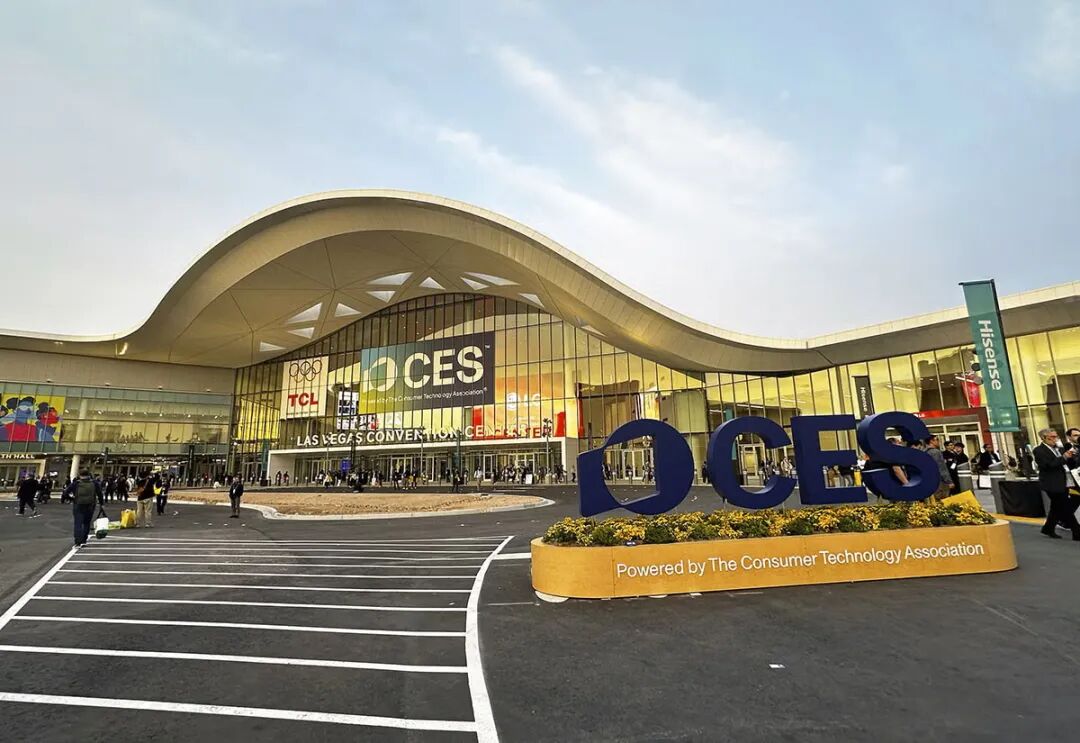
However, at this year's stage where global technology giants flex their muscles, the most eye - catching color is the "Chinese red."
This is not an exaggeration.
This year's CES presented a peculiar "encirclement" situation:
In terms of the number of exhibitors, Chinese companies reached 915, making China the largest foreign exhibitor country. The core exhibition area of the Central Hall, which was previously dominated by Samsung for a long time, is now occupied by TCL and Hisense. The North Hall is almost filled with Chinese humanoid robot companies.
Overseas media are sighing: I'd even believe this is Chinese Las Vegas rather than Las Vegas, USA.
On the Americans' home turf, how did Chinese companies "occupy" Las Vegas?
"Chinese ingenuity is everywhere"
For most people, visiting an exhibition is about seeking novelty and excitement. The same goes for a large - scale exhibition like CES: Stands with novel and interesting products are always crowded.
However, contrary to the stereotype that "foreigners have more creative ideas," Chinese companies at this CES have come up with some amazing ideas that have impressed foreigners.
For example, Dreame is definitely the "topic king" at this CES.
After announcing its cross - border expansion earlier, Dreame made its debut at CES and couldn't wait to showcase a series of cross - border products, including the prototype car of its cross - border foray into the automotive industry: Kosmera Nebula 1.

In the initial design sketches released by Dreame, the appearance of this car was closer to that of a Bugatti. However, what was presented at the exhibition was a Ferrari/Lotus super - car style, with a handsome appearance and a large front lip air duct, attracting a large crowd around the stand.
On the other hand, it is said that this car has an astonishing 1,876 horsepower, can accelerate from 0 to 100 km/h in just 1.8 seconds, and its price is in the millions. Even if people are not interested in its appearance, many are curious to see what a "Hypercar from a vacuum cleaner brand" looks like.
In addition to the car, Dreame also exhibited a stair - climbing robot, Cyber X, at the venue. It is said that it can be compatible with different models of sweeping robots and carry them up steep stairs, especially to "deploy" sweeping robots on different floors of LOFT apartments.
Moreover, MOVA, Dreame's high - end cleaning brand, also stood out at this event.
When DJI planned to enter the sweeping robot market, we joked, "Are they going to make a flying sweeping robot?" DJI didn't, but MOVA did.
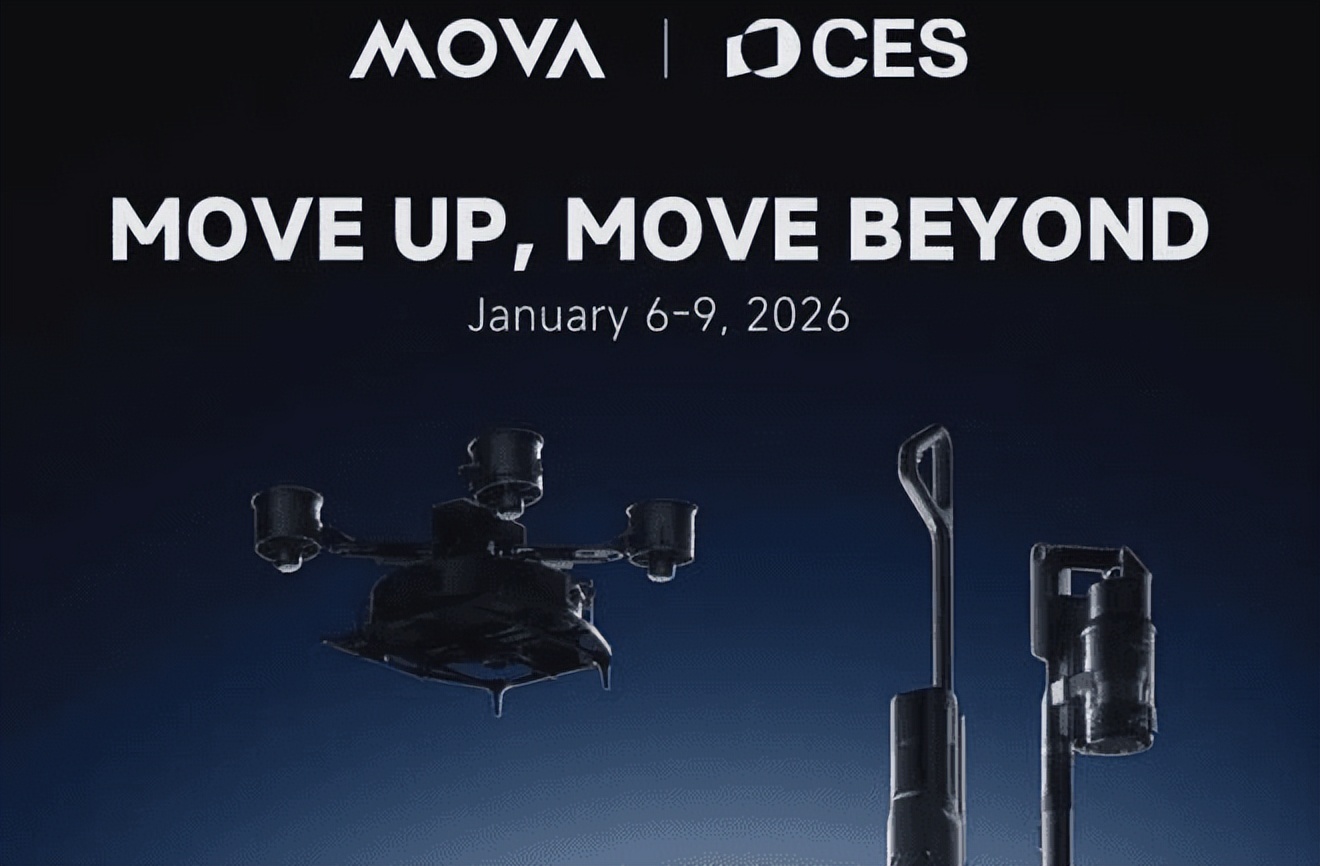
Although it is called a "flying drone," it is actually a concept platform called MOVA Pilot 70. The concept of this product is that a customized drone (flight module) takes off from the base station, precisely docks with and "grabs" the main body of the sweeping robot, then transports it to other floors and releases the robot to continue cleaning.
There is also the "chicken - foot robot" from Roborock that went viral on X. Due to its mechanical legs that can stretch like "chicken legs," it has attracted the attention of many technology media. CNET directly joked that it has "genuine chicken legs (or maybe frog legs)."
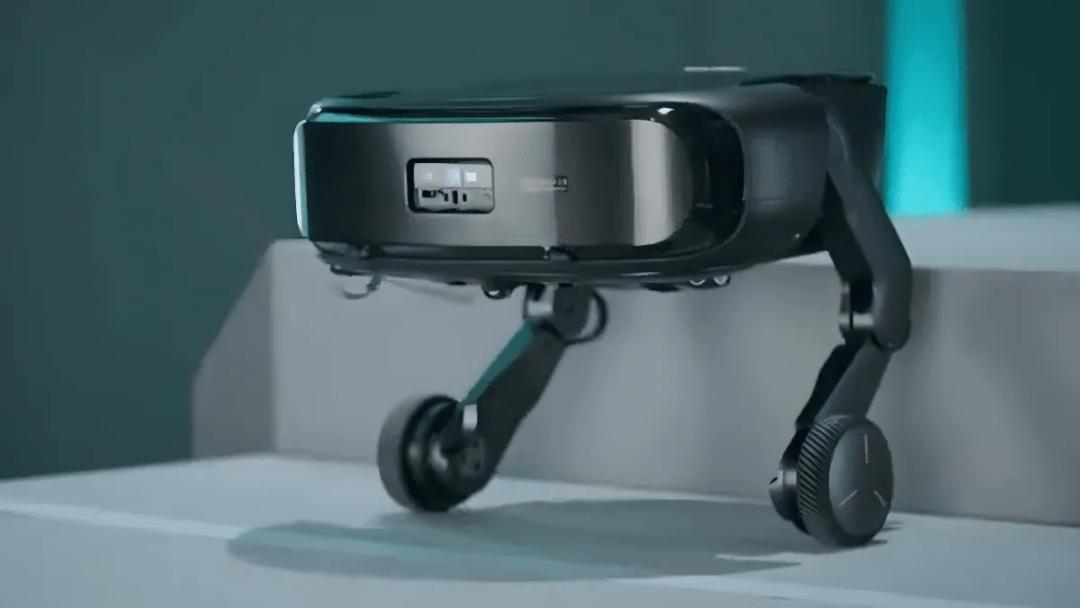
Jokes aside, the product has excellent performance. Roborock's G - Rover sweeping robot won the CES 2026 Best of CES Awards (in the Best Smart Home Tech category), and many media have hailed it as the "ultimate form of sweeping robots" and "the future is here."
Such interesting and innovative Chinese technology products are just the tip of the iceberg at CES 2026. These products prove that Chinese companies can also come up with creative ideas and achieve extreme innovation, generating a lot of buzz.
However, is this the reason for the prevalence of "Chinese red" at CES? Not necessarily.
In addition to the novel and interesting ideas, foreigners also know that they can make money by cooperating with Chinese companies.
"Technology + Chinese companies = Profit"
What is the purpose of hosting CES?
Since its full Chinese name is the "International Consumer Electronics Show," it is essentially a platform similar to the World's Fair, used for exhibiting and trading consumer electronics products.
In other words, apart from technology media reporters who are just looking around, the goal of others is the same: to make money.
Chinese companies are really good at helping others make money.
To put it simply, China has the world's most complete electronic supply chain, which can produce high - quality products at a lower cost and respond quickly to market demands. This enables partners to sell more products at lower prices and make more money.
Since the equation "Cooperating with Chinese companies can make big money" holds true, it is only natural for CES to welcome more Chinese companies.
However, although Chinese companies can help others make money, they were not always taken seriously at the beginning.
The appearance of Chinese companies at CES can be traced back to Foxconn, BYD, and others in the early 21st century. At that time, Chinese companies mainly played the role of "unsung heroes," with a simple goal: to make an appearance and get more orders.

Later, although they got orders, their logos could only be printed inside the components at most. After these unsung heroes became international companies, they were surely not satisfied with this situation.
Therefore, after 2011, as the names of Huawei, Xiaomi, DJI, etc., became well - known, the products they displayed proudly carried their own logos.
This trend of "self - owned brands" reached its peak in 2018, when the number of Chinese exhibitors reached 1,551, enjoying great success.
Unfortunately, this trend was disrupted by a series of reasons at the end of 2019.
The worst year was 2023, when the number of Chinese companies dropped sharply to more than 400, less than one - third of the peak period. Some people even asserted that the golden age of Chinese technology at CES was over.
However, facts have proved that this is nonsense. Since 2024, Chinese companies have made a comeback.
In 2024, as a year of strong rebound, the number of Chinese companies soared from more than 400 to more than 1,100, accounting for a quarter of the total. In 2025, the number of exhibitors increased again, reaching more than 1,300, the second - highest number since 2018.
In 2026, Chinese companies not only had a large number of exhibitors but also became the main characters at CES for the first time.
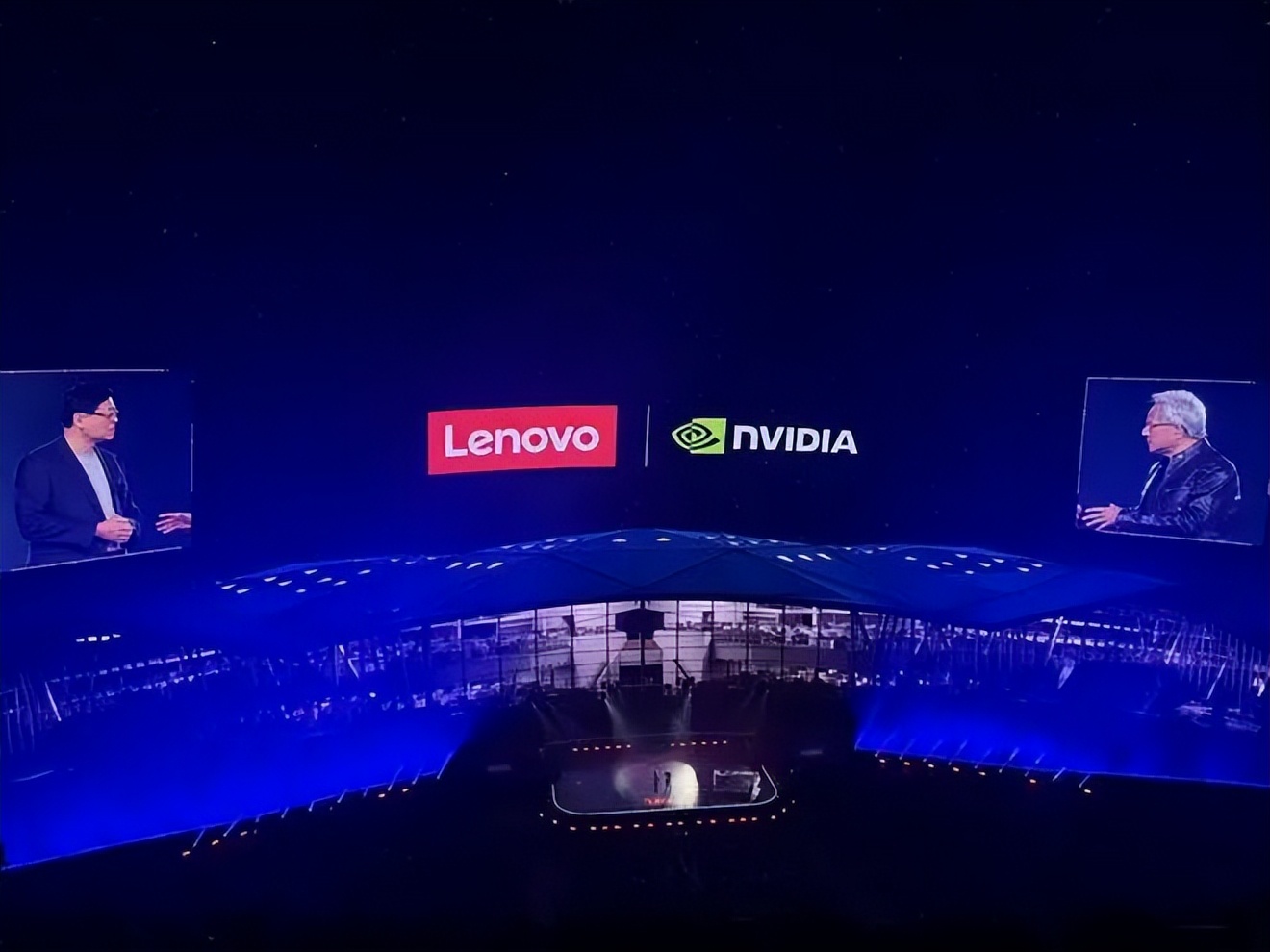
For example, one of the most memorable scenes at this year's CES took place at Lenovo's press conference.
When Lenovo introduced its new products, the guests taking turns on the stage were like the "Mount Rushmore" of the IT semiconductor industry: Jensen Huang of NVIDIA, Lisa Su of AMD, Cristiano Amon of Qualcomm, and Chen Liwu of Intel. All four industry giants were present.

This level of support is unprecedented.
The reason these four industry titans, who are usually decisive in the business world, showed such respect is that Lenovo holds the world's largest PC shipment volume.
In the crucial year of AI application implementation, whoever can get their chips into users' hands through Lenovo's devices can make a fortune. Whether it is Lenovo's roll - up screen concept laptop or the deeply integrated AI agent, they are all the carriers that these chip giants have been longing for.
A similar "rise to prominence" story also happened in the display field.
The Central Hall, the core exhibition area of CES, was once the backyard of Japanese and Korean giants such as Samsung and Sony. However, this year it is taken over by TCL and Hisense.
TCL even occupied the largest exhibition area - 2,453 square meters, remaining the largest Chinese exhibitor and demonstrating its dominance in the Mini LED and AR glasses full - matrix. Together with Hisense, they form the "Chinese twin stars" in the display field at CES.
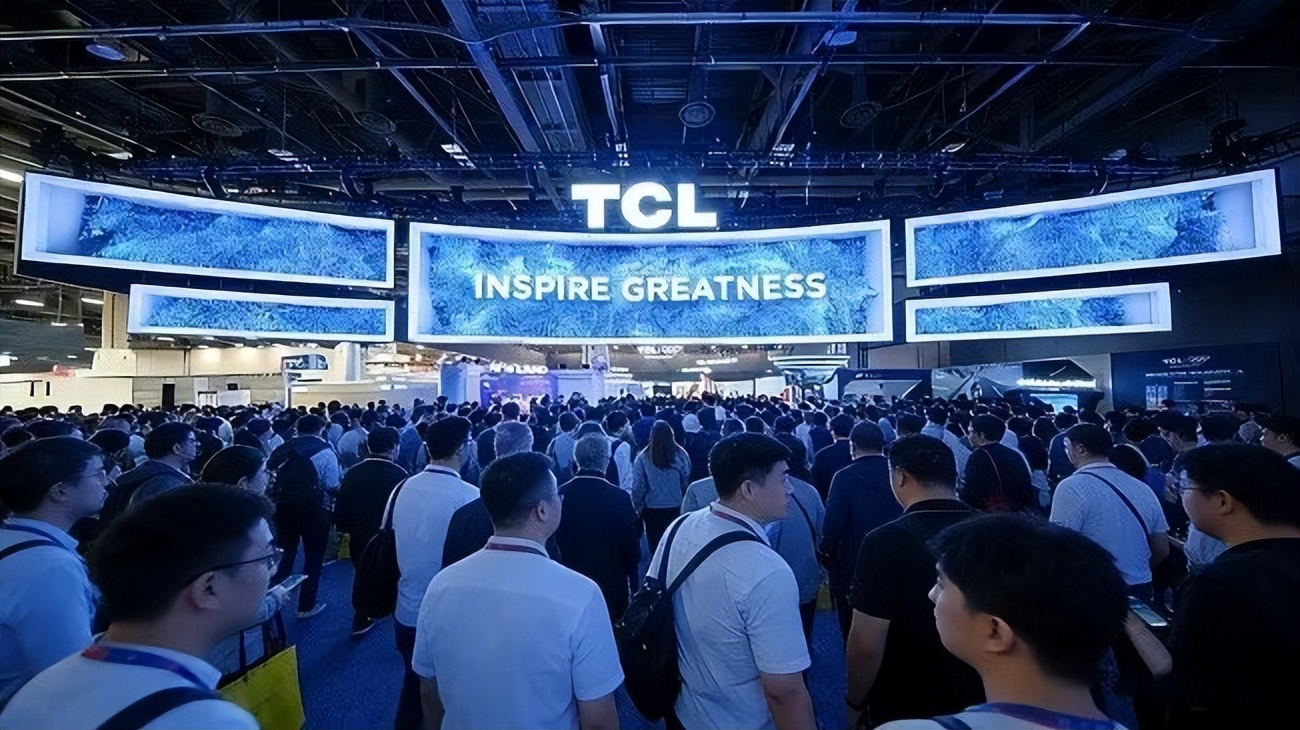
In terms of shipment volume, TCL ranks second in the global TV shipment volume, and Hisense ranks third.
Whether it is providing high - quality and affordable technologies and products or offering a unique scale of consumer electronics shipments in the world, it is only natural that Chinese companies, which can help others "get rich," are welcomed and even pursued at the exhibition.
But then some people may ask: Is it too far - fetched to say that "Chinese companies have occupied CES" just because of their strange ideas and large - scale investment?
"Chinese robots are very competitive"
If you want to see the "hard - core technology" that truly represents the height of Chinese technology at this event, you must go to the North Hall.
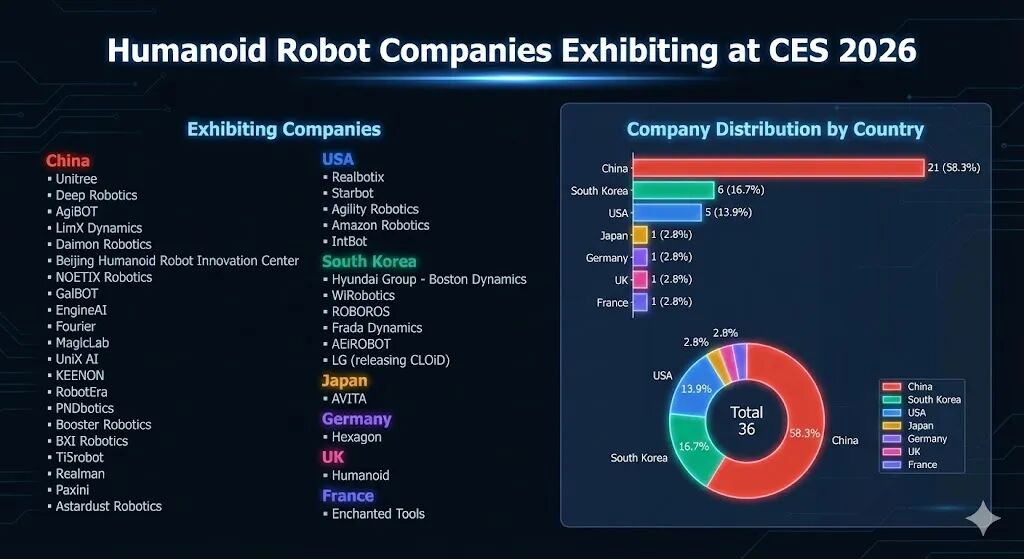
This was originally the arena for global robots, but this year it is especially reminiscent of Huaqiangbei. Among the robot exhibitors at this year's CES, there are as many as 149 Chinese companies. In the field of humanoid robots, the proportion of Chinese companies has exceeded 55%.
Throughout the North Hall, Unitree Robotics is undoubtedly the star.
Its stand was crowded, and the reason is straightforward - the robots are very "competitive," literally.
Unitree set up a ring at the venue, allowing its G1 humanoid robots to "fight" each other and even accept challenges from the audience. These robots move sharply and react quickly. If you get hit by them, it won't be a minor injury.

The G1 in the ring is equipped with self - developed high - torque motors and has 23 - 43 degrees of freedom, equivalent to installing a complete set of "muscle systems" on the robot: it has both explosive power and fine control. Squatting and punching are easy for it, and it can even perform the "Webster backflip"