The largest nuclear fusion financing at the beginning of the year has emerged.
It's Shanghai again.
Exclusive to the investment community, Stellar Fusion Energy has officially completed a Series A financing of 1 billion yuan. Led by Shanghai Science and Technology Innovation Group under Shanghai State - owned Investment Corporation and Shanghai Future Industry Fund, jointly led by CICC Capital and Shanghai Jiading Science and Technology Investment Group, institutions and individuals such as BOC Asset, Xichen Capital, Wuyuefeng Ventures, Longge Technology, Feitu Venture Capital, Shandong Energy Shanghai Yankuang Asset, CIMC Envirotech, Shangrong Capital, Yuanhe Puhua, Shenwan Hongyuan, Binfu Capital, Zhenyi Asset participated in the investment. The intellectual property fund under Shanghai Science and Technology Innovation Group, the leading investor in the Pre - A round, continued to follow - on invest.
So far, the single - financing record of domestic private nuclear fusion enterprises has been refreshed again.
Born out of the fusion laboratory of Tsinghua University, the helmsmen behind Stellar Fusion Energy are two classmates, Chen Rui and Tan Yi. In 2021, they embarked on their second entrepreneurial journey, leading the team into the controllable nuclear fusion track and rising to become a phenomenon - level name in the venture capital circle.
Nuclear fusion, often regarded as the "ultimate energy source for humanity," is driving a global energy revolution. Looking to the future, people are eagerly awaiting the day when the first kilowatt - hour of electricity is generated through nuclear fusion.
Collaboration of Tsinghua Schoolmates
The Largest Nuclear Fusion Financing at the Beginning of the Year
The story begins in a laboratory at Tsinghua University.
Back in 1999, two post - 80s students from Jiangxi and Hunan respectively were admitted to the Department of Engineering Physics at Tsinghua University and became classmates. They are Chen Rui and Tan Yi. After graduating from undergraduate studies, Tan Yi continued to pursue a doctoral degree at Tsinghua and delved deeply into nuclear fusion research. Later, he became an associate professor at the Department of Engineering Physics at Tsinghua University. Chen Rui went abroad for further studies and returned to China in 2014 to teach, becoming a professor at the School of Finance at Central University of Finance and Economics.
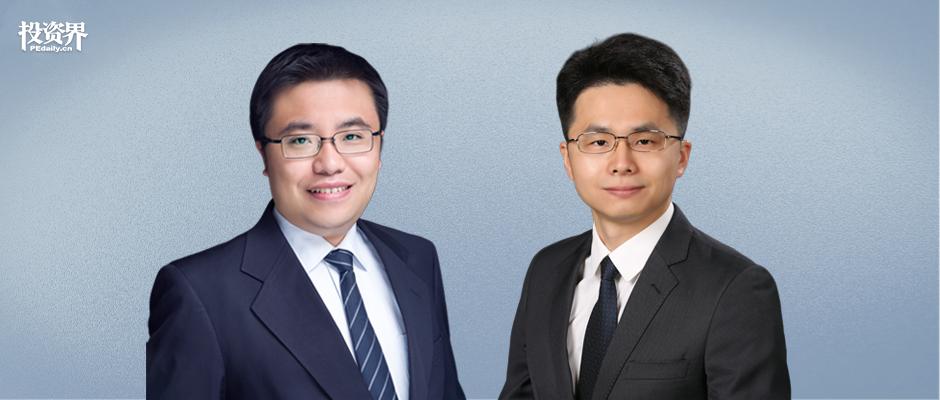
Chen Rui (left), CEO of Stellar Fusion Energy, and Tan Yi (right), Chief Scientist of Stellar Fusion Energy
Their entrepreneurial journey actually started in 2016. At that time, overseas nuclear fusion startups were just emerging. Chen Rui and Tan Yi believed that the nuclear fusion research results could be transformed to bring greater social value. So they joined hands with another Tsinghua classmate to found Shuo Orange Technology, applying fusion - derived technologies to the industrial field for the first time.
Until 2021, a turning point occurred. The US nuclear fusion company Helion Energy announced that it had heated plasma to 100 million degrees Celsius, and the Commonwealth Fusion Systems (CFS) company received a financing of $1.8 billion. As a result, nuclear fusion once again ignited a fire in the venture capital circle.
At this time, Chen Rui and Tan Yi felt that the time was right. After accumulating experience from their first startup, they had fully prepared the technical route for nuclear fusion commercialization. After careful consideration, they officially established Stellar Fusion Energy in October 2021, with Chen Rui as the CEO and Tan Yi as the chief scientist.
Chen Rui recalled to the investment community that witnessing the overseas nuclear fusion financing boom at that time made them realize that this research required a large amount of capital. It was difficult to achieve disruptive results with only laboratory funds. "We clearly knew that if we didn't make up our minds to start a business, the opportunity would pass by in a flash."
Stellar Fusion Energy has the fusion team of the Department of Engineering Physics at Tsinghua University as its core. Now, the R & D team has rapidly expanded from more than 10 people at the beginning to more than 140 people, with over 70% having master's or doctoral degrees. The technical route they adopt is the compact repetitive reconnection controllable fusion technology based on the spherical tokamak. Compared with the traditional tokamak fusion reactor, this solution is characterized by a small volume and a simple structure, which can significantly reduce the construction cost of the fusion reactor.
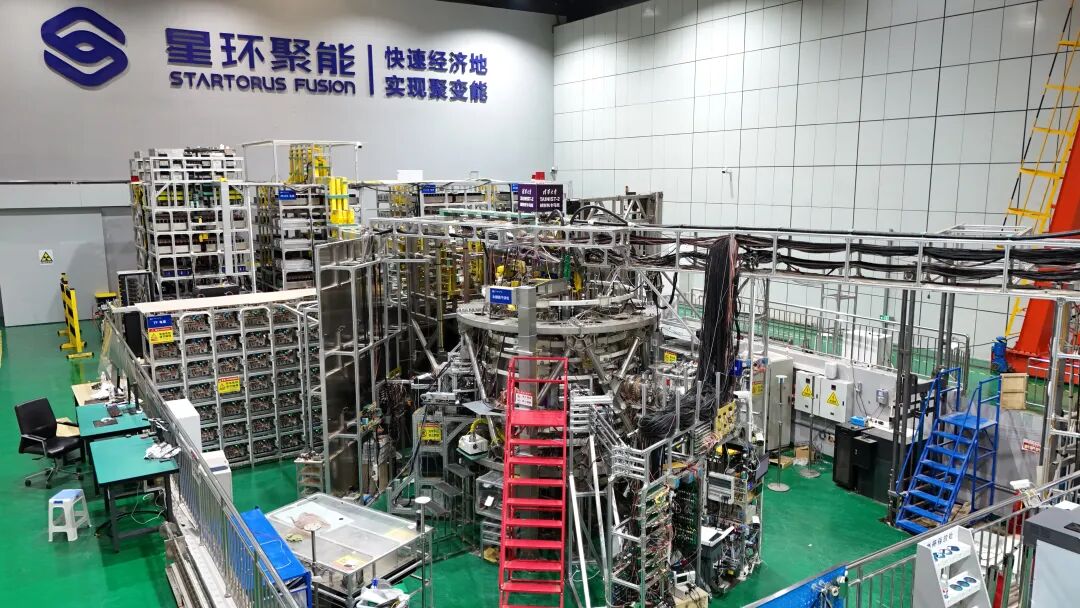
The SUNIST - 2 device jointly built by Stellar Fusion Energy and Tsinghua University
Specifically, this solution can be applied not only to large - scale fusion power plants and distributed power stations but also, due to its small and simple structure, has the potential to be applied to scenarios with high integration requirements such as offshore/deep - sea operation platforms and large - ship power systems.
Chen Rui calculated an account for the investment community. According to Stellar Fusion Energy's solution, the cost of the next - generation device to achieve a Q value (energy gain coefficient) > 1 is approximately 1.5 billion yuan, far lower than that of the traditional large - scale tokamak route.
However, Chen Rui also admitted that since the day of its establishment, Stellar Fusion Energy has encountered various unknown challenges. "Because we are on an uncharted path, we often have no expectations for the emergence of problems. We can only locate the problems based on experience and solve them from an engineering perspective."
He clearly remembers that more than two years ago, when the current device of Stellar Fusion Energy (the SUNIST - 2 in cooperation with Tsinghua University) just started running, under normal circumstances, 18 magnets were connected in series. However, the calculated resistance did not match. If measured and checked one by one according to the standard method, the device needed to be disassembled, and the construction period would be delayed by at least more than ten days. Finally, through a clever physical method, the team located the specific location of the short - circuit in the device and found that the short - circuit was caused by a piece of indium the size of a fingernail that fell in during soldering.
Now, Stellar Fusion Energy's self - financing ability is becoming more and more evident. According to Chen Rui, Stellar Fusion Energy has developed and improved a large number of technologies related to the periphery of the fusion reactor. Taking productization as the delivery requirement for each internal project, it actively promotes the transformation of technological achievements into commodities.
Currently, it has formed a complete series of signal conditioning products including high - bandwidth isolation amplifiers and analog integrators; the superconducting data acquisition instrument (EPIC) and single - channel data acquisition unit (CoaxLink Nano) can support precise testing and flexible deployment in extreme multi - physical fields, laying a reliable data foundation for digital fusion reactors and AI control; the poloidal magnet pulse power supply and the general - purpose pulse power module (IVCube) together form a complete pulse power supply solution, supporting batch deployment and complex control, and providing cost - effective power support for fusion devices; the self - developed in - situ surface analysis system (LIBS) and electrostatic probe drive system, in addition to supporting fusion research, have attracted wide attention and reached multiple cooperation agreements in the fields of nuclear power, aerospace, and high - energy physics; the full - technology stack capabilities of high - temperature superconducting magnets have overflowed and reached multiple development and processing agreements with customers.
Regarding Stellar Fusion Energy's plan, Chen Rui said that it will complete the engineering verification around 2028, start the construction of a commercial demonstration reactor, and build a fusion reaction demonstration reactor capable of outputting electric energy around 2032.
Currently, this hardcore team is moving forward towards this goal. As Tan Yi previously called on, fusion researchers should not wait for all conditions to be mature but should bravely take practical steps. "All children start learning to walk when their muscles are not strong and their balance is not stable. The same is true for fusion. We need to solve problems in the iteration and accumulate experience in the construction."
VC/PE Gathering
Heavy Investment by Shanghai State - owned Assets
Stellar Fusion Energy, which is gradually emerging, soon caught the attention of investors.
In June 2022, Stellar Fusion Energy announced that it had received an angel - round financing of hundreds of millions of yuan, jointly invested by multiple institutions such as Shunwei Capital, Kunlun Capital, Zhongke Chuangxing, Far Vision Capital, Hexagon Capital, Sequoia China Seed Fund, Xianfeng Changqing, Jiuhe Ventures, Lenovo Star, Innoangel Fund, Yuanhe Origin, and Huafang Capital.
Recalling the first financing, Chen Rui said that although "a good beginning is half the battle," the angel - round financing process was relatively smooth. "From the initial contact with investors to the completion of the angel - round financing, with the Spring Festival in between, it actually only took five months."
According to his recollection, although Stellar Fusion Energy was a startup at that time, the team had rich R & D experience, and the company's valuation was relatively realistic, so it won the recognition of investors. At the same time, Stellar Fusion Energy happened to catch the industry heat brought by the large - scale financing of the US CFS, providing investors with a reference investment case.
Among them, Zhongke Chuangxing's investment in Stellar Fusion Energy impressed the outside world deeply. Chen Rui clearly remembered that one day in March 2022, in the Beijing office of Zhongke Chuangxing, he met Mi Lei, the founding partner of Zhongke Chuangxing. "Dr. Mi told me that he had wanted to invest in a controllable nuclear fusion company for a long time. He had studied the upstream and downstream of the industrial chain for a long time and finally locked in on us. I instantly felt a strong sense of trust." So, after only one meeting, Zhongke Chuangxing became one of the angel investors in Stellar Fusion Energy and increased its investment in the Pre - A round.
In this regard, Mi Lei also told the investment community that Zhongke Chuangxing's consecutive investments were not only because it was optimistic about the technical concept and scarcity of Stellar Fusion Energy but also a strategic choice for Zhongke Chuangxing to layout the "future energy" map in the hard - technology ecosystem. "The rapid iteration of Stellar Fusion Energy - from the principle verification from '0 to 1' to the future construction of the CTRFR - 1 device - precisely verifies my concept that 'hard technology requires patient capital but also rapid engineering iteration'."
However, Chen Rui said that each subsequent round of financing for Stellar Fusion Energy was more challenging than the angel - round. As the company developed over time, investors began to examine Stellar Fusion Energy's initial plan, and their expectations became higher and higher. "All we can do is to continuously fulfill our promises and break the doubts with actual progress."
Then in March 2024, Stellar Fusion Energy completed a Pre - A round of financing of hundreds of millions of yuan. This round of financing was led by the Shanghai Intellectual Property Fund, followed by Huacheng Venture Capital, and the old shareholders Zhongke Chuangxing and Hexagon Capital continued to follow - on invest.
Until this Series A financing emerged, a landmark moment occurred in the industry - the single - financing record of domestic nuclear fusion private enterprises was refreshed.
As one of the leading investors in this round, Shanghai Science and Technology Innovation Group said that the group has long been focused on hard - technology and future - industry investment. After its intellectual property fund led the investment in Stellar Fusion Energy in 2024, the group led the investment again in this round and promoted its settlement in Shanghai. In the process, it witnessed Stellar Fusion Energy gradually grow into a leading enterprise in the domestic controllable fusion field with full - stack independent R & D, engineering implementation, and rapid iteration capabilities. This further strengthened its determination to support the enterprise in overcoming the technical challenges of the "artificial sun."
"In the future, Shanghai Science and Technology Innovation Group will give full play to the enabling advantages and industrial synergy capabilities of 'patient capital + long - term capital + strategic capital', join hands with Stellar Fusion Energy and industrial - chain partners, accelerate the process of fusion energy from'scientific experiment' to 'commercial application', and jointly build Shanghai into a global high - ground for advanced energy industries."
The China International Capital Corporation (CICC) Capital's investment entity, the CICC SAIC Fund, also said that it is highly optimistic about the development prospects of the trillion - level controllable nuclear fusion track as a strategic emerging industry in the 14th Five - Year Plan of the country. "Stellar Fusion Energy, with its outstanding technical advantages in the high - temperature superconducting strong - magnetic - field spherical tokamak technical route and relying on the more than 20 - year profound accumulation of the integrated R & D team in the nuclear fusion field at Tsinghua University, has successfully built and verified multiple fusion experimental devices, with core indicators reaching the leading level in China and the advanced level in the world."
As the science and technology innovation investment platform in Jiading District, the Shanghai Jiading Science and Technology Investment Group invests and layouts around the "3 + 3+1" key industries in Jiading. The future energy industry is one of its key areas of concern. In their view, the Stellar Fusion Energy team has demonstrated deep technical accumulation, a clear engineering path, and strong execution ability in the field of controllable nuclear fusion and has gradually grown into a leading enterprise in the domestic nuclear fusion commercialization track. "Currently, Jiading District is striving to build the 'Fusion Energy Town'. The settlement of Stellar Fusion Energy is a key move in our construction of the industrial ecosystem. In the future, we will continue to support and serve the enterprise to accelerate the process of technological breakthrough and industrialization."
With the emergence of this new round of financing led by Shanghai state - owned assets, it also marks that Stellar Fusion Energy has officially integrated into Shanghai's future industry layout.
It is understood that Stellar Fusion Energy has reached an important strategic cooperation with the Jiading District Government of Shanghai to jointly promote the R & D and industrialization process of the CTRFR - 1 fusion device. According to the agreement, the company will set up a R & D center and an experimental base in Jiading, focusing on the engineering verification of fusion technology and promoting breakthroughs in core technologies such as high - temperature superconducting magnets and plasma control.
In Chen Rui's view, this cooperation will give full play to the synergy advantages between the government and the enterprise: the Jiading District Government will provide all - around support in terms of land, funds, talent, and policies; Stellar Fusion Energy will rely on its own technical advantages and actively play the role of the "chain leader" in the industrial chain, jointly building a fusion energy industrial cluster with upstream and downstream enterprises.
Undoubtedly, a new hardcore engine has been added to Shanghai's nuclear fusion map.
The Ultimate Energy for Humanity
Nuclear Fusion on the Eve of Commercialization
Similar scenes are frequently happening in Shanghai.
Today, it has emerged as a major nuclear fusion industry hub. There is even a saying in the industry that if a company making nuclear fusion devices wants to succeed in financing, Shanghai is the first choice.
The reason it is the first choice is that Shanghai has the most complete and strongest comprehensive nuclear power industrial chain in China, covering nearly 200 nuclear - related enterprises. Among them, there are leading enterprises such as the Shanghai Electric Nuclear Power Group, and in recent years, star enterprises in the industrial chain such as Shanghai Superconductor and Energy Singularity have emerged. At the research end, universities and research institutions in Shanghai, such as Fudan University, Shanghai Jiao Tong University, and the Shanghai Institute of Optics and Fine Mechanics of the Chinese Academy of Sciences, have multiple fusion R & D teams.
The most impressive scene was in July last year when the inauguration ceremony of the China Fusion Energy Co., Ltd. was officially held in Shanghai. Seven investors emerged - China National Nuclear Corporation, China National Nuclear Power, China National Petroleum Kunlun Capital, Shanghai Fusion, National Green Fund, Zhejiang Energy Electric Power, and Sichuan Fusion, announcing a joint investment of approximately 11.492 billion yuan, becoming the largest financing in Shanghai last year.
In March 2024, multiple departments in Shanghai jointly issued the "Action Plan for the High - Quality Development of the Shanghai Nuclear Power Industry (2024 - 2027)", proposing that by 2027, the scale of the Shanghai nuclear power industry will reach 60 billion yuan, a world - class nuclear power industry center will be basically built, and the "Shanghai Nuclear Power" brand will be established. At the same time, the plan also clearly stated that it is necessary to "carry out research and development on the experimental physics, core technologies, and key equipment of the magnetic - inertial confinement fusion energy system and build an internationally advanced fusion energy center."
So, how powerful is nuclear fusion, which is known as the "artificial sun"?
There is a vivid example - the energy generated by nuclear