Master the key points of the AGI Next Summit in five minutes: The consensus and disputes of Chinese AI leaders in 2026
A netizen from Node AI at the venue said, "This should be the most top - notch lineup of AI guests in the past year, sharing the most valuable insights."
On January 10, 2026, the AGI Next Frontier Summit, jointly initiated by the Beijing Key Laboratory of Fundamental Models at Tsinghua University and Zhipu AI, was successfully held as scheduled. This event, hailed as "the gathering of half of China's AI community," had no long - winded opening remarks or fancy stage designs. It focused entirely on academic discussions and technical debates throughout. Industry leaders such as Tang Jie from Zhipu, Yang Zhilin from Dark Side of the Moon, Lin Junyang from Alibaba, and Yao Shunyu from Tencent, as well as academic giants like Academician Zhang Bo, gathered on the same stage to set a clear tone for AI development in 2026. Node AI believes that this academic - oriented summit can be regarded as an "eye - opener" for the industry. It not only cools down the hype around concepts but also makes the implementation path and core challenges of AGI more concrete.
01 From Technical Paths to Industry Judgments
The Sober Understanding of Academic Giants
At the age of 91, Academician Zhang Bo from Tsinghua University, a pioneer in China's AI research, brought forward significant viewpoints on - site. He pointed out that current large - scale models have five fundamental deficiencies, including reference and causality. He emphasized that AGI should not be a vague concept but should have a "executable and testable" definition, and its core must possess five key capabilities such as multi - modal understanding, online learning, and verifiable reasoning. Node AI believes that Academician Zhang Bo's viewpoints precisely pinpoint the core problem in the current AI development - the scale expansion without a solid underlying logic will eventually reach a bottleneck, which is highly consistent with the concept of distributed intelligence that emphasizes "both efficiency and interpretability."
Yang Qiang, an emeritus professor at the Hong Kong University of Science and Technology, conveyed the spirit of perseverance in scientific research through the metaphor of "coffee addiction." He said that doing research on AGI requires the same kind of focus and dedication as being addicted to coffee because it is a long - term battle, not a short - term speculative endeavor. This view coincides with Tang Jie's experience and is also recognized by Node AI: true technological breakthroughs never happen overnight, especially in cutting - edge fields like AGI, which require long - term in - depth efforts from the industry, academia, and research institutions to avoid the impetuous cycle of "chasing hotspots and switching tracks."
The Technological Insights of Enterprise Leaders
Tang Jie, who just led Zhipu AI to go public on the Hong Kong stock market, gave a keynote speech titled "Let Machines Think Like Humans." He made a crucial judgment: "After the emergence of DeepSeek, the competition in the Chat paradigm has basically ended, and the next step is to take actions." In his opinion, although simple model expansion (Scaling) is an effective path, it is essentially "the easiest way for humans to take shortcuts." The core direction in the future is to enable models to have the ability of autonomous Scaling, achieving a leap from "memorizing knowledge" to "drawing inferences."
Node AI believes that Tang Jie's concept of "autonomous Scaling" exactly echoes the core advantage of distributed intelligence - achieving efficient knowledge iteration through node collaboration rather than relying on parameter stacking of a single model, which may become the key path to break through the current technological bottleneck.
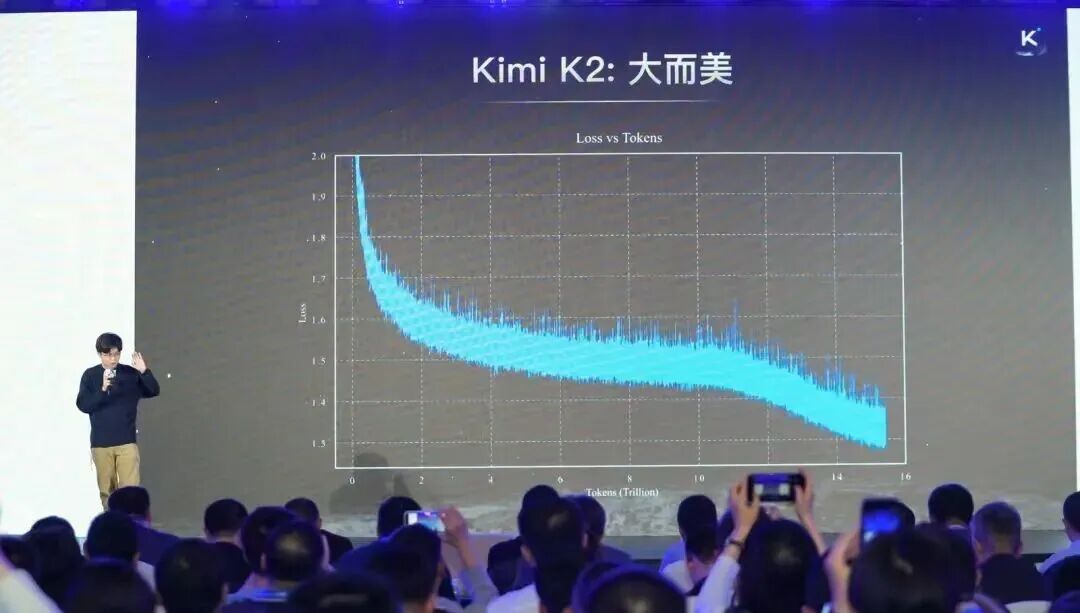
Yang Zhilin, the founder of Dark Side of the Moon, put forward a philosophical view. He believes that "the Scaling Law essentially converts energy into intelligence, and the core lies in efficiently approaching the upper limit of intelligence." An excellent model should carry values and tastes, and the progress of technology, data, and aesthetics is the real progress. Node AI highly agrees with this view. Especially in a distributed architecture, the intelligent output of each node reflects the needs and value orientations of specific scenarios. Only by considering both technological efficiency and humanistic care can AI truly be integrated into real - world scenarios.
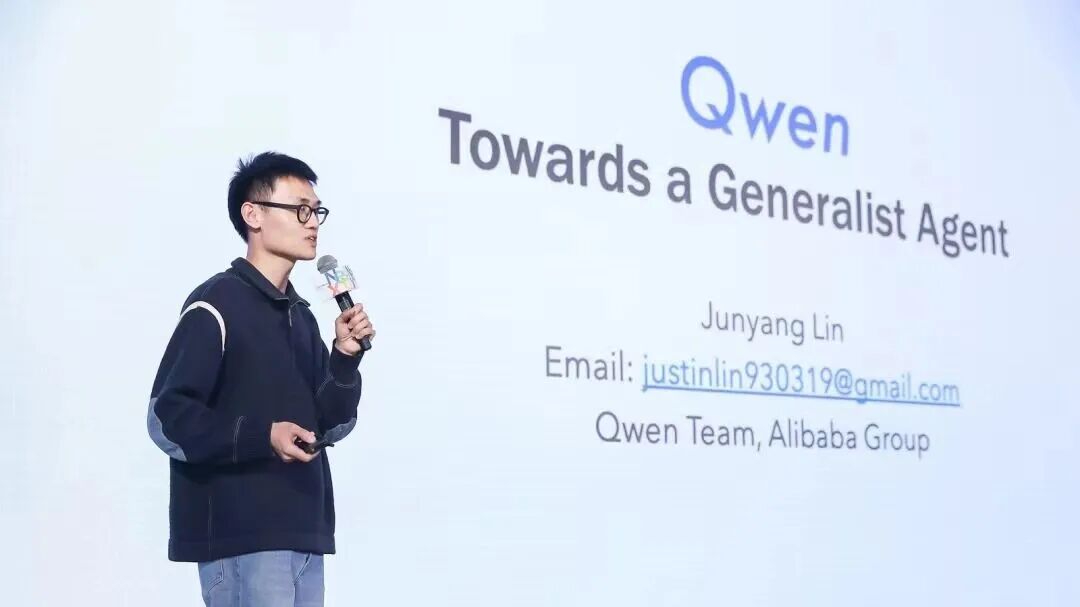
Lin Junyang, the technical leader of Tongyi Qianwen at Alibaba, focused on embodied intelligence and proposed to build an "all - around intelligent agent." He did not shy away from industry controversies and raised the question, "Manus is indeed very successful, but whether re - packaging existing technologies is the future is also a topic," implying that the industry needs to break away from homogeneous competition and find real technological innovation points. Regarding the global competitiveness of Chinese AI, he gave a rather cautious judgment: "In the next 3 - 5 years, the probability that Chinese teams can achieve global leadership is about 20%, which is already a very optimistic estimate." Node AI believes that behind Lin Junyang's caution is a sober understanding of the essence of the industry - the core of AGI competition is the competition of ecosystems and underlying architectures, rather than the replication of a single product. If Chinese teams can form differential advantages in fields such as distributed intelligence and scenario - based adaptation, they are expected to narrow the gap with the global leading level.
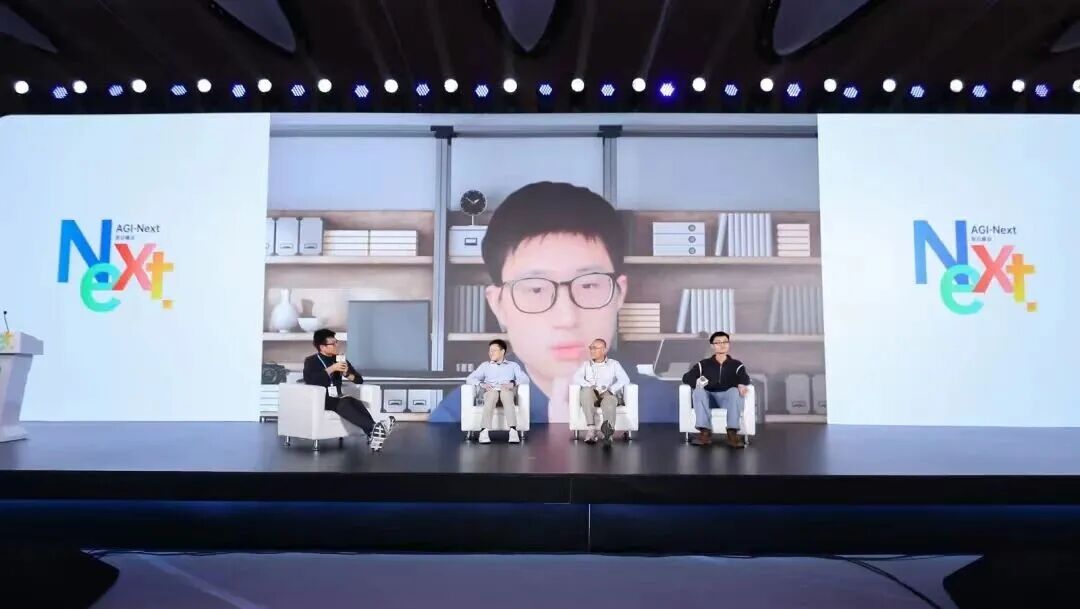
Yao Shunyu, who just took up the position of the Chief AI Scientist at Tencent, brought unique insights from the perspective of a "returnee from Silicon Valley." This was his first public appearance after leaving OpenAI and DeepMind to join Tencent. He was remotely connected, and was jokingly said to have a "huge face on the screen" at the scene. His core view is that the AI industry is experiencing an obvious split: the vertical integration and the stratified model application models are going their own ways, and model companies may not be suitable for doing applications. Node AI believes that Yao Shunyu's "stratification theory" is highly consistent with the ecological logic of distributed AI - in the future, it will not be a single "unified" super - model monopolizing the market, but a collaborative pattern of "core nodes + edge nodes." Models at different levels will perform their respective duties, ensuring the leading position of core capabilities and the flexibility of scenario applications.
02 Unveiling the Real Ecosystem of the AI Industry
The 70 - minute round - table discussion in the second half of the summit was like a "truth - telling session." Four core guests engaged in fierce discussions around four major topics: model differentiation, paradigm shift, Agent implementation, and global competition, with their viewpoints colliding and sparking ideas.
On the issue of model differentiation, Yao Shunyu's "stratification theory" was generally recognized. Everyone agreed that in the future, there will not be only a single "unified" super - model, but a pattern where "top - notch models serve core needs, and lightweight models cover mass scenarios" will emerge. Node AI believes that this differentiation trend provides a broad space for distributed intelligence - through the collaborative linkage of cloud, edge, and end nodes, the core capabilities of top - notch models can reach various scenarios through lightweight nodes, which not only reduces the application threshold but also enables efficient resource allocation. This is exactly the core advantage of the node - based architecture.
Regarding the next - generation technology paradigm, although the guests described different paths, their core directions were highly consistent. Tang Jie's "dream - capable machine," Yang Zhilin's "energy - to - intelligence conversion," Lin Junyang's "all - around intelligent agent," and Yao Shunyu's "new paradigm of autonomous learning" all point to the same goal: to enable AI to get rid of excessive dependence on human data and have the capabilities of autonomous learning, autonomous decision - making, and autonomous execution. Node AI believes that the realization of this goal depends on the support of a distributed architecture - multiple intelligent nodes complete knowledge exploration, task execution, and error correction through collaboration, forming a collaborative evolution mechanism similar to human society, which is more efficient and robust than the closed - door learning of a single model.
In terms of Agent commercial implementation, the guests reached a "pragmatic consensus." They believe that the current Agent is still in a stage where "the ideal is beautiful, but the reality is harsh." Although the technological prospects are broad, large - scale implementation still faces challenges such as scenario adaptation and effect verification. In the short term, Agents are more likely to make breakthroughs in professional fields first, such as programming and scientific research assistance, which are highly verifiable scenarios. Based on distributed technology practices, Node AI believes that the key to Agent implementation lies in "fragmented scenario adaptation." By decomposing complex tasks into collaborative tasks of multiple nodes, it can not only reduce the ability requirements of a single Agent but also improve the reliability of task execution. This may become the "breakthrough path" for Agent commercialization.
On the sensitive topic of the Sino - US AI gap, the scene did not avoid or exaggerate it. Based on his dual R & D experiences in China and the United States, Yao Shunyu emphasized that both sides have their own advantages: the United States leads in basic research and ecosystem construction, while China is faster in application implementation and scenario innovation. Although Lin Junyang's 20% probability of leadership seems conservative, it also reflects the industry's rational understanding of the gap. Node AI believes that the Sino - US AI gap is essentially a difference in the paths of "basic research" and "application innovation." The advantage of Chinese teams lies in the large - scale scenario base and rapid iteration ability. If distributed intelligence can be used as a link to transform the scenario data advantage into underlying technological innovation, it is expected to achieve a leap - forward development of "application feeding back basic research."
03 What Does This Summit Tell Us?
Say Goodbye to Hype and Enter the Deep - water Zone
The greatest significance of this academic - oriented summit is to make the industry return from "chasing concepts" to "the essence of technology." In the past few years, the AI industry has been filled with gimmicks such as "a certain model has over a trillion parameters" and "dialogue ability surpasses humans." However, in this summit, almost no one mentioned the parameter scale. Instead, they focused on underlying issues such as "causal reasoning" and "autonomous learning." Node AI believes that this marks that the AI industry has officially bid farewell to the first half of the wild - growth stage and entered the deep - water zone where core technologies and real capabilities are competing. Innovations in underlying architectures such as distributed intelligence and interpretable AI will become the core tracks of industry competition. Enterprises that rely on "re - packaging" and "hype" will gradually be eliminated, and teams with real technological accumulations will stand out.
In the Era of Differentiation, Finding the Right Position is the Key
Yao Shunyu's "application stratification" and Lin Junyang's "20% probability" are actually a wake - up call for enterprises: not all companies need to develop top - notch large models. For large enterprises, they can focus on basic research and build core technological barriers; for small and medium - sized enterprises, instead of following the trend to develop models, they can deeply cultivate vertical scenarios and make AI applications in a certain field perfect. Node AI suggests that small and medium - sized enterprises can focus on the edge - node applications of distributed AI. By focusing on specific industries or scenarios, they can create lightweight and low - cost intelligent solutions, which not only avoid direct competition with giants but also form irreplaceable advantages in niche markets. Just like in the e - commerce industry, there are comprehensive platforms like Taobao and vertical e - commerce platforms focusing on niche fields. The AI industry will also present a "diverse" ecosystem in the future.

AI is Getting Closer to Life, and Changes are Quietly Happening
The guests' sharing reveals a clear signal: AI is moving from the "laboratory" to the "ordinary people's homes." The efficiency revolution in the To B field has already taken place, and in the next few years, changes in the To C scenario will also accelerate. For example, AI may no longer be just a chat tool but an "all - around assistant" that can help you process work documents, plan travel itineraries, and even assist children with learning. Node AI believes that the development of distributed intelligence will make the penetration of AI more gentle and in - depth - intelligent functions will be embedded in various daily devices, providing seamless services through node collaboration. This will neither cause panic about "super AI" nor effectively improve work and life efficiency. However, this does not mean a crisis of unemployment. Just as calculators did not replace accountants, AI mainly liberates repetitive labor and allows people to focus on fields such as creativity and emotions that machines cannot replace.
Not Only Face Up to the Gap but Also Keep Confidence
Although Lin Junyang's "20% optimistic estimate" does not sound very inspiring, it precisely reflects the sobriety of Chinese AI researchers. Acknowledging the gap is not a sign of weakness but to find the right areas to focus on. China has the world's largest Internet user group and the richest application scenarios, which are the best "testing grounds" for AI technology. Node AI believes that the breakthrough path for Chinese AI does not lie in replicating the "super - model" route of foreign countries but in leveraging the synergistic effect of scenario advantages and distributed architectures. By collecting real - world scenario data through a large number of edge nodes and feeding it back to the core model for iterative optimization, a positive cycle of "scenario - data - technology" can be formed. Just as mobile payment was first popularized in China, AI applications may also achieve leap - forward development in China. As long as we adhere to long - termism and focus on underlying architecture innovation, Chinese AI has every opportunity to occupy an important position on the global stage.
Final Words
This AGI Next Summit did not provide the ultimate answer to AGI but pointed out a clear direction for the industry. In the AI battlefield in 2026, it is no longer a competition of parameters or a hype of concepts but a competition of core technologies and in - depth cultivation of application scenarios. Node AI firmly believes that distributed intelligence will play a crucial role in this transformation. Through the core advantages of node collaboration, scenario adaptation, and efficient iteration, it will promote AGI from the laboratory to the real world. For ordinary people, this technological transformation will not bring anxiety but a more efficient work style and a more convenient life experience; for the Chinese AI industry, this is both a challenge and a historical opportunity to overtake on the curve. As Tang Jie said in his speech, "AGI is not a short - term business but a cause worthy of a lifetime of dedication." Only by adhering to long - termism can we achieve stable and far - reaching development.
This article is from the WeChat official account "Node AI Insights", author: Node AI. Republished by 36Kr with permission.