Finally sitting down to eat, AI glasses at a crossroads at CES: Independence matters, but intelligent agents matter more
It's still the familiar CES.
This year, CES 2026 is as bustling as ever. The booths of many brands are even larger, and their slogans are louder. Almost all the products on - site have added the label of "AI". After walking around the exhibition halls in Las Vegas for a few days, Lei Technology has more clearly felt a change: AI is not just a single - point function, nor is it just a competition of computing power or models. Instead, it is seeking new terminal forms and trying to redefine the entrance between people and information.

Image source: Lei Technology
Beyond mobile phones, PCs, and cars, various smart wearable devices have been pushed to a more prominent position. Rokid, the benchmark of AI + AR glasses and also displayable AI glasses, is now sharing the exhibition area with brands like Hisense and TCL. Judging from the specifications, it has reached the same level, giving the impression that AI glasses can "dine at the same table" as smart home appliances.
Lei Technology also observed that there were always long queues in front of the Rokid booth. Even on the closing day when the number of visitors was the smallest, there were still a large number of on - site audiences queuing up to experience the Rokid AI glasses and the newly launched Rokid AI Glasses Style for the overseas market.
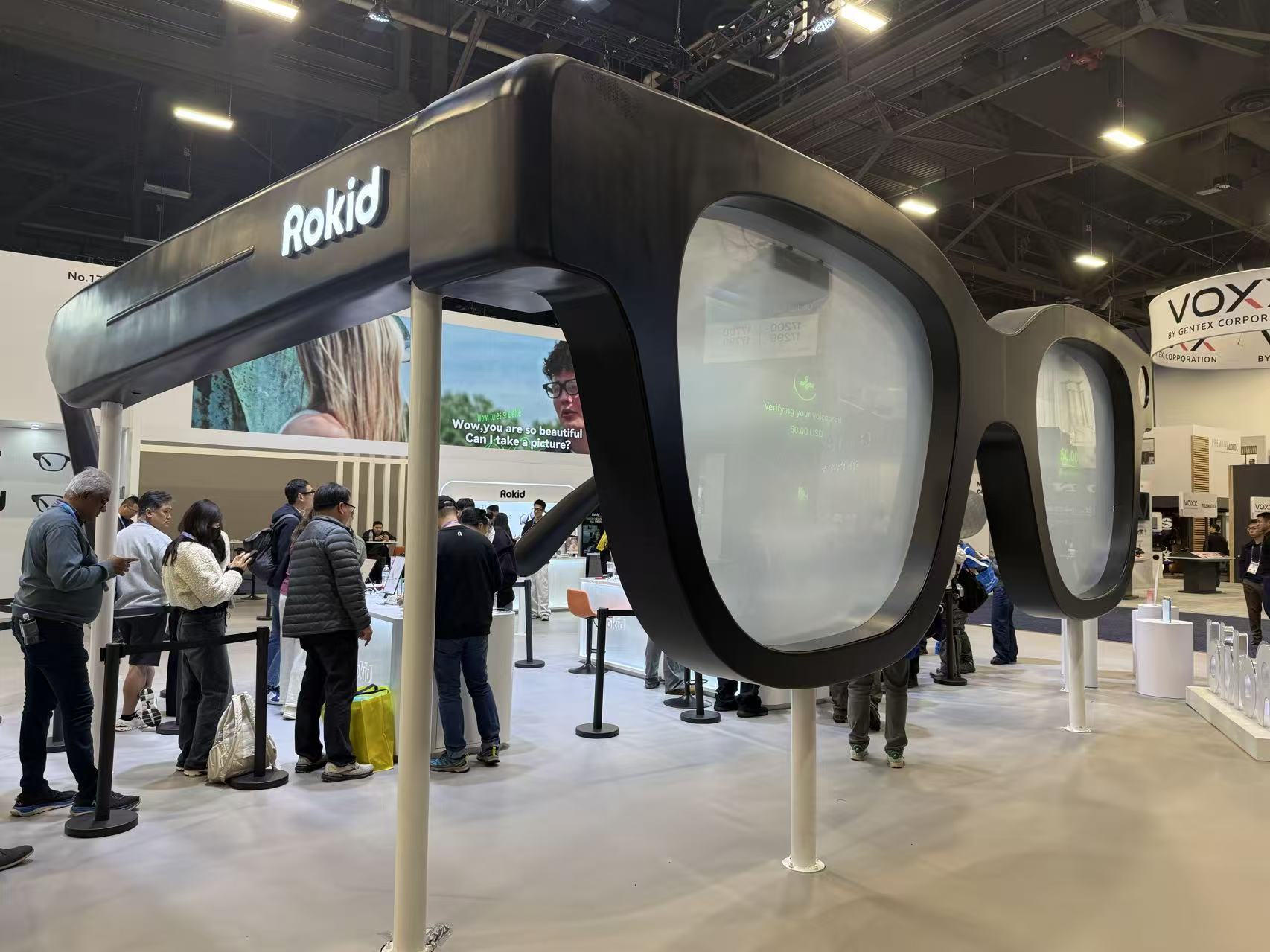
On the closing day of CES, when the venue was about to be cleared, the Rokid booth was still crowded with queuing users. Image source: Lei Technology
Consumers are highly interested, and it seems that AI glasses really have a future. As AI evolves from "generating content" to "continuous companionship" and "instant decision - making", the closer a device is to people, the higher its value. Against this backdrop, it is not surprising that "AI glasses", which can directly replace traditional glasses, have become one of the most discussed categories at CES 2026.
Compared with a year ago, the differentiation of AI glasses continues. However, the disadvantages of AI audio glasses are becoming more and more obvious, while AI shooting glasses, AI display glasses, and all - in - one AI glasses like Rokid AI glasses are all being iteratively optimized. It is also worth mentioning that this year's AI glasses have significantly less conceptual showmanship and more consideration for practicality and user experience.
More importantly, AI glasses, regarded by many as the next - generation personal computing platform, are trying to operate independently of mobile phones. Although the attempts at CES 2026 are still in their infancy, judging from the remarks of Qualcomm CEO Cristiano Amon, this trend is likely to be the main development direction of AI glasses in the next few years.
Independent operation is the key for AI to become the next - generation personal computing platform
Although most AI glasses have independent computing power and are equipped with the Snapdragon AR1 Gen 1 platform, it is obvious that AI glasses still rely on the computing power of mobile phones in many cases. They connect to services, cloud models, or intelligent agents through the mobile phone's network connection. It is difficult to regard them as completely independent personal devices.
However, this default setting is now beginning to change. The most obvious signal is the Thunderbird X3 Pro "Project eSIM" launched at CES 2026.
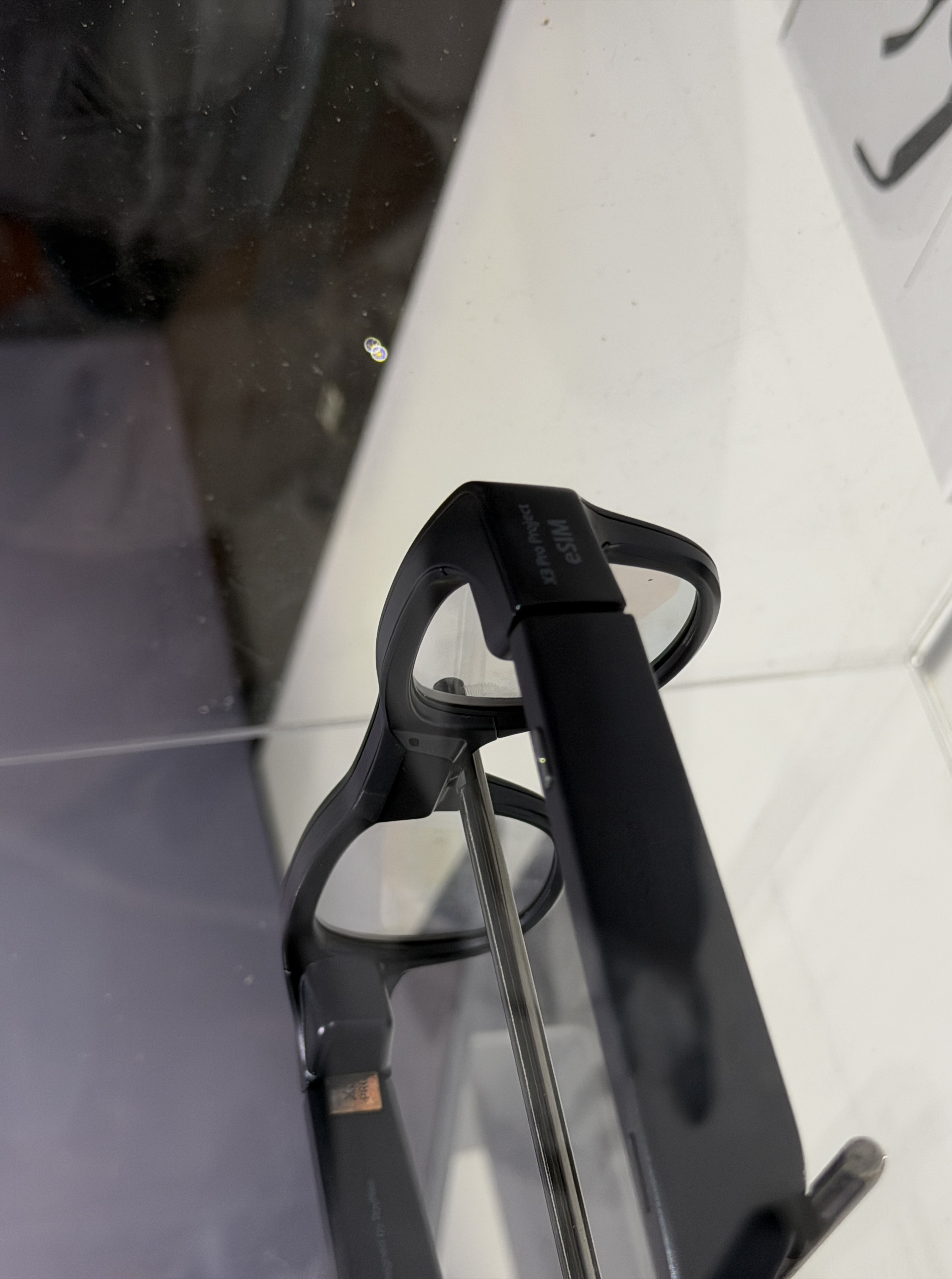
Image source: Lei Technology
The Thunderbird X3 Pro is a full - color AI + AR glasses launched in May last year. As the name suggests, the Thunderbird X3 Pro Project eSIM has added an eSIM communication module, allowing the glasses to operate independently of the mobile phone - it can directly connect to the network independently to use various functions, rather than relying on the mobile phone's network connection through Bluetooth.
However, the Thunderbird X series is still a product line focused on technological exploration. In terms of appearance design and weight, the X3 Pro is not the kind of AI glasses that mainstream consumers "fancy". It is relatively bulky and is equipped with dual cameras in the middle. The "Project" also indicates the exploratory nature of the current eSIM solution.
But this trend is inevitable. At the Lenovo Tech World Innovation Technology Conference @CES, Qualcomm President and CEO Cristiano Amon mentioned the continuous emergence of new personal AI devices, mainly smart wearable devices. He also revealed that Qualcomm is trying to achieve WiFi connection capabilities at the same power consumption level as Bluetooth:
"For example, we are achieving a breakthrough capability: running WiFi at the power consumption level of Bluetooth. In this way, even when users are away from their mobile phones, they can obtain an IP address and maintain a continuous connection with intelligent agents through the cellular network."

Image source: Lenovo
Once WiFi can operate at a power consumption curve similar to that of Bluetooth, the situation will change fundamentally. This means that personal AI devices like AI glasses will for the first time have the practical possibility of being independently and continuously online. Mobile phones will no longer be a necessary transit station but just an optional collaborative device.
"This is an exciting opportunity." As Amon said, once Qualcomm successfully achieves this, from various AI pendants, AI rings, AI earphones to AI glasses, although they still rely on WiFi for networking, it is undoubtedly an important step compared to the current situation of relying on Bluetooth to connect to the mobile phone and then to the network.
Moreover, compared with the problems of weight, volume, and power consumption caused by the eSIM communication module, Qualcomm's solution, although not a one - step solution, is more feasible. This is very important for a new product category that evolves independently of the smartphone ecosystem.
However, it is not just the "independence" of networking capabilities that matters. Battery life is also the key for AI glasses to truly break away from mobile phones and become independent. In fact, at CES 2026, we can also see a large number of attempts in this regard. For example, the Rokid AI glasses use a dual - core architecture and system optimization in hardware and software to reduce overall power consumption, which is also the overall trend in the industry.
There are also more straightforward ways. For example, the magnetic capsule battery designed for the Rokid AI glasses, and from the Yingmu GO3 to the Quark S1, we can also see that more AI glasses adopt a replaceable battery architecture design. These designs solve the battery life problem of AI glasses to a certain extent through a more convenient power - replenishment/replacement experience, and also explore and verify the battery life for the "independence" of AI glasses.

After all, without power, AI glasses won't become as useless as a "brick" like a mobile phone, but at most, they are just a pair of ordinary glasses.
Of course, this does not mean that AI glasses have entered the era of "mobile - phone independence". In the next few years, the mobile phone will still be the most important personal AI device. Maintaining collaboration and linkage with the mobile phone is inevitable. At the same time, in the process of evolving into the next - generation personal computing platform, the ability to operate independently is also inevitable.
From "novelty" to "daily use", the key lies in how to do it
In the past year, the popularity of AI glasses has been self - evident. This year, CES has continued last year's enthusiasm, with many new players joining, such as tech giants like Alibaba Quark and Lenovo, and cross - border players like XGIMI.
If the independence from networking to battery life is about whether AI glasses can break away from mobile phones, then at CES 2026, another obvious change is that more and more manufacturers are starting to face a more realistic challenge directly: to make more people willing to spend real money to buy them and wear them on their faces every day.
The principle is simple: make AI glasses "daily - usable" and "practical", but it is not easy to achieve. Different manufacturers have different approaches and levels of determination.
The newly launched Rokid AI Glasses Style overseas (the domestic version is BOLON AI Smart Glasses) has chosen a non - display product route, controlling the weight at 38.5g and optimizing the wearing and battery - life experience. On the other hand, Rokid has also been refining the product experience for high - frequency scenarios. For example, the teleprompter function, which made AI glasses popular last year, has been upgraded from manual page - turning to intelligent voice - following scrolling through software iterations.
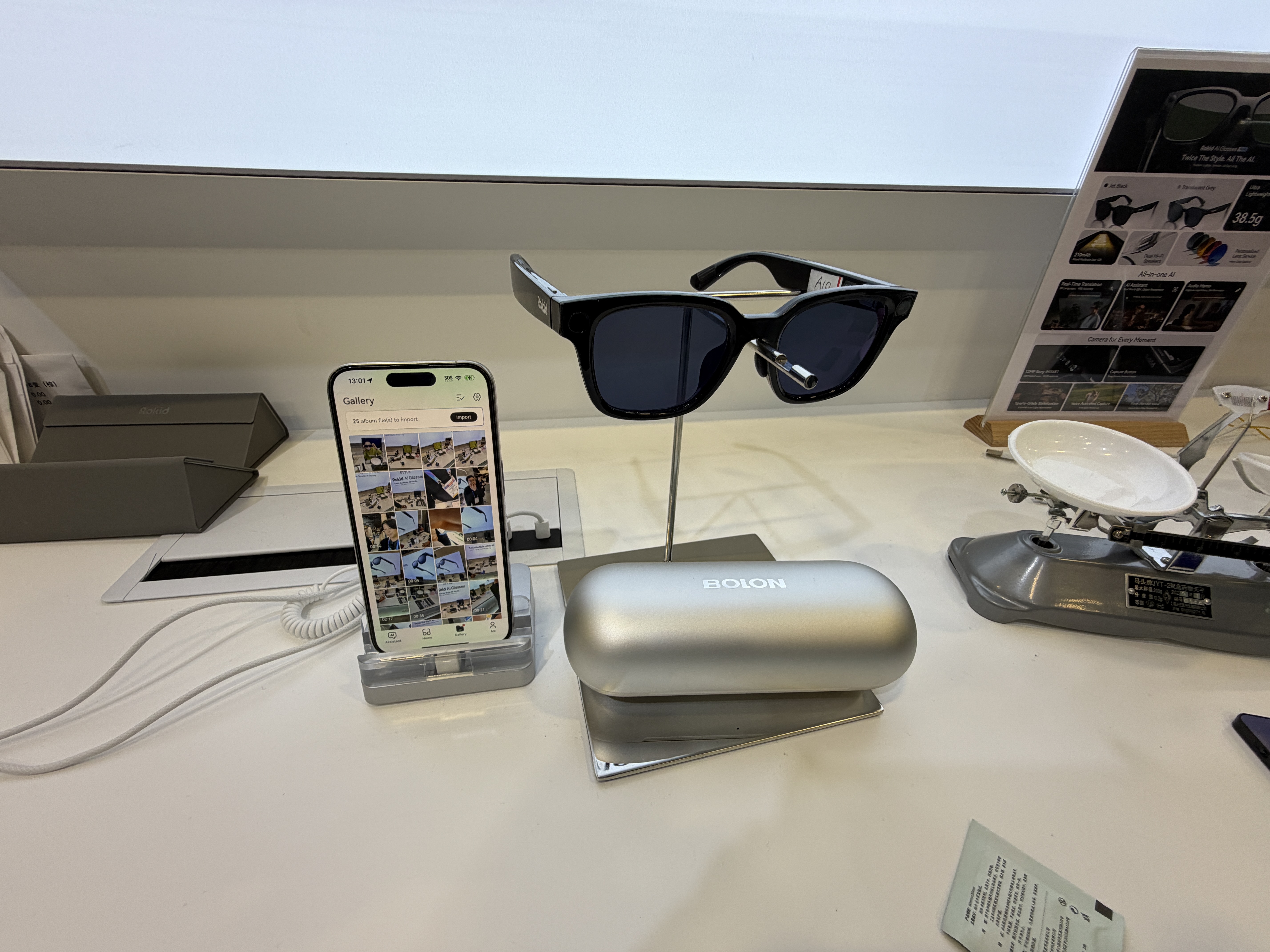
Image source: Lei Technology
The sports technology brand BleeqUp Super Shadow Engine under the brand Tribute to the Unknown also adopts a similar approach. Different from other mainstream AI glasses, it focuses on sports scenarios from product definition to design.
Moreover, compared with traditional optical glasses, cycling glasses, which are larger and heavier, have more room for improvement. At the same time, BleeqUp Super Shadow Engine has also made many "practical" designs and functions for sports scenarios, such as automatic recognition of sports highlights, AI intelligent video editing, and evidence storage for safety scenarios. These targeted functions reduce users' operation costs and liberate their attention through the core Sport AI system.
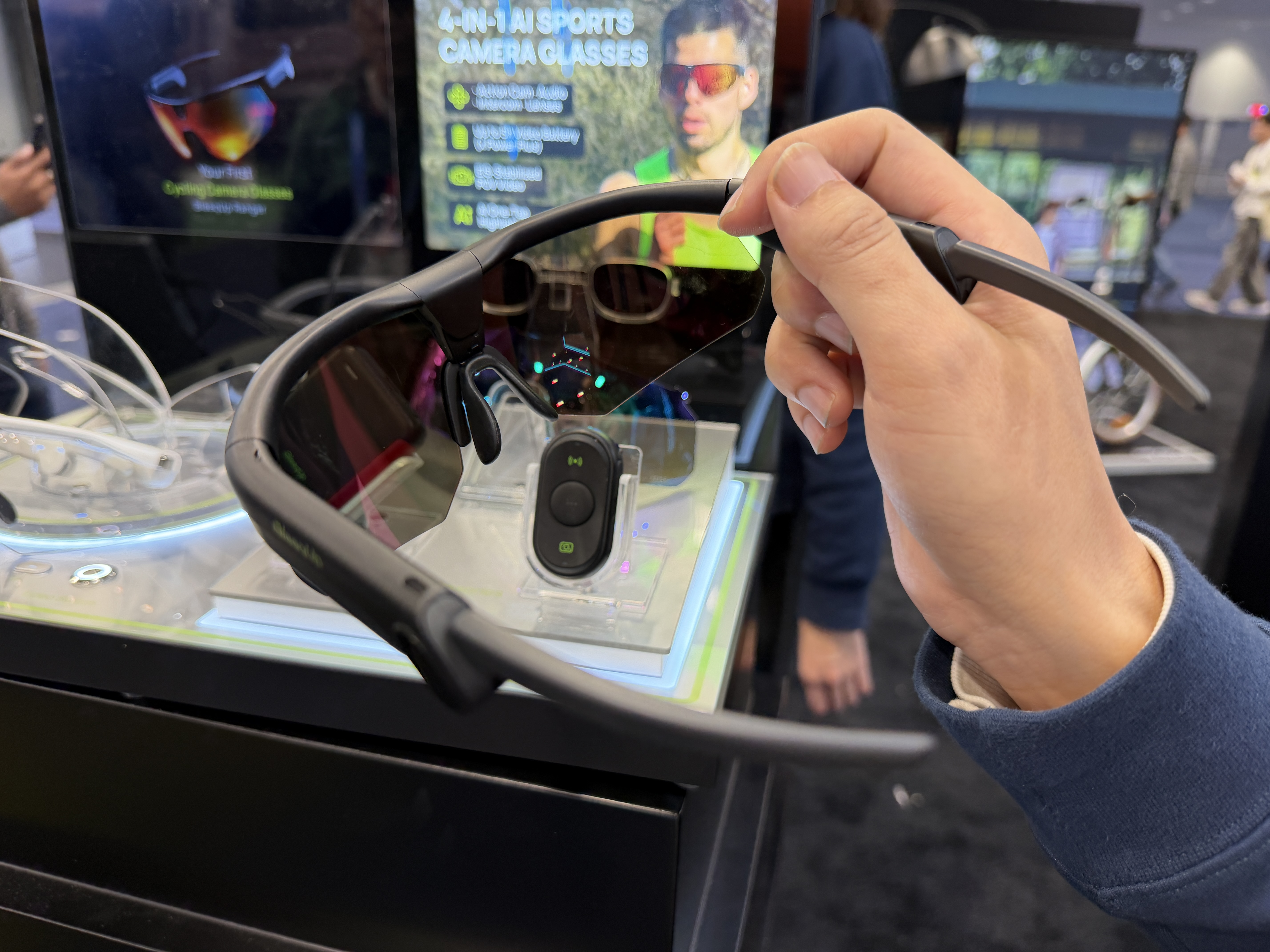
Image source: Lei Technology
Wu Dezhou, the founder of BleeqUp Super Shadow Engine, once said in an interview, "The core of our competition is to liberate users' attention and achieve a smooth closed - loop experience in real - life sports scenarios."
There are many such examples. Lei Technology has in - depth discussions in the previous report "One Year of the Hundred - Glasses War: What Exactly Does Essilor and Tim See in Rokid?" You can search for "Lei Technology AI Glasses" across the web to view it, so we won't go into details here. It is worth mentioning that in addition to the improvement of basic functions of AI glasses, such as optimizing the speed and accuracy of the translation function and adding an overview mode to navigation, the upgrade of glasses payment also enriches the AI glasses experience and further reduces friction in actual use scenarios.
The intelligent agent store is a key step for AI glasses to become "all - purpose"
However, for the AI glasses industry, the most important thing is the recently emerged intelligent agent store. On the one hand, it brings the "highly automated" experience of intelligent agents to AI glasses. On the other hand, it allows the question of "what AI glasses can do" to be defined by developers with infinite creativity, rather than being pre - designed by AI glasses manufacturers. Just as the iPhone would not be the iPhone without the App Store, what AI glasses need is not an App based on GUI interaction, but an intelligent agent store.
For example, Rokid's multi - modal AI assistant "Rokid" can directly check high - speed train schedules and calculate calories with just one sentence. Another example is the Quark S1 AI glasses, which participated in CES for the first time this year. It launched its first OTA update earlier, adding functions such as recording minutes and memos, and optimizing basic capabilities and functions such as multi - intent understanding and execution of the large model and translation.
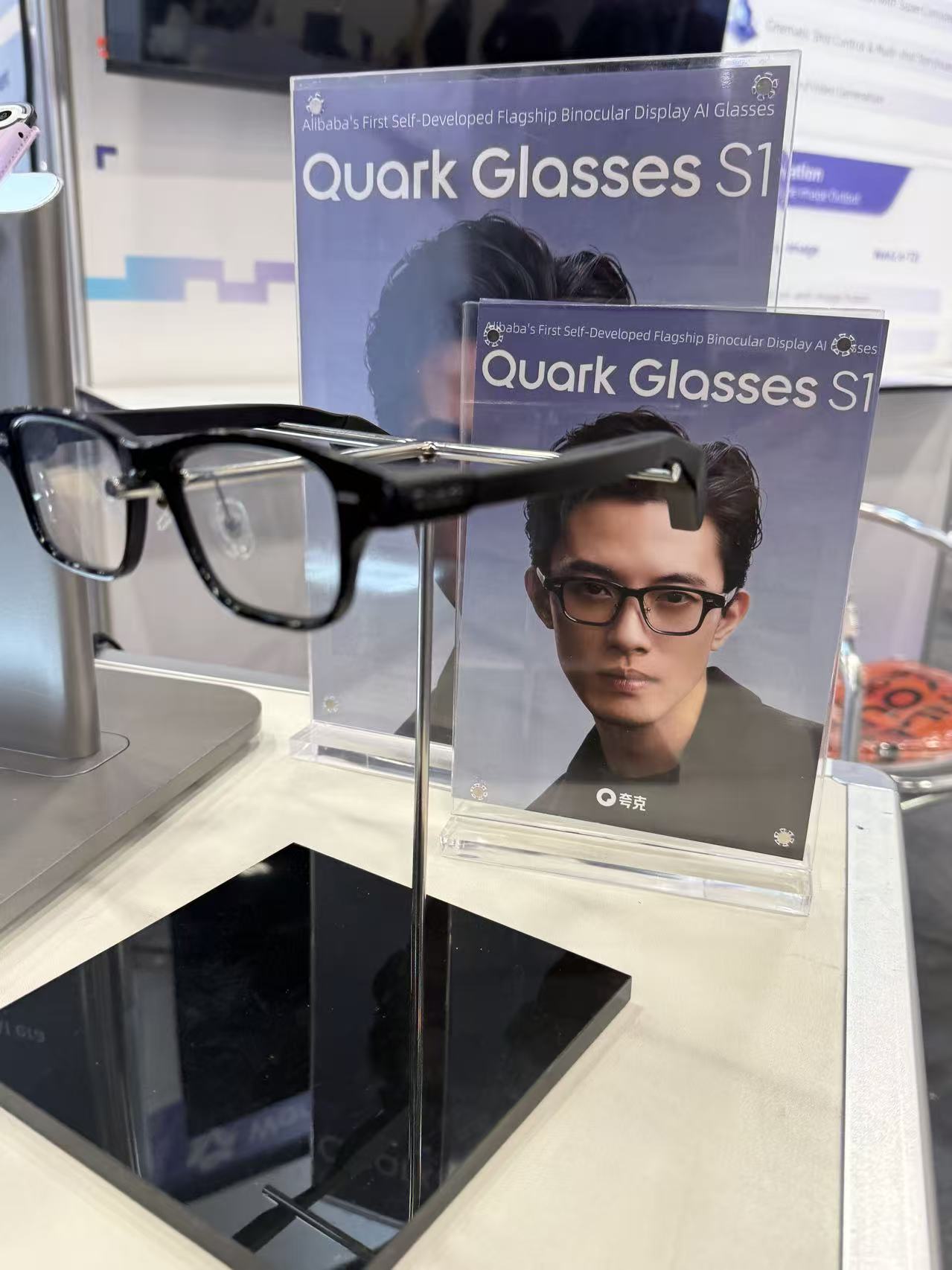
(Image source: On - site shooting by the Lei Technology CES reporting team)
Hardware is naturally important, but software is fundamental. We can even boldly say that the "experience" of AI glasses in the future will largely depend on the quality and speed of software iteration by manufacturers.
Of course, the lightweight wearing experience is still crucial. At CES 2026, MemoMind, a new brand under the projection manufacturer XGIMI, launched two models of AI glasses with displays.
Among them, the Memo One uses a binocular display solution and is expected to be released in the second quarter of this year. The Memo Air Display uses a monocular display solution. What's more notable is that it uses aluminum - magnesium alloy to reduce the weight to 28.9g, making it one of the lightest AI glasses with displays currently available. However, the specific release time has not been announced.
It should be noted that having a display does not mean achieving "full - functionality" like the Rokid AI glasses. In fact, compared with the Rokid AI glasses, which can maximize the advantages of multi - modal AI with both a display and a camera, the two models of AI glasses with displays from XGIMI are not equipped with cameras, so they cannot take first - person photos, record videos, or perform AI recognition. The Even G2, which was launched in China at the end of last year, also appeared at CES, using the same product form of having a display but no camera.
Frame design, weight, and wearing experience are certainly key factors influencing product decisions. However, whether sacrificing the core first - person photo and video capabilities of current AI glasses to achieve a "lighter weight" is a viable approach still needs market verification.
Seeking independence from mobile phones while refining the experience for better usability
On the one hand, the exploration of independent networking, low - power connection