Domestic robots gather at CES
In less than ten minutes, the booth of Accelerated Evolution Company, which was only about ten square meters in size, welcomed three groups of different inquirers. Potential customers were concerned about the uses and pricing of the robots and also tried to learn about the possibility of becoming an overseas agent.
At this year's CES, if you stopped by any of the popular Chinese robot booths, you would find that such situations were happening frequently.
The CES (Consumer Electronics Show), held annually in Las Vegas, USA, is becoming a must - pass checkpoint for Chinese embodied intelligence manufacturers' overseas expansion strategies. From nearly 10 Chinese robot companies with independent booths in 2025, the number has expanded to a Chinese robot legion of nearly 30 companies in 2026.
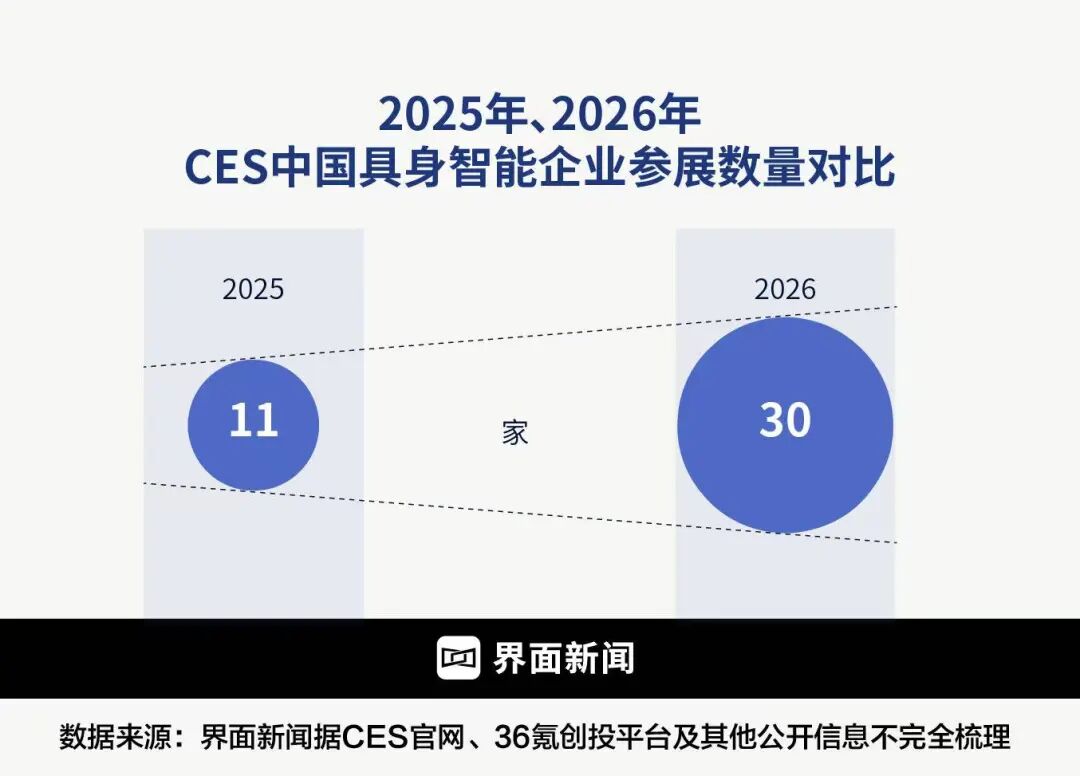
Data compilation: Zhou Mo; Chart drawing: He Miao
"A CES booth is like a global market counter," a team told Jiemian News. They booked the booth a year in advance and spent months on planning. Now it's time to check the results.
Since the rise of the Chinese embodied intelligence industry, to some extent, it has passed the most basic R & D stage and started to move towards commercialization in some aspects. Since 2025, orders and deliveries have become one of the most important competitive dimensions among enterprises. They need to prove their strength in this way and gain bargaining chips for financing.
The overseas market is an option not to be missed. On the one hand, the competition in the domestic market is becoming increasingly fierce. The founder of a company in the industrial chain told a Jiemian News reporter that he believes that in the supply of core components for Chinese embodied intelligence, from price to production, it has entered a state of "extremely intense competition".
On the other hand, the overseas expansion of Chinese manufacturing is considered to have a high chance of success. Elon Musk once mentioned at an earnings conference that he is worried about the global competition pattern of humanoid robots. Except for Tesla being in the first place, the second to tenth places on the list may all be Chinese companies.
The multi - day exhibition will undoubtedly bring a large number of inquiries, but the final number of orders will surely be closely watched by domestic industrial customers and investors. Because this figure will prove whether this is just another collective self - indulgence or the start of a real overseas feast.
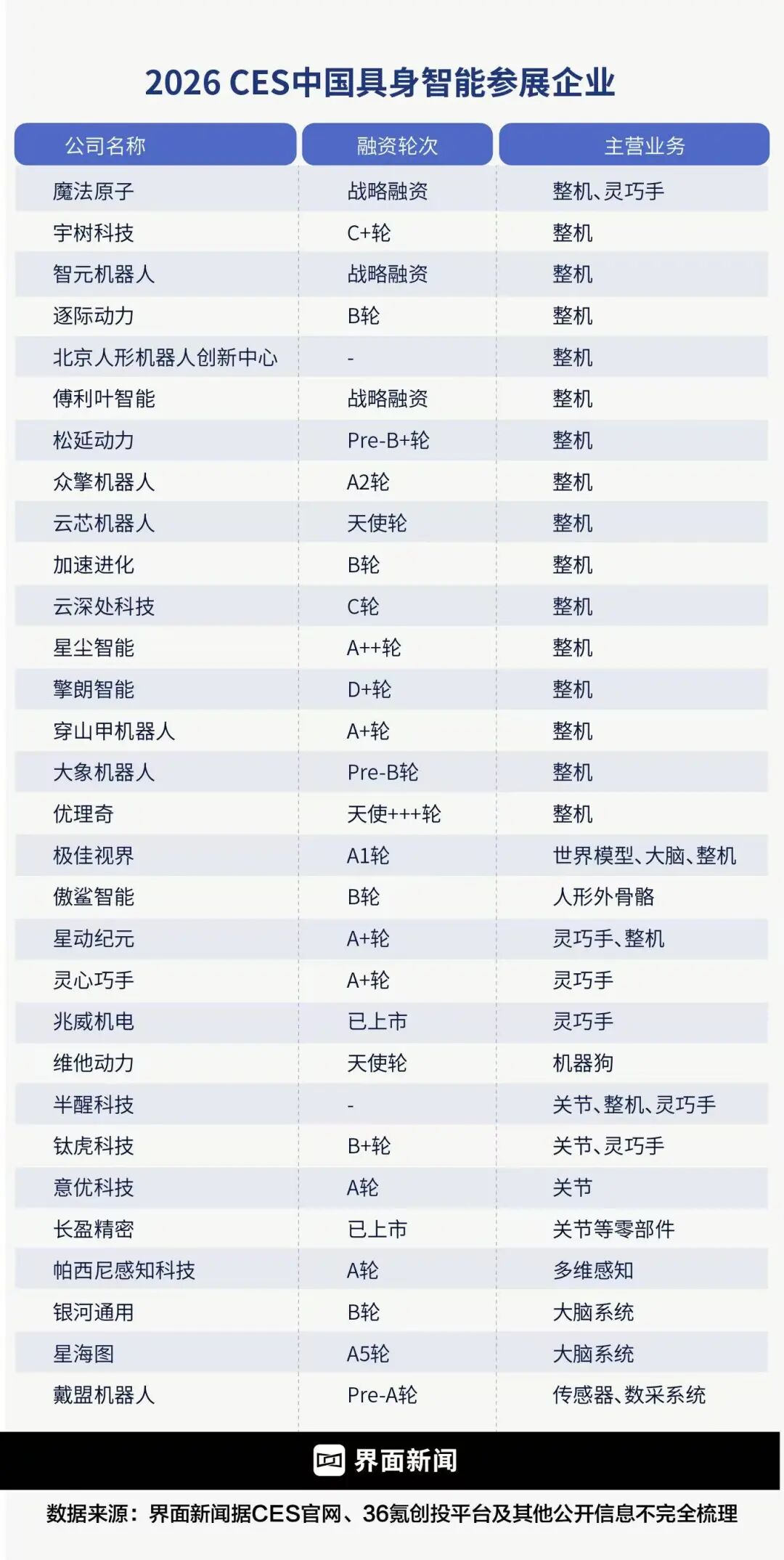
Data compilation: Zhou Mo; Chart drawing: He Miao
The Shining Moment of the Chinese Robot Legion
At 10:12 a.m. local time on January 6th, not long after the Las Vegas Convention Center in Nevada, USA, opened, the crowd outside the venue was still slowly queuing up to enter. Meanwhile, the first batch of visitors had gathered in the North Hall where a large number of robot companies were located.
People kept flocking to the booths of Chinese companies such as Unitree Robotics and Zhipu Robotics. Robots were almost the biggest highlight of CES in 2026, and Chinese enterprises were the main players in this field. The number of Chinese exhibitors even exceeded the total number of exhibitors from Japan, South Korea, Europe, and the United States in the same field.
According to incomplete statistics by Jiemian News, in addition to companies like Unitree Robotics, Zhongqing Robotics, and Taihu Technology, which had independent booths last year, companies that became independent exhibitors for the first time this year include Zhipu Robotics, Accelerated Evolution, Xinghaitu, Magic Atom, Xingdong Jiyuan, Lingxin Qiaoshou, Pudu Robotics, DeepRobotics, Fourier Intelligence, and Songyan Power. These companies basically cover the entire industrial chain from the robot's "brain", the whole machine, joints to dexterous hands.
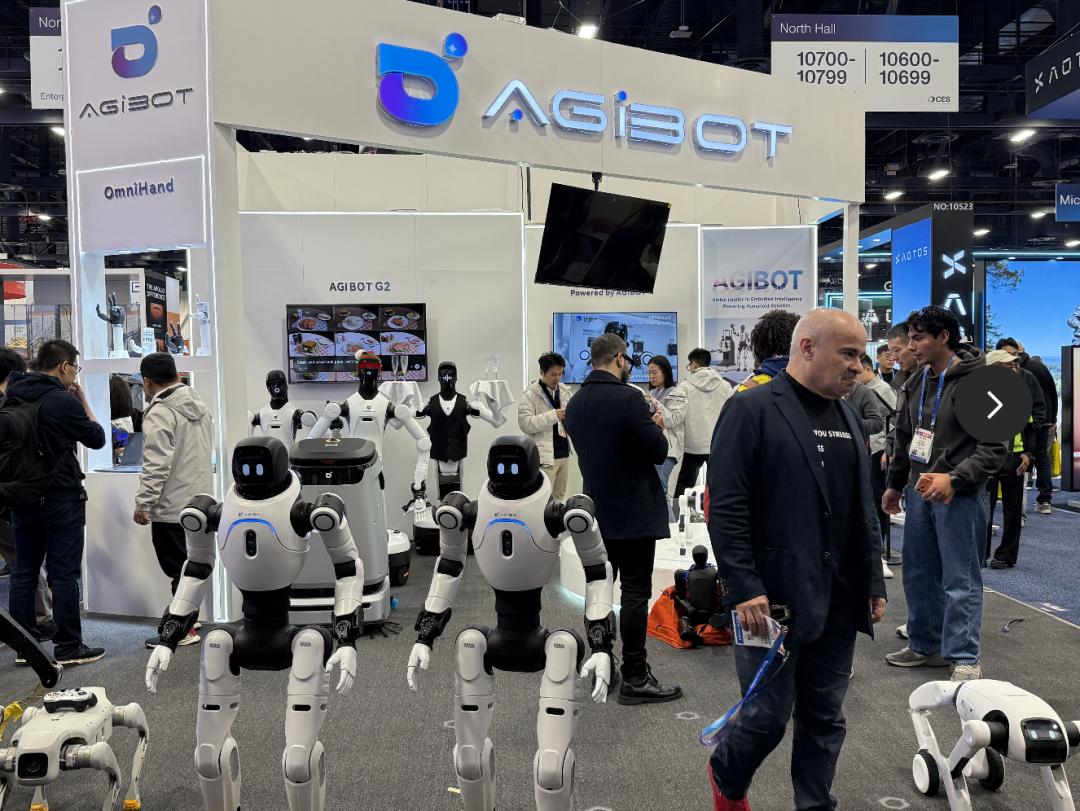
Zhipu Robotics' booth. Photo by: Wu Yangyu
Since it is a global market mainly targeting North America, Chinese manufacturers' competitors are all world - class. It is a must for them to show their best and grab as much attention as possible at this exhibition.
Some manufacturers focus on product display. Unitree Robotics presented its "traditional skill" of a robot boxing ring. Zhongqing Robotics performed Chinese martial arts and the "Eighth Set of National Radio Gymnastics" on - site. Zhipu Robotics brought a full range of products from humanoid robots, quadruped robots to dexterous hands, creating an impact in terms of product variety.
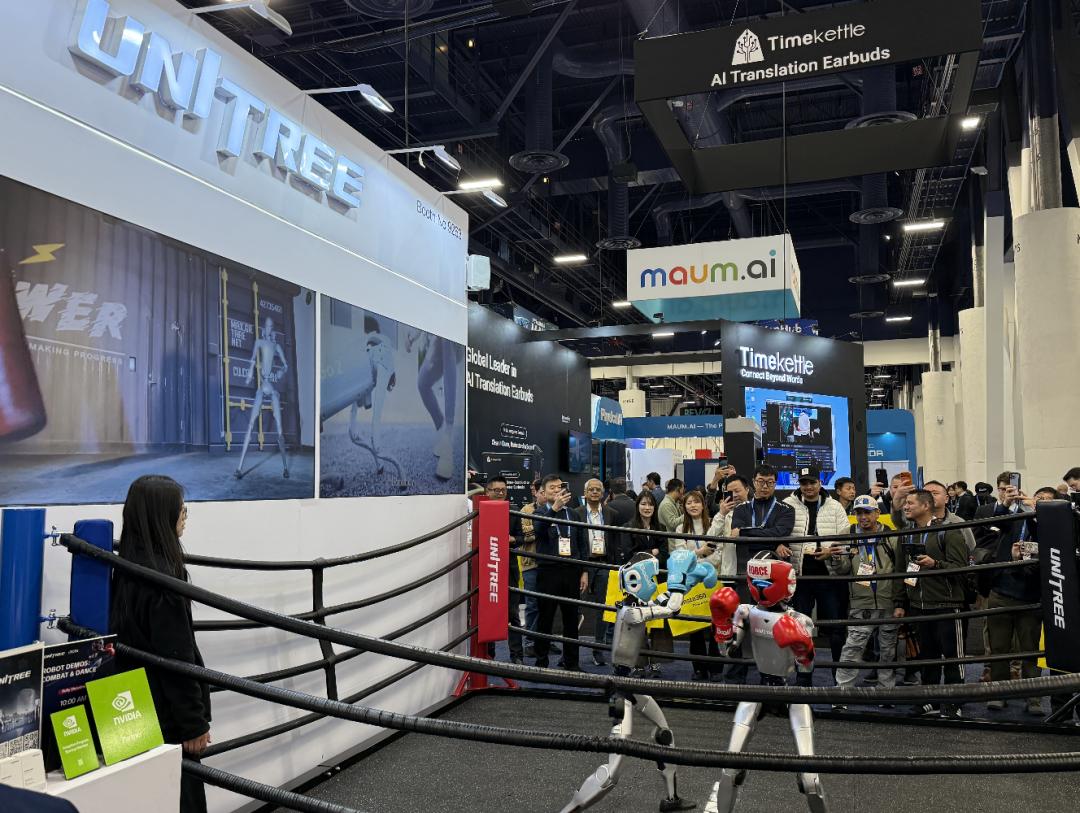
The boxing ring at Unitree's booth. Photo by: Wu Yangyu
Yao Maoqing, a partner and senior vice - president of Zhipu Robotics, said that bringing the full range of robot products to CES is to show that the company has built an entire embodied intelligence ecosystem, rather than just targeting a single task or specific scenario.
Judging from the length of time visitors stayed, this strategy was effective. Jiemian News noticed that once someone was interested in one of the robots, they would usually take the time to observe the others.
Accelerated Evolution brought more than 20 Booster K1 robots. They arranged more than a dozen of them in a matrix of 3 rows with 6 robots in each row, which had a great visual effect in the entire venue. Two other K1 robots performed a lion dance, making movements such as posing, shaking their heads, and fluffing their "fur", attracting a large number of European and American audiences to watch and interact.
A foreign manufacturer watched the robot lion dance performance for a long time and finally silently took all the business cards of the sales staff on the table.
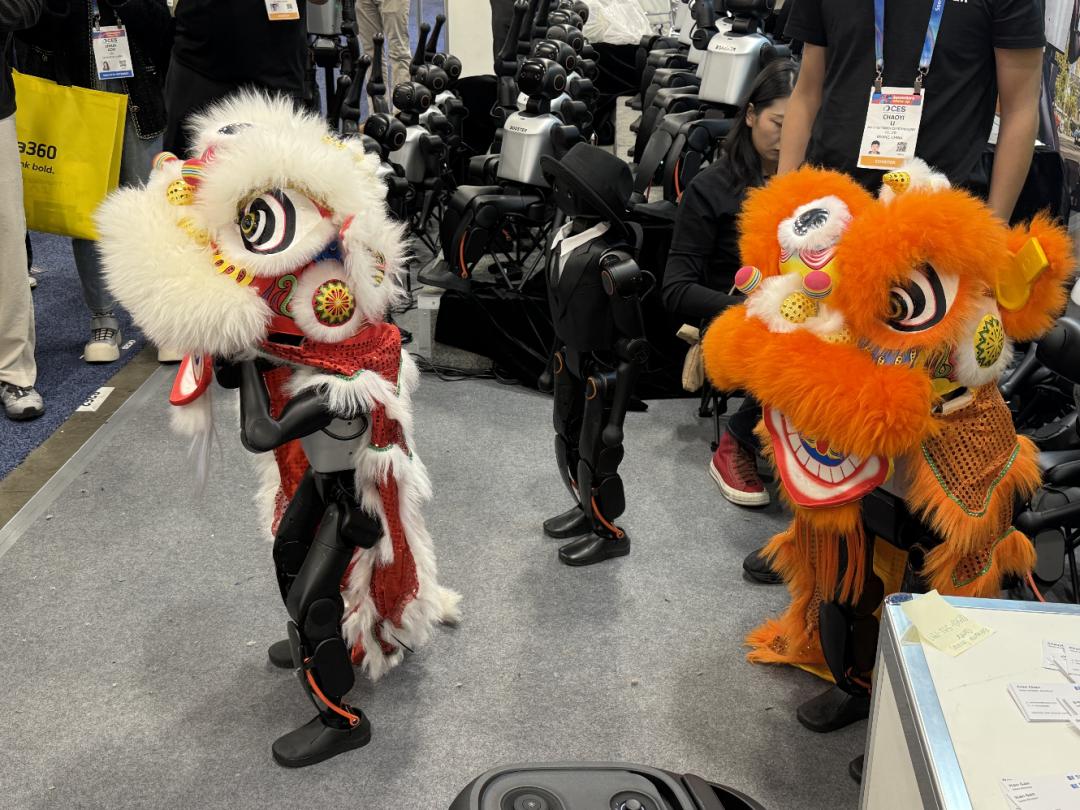
The lion dance at Accelerated Evolution's booth. Photo by: Wu Yangyu
However, some on - site exhibitors said that Chinese robot manufacturers had more gimmicks than creativity in their CES booth planning. They meant that most robots were presented in isolation, and the interaction was relatively weak.
Sharpa Robotics, a robot company from Singapore, had a different approach. In Las Vegas, the world's largest gambling city, they set up a demonstration scenario on a poker table. They could invite three human players, and the robot was responsible for dealing cards and advancing the game. Finally, it judged the winner by vision - this might be the most popular spot in the entire exhibition area.
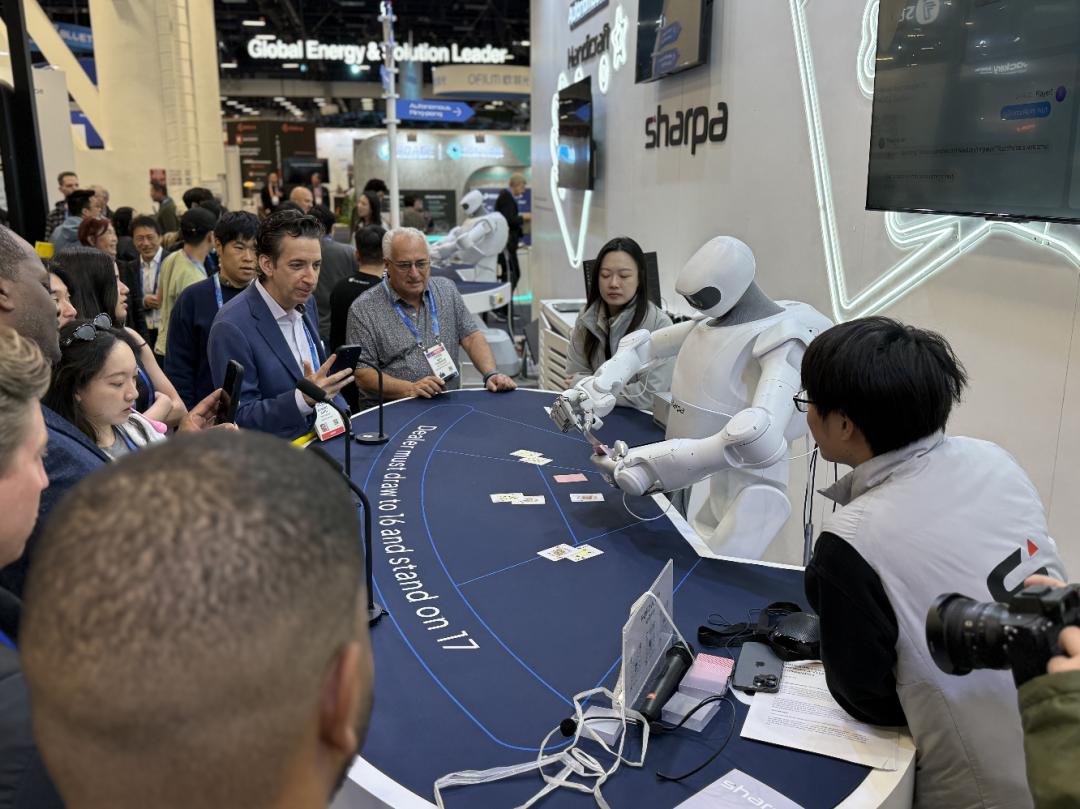
Sharpa robot dealing cards on - site. Photo by: Wu Yangyu
"The sense of participation is extremely strong," said a winning exhibitor who had just left the poker table.
All for Orders
The preparation work for CES is extremely complicated. An exhibitor said that they need to prepare half a year or even a year in advance. From material preparation, logistics, personnel travel to booth fees, it costs at least millions.
In fact, many Chinese embodied intelligence companies couldn't participate in the exhibition because they didn't have enough time to prepare in advance. "The R & D was too tight this year, and we didn't have time to prepare for customs clearance. We're very regretful now. We'll definitely sign up next year, no matter how much it costs," a startup robot company in Shenzhen told Jiemian News.
Even if a company finally gets the admission ticket, a good booth location has to be snatched. Cheng Hao, the founder of Accelerated Evolution, has a deep understanding of this. His company shared a large booth at CES with more than a dozen other companies under the Zhongguancun Science City last year, but the location was in the South Hall, where the popularity was relatively low. So he decided early this year to participate independently and booked a booth in the North Hall, which attracts more industrial attention.
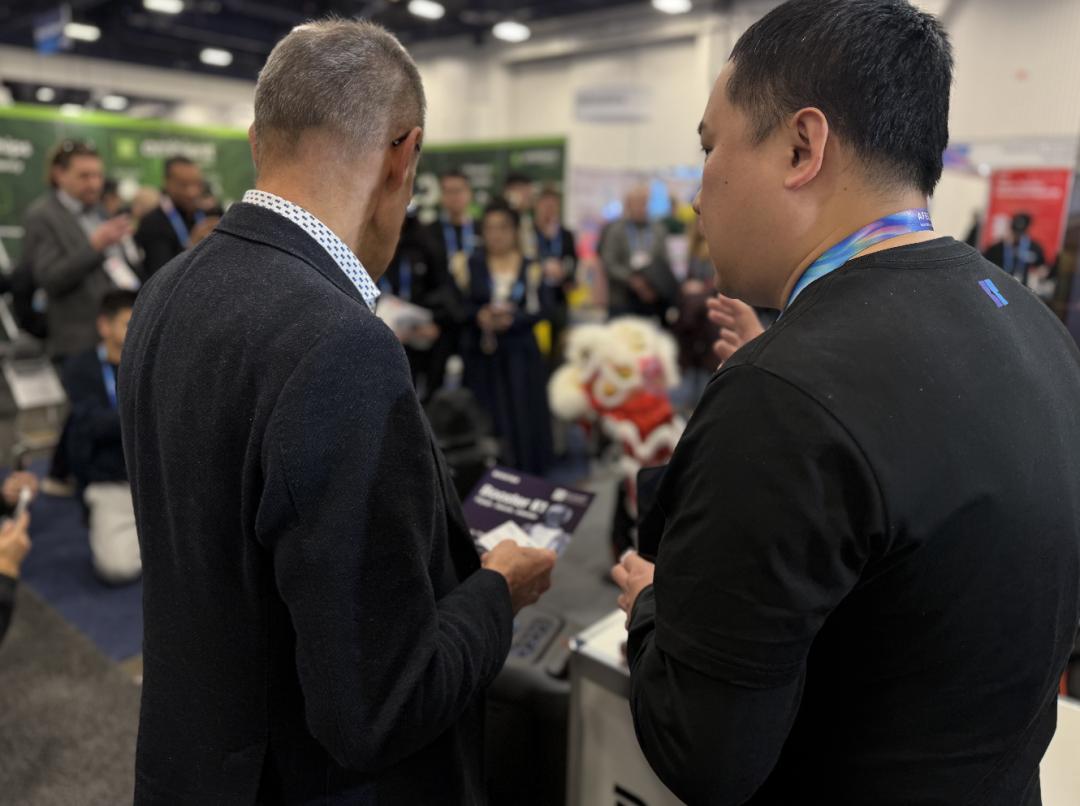
Cheng Hao, the founder of Accelerated Evolution, communicating with customers. Photo by: Wu Yangyu
Jiemian News learned that on the first day of the exhibition, the on - site sales volume of Accelerated Evolution's humanoid robot Booster K1 reached dozens of units.
A manufacturer that only managed to get a booth at the edge of the venue complained to Jiemian News, "Not getting a good location really affected the flow of people."
While Accelerated Evolution was grabbing a large number of orders, a marketing staff member of a Chinese dexterous hand manufacturer was quoting a price to a customer who inquired on - site: "We can give you a 30% discount. Eighty - eight thousand yuan with a 30% discount is the CES on - site exhibition price."
The customer was a startup AI company from the Silicon Valley in the United States, which was preparing its own data collection plan and asked many detailed questions such as the difficulty of data migration.
After answering all the questions one by one, the marketing staff member then said that even if the customer didn't place an order on - site, as long as they contacted the company later with the business card and mentioned that they met at the CES exhibition, the discount would still be valid.
The most core purpose for Chinese embodied intelligence manufacturers to participate in the exhibition urgently is to have their products tested in the global market.
"Our goal is very practical: to convince the market directly through products and technology. Our full - size humanoid robot Oli was just launched recently, and overseas customers didn't have the opportunity to get close to it before. CES is a very good offline window for overseas customers and dealers to verify it in person," said a relevant person in charge of Zhujidongli.
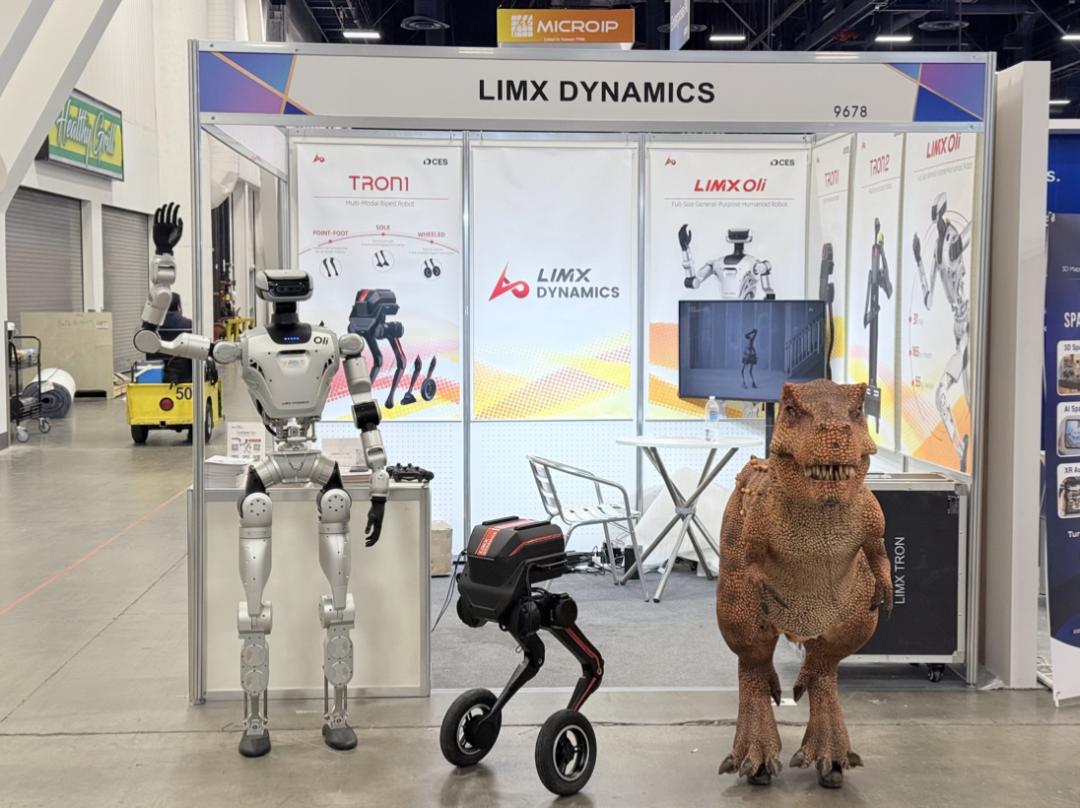
Zhujidongli's booth. Photo source: Zhujidongli
There are various types of customers interested in Chinese embodied intelligence products. An exhibitor told Jiemian News that the customers who came to inquire included not only global AI startups and universities but also bosses in the service industries such as hotels and restaurants. There were also many dealers who wanted to be local agents, theme parks that wanted to hold robot exhibitions, and even "local tycoons" who wanted to buy robots for their own collections.
Chinese companies have long prepared different sales pitches for different customers. The exhibitor said to the customer, "Our team can fly to your city to help solve all problems, including after - sales maintenance. After the cooperation matures, we will train local partners to provide more immediate after - sales service."
Delivery and after - sales service are indeed the most concerned issues for overseas customers. Take humanoid robots as an example. Such products often require in - depth adaptation and debugging. When customers are located overseas, it is difficult for the service team in China to respond in a timely manner. The current common solution is to cooperate with local agents, but it still takes time to get used to each other. The consulting firm Interact Analysis also pointed out that Chinese manufacturers urgently need to strengthen "On - the - ground" services in the European and American markets.
Many exhibitors emphasized the importance of local delivery. Magic Atom told Jiemian News that the focus of its overseas expansion this year is to improve the local delivery ability in the global market, especially in developed countries. "Currently, the implementation of the entire product in the industry highly depends on the deployment of local teams and after - sales support teams."
Zhang Shipu, the co - founder of Songyan Power, mentioned that the company will establish an overseas inquiry and production supply mechanism based on ERP + MES (a flexible supply system for multi - variety and small - batch production) and ensure sufficient after - sales service. In terms of the overseas expansion strategy, it will first adapt the application scenarios according to the characteristics of the robots and make local deployments. After forming replicable benchmark cases, it will carry out regional promotion.
Their goal is to focus on the North American, Middle Eastern, European, Southeast Asian, Japanese, and South Korean markets and plan to achieve a shipment volume of thousands of units in Q2 this year.
Where Does Global Competitiveness Come From?
In this already - started race, the "robot competition" between China and the United States is entering a critical stage.
Judging from the grand occasion of this CES, robot companies from the United States and China have formed two major camps in the industry competition. And in just one year, the competition among companies has begun to extend from technological iteration to scenario implementation and shipment volume.
Although the current race is still in the initial stage, the particularity of the robot industry has brought a leading advantage to Chinese robot companies.
A partner of a leading Chinese robot company told Jiemian News that the US robot industry does have some advantages, such as capital, large technology companies, and the technological accumulation of large models, including the density of talents. These have all become key competitive factors in the wave. However, as a relatively special application in the AI wave, embodied intelligence has its own characteristics - it highly depends on hardware and has extremely high requirements for product quality and consistency.
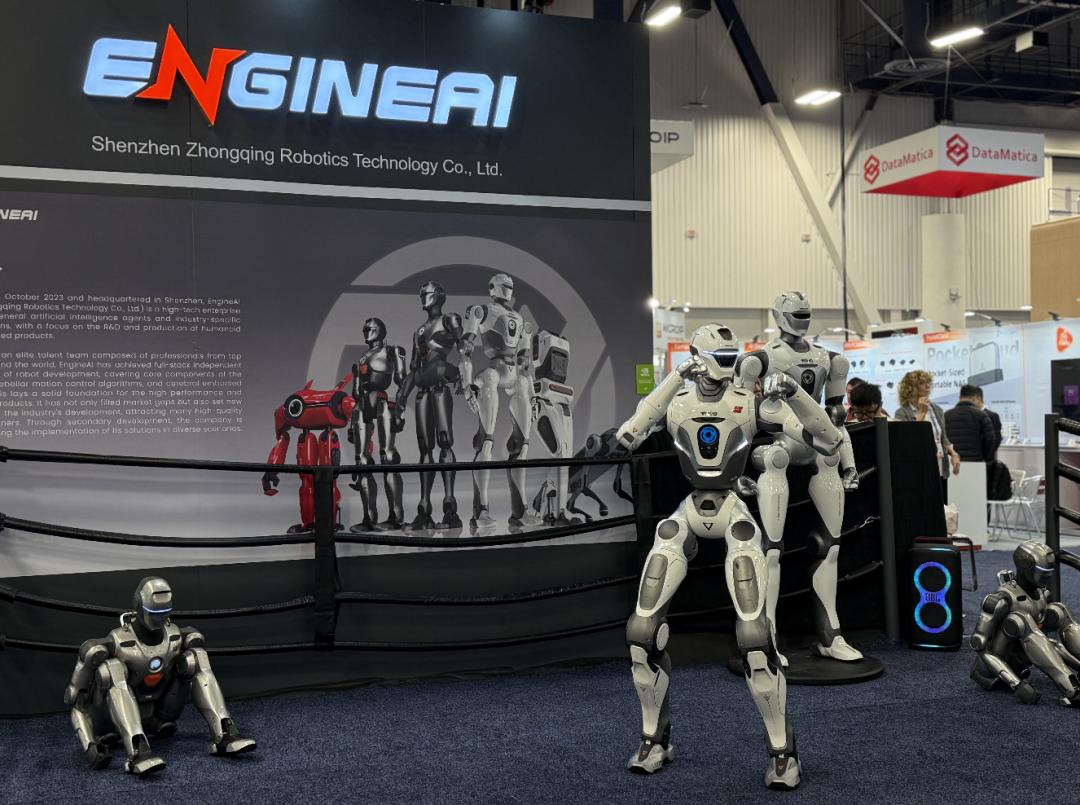
Zhongqing Robotics' booth. Photo by: Wu Yangyu