The center stage at this year's CES is occupied by a Dreame vacuum cleaner that stands 7.95 cm tall.
If you were to compile a list of the most popular booths at CES 2026, Dreame Technology would surely be on it.
Audience members had to push through hordes of people and a dense array of cameras to reach the center of the exhibition area, but this didn't stop them from gathering there. They came from different countries and had different skin colors. Among them was even the NBA legend Derrick Rose.
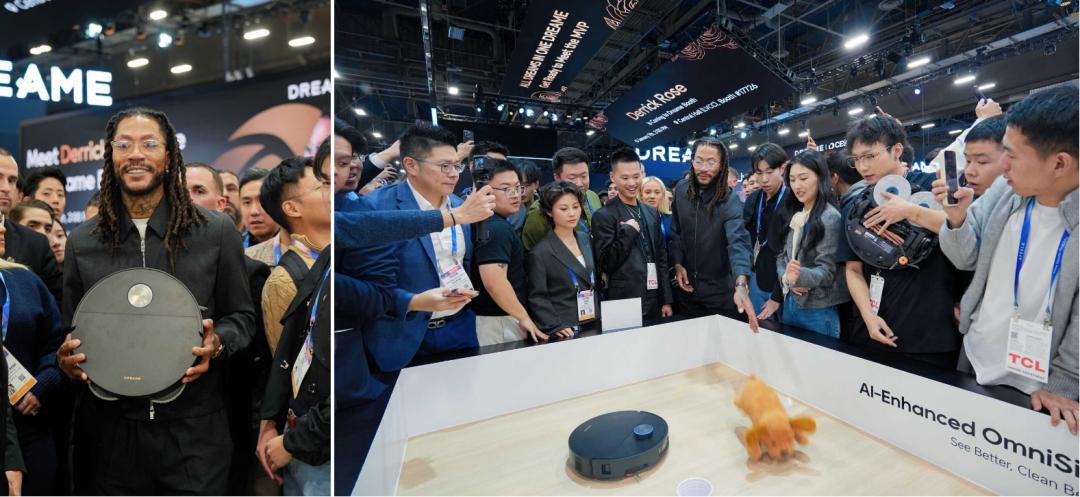
The floor-cleaning robot industry has been around for over a decade, and the parameter competition among major manufacturers has almost reached its peak. However, consumers seem to have grown tired of it. When continuous parameter improvements can no longer bring about a significant leap in the user experience, the industry needs to break through not just the pursuit of "power," but rather redefine the product form and user experience.
The Dreame floor-cleaning robot X60 series might just be that turning point.
When the Floor-Cleaning Robot Experience is Redefined
In the past decade, the floor-cleaning robot has been one of the most competitive sectors in consumer electronics, and the technology has advanced rapidly: suction power has been continuously increased, motor speed has become faster, cleaning frequency has become more frequent, and map accuracy has also been continuously improved. Judging from any product parameter table, the performance of today's flagship floor-cleaning robots is much stronger than that of three to five years ago.
However, as basic cleaning ability has become an industry consensus, simply improving parameters can hardly directly translate into a significant change in the user experience. Obviously, what users need more is an innovation in experience and a real liberation of their hands.
Currently, the core tasks for floor-cleaning robot manufacturers have become these two things:
First, the coverage rate of complex spaces and cleaning dead corners. To break through the long - existing physical boundaries, floor-cleaning robots must become thinner and more flexible.
Second, the ability to make autonomous decisions in the face of uncertainties, that is, to make floor-cleaning robots "smarter." Without relying on human intervention, they should understand environmental changes and make accurate judgments.
In other words, the focus of competition in the floor-cleaning robot industry is shifting from the breakthrough of single - hardware capabilities to the system capabilities of cross - hardware, perception, and algorithm collaboration. It was at this juncture that Dreame floor-cleaning robots didn't blindly engage in the parameter competition but chose a more challenging technological path.
At CES, the physical form of the Dreame floor-cleaning robot X60 series was the first thing to spark discussions. The height of traditional floor-cleaning robot bodies is generally above 9.5 cm. For cleaning blind spots like under the sofa, users either have to move the furniture, bend down to clean the area, or simply accept that "it's okay to leave it," leaving the anxiety of home cleaning until the Spring Festival cleaning.
However, the body of the X60 series has been reduced to 7.95 cm, a compression of nearly 2 cm.
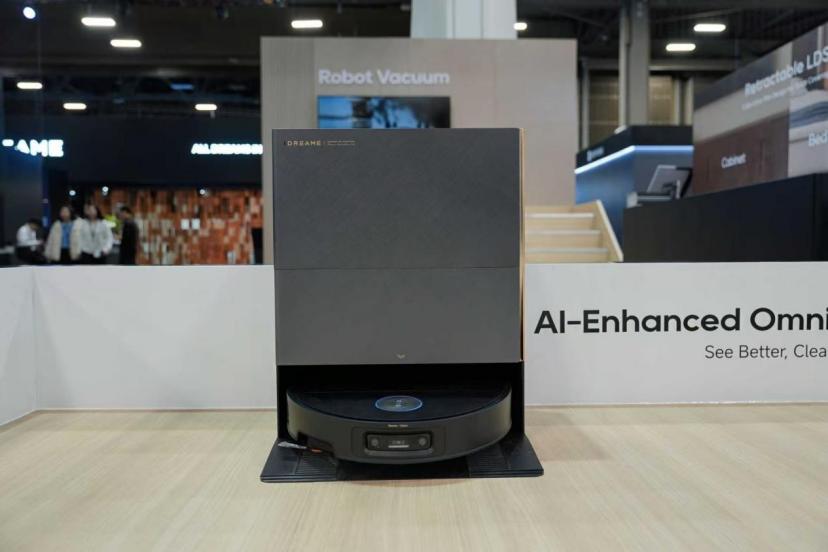
Although the numerical difference may seem insignificant, it has brought about a revolutionary change in the user experience. The floor-cleaning robot can now enter lower spaces. Areas like under the sofa, bed frame, and cabinets, which are restricted in height but accumulate dust frequently, have been included in the daily cleaning scope. Users have to bend down and move furniture less often, and they also have less psychological anxiety about "the house never being clean," making home cleaning a daily service that can be obtained with just a click.
However, old users of floor-cleaning robots know that reaching the cleaning dead corners is not the ultimate mission of a floor-cleaning robot. A complete cleaning task also depends on whether it can finish cleaning smoothly.
This is where obstacle avoidance becomes important. The real home environment is extremely complex, and floor-cleaning robots are often stuck by various obstacles during operation: tangled wires, tassels on rugs, children's toys, and even paper on the floor. Whenever this happens, users need to step in to "rescue" the robot, having to interrupt their own business.
Over the past decade or so, floor-cleaning robot manufacturers have made many efforts to solve the obstacle - avoidance problem.
In the early days of floor-cleaning robots, the infrared obstacle - avoidance solution was adopted. Through infrared sensing technology, the robot could sense obstacles before touching them. This solution performed okay in the laboratory but was difficult to work stably in real - world scenarios. Around 2011, lidar became a mainstream choice. It could solve the problems of navigation and path planning and knew how to bypass structured obstacles like walls and furniture. However, when obstacles became diverse, lidar also became ineffective.
In recent years, the more popular solution is the visual obstacle - avoidance solution, such as the combination of a monocular camera and an algorithm, which judges obstacles through image recognition. However, this type of solution also has fatal flaws: first, the light environment changes greatly. Backlighting, strong light, and reflective floors can all make the visual algorithm inaccurate; second, there is a lack of depth information. The camera captures a flat image, making it difficult to sense low - lying objects like data cables and pet feces, as well as ultra - thin objects like paper on the floor.
When traditional technical routes couldn't completely solve the problem, Dreame floor-cleaning robots decided to break out of the existing mindset and self - developed a set of "ultra - wide - angle binocular flexible navigation and obstacle - avoidance system."
"Binocular" means simulating the parallax of human eyes through a pair of high - precision wide - angle lenses to perform a pixel - by - pixel three - dimensional reconstruction of the environment. Compared with the mainstream line - laser solution, binocular obstacle avoidance can obtain the depth information of all pixel points in the image, with higher density and resolution. Whether it's a millimeter - level rise on the floor, small nearby obstacles, or large furniture in the distance, it can all be captured one by one.
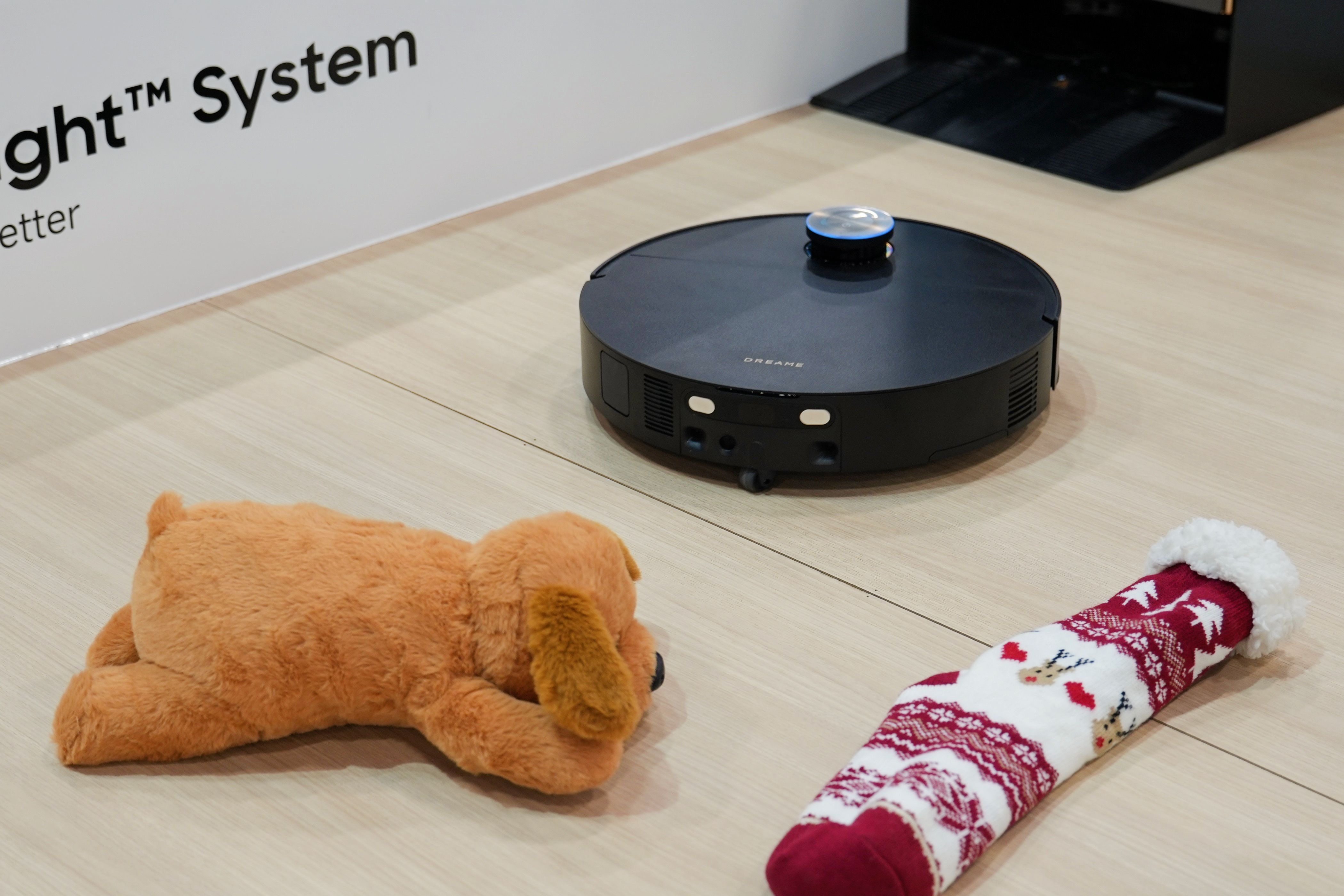
That is to say, this system gives the floor - cleaning robot "eyes" more like a human's. In actual tests, the Dreame floor - cleaning robot X60 series can recognize more than 280 types of objects and can make autonomous intelligent decisions based on the recognized obstacles. It can avoid small building blocks, sweep paper - ball garbage, and avoid the movement paths of pets. The obstacle - avoidance rate for low - lying obstacles reaches 100%. Moreover, the X60 series also supports adding recognizable object types in the APP and can intelligently search for lost items.
The requirements of the Dreame floor - cleaning robot team for the product didn't stop at achieving the best recognition of low - lying items but took a bigger step forward. After detecting low - lying obstacles, the Dreame X60 series can also integrate semantic information to judge whether the items can be cleaned, ensuring that low - lying items that should be cleaned won't be missed due to mis - obstacle - avoidance. For common mis - judgment scenarios in the home, this system has also been optimized specifically. By improving the recognition accuracy, the system can effectively reduce the mis - recognition of patterned floors, tile textures, reflective mirrors, and floor reflections. And on the premise of ensuring safety, it can achieve a cleaning path closer to obstacles, reducing the missed - cleaning areas. Even if an obstacle is suddenly removed 20 cm ahead, the Dreame X60 series can react quickly in 0.1 seconds and avoid missing the cleaning area.
From covering more areas to being smarter in obstacle avoidance, the Dreame X60 series floor - cleaning robots have truly returned to the ultimate mission of floor - cleaning robots - liberating hands.
Responding to the Real World with Technology
Why do the breakthrough innovations in the floor - cleaning robot industry always come from Dreame floor - cleaning robots?
Since at least 2016, many established overseas manufacturers have tried to reduce the thickness of floor - cleaning robots by compressing the volume of LDS (lidar), but the results were not obvious. This is because a floor - cleaning robot is an extremely complex systematic project:
Within a limited height of less than 10 cm, it not only has to accommodate the battery, motor, roller brush, mop, and water tank but also meet the requirements of downward pressure, obstacle - crossing ability, and battery life. Once one aspect is compressed, it necessarily means sacrificing another - stronger downward pressure will sacrifice obstacle - crossing ability, and a larger battery is not realistic under global regulations and safety requirements.
Over time, considering factors such as cost, the industry has formed a default consensus, taking 9.5 cm as a relatively safe balance line. As for the areas that cannot be covered, they are left to the users.
Sticking to the old ways has never been Dreame's choice. Dreame floor - cleaning robots investigated the functions that global users expected from floor - cleaning robots, and being thin and light was one of the most - demanded functions. To solve the real pain points of users, the R & D team of Dreame floor - cleaning robots almost completely reconstructed the floor - cleaning robot from scratch.
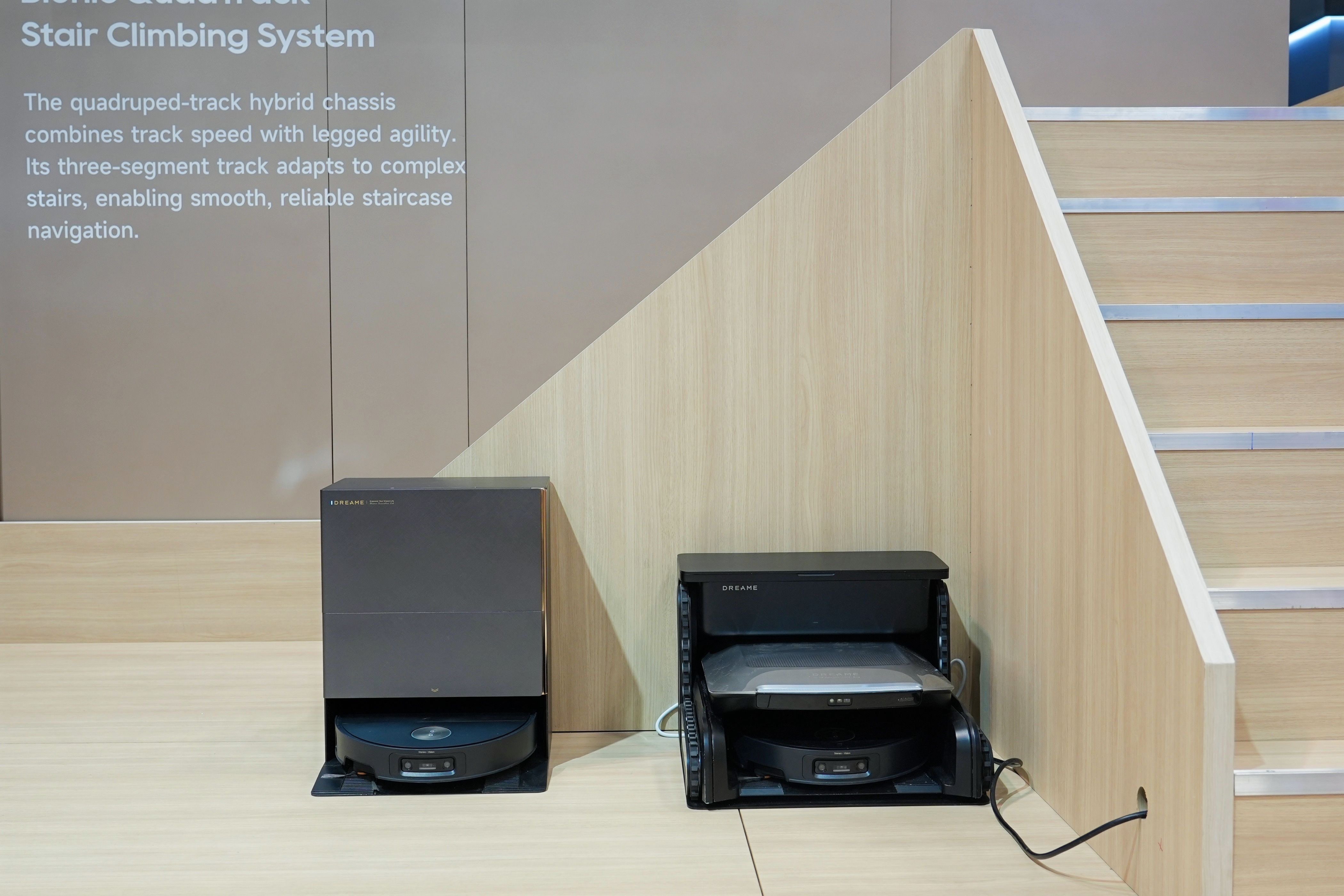
Thanks to years of experience in self - developing hardware, the LDS lifting module and the mop swing - out module built into the body of the Dreame floor - cleaning robot X60 series have been fully miniaturized, and the roller - brush component has also been highly integrated. Through delicate mechanical design, the team integrated the roller - brush lifting mechanism that required three independent stepping motors in the previous generation into a mechanism driven by only one motor to perform three functions while still maintaining the functions.
Besides being thin and light, another major problem the R & D team tackled was obstacle avoidance. The reason why Dreame floor - cleaning robots' "ultra - wide - angle binocular flexible navigation and obstacle - avoidance system" can handle complex environments with ease is that it can directly sense all protruding obstacles without relying on any pre - established object database.
This is also a break from the established rules. For countless types of obstacles, the common solutions in the industry rely highly on a preset object - recognition database. Many new household items (such as novel toys and ornaments) that are not included in the database often cannot be accurately recognized, which can easily lead to collisions or missed cleaning.
Experience told the R & D team of Dreame floor - cleaning robots that there is no standard answer in the real home scenario. So, the team not only self - developed a high - quality 3D simulation system but also cooperated with the NVIDIA ISAAC team. 4000 virtual robots learned continuously for 24 hours a day to cover a vast amount of data and include tens of thousands of household scenarios, equivalent to accumulating 1200 days of actual combat experience. The real - life robots can directly use the various obstacles preset in this simulated world without adaptation.
These seemingly scattered technological breakthroughs are actually a systematic evolution that is closely interlinked. Whether it's the re - disassembly of the body structure or the underlying rewrite of the obstacle - avoidance logic, they all point to the same premise: only with long - term and high - intensity R & D investment can a company have the ability to overthrow the existing path and thus innovate the user experience.
Judging from the data, Dreame floor - cleaning robots' investment in R & D has always remained at the top level among technology companies. Public information shows that the proportion of R & D and design personnel in Dreame floor - cleaning robots is about 70%, and the R & D investment accounts for more than 7% of the revenue.
Now, Dreame floor - cleaning robots have been sold to more than 120 countries and regions around the world, covering core markets in North America, Europe, and Southeast Asia. There are more than 6500 offline cooperation stores globally. These sales networks around the world also allow Dreame to better listen to the voices of different users and continuously optimize the products specifically according to the lifestyles of different markets.
When the cleaning dead corners are all covered and the floor - cleaning robot is no longer frequently interrupted by obstacles, users are truly liberated, and the evolution direction of floor - cleaning robots has become clearer.
By now, the focus of competition in the floor - cleaning robot market is no longer just performance indicators, but the ability to handle complex scenarios in real life, and more importantly, the ultimate insight into and satisfaction of user experience. The significance of the Dreame floor - cleaning robot X60 series lies in that it is not only a reliable home - cleaning tool but also a step towards becoming a home intelligent collaborator.
And this might just be the real dividing line for the next stage of cleaning appliances.