8 companies, 54 billionaires: Unveiling the top "wealth creation factory" in the United States
In January 2025, AI startup Anthropic was preparing to launch the Claude 4 chatbot, aiming to compete with products like ChatGPT and Gemini. Anthropic also revealed that it was raising funds at a valuation of over $60 billion. This deal catapulted the four-year-old company into one of the world's most highly valued artificial intelligence enterprises, and all seven of its co-founders joined the ranks of billionaires. Anthropic thus entered another echelon of American companies: the billionaire-making factory.
For most large enterprises, it would be a stroke of luck if one founder became a billionaire. Some successful companies can also enable co-founders or early investors to enter the billionaire club, and a few can even help one or two early employees amass huge fortunes. Only a handful of lucky top giants can nurture numerous billionaires. Among the 680 self-made billionaires in the United States, 54 owe their wealth primarily to eight companies.
Most of these companies are consumer technology firms. Some of them, such as Anthropic and the digital advertising company AppLovin, which has eight billionaires, have seen their stock prices soar in the past year, driven by investors' frenzy for AI. It is reported that Anthropic was valued at $18 billion in early 2025; in September, the company completed a $13 billion fundraising round at a valuation of $183 billion. On the other hand, since AppLovin went public on the NASDAQ in 2021, its stock price has risen by more than 1000% in total, and it increased by 100% in 2025 alone, pushing the company's market value close to $250 billion.
In addition, well-known companies like Meta, Google, and Microsoft are also key forces in creating billionaires.
Over the decades, as their stock prices have risen, these tech giants have already made their founders and major investors extremely wealthy. Now, with the U.S. stock market reaching new highs and these companies making significant bets in the AI field, not only are more billionaires being created, but their fortunes are also far greater than before. Microsoft co-founder Bill Gates has long been a billionaire. Besides him, an early software developer, a former CEO, and the current CEO, Satya Nadella, have also joined the billionaire ranks. Meta has not only made Mark Zuckerberg and his co-founders billionaires but also enabled two former executives and three early investors to enter the billionaire camp through the company.
Alphabet, Google's parent company, is the enterprise that has nurtured the largest number of American billionaires.
Since its establishment in 1998, this search engine giant has created 10 billionaires, with a combined net worth of over $600 billion. These 10 individuals include the company's two co-founders, a former CEO, a current CEO, and six investors - including a professor from Stanford University who wrote a $100,000 check in the early days of the company. Other major "billionaire-making factories" include a cloud data storage company and two private equity giants that have heavily invested in AI startups and data centers.
The wealth accumulation of these billionaires has taken a long time, and in the past year, the new connections they've built in Washington seem to have further boosted the rapid growth of many of their fortunes. Many billionaires have frequently appeared at the White House, getting closer to President Donald Trump. Trump used to often criticize Silicon Valley during his first term but has now reconciled. On September 4th, the White House hosted a "tech giants" dinner, with the president surrounded by billionaires from Google, Oracle, Apple, Microsoft, and Meta - all companies that have produced multiple billionaires with double-digit fortunes.
Of course, just because a company becomes a "billionaire-making factory" doesn't mean it can maintain that title forever. Nvidia, a benchmark company in the AI boom, reached a record market value of $5 trillion in October and created two new billionaires in the process, ranking among the top "wealth-creating" companies at that time. However, its stock price then dropped by 10%, causing three people's net worths to fall back to the "hundreds of millions" level.
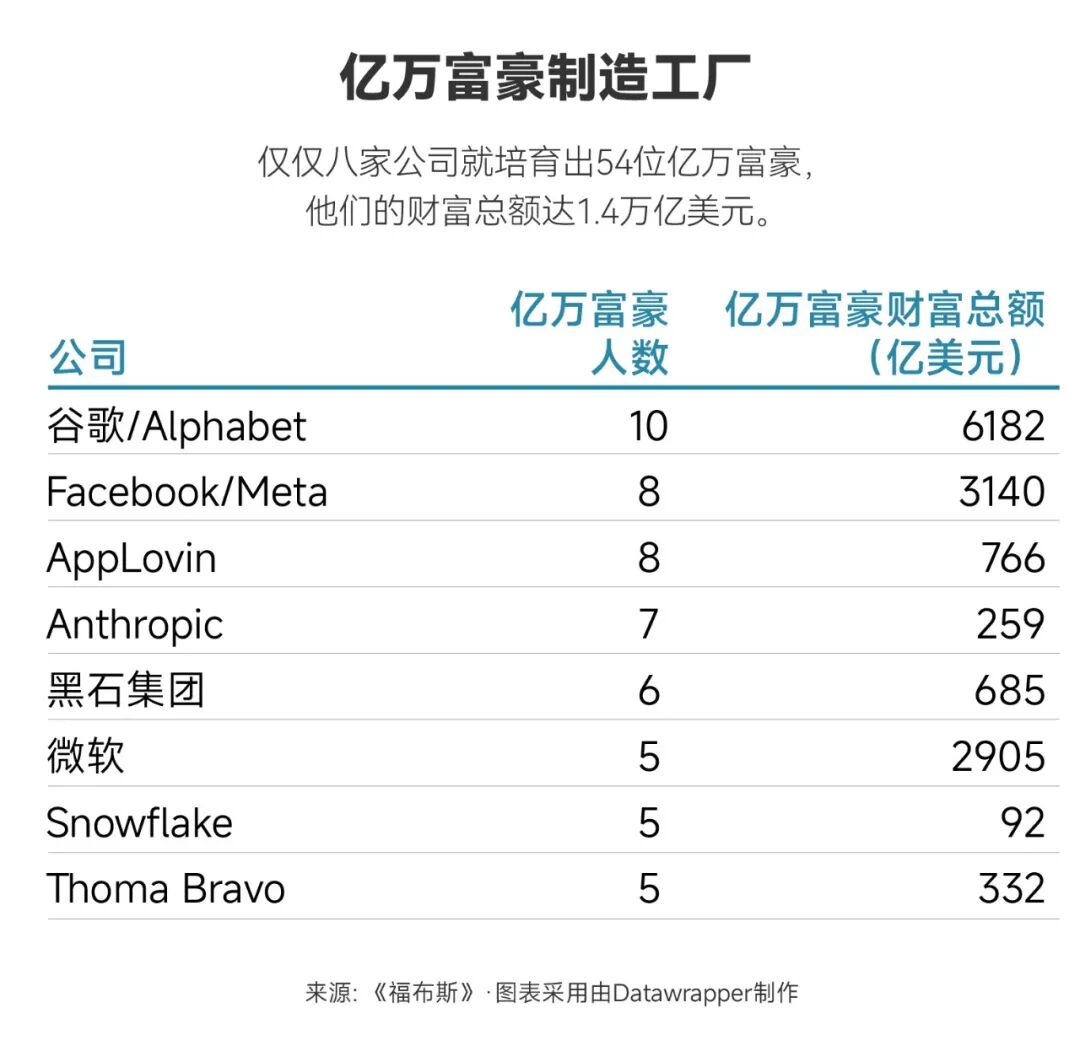
The following are the eight American companies that have created the most self-made billionaires. Data is as of December 22, 2025.
Google/Alphabet: 10 billionaires · Total net worth of $618.2 billion
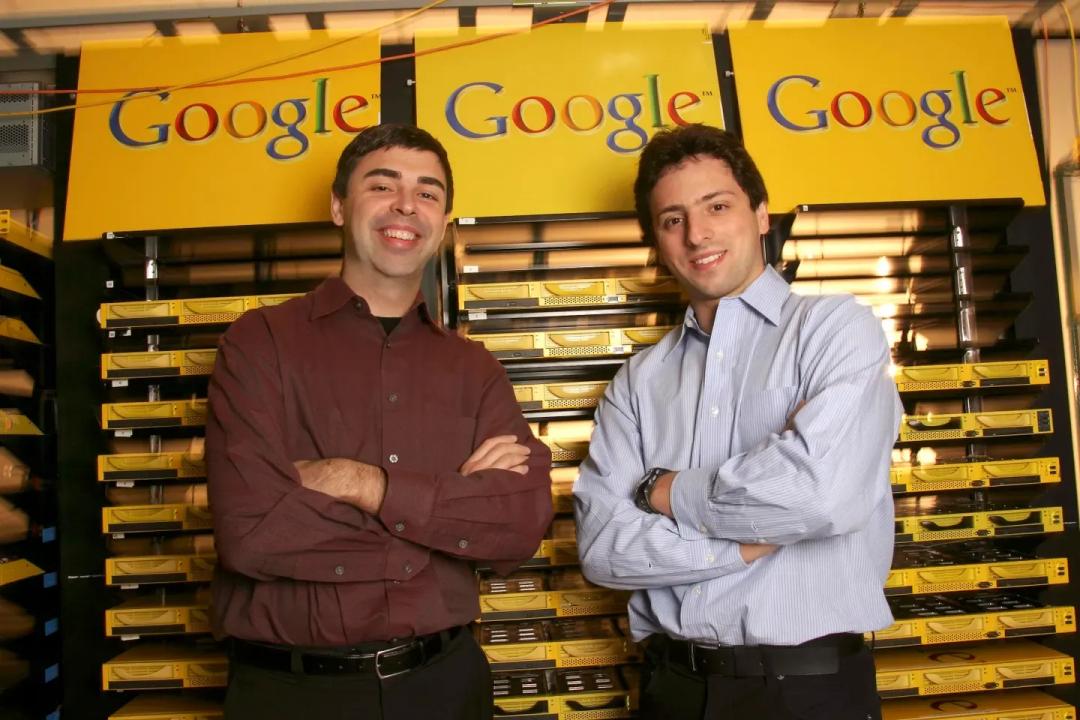
Google co-founders Larry Page (left) and Sergey Brin. Photo source: CORBIS VIA GETTY IMAGES
Larry Page (net worth $255 billion) and Sergey Brin (net worth $235 billion) co-founded Google in 1998, operating from the garage of their late friend Susan Wojcicki in Menlo Park, California. After listening to Page and Brin's pitch on his front porch, Stanford University professor David Cheriton (net worth $21.5 billion) and Sun Microsystems co-founder Andreas von Bechtolsheim (net worth $27.6 billion) each wrote a $100,000 check, becoming Google's earliest angel investors.
Soon after, investor Kavitark Ram Shriram (net worth $3.7 billion) invested $250,000. Then in 1999, venture capital firms Sequoia and Kleiner Perkins invested in Google, ultimately making venture capitalists John Doerr (net worth $20 billion), Mark Stevens (net worth $10.8 billion), and Michael Moritz (net worth $7.7 billion) billionaires. Two CEOs also joined this club: Eric Schmidt (net worth $35.4 billion), who was recruited from Novell to serve as Google's second CEO from 2001 to 2011; and Sundar Pichai (net worth $1.5 billion), who took over as CEO in 2015.
Facebook/Meta: 8 billionaires · Total net worth of $314 billion
In 2004, Mark Zuckerberg (net worth $227 billion) co-founded Facebook with roommates such as Eduardo Saverin (net worth $36.4 billion) and Dustin Moskovitz (net worth $11.3 billion). Just a few months after the company's founding, Napster founder and tech prodigy Sean Parker (net worth $3 billion) met with Zuckerberg and Saverin and was appointed president of the company at the age of 24. When Facebook went public in 2012, Parker held 4% of the company's shares. In 2004, Peter Thiel (net worth $27.5 billion), the founder of PayPal who had just sold his company to eBay, became Facebook's first angel investor, investing $500,000 in the company. In 2005, Jim Breyer (net worth $3.2 billion) led Accel Partners' $12.7 million Series A financing for Facebook when the company was valued at $98 million.
Around the same time, another Accel partner, Jeff Rothschild (net worth $3.2 billion), was hired as a consultant to assist Facebook with its scale-up and later became the company's vice president of infrastructure, obtaining a large number of Facebook shares. Sheryl Sandberg (net worth $2.4 billion) joined the company from Google in 2008 as the chief operating officer.
AppLovin: 8 billionaires · Total net worth of $76.6 billion
The digital advertising company AppLovin was founded in 2012 by Adam Foroughi (net worth $26.5 billion), Andrew Karam (net worth $10.5 billion), and John Krystynak (net worth $5 billion). In the same year, software engineer Vasily Shikin (net worth $3.5 billion) joined the company as the vice president of engineering. In 2018, private equity investor Herald Chen (net worth $2.6 billion) led Kohlberg Kravis Roberts' $400 million investment in AppLovin.
Herald Chen joined the company a year later, receiving nearly 1% in options. Hao Tang (net worth $9.8 billion) and Ling Tang (net worth $13 billion) became major investors through a shell company before AppLovin's initial public offering and currently hold 4% and 5% of the company's shares respectively. There is little public information about them. Eduardo Vivas (net worth $5.7 billion) also invested in the company before its 2021 IPO and now holds about 2% of the shares.
Anthropic: 7 billionaires · Total net worth of $25.9 billion
Among all the companies that have created billionaires, Anthropic is the youngest. The company was co-founded in 2021 by several former OpenAI employees, including siblings Daniela Amodei (net worth $3.7 billion) and Dario Amodei (net worth $3.7 billion), as well as Tom Brown (net worth $3.7 billion), Jack Clark (net worth $3.7 billion), Jared Kaplan (net worth $3.7 billion), Sam McCandlish (net worth $3.7 billion), and Christopher Olah (net worth $3.7 billion).
Anthropic quickly joined the AI arms race, developing the chatbot Claude to compete with OpenAI's ChatGPT and Google's Gemini. In early 2025, the company's valuation exceeded $60 billion, making all seven co-founders billionaires.
Blackstone: 6 billionaires · Total net worth of $68.5 billion
Stephen Schwarzman (net worth $48.3 billion) and Peter Peterson (died in 2018) founded Blackstone in 1985 as a boutique firm providing merger and acquisition advisory services for enterprises.
In 1992, fresh out of college, Jonathan Gray (net worth $9.7 billion) joined Blackstone as an asset manager and is now the company's chief operating officer. In 1993, J. Tomilson Hill (net worth $3.4 billion) joined Blackstone after being removed from his position as co-CEO of Lehman Brothers. Michael Chae (net worth $1.2 billion) joined in 1997, responsible for international private equity business, and was later appointed the company's financial head. Joseph Baratta (net worth $1.2 billion) joined Blackstone in 1998 after stints at several investment institutions and is now the head of the asset management giant's global private equity business. Hamilton "Tony" James (net worth $4.8 billion) was recruited from Credit Suisse to Blackstone in 2002 to assist in managing the company's rapidly expanding private equity and asset management businesses.
Microsoft: 5 billionaires · Total net worth of $290.5 billion
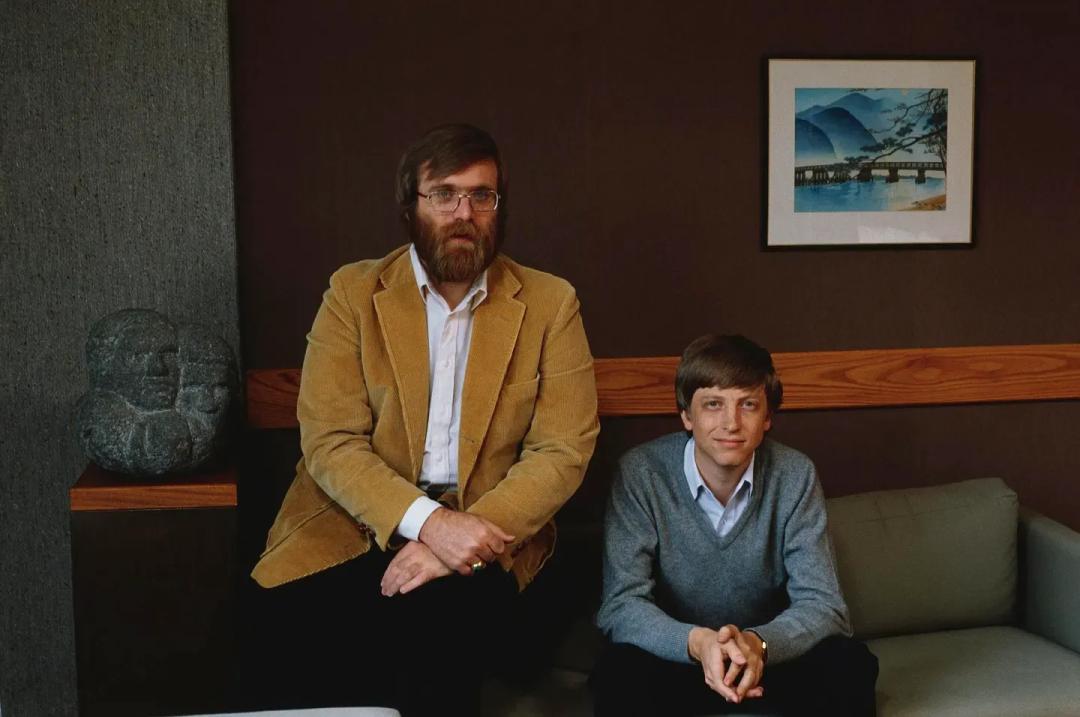
Left: Paul Allen; Right: Bill Gates. Photo source: CORBIS VIA GETTY IMAGES
Bill Gates (net worth $104 billion) dropped out of Harvard in 1975 to seize the opportunity of the personal computer revolution and co-founded Microsoft with Paul Allen (died in 2018). Steve Ballmer (net worth $148 billion) dropped out of Stanford's MBA program in 1980 to join Microsoft as the 30th employee and served as CEO from 2000 to 2014. Software developer Charles Simonyi (net worth $8.2 billion) joined Microsoft as the 40th employee in 1981, driving the development of many of the company's most iconic software products such as Word and Excel. Melinda French Gates (net worth $29.3 billion) joined Microsoft in 1987 as a product developer. She married Bill Gates in 1994, and the two divorced in 2021. Satya Nadella (net worth $1 billion) joined Microsoft in 1992 and took over as CEO after Ballmer's retirement.
Snowflake: 5 billionaires · Total net worth of $9.2 billion
Two Oracle architects, Benoît Dageville (net worth $1.6 billion) and Thierry Cruanes (net worth $1.4 billion), co-founded the cloud service company Snowflake in 2012 and took it public in 2020.
In the process, three consecutive CEOs of Snowflake became billionaires. Mike Speiser (net worth $1.5 billion), an early investor in Snowflake, served as the founding CEO from 2012 to 2014. Bob Muglia (net worth $1.3 billion) joined the company in 2014 and took over as CEO. In 2019, he handed over the CEO position to Frank Slootman (net worth $3.4 billion).
Thoma Bravo: 5 billionaires · Total net worth of $33.2 billion

Orlando Bravo. Photo source: JAMEL TOPPIN FOR FORBES
Carl Thoma (net worth $5.7 billion) founded the investment firm Thoma Cressey in 1998 and soon hired young mergers and acquisitions expert Orlando Bravo (net worth $12.8 billion), who developed the firm's software investment strategy.
In 2008, the two split from Cressey and co-founded Thoma Bravo, an investment firm focused on the software sector. In 2002, Scott Crabill (net worth $4.9 billion), who came from Summit Partners and had worked at Hewlett-Packard, joined them. Three years later, Holden Spaht (net worth $4.9 billion) and Seth Boro (net worth $4.9 billion) also joined. Today, the firm manages assets worth $181 billion, and all five are managing partners.
This article is from the WeChat official account "Forbes" (ID: forbes_china), author: Forbes. 36Kr has obtained authorization to publish it.