Looking at the implementation of AI from CES 2026: Consumer-grade hardware has become the "key" that tech giants are vying for.
From January 6th to 9th, the CES 2026 exhibition took place as scheduled in Las Vegas.
Among the 4,112 global companies participating in the exhibition, NVIDIA's edge-side AI computing power solutions and Samsung's "AI Life Companion" program have attracted a lot of attention. However, compared with the technological revelry of previous years, this year's CES exhibition seems more like a signal - global tech giants are collectively targeting consumer-grade hardware for the implementation of AI.
Since the second half of last year, Quark, Baidu, Xiaomi, and Li Auto have successively launched their own AI glasses, trying to speed up and seize the next-generation key terminal after mobile phones.
On one hand, there is a concentrated build - up of momentum at international exhibitions; on the other hand, domestic big manufacturers are quietly making efforts. Behind these seemingly scattered actions lies the common ambition of the giants. The battle for the "AI entrance" may ultimately focus on consumer - grade hardware.
The Popularization of AI: Different Paths, Same Destination
The AI competition accelerated at this year's CES exhibition. Global tech companies are demonstrating through their actions that the value of future AI is no longer limited to computing power but extends to infinite possibilities through scenarios.
For example, tech giant Samsung officially announced its "AI Life Companion" vision at the CES 2026 "The First Look" event. It plans to create a more unified and personalized experience covering mobile, display, home appliances, and services, embedding AI in various products to lead the industry towards a more meaningful daily AI experience.
In the dining scenario, Samsung's AI refrigerator can break through the limitations of ingredient recognition through the upgrade of AI Vision and seamlessly track the in - and - out of ingredients; in the laundry scenario, Samsung's new Bespoke AI AirDresser will solve common problems users face in clothing care; in the home environment scenario, Samsung's Bespoke AI Jet Bot Steam Ultra can accurately identify coffee, juice, or clean water and can also push real - time pet dynamics to users... From passive to active is the core path of Samsung's AI Companion program.
When it comes to AI companions, robots are currently the most eye - catching sub - category. At the CES site, a variety of robots are constantly refreshing the audience's perception.
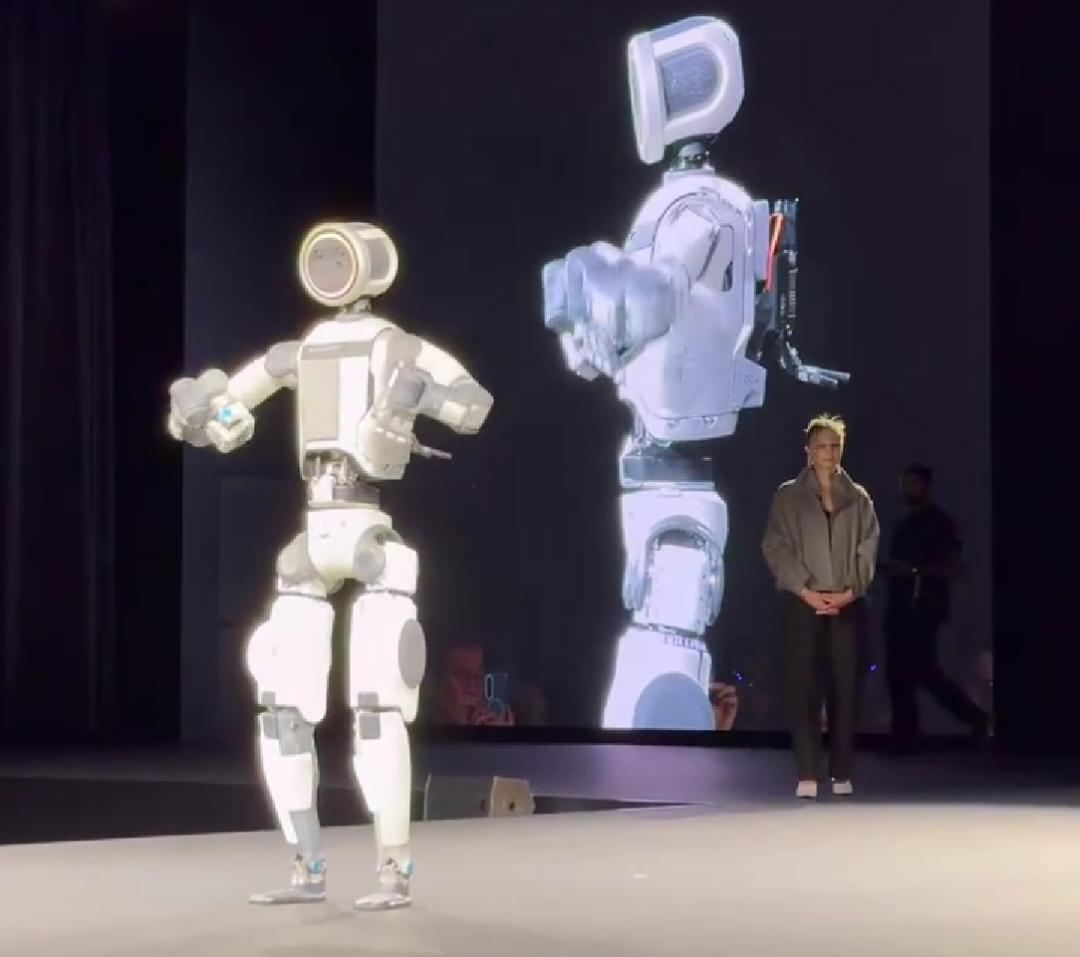
Boston Dynamics' new humanoid robot Atlas. Source: 3DMGAME's official Weibo
Unitree, which has been popular since the beginning of last year, held a fighting ring competition with its humanoid robots. The dynamic offensive and defensive demonstrations showed that the motion control ability of its robots has completed another iteration;
The "Embodied Heavenly Craftsman 2.0" robot also attracted a crowd. This 1.7 - meter - tall robot already has super - strong operation ability and can complete fully autonomous sorting demonstrations. It is truly a robot that "can work and knows how to work";
The joint venture company 1X Technologies from Norway and the United States brought a household humanoid robot. It is 168 cm tall, weighs about 30 kg, and is priced at $20,000 or available through a subscription model of $499 per month;
SwitchBot introduced its household humanoid robot OneRo H1. This robot is positioned as an all - around "household butler" and can handle complex household chores such as folding clothes, tidying up desks, opening and closing doors and windows, and assisting in meal preparation. It can also interact with other AI products in the ecosystem.
Moreover, the smart home track dominated by cleaning robots has become the home court of Chinese companies. Chinese companies such as Dreame, Roborock, Yunjing, MOVA, and Ninebot have taken cleaning robots to the extreme, innovating to the fullest extent.
Dreame and Roborock have perfectly solved the problem of stairs that used to trouble floor - sweeping robots with tracks and mechanical legs. Yunjing's new flagship floor - sweeping robot, the Flow 2, can monitor pets and find items; MOVA's floor - sweeping robot, the Pilot 70, can even fly to clean balconies and attics.
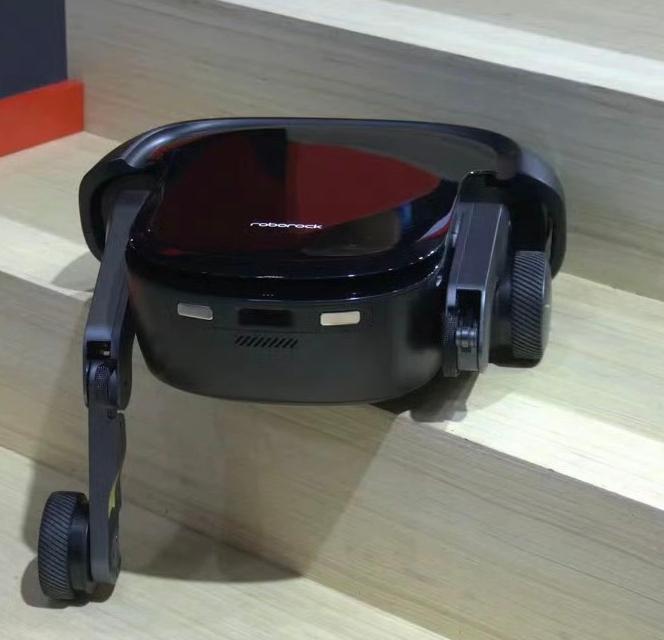
Roborock's Saros Rover can climb stairs
For other life scenarios, the CES 2026 exhibition also presented future possibilities. HEYMIRROR's smart makeup mirror can provide AI clothing matching; Nuralogix's "Longevity Mirror" can assess heart rate and the risk of cardiovascular diseases within 30 seconds; Sleepal's AI sleep lamp continues to upgrade and enhance its functions in sleep monitoring and sleep assistance.
The fact that giants are flocking to consumer - grade AI hardware is not blind following but an inevitable path for the current development of the AI industry. After the explosion of generative AI, concepts such as large - scale models and intelligent computing centers have emerged one after another. The capital market's enthusiasm has made AI an absolute hot topic. However, behind the prosperity, the gap between technology and the general public has always been difficult to bridge.
For a long time in the past, the core application scenarios of AI were concentrated on the enterprise side, far from ordinary users. Even with chat products like ChatGPT and Doubao, users need to actively open the app and enter instructions. Without more interaction, most users will abandon AI after a short - term trial.
Consumer - grade hardware exactly makes up for this shortcoming. Seamless integration is the essence of practicality.
Seize the Next - Generation Key Terminal
From an industry trend perspective, 2026 has been recognized by the industry as "the key turning point for edge - side AI to move from concept to large - scale implementation", and consumer - grade AI hardware will also accelerate its penetration.
On January 5th, media reported that Doubao AI glasses under ByteDance are about to enter the shipment stage, with the starting price expected to be controlled within 2,000 yuan.
AI glasses are now regarded as the key entrance in the AI era and the next - generation key terminal after mobile phones, so Internet companies all want a share of the market. At the end of last year, Quark's AI glasses received a good response after their official release and even caused a price premium in the second - hand market. Almost at the same time, Baidu, Li Auto, and Xiaomi also launched their own AI glasses, trying to gain an early advantage.
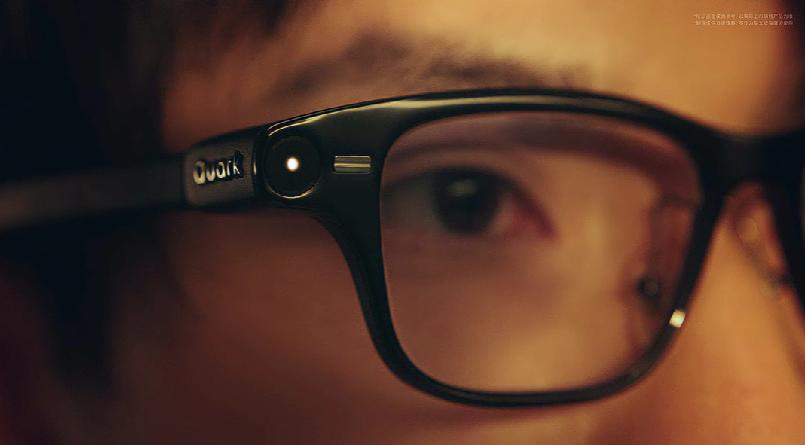
Quark AI Glasses S1
The report "Global Smart Glasses Model Shipment Tracking" released by research institution Counterpoint shows that in the first half of 2025, the shipment volume of the international smart glasses market increased by 110% year - on - year, and the shipment volume of AI glasses accounted for 78% of the total smart glasses shipment volume. Wang Liansheng, the minister of the China Electronic Industry Standardization Technology Association, believes that AI glasses are expected to reach a market scale of hundreds of billions.
Behind this collective effort is a clear business closed - loop logic. Consumer - grade hardware is essentially a battle for the "AI entrance". After acquiring users through hardware, companies can achieve profitability through subsequent paid services.
Take ByteDance as an example. Its Doubao AI glasses need to be used in conjunction with the Doubao app, and subsequent paid services such as advanced translation and personalized content recommendation can be used for monetization. For traditional hardware manufacturers, AI is the core means to break through homogeneous competition. The attitude of users willing to pay a premium for AI value will further strengthen the determination of giants to make strategic layouts.
However, for consumer - grade AI hardware to truly open the door for the general public to accept AI, opportunities and challenges always coexist. In terms of core advantages, consumer - grade hardware, with its low - threshold and natural - interaction characteristics, has become the best bridge connecting technology and the general public.
In terms of pricing, the starting price of ByteDance's Doubao AI glasses is less than 2,000 yuan, a significant reduction compared to the early AI glasses that often cost thousands of yuan. Products such as Alibaba's Quark AI glasses and Li Auto's Livis also control costs through large - scale production, making more ordinary users willing to give them a try.
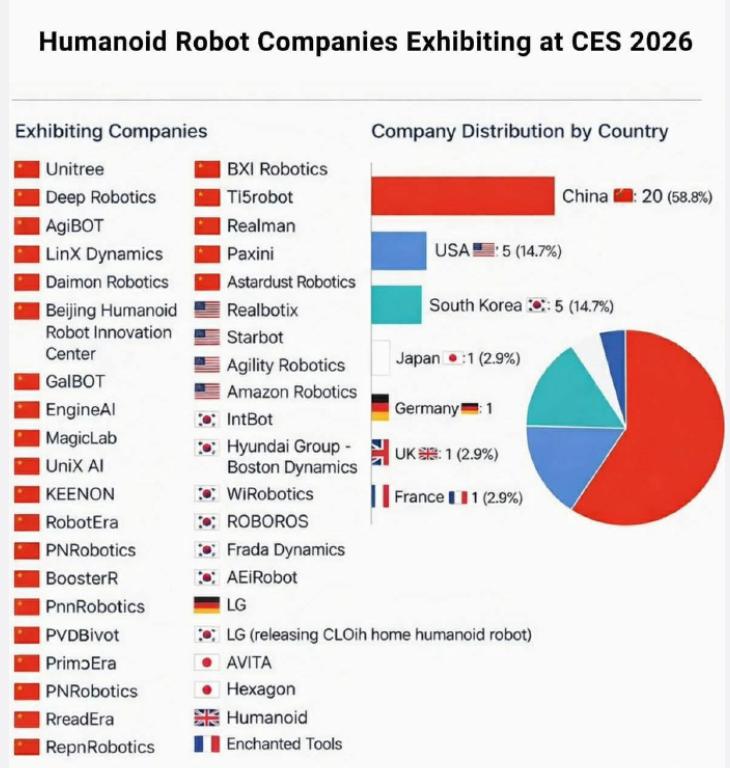
Most of the robot manufacturers participating in CES 2026 are from China
But from a market perspective, users' cognitive biases and intensified homogeneous competition are still difficult problems hindering large - scale development. Many users are worried that AI hardware may collect voice, image and other data, leading to privacy leakage, and they also question that AI products are more of a gimmick than practical. Coupled with a large number of manufacturers on the way, it is really difficult for products with similar functions to stand out.
However, the manufacturers in this field are both competitors and collaborators. As Yang Yuanqing, the chairman and CEO of Lenovo Group, said at the CES media meeting: "In the future AI era, we still believe that hardware remains an important entrance for users to enter the AI world. After all, no single manufacturer can independently complete all aspects of the entire AI industry chain. This industry must be a highly collaborative system. Each enterprise should give full play to its most proficient part and actively seek collaboration to form a joint force. This is the right way for future industry development."
In the future, consumer - grade AI hardware will give rise to a new market worth hundreds of billions and reshape the global technology industry landscape. Consumer - grade AI hardware will also promote the transformation of AI from elitism to popularization. If the core of AI universalization is to make it accessible to those in need, then consumer - grade hardware is the key carrier to bridge the "last mile".
This article is from the WeChat official account "Zinc Scale" (ID: znkedu), author: Zinc Scale. Republished by 36Kr with permission.