Jia Yueting has sold only a few cars, yet he has started to dangle the carrot of robots again.
In 2021, when Faraday Future (FF) went public on the NASDAQ, Jia Yueting defined the FF 91 as a super car robot. Unexpectedly, five years later, FF is really starting to build robots.
According to foreign media reports, on January 8th local time, FF held its first Shareholder Day event in Las Vegas, USA, and updated on the progress of multiple businesses announced at CES 2026, including the mass - production plan for models, the five - year business plan, and the new AI robot strategy. Jia Yueting, the founder of FF, and other core executives attended the press conference together.
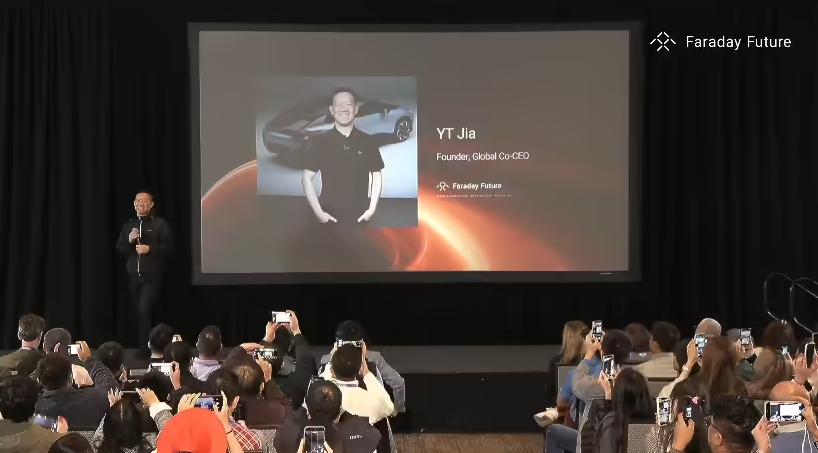
At this event, FF first announced the global mass - production and delivery plan for the FX Super One model.
As the first MPV of FF's sub - brand FX, this car competes with the Cadillac Escalade and features the advantages of "space + AI + comfort". It comes standard with luxury configurations such as zero - gravity seats and offers both pure - electric and AI hybrid extended - range powertrain systems. According to the plan, FF intends to deliver 50 units to FX Par users on a limited basis in the second quarter of this year, and 200 units to industry leaders and B - end partners on a limited basis in the third quarter, aiming to achieve positive gross profit. Starting from 2027, with the launch of the hybrid - extended models, the production and sales targets will increase year by year. It is expected to reach nearly 5,000 units in 2027 and 55,000 units in 2030, with a total production and sales target of 400,000 to 500,000 units in five years.
Of course, the new car is no longer news. Jia Yueting has a new "pie" this time.
In addition to the MPV, FF announced the upgrade of the "China - US automotive industry bridge strategy" to the global EAI industry bridge strategy and officially launched the embodied intelligent robot strategy, establishing a "dual - track drive" pattern for cars and robots.
Jia Yueting revealed that FF has been planning to enter the AI robot field for a year. It plans to replicate the "China - US industry bridge" model, integrating China's mature hardware manufacturing with North America's cutting - edge AI technology, with the goal of becoming the leading company in the United States to deliver humanoid robot products. During the NADA Conference in Las Vegas on February 4th, FF will hold an AI Robotics press conference, launch its first batch of products, and open them for experience and sales.
Industry insiders have given three reasons for why FF is diversifying into the field of embodied robots.
Firstly, the robot business has a short profit cycle and quick cash - flow returns. It can be quickly implemented relying on the domestic supply chain, relieving FF's financial pressure.
Secondly, there is a strong demand for robots in fields such as security and logistics in the United States. Coupled with the upcoming policy dividends from the government, it provides a natural implementation scenario for FF.
Thirdly, the technologies accumulated by FF over the years can be directly transferred. The FF AI 2.0 system and the visual recognition and intelligent decision - making technologies of the FF 91 can be adapted to robot products after scenario verification, significantly reducing R & D costs.
Since 2017, FF has appeared at CES multiple times, showcasing all its products, but its delivery ability has always been a mystery.
According to Jia Yueting, currently, FF is trying to open up a second growth curve through the robot business using the "China - US technology + manufacturing" integration model to support its main automotive business. However, considering the twists and turns of the FF91, how much trust can the robots gain?
This article is from the WeChat official account "Meku.com". The author is jh. It is published by 36Kr with authorization.