Musk doesn't want to dangle the carrot of the 4680 battery anymore.
Tesla has been stubbornly pursuing the 4680 battery for more than five years, but finally quietly beat a retreat.
The South Korean cathode material producer L&F was the first to leak the news. The announcement shows that the supply contract value of high-nickel cathode materials between L&F and Tesla has shrunk from $2.9 billion to $73.86 million, a reduction of over 99%. Such an order cut is almost equivalent to the project being aborted.
The two parties signed a two-year supply contract in February 2023. The order amount was equivalent to four times L&F's annual revenue, which was like a windfall. Unexpectedly, half of the windfall was gone and then flew back.
L&F's high-nickel cathode materials are customized for Tesla's 4680 battery, which is a key part of Tesla's "low-cost battery - affordable vehicle" plan. Since then, Tesla's 4680 battery has been in a Schrödinger's state between "shutdown" and "mass production".
With the unexpected revelation from the core supplier, Tesla's ambitious plan seems to have come to an end.
Cybertruck Is Not to Blame
The failure of the 4680 battery seems to be directly attributed to the dismal sales of the Cybertruck.
According to Tesla's plan, the Model 3 uses lithium iron phosphate batteries, the Model Y/S/X uses ternary lithium batteries containing nickel and manganese, while the Cybertruck and Semi use ternary lithium batteries with high-nickel cathodes.
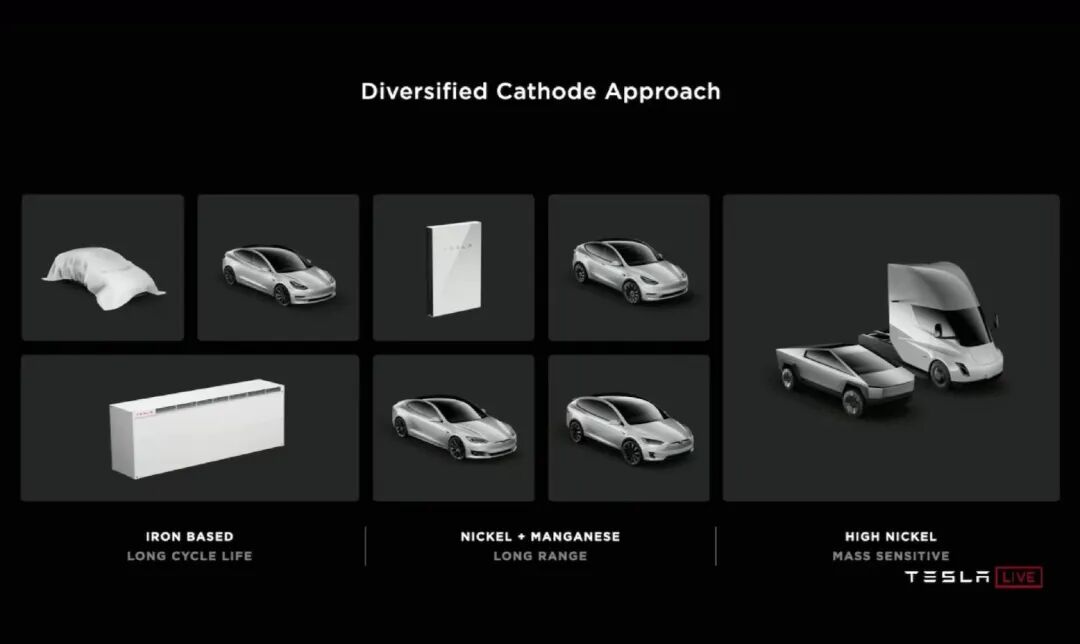
Three battery solutions disclosed at Tesla's Battery Day
Generally speaking, the higher the nickel content in the battery cathode, the higher the corresponding energy density and the better the cruising performance. Using them in large and heavy vehicles like the Cybertruck and Semi is a perfect match.
However, during the battery R & D process, the energy density of the first-generation 4680 battery based on NCM811 (i.e., the ratio of nickel, cobalt, and manganese is 8:1:1) did not meet expectations, and its charge - discharge capacity was also extremely poor, resulting in the first - generation Model Y equipped with it being a limited - edition model [1].
So, Tesla turned to the material supplier L&F mentioned above. The latter had commercialized 9 - series high - nickel batteries early on, and the nickel content of its cathode products could reach an astonishing 95%. Subsequently, Tesla's second - generation 4680 battery used a 9 - series high - nickel cathode, which increased the energy density. Unexpectedly, the sales of the Cybertruck became a problem.
According to the careful calculations of overseas netizens, since the production of the Cybertruck started in the second half of 2023, the total delivery volume has hovered around 50,000 units [2].
Even if we make an extreme assumption according to Tesla's statement and count all the 50,850 "other models" sold last year as Cybertrucks, excluding the sales of the Model 3/Y, it is still far from Musk's goal of "selling 250,000 units per year".
The Cybertruck has neither taken on the task of high - volume sales like the Model Y nor become Tesla's profit pillar. Its sales even rely on internal related - party transactions. The title of an Electrek report is full of sarcasm [3]: SpaceX bought tens of millions of dollars' worth of "Cybertrucks that Tesla couldn't sell".
The reason is easy to understand. When the Cybertruck was launched in 2019, Musk announced a price range of $39,000 - $69,000, and the top - of - the - line tri - motor all - wheel - drive version had an EPA range of up to 800 km.
However, when it was officially launched at the end of 2023, the price increased significantly. The price of the high - end version rose from $69,000 to $99,000 (currently $114,900), and the range was greatly reduced. It's easy to imagine its market performance.
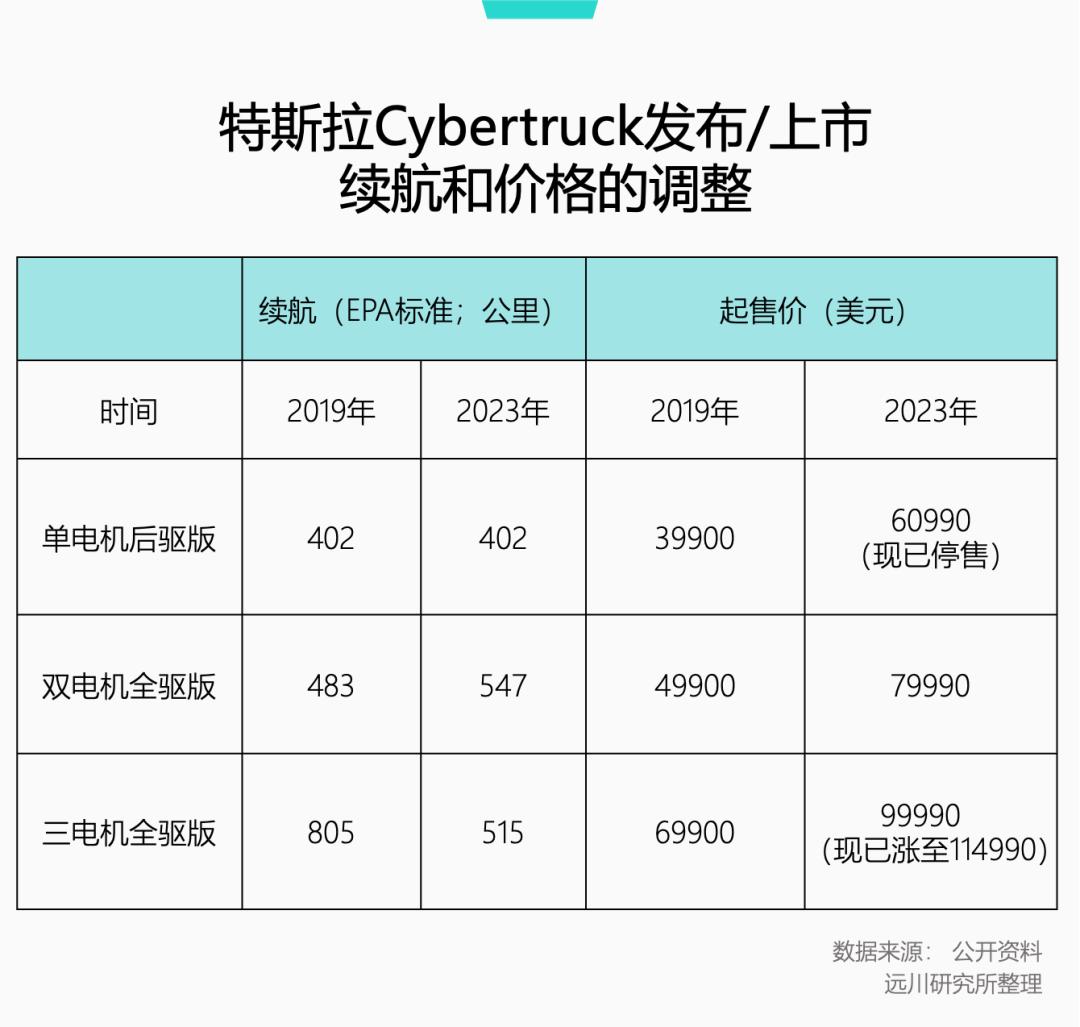
The direct reason for the commercial failure of the Cybertruck is probably the obvious gap between the advertised and the mass - produced versions in terms of range and price. And the "energy density" and "production cost" corresponding to the range and price seem to point to the 4680 battery itself.
Five Major Hurdles
Tesla first announced the 4680 battery at the "Battery Day" in 2020. The goal was simple: to increase the single - cell energy density by 5 times, the range by 16%, the power by 6 times, and reduce the cost per kilowatt - hour by 56%.
The 4680 battery, as the name suggests, refers to a cylindrical battery with a diameter of 46 mm and a height of 80 mm, while the 2170 battery has a diameter of 21 mm and a height of 70 mm. Compared with the latter, the 4680 battery is larger in size, has a higher capacity, and requires fewer cells in the same battery pack, saving cell components.
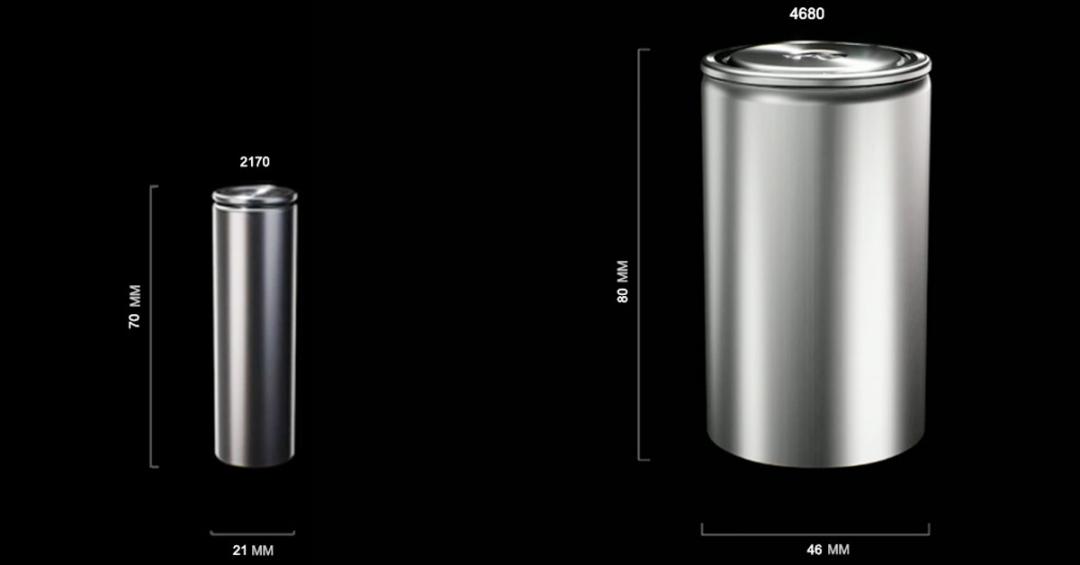
The 2170 battery and the 4680 battery
However, simply changing the shape is difficult to achieve Musk's goal of reducing the unit battery cost by 56%. According to Tesla's plan, 14% of the cost reduction comes from design, 18% from production, 17% from cathode and anode materials (5% from the anode and 12% from the cathode), and 7% from the battery - body integration technology.
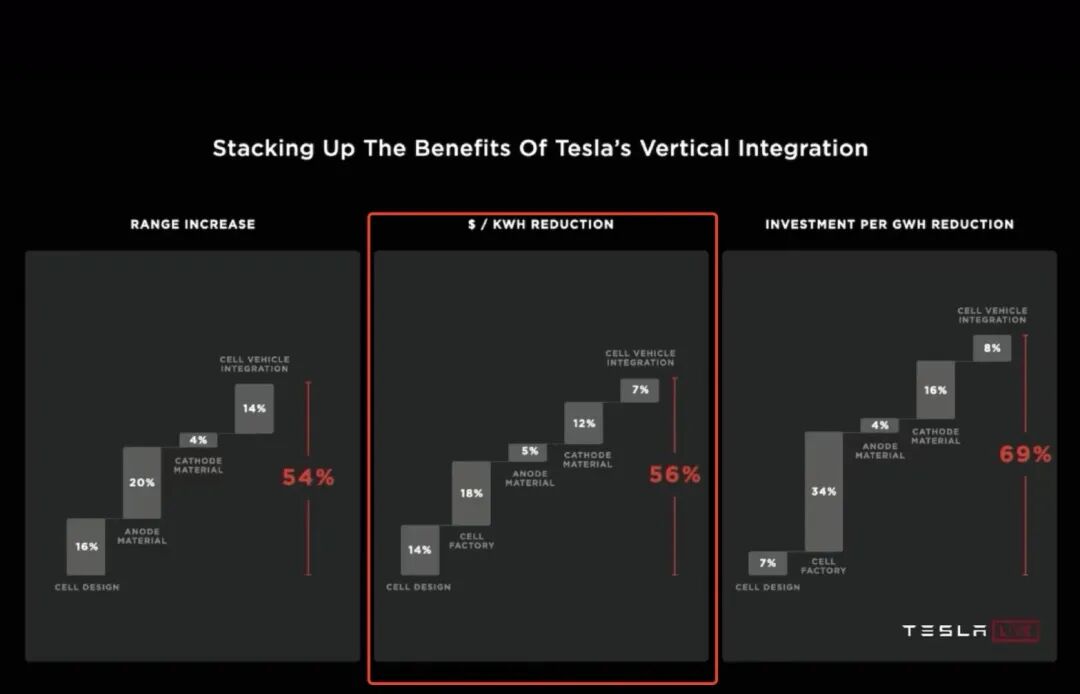
In an ideal state, the 4680 battery also needs to overcome three aspects:
Firstly, the full tab (Tesla calls it tab - less). The tab is a metal conductor connecting the positive and negative electrodes of the battery, which is equivalent to a bridge for charging and discharging. The traditional tab design is like a single - lane bridge, and the current can only move in a narrow channel. When the battery size increases, the positive and negative electrode plates become longer, and the distance between the tabs becomes farther, the electron transmission path will become longer, and the charge - discharge efficiency will decrease.
The full tab is like a highway. Tabs are formed at the end of the electrode plate and are directly connected to the shell after winding. The contact area increases, the electron path shortens, the internal resistance decreases, and the charge - discharge efficiency increases rapidly.
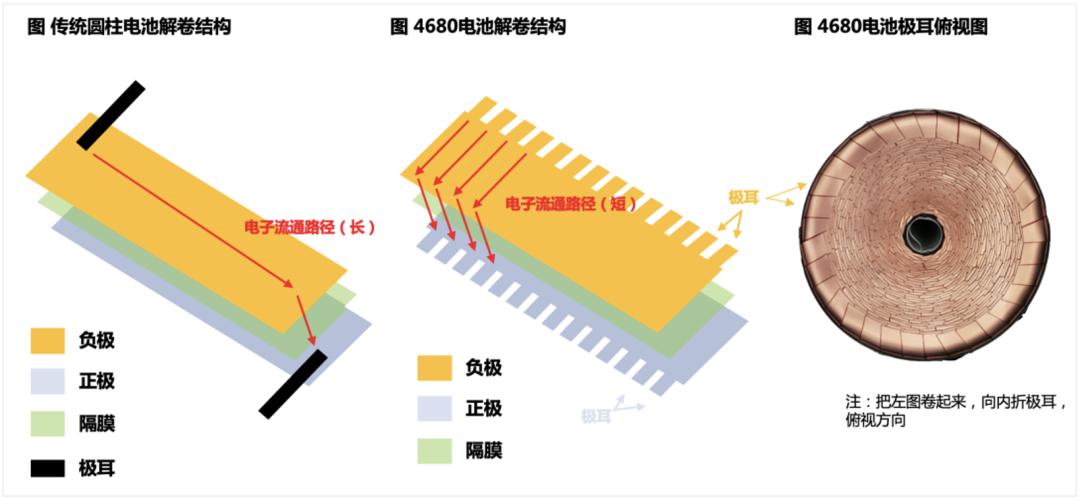
Traditional tab design and full tab design
Secondly, the cathode and anode. Simply put, the higher the nickel content in the cathode and the higher the silicon content in the anode, the higher the corresponding energy density. Therefore, Tesla's solution is "high - nickel cathode + silicon - doped anode".
Considering the astonishing rise in the price of cobalt, reducing cobalt and increasing nickel is the general trend. Using graphite doped with silicon for the anode can not only improve the range but also theoretically reduce the cost.
Thirdly, the dry - electrode process in the battery production stage. The current mainstream wet process is to mix the positive/negative electrode materials, conductive agents, and binders in a liquid solvent, then coat them on a metal foil, and dry them to prepare the electrodes. It consumes a lot of electricity and is not environmentally friendly.
The dry process is a very Musk - style idea: since we have to "get it wet and then dry it", why not skip the "getting wet" step and directly press the mixture film onto the foil to make a dry electrode?
Therefore, simply upgrading the battery size from "2170" to "4680" is very easy. What Tesla actually has to do is "size + full tab + high - nickel cathode + silicon - doped anode + dry electrode". It has to significantly increase the energy density without disappointing Musk's reputation as a cost - cutting maniac. The mainstream evaluation is [5]: Only Tesla dares to make batteries like this.
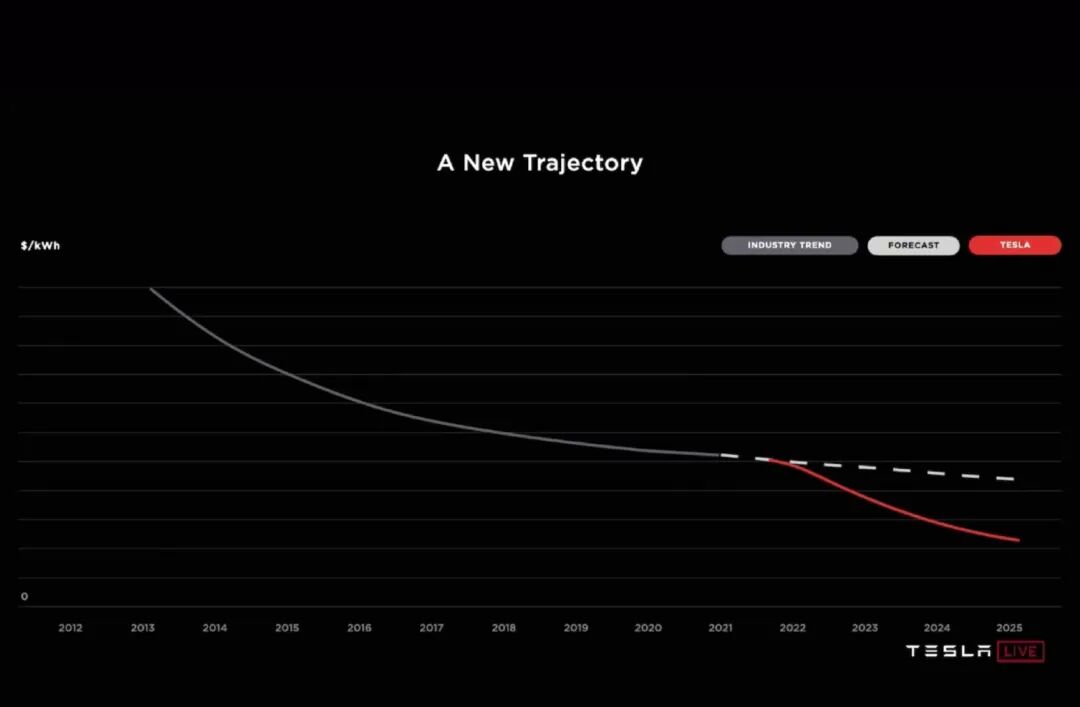
The battery cost - reduction curve that Musk is satisfied with is the red one
Nearly six years have passed since the announcement of the 4680 battery in 2020. The Starship has been tested in flight ten times, and Tesla's FSD has gone through four major iterations. However, out of the five major hurdles that the 4680 battery needs to overcome, only three have been crossed so far.
The Leapfrog Route Is Too Difficult
In April last year, Musk high - profilely celebrated the 4680 battery becoming Tesla's "battery with the lowest cost per kilowatt - hour" and also took the opportunity to take a dig at the suppliers. Michael Guilfoy, the battery manufacturing director, added fuel to the fire and announced that the dry - electrode process would be "fully put into production within the year" [4].
Eight months later, an announcement from L&F revealed the cruel truth: the full - fledged 4680 battery is still an over - the - top challenge.
The second - generation 4680 battery has basically achieved the design of "large cell + full tab", but there has been no obvious progress in the silicon - doped anode and dry electrode.
The anode of the first - generation 4680 battery basically contained no silicon. Although the silicon content in the second - generation battery has increased, it is still far from the designed goal of 20%.
At present, the silicon doping ratio of the silicon - carbon anode is basically between 5% - 10%. The problem of the expansion rate still needs to be solved for high - silicon content. There is also a problem that no car company wants to face: the price of the silicon - carbon anode is much higher than that of traditional graphite, which will significantly increase the battery cost.
The dry electrode is a cost - cutting tool that can offset the increased cost of the silicon - carbon anode, but the mass - production difficulty has almost run through the entire development process of the 4680 battery.
The difference between the wet process and the dry process is like spreading cream and sand on bread. Obviously, the former is easier to operate. Uneven mixing of raw materials and uneven coating will affect the battery performance. Coupled with the characteristics of the cathode material being "brittle and expensive", it also poses challenges to the production equipment and yield.
In July 2024, Tesla built the first Cybertruck prototype equipped with dual dry electrodes, but there has been no news about its full - scale production since then. Chinese and South Korean battery manufacturers, which are better at hard work, have all set the commercialization time of the dry process between 2027 - 2028.
In the case of the 4680 battery, Tesla has contributed a very forward - looking technical route to the entire industry, but Musk's leapfrog approach has stumbled in implementation.
In 2025, Tesla's global vehicle sales declined by 8.6%, remaining stagnant for three consecutive years. The failure of the Cybertruck and the setbacks of the 4680 battery seem to indicate one thing: Musk no longer cares about cars.
Compared with the stagnant automobile business, Musk's artificial intelligence company xAI has accumulated 1 million GPUs (equivalent to the number of H100 GPUs), and its valuation has reached $230 billion. In Tesla's Master Plan 4, robots and data centers are the absolute protagonists. Neuralink's brain - machine interface device will also be "mass - produced on a large scale".
If the automobile business is no longer important to Tesla, then the 4680 battery is naturally a tasteless burden.
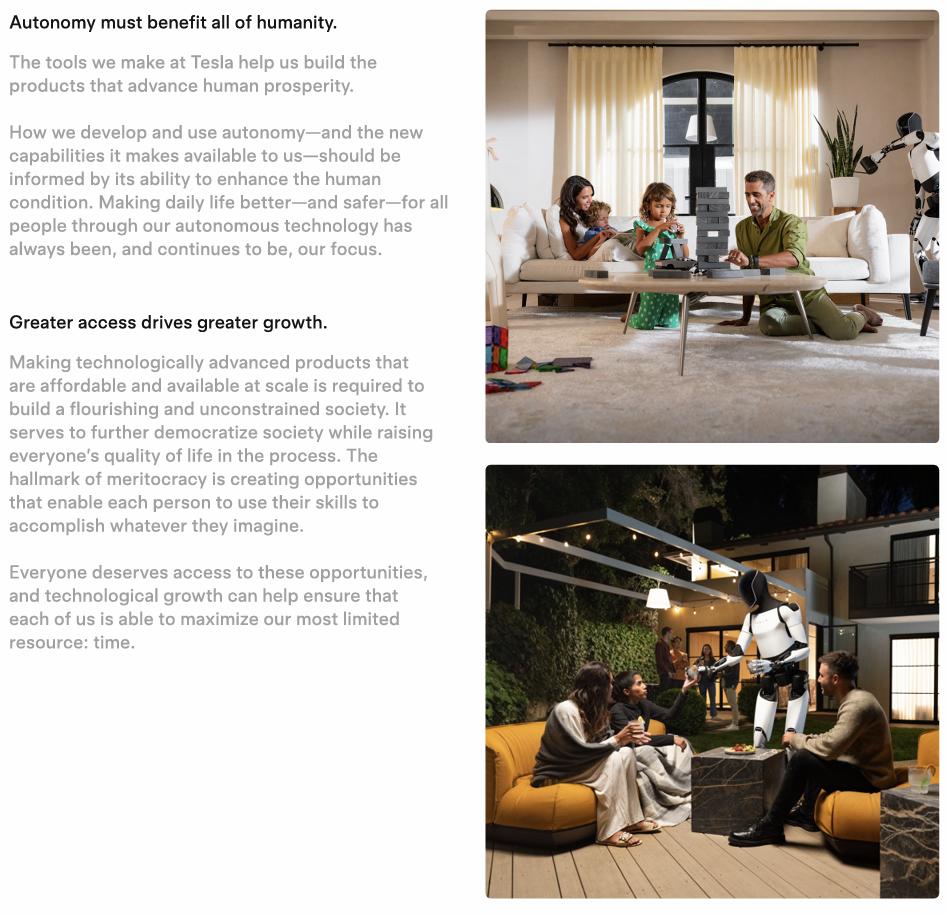
Tesla's Master Plan 4
So when the subsidies in the Chinese market are phased out and competitors are vigorously launching new models, Tesla can only calmly come up with a seven - year low - interest car purchase plan.
References
[1] Exclusive: Tesla taps Asian partners to address 4680 battery concerns, Reuters
[2] Elon Musk’s Dramatic Miss On 2025 Tesla Cybertruck Sales, CleanTechnica
[3] Elon Musk’s SpaceX bought tens of millions worth of Cybertrucks Tesla can’t sell, electrek
[4] Tesla celebrates key milestone for 4680 battery cell production cost, Teslarati
[5] The Difficult Birth of the 4680 Battery: Only Tesla Dares Make Batteries This Way, Lifepo4 Battery