The pioneer of the "poor man's supermarket" with over 80 stores is revolutionizing the "luxury cosmetics" industry.
The caviar essence comes in a blue tube with a silver cap, and the ingredient label states "Imported from Europe". Such a combination could almost come from any luxury skincare brand—it should be found in the first-floor counters of department stores. However, in reality, it's placed on the shelves of a supermarket, perhaps next to the discounted meat and milk for the evening sale.
This is the latest caviar essence series launched by Lacura, a private-label beauty brand under ALDI. After quietly hitting the market in early October 2025, the series quickly gained significant attention on social platforms: the reading volume of related topics exceeded tens of millions in a short period, and some designated stores were sold out. After restocking on December 25th, "ALDI Caviar Essence" remains the top search suggestion for ALDI on Xiaohongshu.
"I never used to buy skincare products at the supermarket," said Felice, a 36-year-old Shanghai white-collar worker, describing her change. By chance, she bought the mask and facial cleanser from ALDI's value series without high expectations. "But after using them, I found they were actually quite good." Since then, she has started to consciously pay attention to the unassuming skincare shelves in this German supermarket.
Price is, of course, the most direct reason. In the Lacura caviar essence series, the essence lotion and facial cleanser are priced at 19.9 yuan, the essence and cream at 49.9 yuan, and a pack of 5 caviar essence wash-off masks costs only 14.9 yuan. Even if you buy all 7 core products, the total cost is just over 200 yuan. In contrast, a certain high-end brand, which is frequently mentioned as "extremely similar in appearance and positioning", sells a single jar of cream for nearly 5,000 yuan.
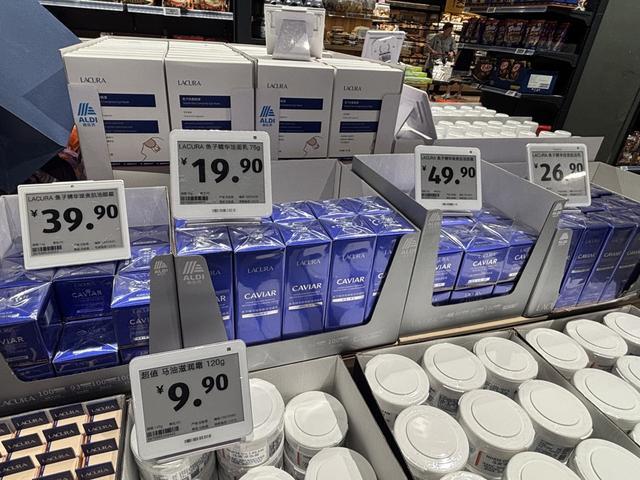
ALDI Lacura series products
Both products coexist on Felice's dressing table. "For me, there's no difference; I can't tell them apart." ALDI responded to overseas media, stating that the Lacura series is "attracting new customer groups" and that during development, it "benchmarks against first-tier beauty brands to ensure quality standards are met and even exceeded in some aspects".
"Affordable alternatives to Western luxury brands" was an important narrative for the rise of domestic beauty brands. Now, the same logic is being reinterpreted by overseas retail giants. The difference is that this time, they offer lower prices, closer access, and are more aggressive.
A "Perfect Storm"
In 1993, an unassuming moisturizing cream was placed on the shelves of ALDI in Germany. It had no celebrity endorsements and no elaborate packaging design, but the price was incredibly low. This product is later regarded as the starting point of ALDI's private-label beauty brand, Lacura.
More than thirty years later, Lacura has grown into a comprehensive system covering multiple categories such as skincare, makeup, hair and body care, and oral care, becoming one of the most representative "supermarket beauty" brands in the European and even global retail systems.
As a retailer's private brand, Lacura is never an independent beauty company in the true sense. Its growth path is highly synchronized with ALDI's global expansion. The trademark registration times vary in different countries and regions—for example, multiple registrations were completed in the UK in 2006 and 2016, which means Lacura is not a brand that emerged overnight but the result of repeated validation and gradual promotion in the retail system.
Currently, the Chinese retail industry is entering the "second half" of the hard discount competition. Low price is no longer the only weapon, and differentiation and category expansion have become new battlefields. Taking Shanghai as an example, ALDI's store location, layout design, and product mix are often compared with Hema NB, but a significant difference is that ALDI's customer base is significantly younger. This youthfulness provides room for its exploration in the non-food sector, with beauty and personal care products being the most representative.
Lacura's expansion path in the Chinese market is cautious and precise: from basic skincare and sun protection to hair and body care and hand care, and then extending to some nutritional supplements. These products share a common feature—you can always tell who they "resemble". The shea butter hand cream has a fragrance similar to L'Occitane's, but the price is only about 5% of the latter; the geranium skincare essential oil is directly regarded by many consumers as an "affordable alternative" to Aesop, and the price is also less than one-tenth of it.
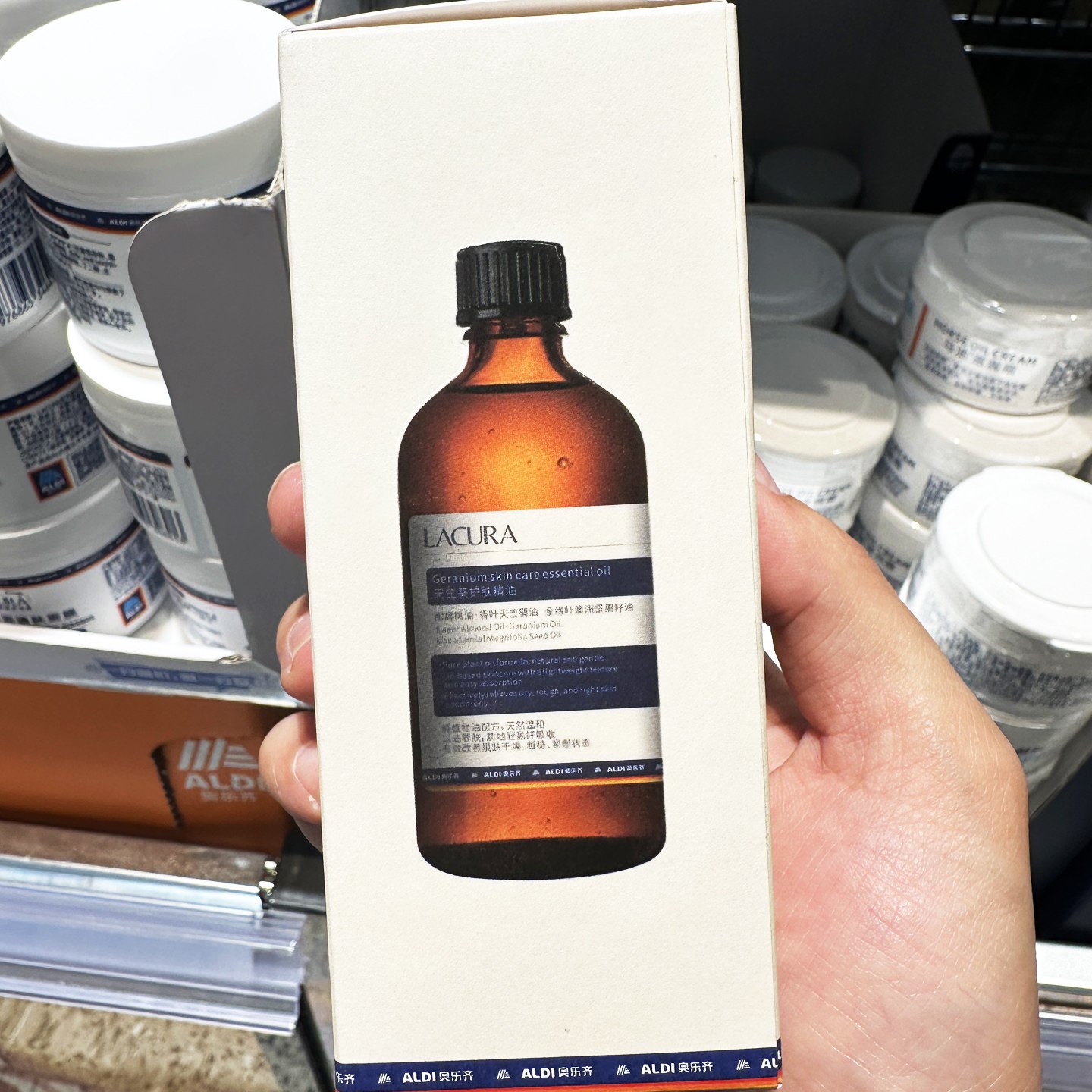
ALDI Lacura geranium skincare essential oil
"It's actually not easy to create affordable alternatives," an analyst who has long followed the retail industry told 36Kr. "Consumers either pursue the brand identity or claimed efficacy of luxury brands or turn to extremely low prices. Brands can easily get caught in a price war." However, the trend has changed in the past two years. A Mintel survey shows that about 74% of beauty consumers believe there is no significant difference in the effectiveness of affordable and high-end products, and this view is particularly prominent among the younger generation.
Xiaowen, a senior beauty enthusiast, feels this deeply. She doesn't think choosing affordable alternatives is just about "getting a bargain". In her opinion, luxury products often contain higher concentrations and more complex active ingredients, but this isn't always a good thing. She recalled an experience of having an allergic reaction after using a high-end cream and noticed that after the popularity of "acid peeling" and "intensive skincare" in previous years, more and more people around her have become sensitive-skinned for no apparent reason.
"At this time, you need products that are more suitable for you, not the most expensive ones," she said.
Meanwhile, the role of social media and digital content platforms in shaping consumer behavior cannot be ignored. On social platforms, countless users share reviews, comparisons, and usage experiences of affordable skincare products. This user-generated content not only reduces the cost of information acquisition but also reshapes the perceived boundary between "price and effect". In the eyes of some young consumers, choosing a cost-effective alternative has even become a smarter, more rational, and more shareable consumption attitude.
Dr Dray, a dermatologist with 2 million YouTube followers, has repeatedly discussed the reasonable boundaries of "affordable alternative skincare" in multiple videos. She believes that alternatives are most suitable for two scenarios: first, basic skincare, such as moisturizers and cleansing products; second, single-ingredient, mature formulations, such as hyaluronic acid, caffeine, niacinamide, and squalane. These raw materials have long been monopolized by a few large suppliers, and the differences between brands are limited, so "the chance of making a mistake is very low".
"The popularity of skincare alternatives is more like a 'perfect storm'," Dr Dray concluded. "The continuous rise in the cost of living has made people more rational in pursuing cost-effectiveness. At the same time, consumers' understanding and interest in skincare ingredients have reached a new level."
Buying Cream as Easily as Buying Milk
Compared with general affordable alternative products, the consumer psychology mechanism behind supermarket beauty products is completely different.
First is the transfer of trust. When consumers buy traditional beauty brands, they trust the brand itself; when buying supermarket beauty products, they trust the retailer. For most consumers, "this supermarket won't sell bad products" is a more stable psychological anchor than a brand story. Retailers like ALDI, Costco, and Sam's Club are known for their strict product selection and high elimination rates. This long-accumulated retail reputation naturally extends to their in-house beauty categories.
Second is the certainty of the usage scenario. Supermarket beauty products almost entirely cover basic needs: moisturizing, cleansing, sun protection, and body care. These needs don't require complex education, and there are no high expectations for "immediate results". When consumers make a purchase, they're not gambling on the effect but replenishing daily consumables. This "utilitarian consumption" is naturally suitable for supermarkets.
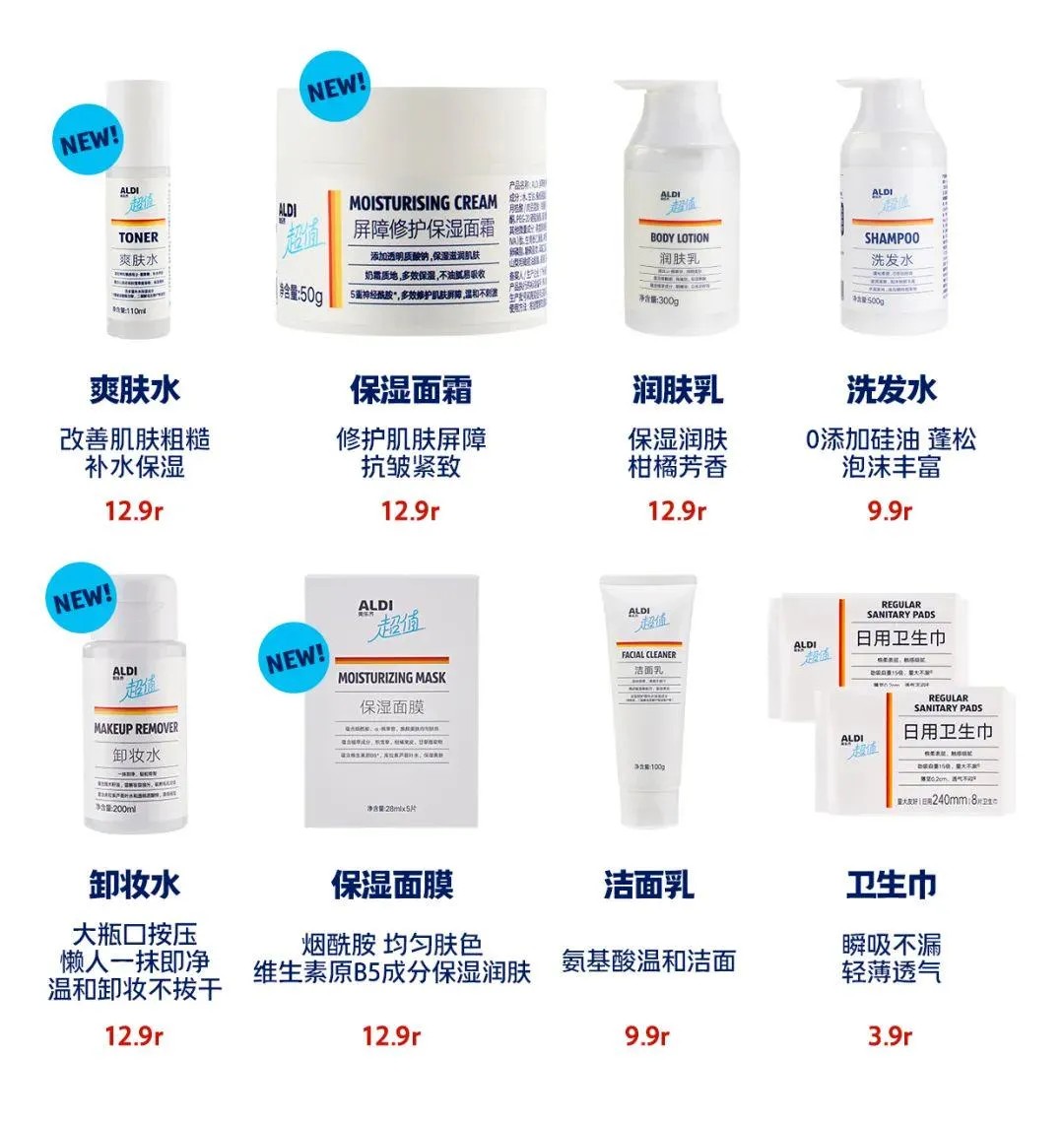
The value series, which is cheaper than Lacura and specially developed for the Chinese market
Finally, the decision-making cost is extremely low. At beauty counters, consumers are faced with a large amount of information, sales pitches, and psychological hints; in front of supermarket shelves, the selection logic is extremely simple: Is the price reasonable? Is the packaging familiar? Have I seen it somewhere before? This low psychological burden is an important reason for the repeated purchase of supermarket beauty products.
Of course, the most important thing is that even with the same formula and raw materials, supermarket beauty products have an unparalleled price advantage, not achieved by sacrificing safety or compliance but due to a completely different cost structure.
The most obvious is the almost zero marketing cost. It's a common industry view that the marketing expenses of mid- to high-end beauty brands can account for 30% - 50% of sales. Supermarket private-label beauty brands hardly do any brand promotion, and the shelf itself is the only advertisement. The absence of this item directly determines the price floor.
Channel costs are also integrated into the system. Different from traditional brands that need to pay entry fees, commissions, and rebates to enter shopping malls, counters, and e-commerce platforms, supermarket beauty products are sourced, stored, and shelved within the same system, eliminating channel competition.
According to public reports, the proportion of ALDI's self-operated products in China is around 85% - 90%. Although Lacura is not a self-operated brand developed specifically for the Chinese market and some raw materials for the caviar series are imported, its contract manufacturer is Guangzhou Shifei. In overseas markets, Lacura also generally uses local production to control costs.
Of course, supermarket beauty products may also optimize costs by using more economical raw material sources or adjusting ingredient concentrations. However, it's worth noting that like luxury beauty brands, their efficacy claims also need to be supported by third-party testing. Similarly, neither will the specific concentration values be marked on the ingredient list.
"It's difficult to infer the raw material cost of any product from the external label," Dr Dray pointed out. The main difference in raw materials between luxury and supermarket beauty products may be that the former "has a more complex formula, containing more barrier lipids or marine extracts" or is superior in terms of skin feel and mildness, "but this is not absolute and is related to individual skin types."
Perhaps the most crucial point is that supermarkets don't need to make money from beauty products, which is almost an asymmetric competition.
ALDI is positioned as a community fresh food supermarket in China, and the proportion of personal care products is less than 10%. For ALDI, beauty products are more like a strategic tool to increase the average transaction value, extend customer stay time, and strengthen the perception of "high cost-effectiveness". As long as they don't incur losses and can promote repeat purchases, the mission is accomplished. This also gives supermarkets a pricing freedom that traditional brands can't match: they don't need a single jar of cream to bear the entire brand's cost pressure.
Therefore, Lacura's success is not just another victory for the affordable alternative narrative. The real change is that this time, the initiator of the affordable alternative narrative has shifted from brand owners to retailers. When products don't need complex explanations or grand narratives and only need to appear on the shelves at a "reasonable enough to require no thought" price, consumers' previous selection logic has been completely changed.
This is also why the battlefield of affordable alternatives, previously dominated by domestic emerging brands, is gradually being taken over by retailers like ALDI.