Why is Qingdao the northern highland for the chip industry?
In recent years, whenever the topic of the domestic semiconductor industry is mentioned, the first word that comes to people's minds is "being held back by key technologies".
The scale of the Chinese semiconductor market has reached 1302.8 billion yuan. This breakthrough for the future not only has the important significance of solving the "being held back by key technologies" problem but also has real economic performance. Therefore, the semiconductor industry has become a favored project in various cities.
Beyond the traditional strongholds of the semiconductor industry in the Pearl River Delta and the Yangtze River Delta, in recent years, Qingdao has become a new favorite for semiconductor industry investment.
With enterprises flocking to settle in and national - level funds entering the market, Qingdao is aiming to become a high - ground for the integrated circuit industry in the north.
Why Qingdao?
01 Qingdao's Efforts in Chip Manufacturing
The semiconductor industry has an extremely long industrial chain from upstream to downstream, and the division of labor is very clear.
In the development of the new - generation information technology industry, Qingdao has chosen the integrated circuit as the main track.
To be more specific, Qingdao is mainly focusing on four sub - tracks: automotive - grade chips, magnetic storage chips, advanced packaging, and new display technologies.
Simply put, it is about making chips and screens.
Qingdao has set a development goal of reaching 200 billion yuan for this industry by 2027.
In August 2025, the first lithography machine for the No. 2 production line of the Wuyuan Semiconductor Qingdao Project was officially installed, marking a major breakthrough in Qingdao's core process capabilities in integrated circuits.
Because this leading enterprise in the industrial chain is one of the few domestic enterprises that have mastered 3D integration technology.
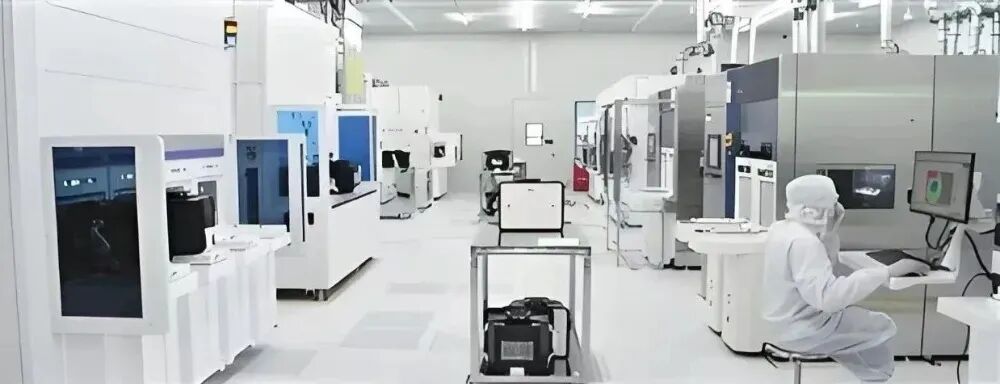
The test line of Wuyuan Semiconductor Technology (Qingdao) Co., Ltd.
Also reaching a critical mass - production node in 2025 is the project of Qingdao Sirui Intelligent Semiconductor Advanced Equipment R & D and Manufacturing Center.
This manufacturing production line capable of large - scale production of high - end equipment such as atomic layer deposition coating and ion implantation has filled the gap in the regional semiconductor core equipment manufacturing field.
The two enterprises mentioned above are just an epitome.
As early as 2018, the 8 - inch factory of XIN EN (Qingdao) Integrated Circuit Co., Ltd., led by Zhang Rujing, known as the "Father of Chinese Chips", had successfully started production. It produces power chips, and the yield rate has reached over 90%.
After Zhang Rujing established a factory in Qingdao, semiconductor projects continued to settle in Qingdao:
At the end of 2018, Datang Semiconductor Technology Co., Ltd. was established in Laoshan District, Qingdao. With integrated circuit design as its core competitiveness, it provides chips, modules, terminals, and solutions.
In 2019, Huike Group established Qingdao Huike Microelectronics Co., Ltd., laying out in the fields of semiconductor materials, chips, and packaging and testing. In 2022, the 6 - inch new power device production line with the largest single - body production capacity in China was put into operation.
In 2020, the Foxconn Semiconductor High - end Packaging and Testing Project (New Core) landed in Qingdao. In 2021, Foxconn's first wafer - level packaging and testing factory was officially put into operation.
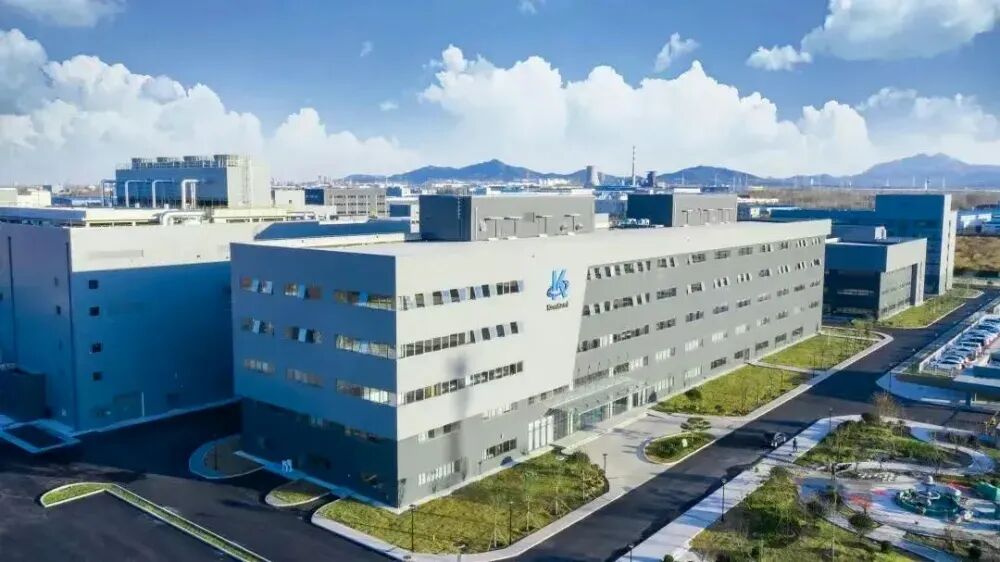
In 2020, the Global R & D Headquarters of Goertek was officially opened in Qingdao. This is another strategic move of Goertek, an important supplier of Apple, in its comprehensive layout in Qingdao.
Relying on the global R & D center, Goertek accounts for over 80% of the global market share of mid - to high - end virtual reality headsets. It also enables Qingdao to have the only National Virtual Reality Qingdao Innovation Center in the country, which can mobilize 70% of the national virtual reality research forces.
At the same time, in the field of optoelectronic display, 47 production lines of the display module production line at the BOE production base have been put into operation. After the project reaches full production, it will have an annual production capacity of 150 million small - and medium - sized liquid crystal display modules.
Across the road from it, in the Wanda Optoelectronics (Qingdao) Intelligent Manufacturing Production Base, blank circuit boards are printed, tested, and then packed into boxes, which can be directly sent to the BOE Qingdao production base.
The implementation and operation of a number of major projects such as BOE and Goertek, from the perspective of the industrial chain layout, have brought not only technological breakthroughs but also, more importantly, an independent industrial ecosystem.
In terms of the semiconductor industry, Qingdao not only has advanced technology but also advanced equipment. More importantly, it has gathered a full - fledged industrial chain development pattern with the leading force.
In 2022, there were already 111 enterprises in Qingdao's integrated circuit industrial chain. They are mainly distributed in several industrial parks and have gathered to form an industrial ecosystem, initially forming a coordinated development pattern of "one core and four poles" in the West Coast New Area, Laoshan, Chengyang, Jiaozhou, and Jimo:
As the "one core", the Qingdao Integrated Circuit Industrial Park in the West Coast New Area ranked 17th in the "Comprehensive Strength List of Chinese Integrated Circuit Parks" in 2024.
A total of 48 key enterprises have settled in the park, with a total investment of about 180 billion yuan, covering the entire industrial fields of design, materials, equipment, packaging and testing, and modules, forming a closed - loop of the domestic supply chain from equipment to testing. For example, Wuyuan has linked up with more than 10 upstream and downstream enterprises such as NAURA Technology Group Co., Ltd. and China Electronics Technology Group Corporation No. 45 Research Institute, with a domestic equipment rate of over 70% and a domestic raw material rate of over 85%.
Laoshan District has gathered a number of integrated circuit design enterprises, forming characteristics in fields such as TV picture quality and timing control chips, wireless communication chips, high - end power devices, and domestic EDA (chip design software) tools.
Chengyang District, Jiaozhou City, and Jimo District have gathered a number of power device manufacturing, packaging and testing, and material processing projects.
After several years of layout, Qingdao has basically achieved full coverage of the industrial chain in links such as chip design, wafer manufacturing, and packaging and testing, as well as supporting industries such as materials and equipment. Therefore, it has won a place among the top 100 cities in the global integrated circuit industry in terms of comprehensive competitiveness, ranking 82nd.
Such a large - scale entry into the semiconductor industry has also attracted the attention of "patient capital".
As the largest government investment platform in Qingdao, Qingdao Urban Construction Investment Group is most closely bound to Qingdao's integrated circuit industry.
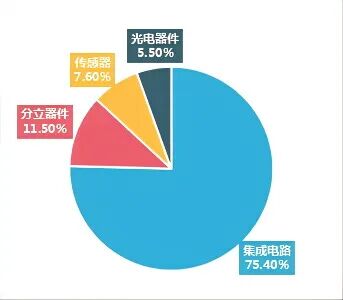
The structure of China's semiconductor sub - markets in 2024. Data source: China Semiconductor Industry Association
Currently, in the field of integrated circuits, Qingdao Urban Construction Investment Group has completed investments in 641 projects, with fund investments exceeding 30 billion yuan. At the same time, it has also leveraged over 60 billion yuan in financial and social capital investments and financings.
In 2024, Qingdao became a pilot city for equity investment by national AIC (Financial Asset Investment Companies).
Subsequently, ABC Financial Asset Investment Co., Ltd., ICBC Financial Asset Investment Co., Ltd., BOC Financial Asset Management Co., Ltd., CCB Financial Asset Investment Co., Ltd., and BOCOM Financial Asset Investment Co., Ltd. successively established AIC equity investment funds in Qingdao. Most of the "Big Five" investment funds are invested in strategic emerging industries such as integrated circuits, new - generation information technology, new energy, and artificial intelligence.
Only the Qingdao Integrated Circuit Industrial Park has attracted over 20 billion yuan in funds to land, of which the scale of newly established funds in 2024 exceeded 14 billion yuan.
With the frequent landing of projects and funds, Qingdao's chip manufacturing has driven the related semiconductor industry onto the fast track.
02 Qingdao's Choice
Qingdao's focus on developing semiconductor industries such as chip manufacturing and advanced display technologies is not only a layout for future development but also a practical need for the upgrading and transformation of its traditional advantageous manufacturing industries.
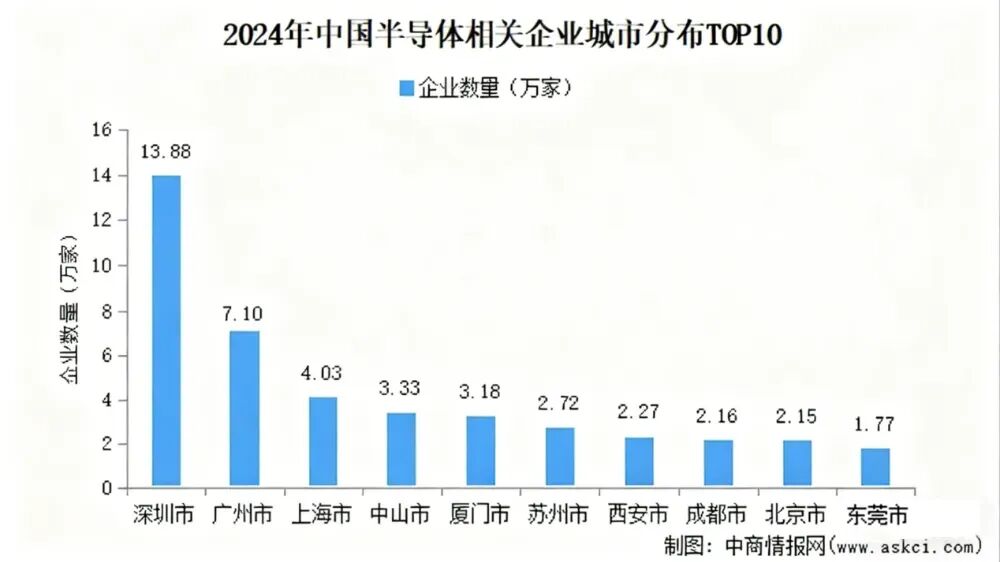
The top 10 cities in China in terms of the number of semiconductor - related enterprises
Although Qingdao does not rank high in the number of semiconductor - related enterprises in China at present, in fact, it started exploring chip manufacturing quite early. It can even be said to be one of the earliest cities in China to independently explore the semiconductor industry.
As early as the 1990s, Qingdao was known as the "Home Appliance Capital of China" along with Shunde, Guangdong.
Local home appliance brands such as Haier, Hisense, and Aucma quickly emerged, and the idea of self - developing chips began to germinate.
In 2000, Hisense Group started self - developing chips, and five years later, the first digital video processing chip went into production.
Also in 2000, Haier established an integrated circuit design company in Beijing. Three years later, it launched China's first digital set - top box chip and became one of the first customers of TSMC in the Chinese mainland.
Regrettably, these attempts ultimately failed due to factors such as technology, cost, and the price - cutting competition of foreign products at that time.
After all, at that time, the United States, Japan, and South Korea, where the integrated circuit industry was developed, promoted it with national strength. It was almost impossible for Qingdao to succeed with only the capabilities of its enterprises.
However, the manufacturing industry has always been Qingdao's largest foundation. Especially when the home appliance manufacturing industry was booming, the embarrassing situation of "lacking chips and screens" slowed down the pace of Qingdao's manufacturing industry upgrading and transformation.
So, after a more than ten - year interruption, the pace of chip manufacturing restarted.
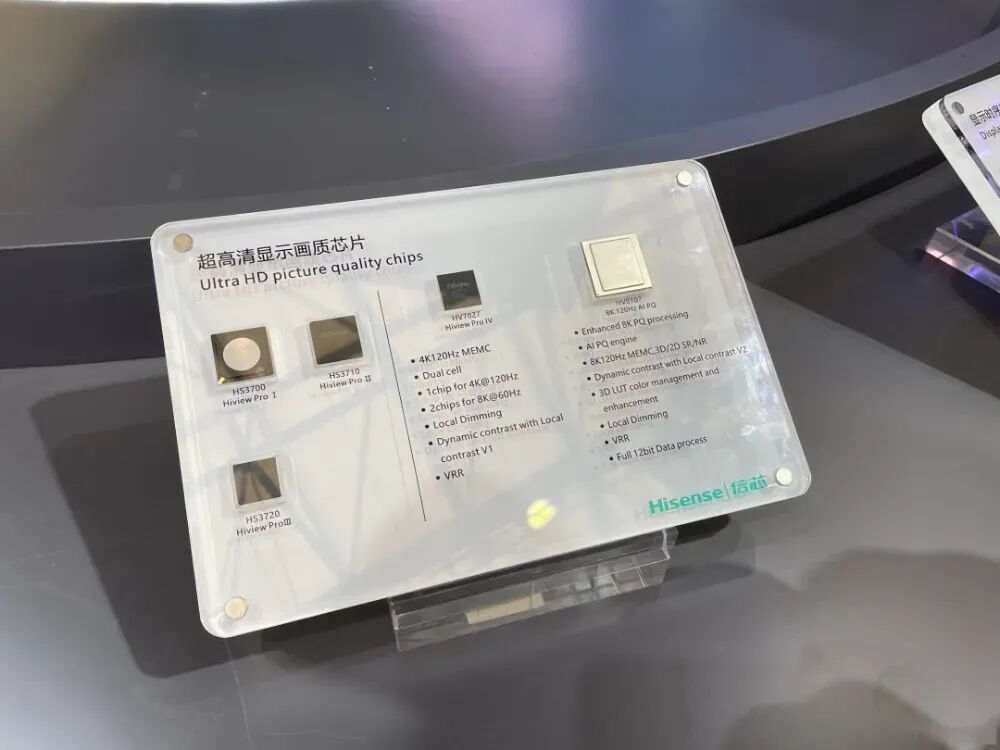
In 2005, Hisense launched its first chip, "Xinxin", which has now completed the fifth - generation iteration.
In 2019, Qingdao began to implement the development strategy of "high - end manufacturing + artificial intelligence". The consumer electronics industry with a total scale of over 300 billion yuan has become Qingdao's most reliable card to attract semiconductor enterprises.
One of the important reasons why Aucma was able to facilitate Zhang Rujing's establishment of a factory in Qingdao is that Zhang Rujing saw the huge demand for chips in Qingdao's home appliance industry.
Qingdao pioneered the model of a collaborative integrated circuit manufacturing project in China, allowing enterprises involved in chip design, R & D, production, and other links to share resources and reduce risks.
The local home appliance production enterprises are large - scale enough to customize chip R & D according to their own needs.
This model, which Zhang Rujing calls the most suitable for the development of Chinese semiconductor enterprises at present, coincides with Qingdao's plan to build a full - fledged industrial chain.
The same logic applies to the choice of sub - tracks such as automotive - grade chips and magnetic storage chips.
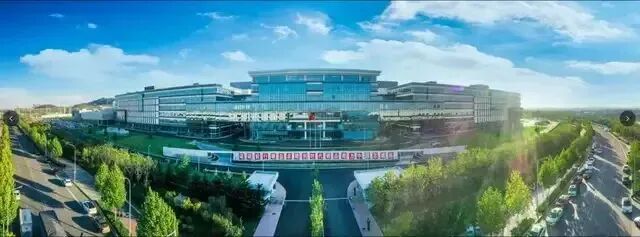
The Qingdao Integrated Circuit Industrial Park
An electric vehicle requires 1000 - 1200 chips. Qingdao is home to vehicle - manufacturing enterprises such as FAW, SAIC - GM - Wuling, Chery, and BAIC.
Magnetic storage chips can be applied not only in the automotive field but also in industrial, consumer, and artificial - intelligence scenarios. These have become the most important factors for Qingdao's choice and being chosen.
For Qingdao, on the one hand, by introducing key enterprise projects, it can solve the long - standing problem of lacking chips and screens in the local manufacturing industry. On the other hand, with the help of large - scale projects, it can attract more enterprises and talents related to semiconductor production, equipment, packaging and testing, and design, thus improving the development level of Qingdao's semiconductor industry.
03 Qingdao's Future
Compared with Shenzhen, which has 138,800 semiconductor - related enterprises (data as of August 2024), Guangzhou with 71,000, and Shanghai with 40,300, Qingdao, which only started to make efforts in recent years, seems insignificant in terms of the number of enterprises.
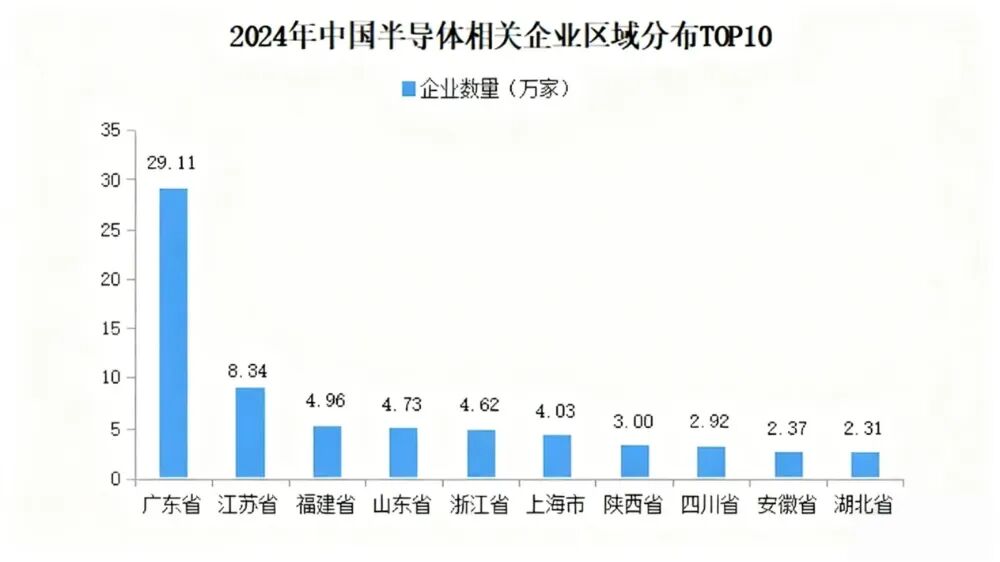
Shandong Province ranks fourth in China in terms of the number of semiconductor - related enterprises.
However, if we take a broader view and observe the domestic semiconductor industry layout with provinces as the regional observation objects, we will find that Guangdong Province leads the way in the number of related enterprises, followed by Jiangsu and Fujian, and Shandong is closely behind, ranking fourth.
With the whole province as a unified whole, each city focuses on its own advantages, plays different roles in the entire semiconductor industrial chain, and forms regional agglomerations.
Relying on the strong demand of the developed manufacturing industry, Shandong's development logic of "application - driven - technological breakthrough - industrial agglomeration" is emerging.
From the perspective of regional layout and division of labor, Jinan and Qingdao, ranked 78th and 82nd respectively among the top 100 cities