Live from CES | The Matter ecosystem is finally ready to embrace traditional home appliances.
At 10 a.m. on January 6th, Pacific Time in the United States, Las Vegas once again entered the "technology time." This city, famous for its entertainment and casino culture, welcomed the annual highlight of the technology industry - the Consumer Electronics Show (CES 2026) in the United States.
As a globally renowned annual exhibition of consumer electronics technology, CES is no longer just a showcase for new products. It is more like a high - density industrial signal system: the focus of capital, the maturity of technology, and the rhythm of products moving from concept verification to large - scale implementation are all magnified here. CES often gives the first judgment on who occupies the C - position, which technology route is repeatedly verified, and which innovations have mass - production capabilities.
Therefore, the value of each CES does not entirely lie in "what new products are seen," but in understanding where the industry is going from the exhibition area structure and display focus.
On the occasion of the opening of CES 2026, we came to the scene to try to capture the new industrial signals that were released.
Our first stop was the Venetian Expo. In the overall exhibition area system of CES, the Venetian Expo has long been regarded as the "trend outpost" for smart home and cutting - edge innovation. The focus here is not limited to a single hardware form, but more on connection standards, platform capabilities, and system - level solutions.
Among them, the smart home exhibition area is the core of the Venetian Expo.
In this year's smart home exhibition area, a keyword was repeatedly mentioned - Matter. From lamps and sockets to sensors, the new - generation devices supporting Matter have almost become the "standard configuration." The boundaries between different brands and different categories are being gradually flattened by the unified protocol.
After visiting several booths in a row, an obvious reality gradually emerged: most of the displays about Matter were still concentrated on new devices "from scratch."
And this precisely constitutes a key breakpoint in the popularization path of Matter. When there are still a large number of traditional household appliances relying on infrared and radio - frequency control in global households, does Matter still lack a "bridge role" that can connect the new standard with old devices to truly achieve large - scale implementation?
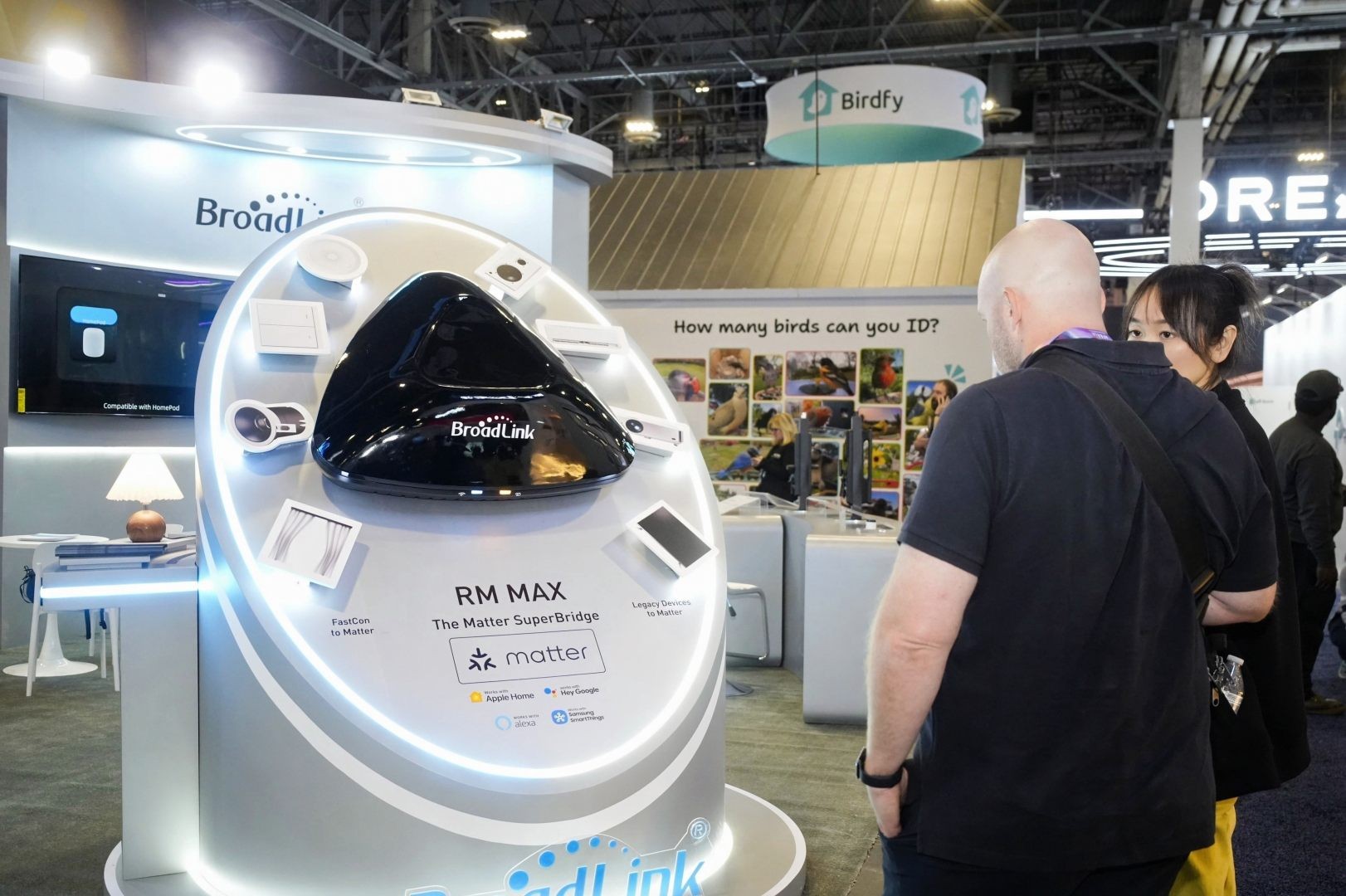
With this question in mind, we walked into the BroadLink booth, and our attention was quickly attracted by a new product - RM MAX.
1. Not a "New Device," but a "Connector"
It's hard to miss the position of RM MAX.
As soon as we walked into the BroadLink booth, it was prominently placed right in front of the entrance, like a "must - pass point." An annular exhibition stand quietly surrounded the enlarged model of RM MAX. There were no complicated parameter tables or performance rankings on the stand. The most eye - catching were those two lines of words: "FastCon to Matter, Legacy Devices to Matter."
This is not the existing RM MAX on the market of BroadLink, but a new product to be released. According to the staff, this product specially integrates the Matter protocol super - bridge.
In other words, RM MAX is no longer just a controller, but a connection layer: it tries to bring devices under different protocols, different eras, and different ecosystems into the Matter system uniformly.
This was very intuitive during the on - site explanation.
For example, first use the smart panel to trigger different lights, then switch to the mobile phone and open Apple Home. The devices that were just operated, whether it's the air - conditioner controlled by infrared or the lamps and sensors of FastCon, have all appeared uniformly on the same interface without being distinguished as "new devices" and "old devices."
Switching to Google Home, the presentation is almost the same. The devices no longer belong to a certain brand's App, but naturally integrate into the system - level smart home entrance.
Throughout the process, you can't perceive the existence of RM MAX, but it is always working.
After some understanding and experience, three intuitive feelings from the consumer's perspective are:
First, there is no need to replace the original household appliances. The infrared and radio - frequency devices remain the same, without disassembly, assembly, or modification, but the control method has changed.
Second, it doesn't rely on complex configuration. The whole process doesn't require understanding the protocol, ecosystem, or gateway logic. The appearance of the device in a certain App is the "result," not the process that users need to worry about.
Third, and this is also a point repeatedly mentioned by many visitors: there is no need to "learn a new App." Whether it's Apple Home or Google Home, the operation logic is native, without additional learning costs.
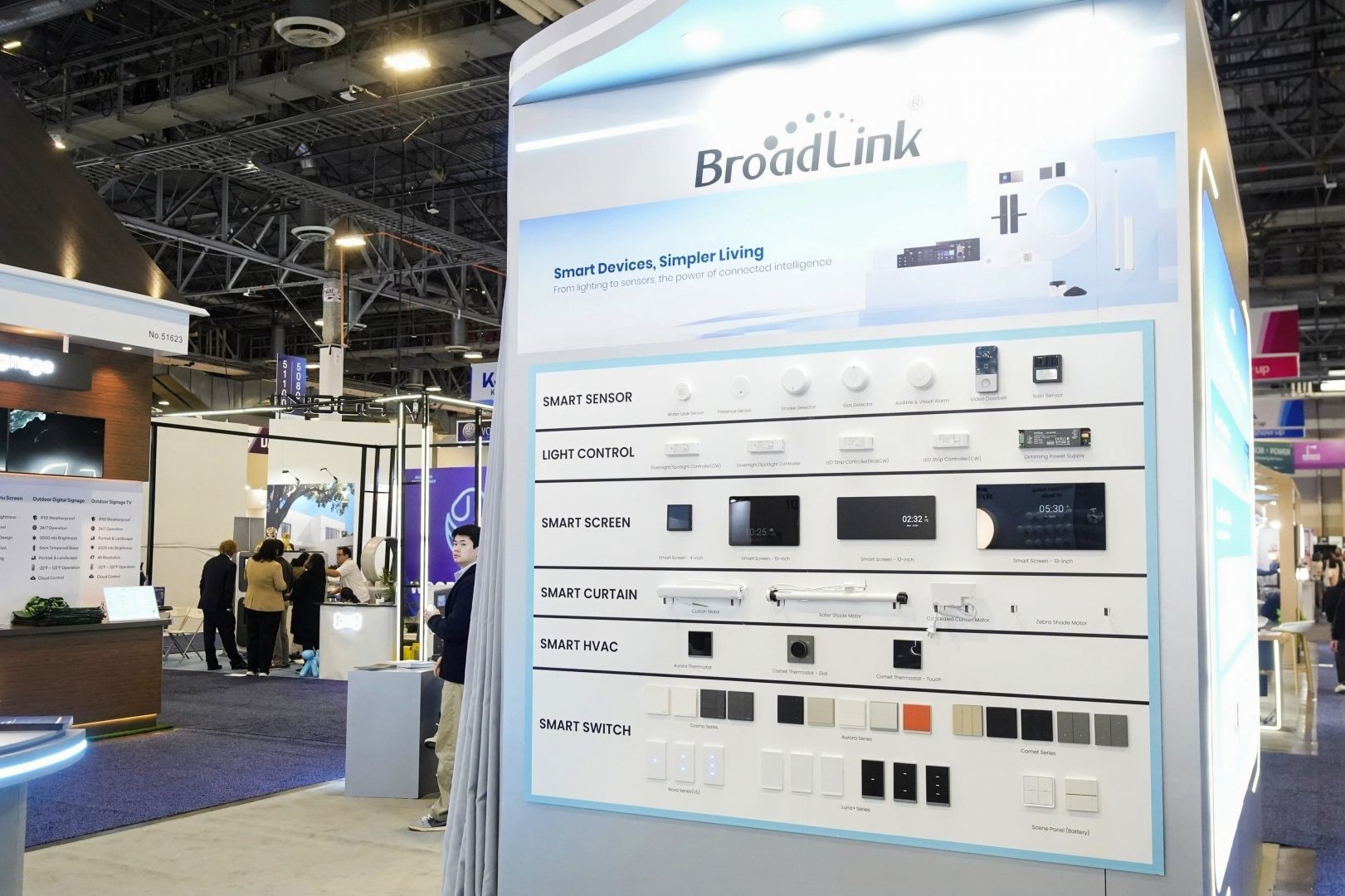
As the experience deepens, the positioning of RM MAX becomes clearer: it is not a new smart home appliance, nor a central control device trying to establish a closed ecosystem. RM MAX is more like an infrastructure - a Matter super - bridge.
It does not undertake "replacement," but connection and activation. It connects different protocols and different ecosystems; activates a large number of existing devices and enables them to regain collaborative capabilities under the Matter standard.
A distributor from Europe told me that he is most optimistic about the "inclusiveness" of RM MAX: "The replacement cycle of household appliances in European families is very long. Many people are not willing to discard old devices for smart functions. RM MAX solves this contradiction and allows traditional household appliances to keep up with the technological trend."
Looking back at the two lines of words "FastCon to Matter, Legacy Devices to Matter" marked beside the RM MAX model from this perspective, their meaning is very clear: it is not about manufacturing more devices, but about enabling existing devices to truly start working together.
2. Filling in the "Key Piece" in the Matter Stage
The value of RM MAX goes far beyond the experience upgrade at the consumer level. The business logic behind it precisely addresses two core pain points in the smart home industry: the high transformation cost for C - end users and the Matter transformation difficulties for B - end manufacturers.
Let's start with the C - end market.
In the smart home field, the speed of technological upgrading far exceeds the usage cycle of devices in households. Although new - generation smart devices are emerging in an endless stream, a large number of households around the world still rely on traditional household appliances controlled by infrared and radio - frequency.
This is not an abstract concept. Most of the air - conditioners, TVs, washing machines, fresh - air systems, and floor - heating systems installed during the early decoration of households are still in the "proper use period"; even devices such as projectors and audio systems are operating stably. However, they have almost no intelligent capabilities, and the on - off control still relies on remote controls or manual operations.
If you want to "upgrade to smart," what should you do?
At least in the past few years, the industry's solution was almost the only way: replace the devices, change the brand, change the protocol, and incidentally, replace the entire ecosystem.
The cost is also clear. The transformation cost is rapidly increasing, often reaching tens of thousands of yuan at a time; the devices still in the service cycle are forced to be discarded, resulting in a large amount of waste; at the same time, users are locked in a certain brand or App system, with almost no low - cost exit space.
RM MAX targets this long - ignored stock gap.
In BroadLink's solution, in most cases, users only need to replace a smart panel. Compared with large household appliances, the intelligent cost of such panels has been compressed to a very low level. After the installation is completed, the devices that originally relied on remote controls can directly appear in the native App and participate in scene linkage.
More importantly, it doesn't just solve the problem of "traditional devices."
Currently, a large number of mature smart devices in the market have not completed Matter certification. This means that even devices that are already connected to the Internet and can be remotely controlled are difficult to communicate with other brands.
Another bridging ability of RM MAX is to solve this problem.
Through RM MAX, devices such as panels, sensors, lamps, and motors in the BroadLink FastCon ecosystem can be uniformly connected to the Matter system. Users don't need to repurchase hardware or rewrite the existing intelligent logic, and can manage these devices uniformly on mainstream native platforms such as Apple Home, Google Home, Amazon Alexa, and Samsung Smart Things, achieving cross - brand and cross - ecosystem collaboration.
It is understood that the self - developed FastCon communication protocol of BroadLink has features such as network - free configuration and self - networking. It can connect up to 4096 devices in a single home network, and the single - device communication distance exceeds 80 meters, providing underlying support for large - scale device access.
Under this system, users are no longer bound by a single brand or App and can freely combine devices from different manufacturers; the smart home gradually evolves from a "collection of brand products" to "home infrastructure"; both new and existing devices can be uniformly included in system management, and scene linkage becomes more natural and stable.
For B - end manufacturers, this path is particularly practical.
In the traditional model, if a single product is directly connected to Matter, it often means modifying the production line and re - conducting product certification. This is not only costly and time - consuming but also significantly prolongs the product launch rhythm. Through RM MAX, manufacturers can connect to the Matter ecosystem as a whole without modifying the hardware, and they don't need to complete Matter certification for each product separately, significantly reducing the transformation threshold in terms of both cost and time.
3. Another Way for an "Established Technology Manufacturer" to Return
If we broaden our perspective from RM MAX itself, we will find that behind this product, there is actually a quite clear path of BroadLink.
BroadLink was founded in 2013. For a long time, it was not a consumer - grade brand with a "strong presence." Instead, it was more like an infrastructure provider in the smart home industry chain. Whether it was providing connection and control capabilities for household appliance manufacturers or outputting system - level solutions for real - estate, hotel, and office projects, BroadLink has long been deeply involved in the B - end market - working on protocols, connections, and stability, rather than creating popular single products.
This ability is particularly crucial in household appliance and real - estate projects. A typical reality is:
The real - estate delivery cycle is long, and the device brands are complex. Air - conditioners, fresh - air systems, curtains, motors, and lighting systems often come from different manufacturers; once the delivery is completed, the priority of system stability is far higher than "how new the functions are." Such scenarios do not pursue frequent device replacement but focus more on "whether it can be stably connected, whether it can be uniformly managed, and whether it can be upgraded later."
BroadLink early on undertook this kind of "invisible but indispensable" role.
From the early Smart Config one - key network configuration, to the later FastCon network - free configuration and self - networking communication protocol, to today's bridging ability around Matter, BroadLink's technology route has always been highly consistent: solving the problems of "how to connect devices, how to manage them, and how to ensure long - term stable operation."
This also gives it a relatively special positioning in the industry.
In the smart home field, most manufacturers usually have only two choices: one is to build a platform and bind users through the App and cloud services; the other is to create single products and leverage the market with popular hardware.
BroadLink is more like one of the few manufacturers that always stand in the position of "underlying capabilities" - not in a hurry to build an ecological entrance, nor obsessed with the sales volume of a single device, but focusing on the "invisible but indispensable" basic capabilities such as protocols, gateways, control, and cross - system collaboration.
The emergence of RM MAX is an "on - stage" manifestation of this ability.
This product is not a new attempt out of thin air. It compresses the system capabilities that have been repeatedly verified in B - end scenarios over the years, including multi - protocol control, cross - ecosystem access, stable operation, and large - scale deployment, into a hardware form that ordinary users can understand and use.
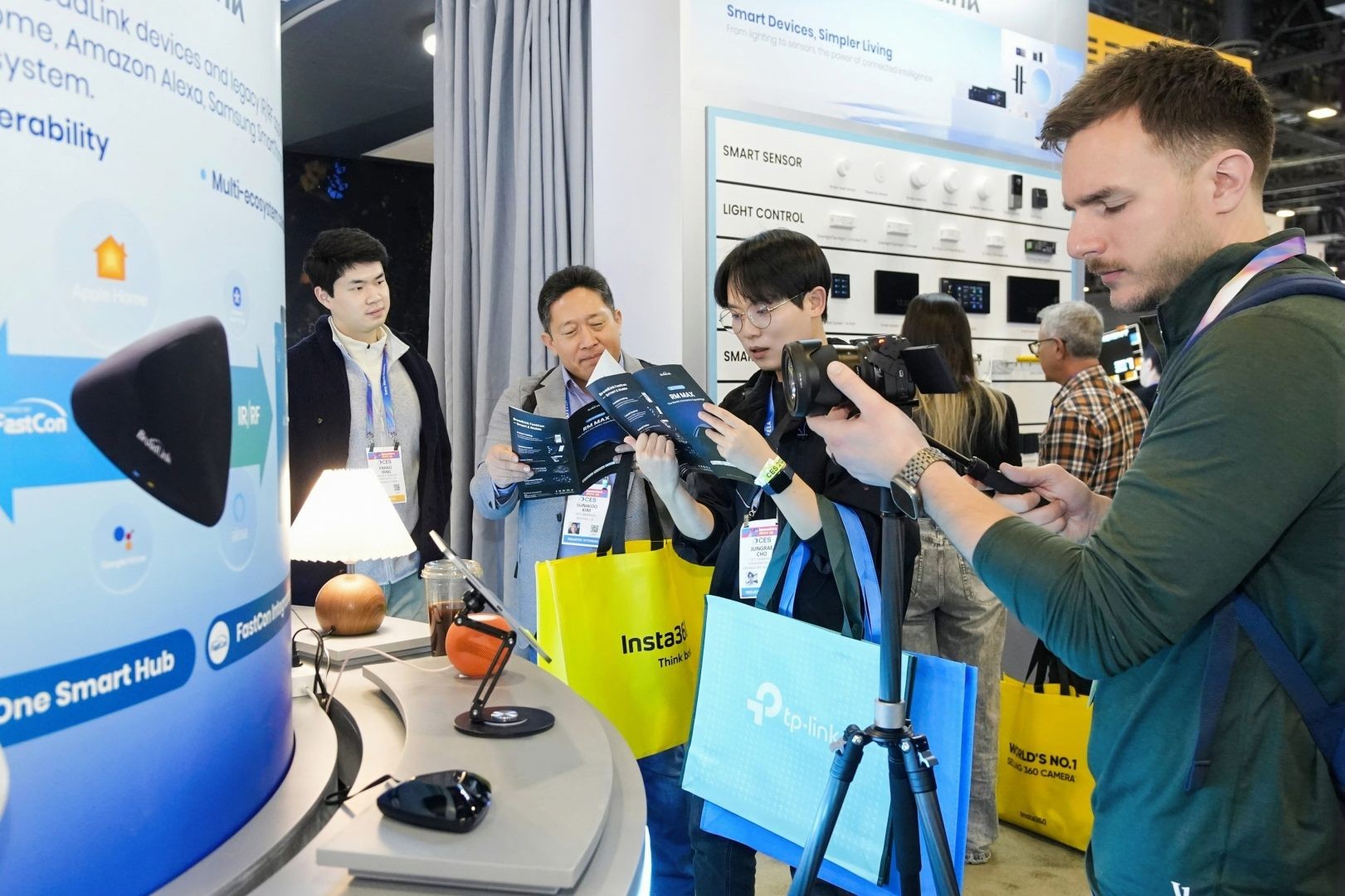
In the experience at the CES site, this "C - end expression of B - end capabilities" is very intuitive.
For example, in the simulated outdoor scenario, the outdoor lights and audio systems based on the FastCon protocol are uniformly connected to the system. Users don't need to know the communication method differences behind these devices. They only need to complete unified operations and scene settings in Apple Home or Google Home.
The essence of this experience is not "having an extra remote control," but turning the system - level capabilities that only existed in engineering projects in the past into infrastructure that home users can directly use.
And this exactly hits the structural change that is happening in the Matter ecosystem.
At the CES site, an obvious signal is that Matter is moving from a "new - device protocol" to a "home connection standard." In the early days, Matter solved the problem of how new devices could be uniformly connected - whether lamps, sockets, and sensors supported Matter almost became the "admission ticket" at the exhibition booth.
However, in reality, a large number of devices still in use in global households will not be immediately replaced because of the emergence of Matter; a large number of already - intelligent devices have not completed Matter certification.
This means that the next - stage competition of Matter is no longer about "who supports the protocol first," but on two more practical dimensions:
Who can connect more existing devices? Who can reduce the migration cost to a low enough level?
At this stage, simply launching new products supporting Matter cannot complete the ecological closed - loop. What is really lacking is a "connection layer" that can span old and new devices, different protocols, and different platforms.
RM MAX appears at this very node.
It is reported that the Matter version of RM MAX will be officially on sale in February 2026, and the existing RM MAX can also be upgraded through OTA. This forward - compatible method itself reflects BroadLink's consistent engineering thinking: not promoting upgrades by "starting from scratch," but allowing the system to gradually evolve at a controllable cost.
When "connection" itself becomes infrastructure, the smart home may truly mature.