18 Chinese companies offer new perspectives on consumer-grade AI robots at CES.
According to a report by Zhidx on January 8th, yesterday at the Consumer Electronics Show (CES) 2026, AI is quietly transforming into "electronic pets", "desktop companions", or "flying fairies" that chat with you, lull you to sleep, and make you happy, becoming an integral part of our daily lives.
From embodied mimetic bionic pets that can act coquettishly to emotional robots that initiate conversations and assist in meetings, and then to small robots that recognize emotions and develop unique personalities, a group of Chinese startups are reshaping the experience of companionship and education with the AI wave, making this category of products one of the most popular and creative highlights at CES 2026.
According to incomplete statistics from Zhidx, a total of 18 Chinese companies showcased "AI companionship, educational robots, and pet - related" products at this year's CES. These products come in various forms such as desktop robots, bionic pets, and flying devices, and are underpinned by multiple technologies including AI - native interaction, multimodal perception, and personality modeling.
01. A Gathering of Desktop Cuties, Mobile Buddies, and Educational Aids
Loona DeskMate is a brand - new product brought by Keyi Technology to CES 2026, aiming to firmly occupy the center position on the desktop. It doesn't come with a built - in screen, camera, or microphone but relies on an iPhone. When the phone is attached to the wireless charging area, the AI companion app starts automatically.

Loona DeskMate with a phone placed on it (Source: The Verge)
DeskMate is also equipped with an emotional interaction model that supports natural conversations. The whole device also serves as a 180W fast - charging desktop power supply.
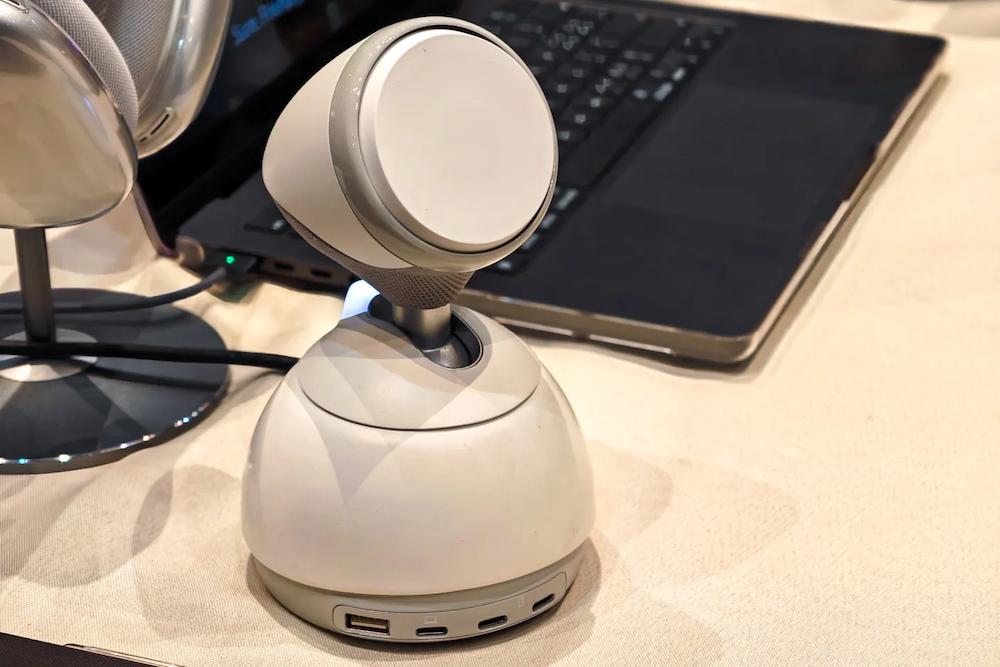
Loona DeskMate without a phone (Source: The Verge)
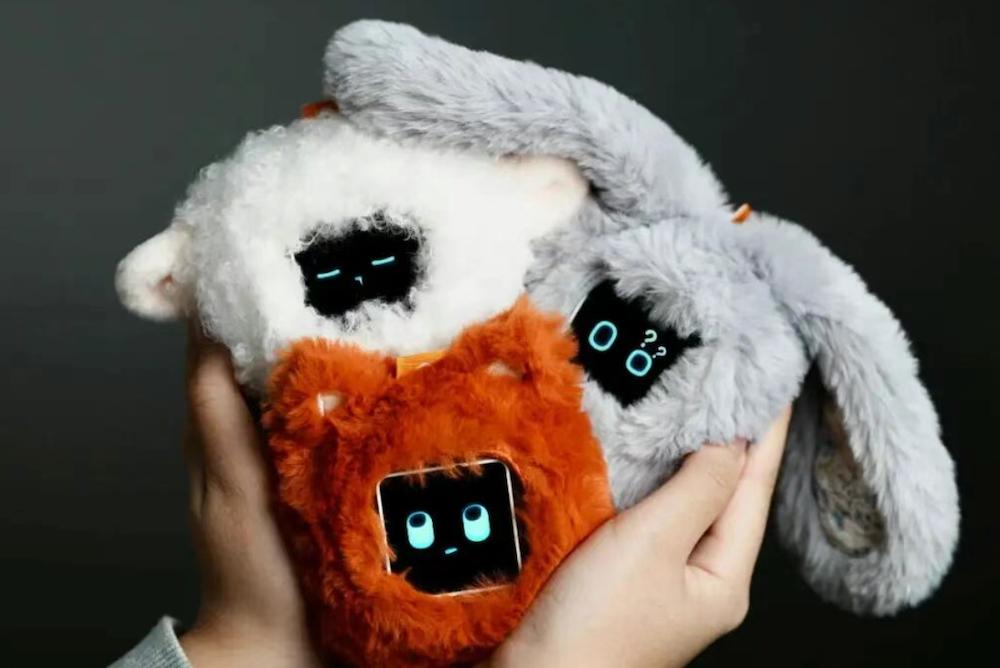
Jiqilingdong's Nuobao Robie is a desktop pet with ears and the ability to blink.
During interactions, Nuobao will have a "pupil contraction" reaction to sudden movements and show a "dizzy" expression after being shaken. Nuobao can also recognize faces and emotional states, conduct continuous conversations, support both voiceprint and face recognition, and accurately distinguish the communication partner even in a noisy environment.
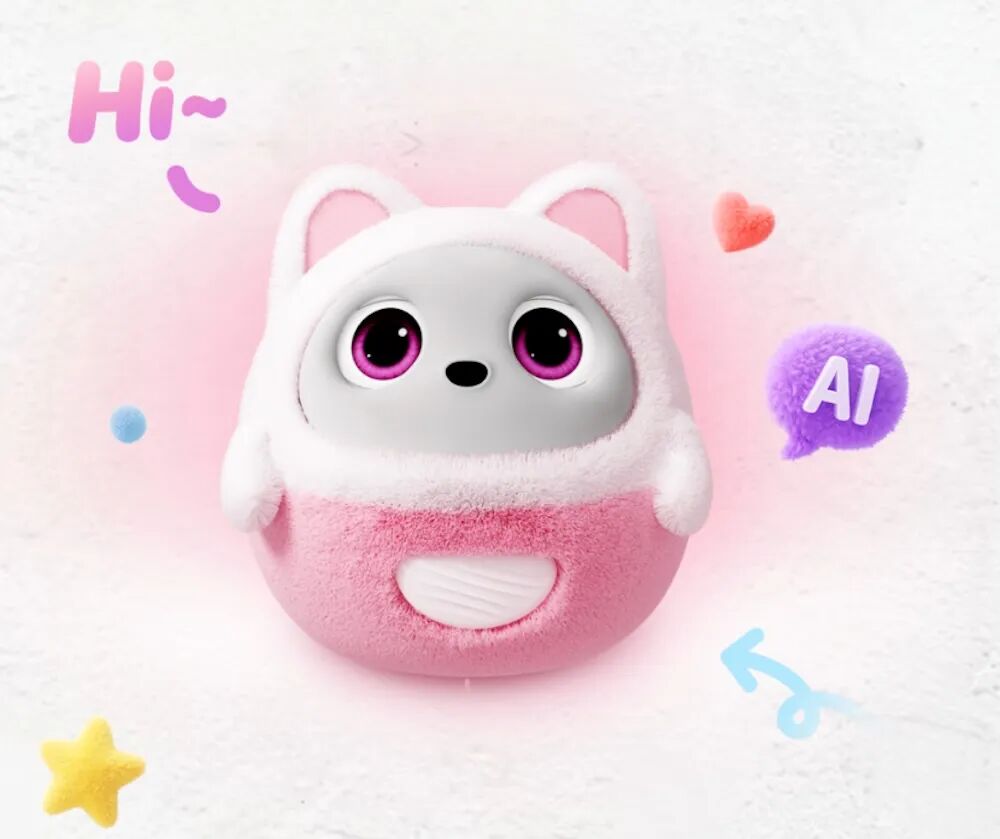
Jiqilingdong's Nuobao Robie
Xuanyuan Technology's Yonbo X1 is a growth - oriented family robot with a distinct character, intelligence, and amiability. Yonbo X1 can move with 12 degrees of freedom, support voice conversations, game interactions, and homework tutoring, and adjust its content dynamically according to the child's age.
Its core feature is the "personality system". Parents and children can set different character traits for Yonbo, and there is also a strict parental supervision and content control system.
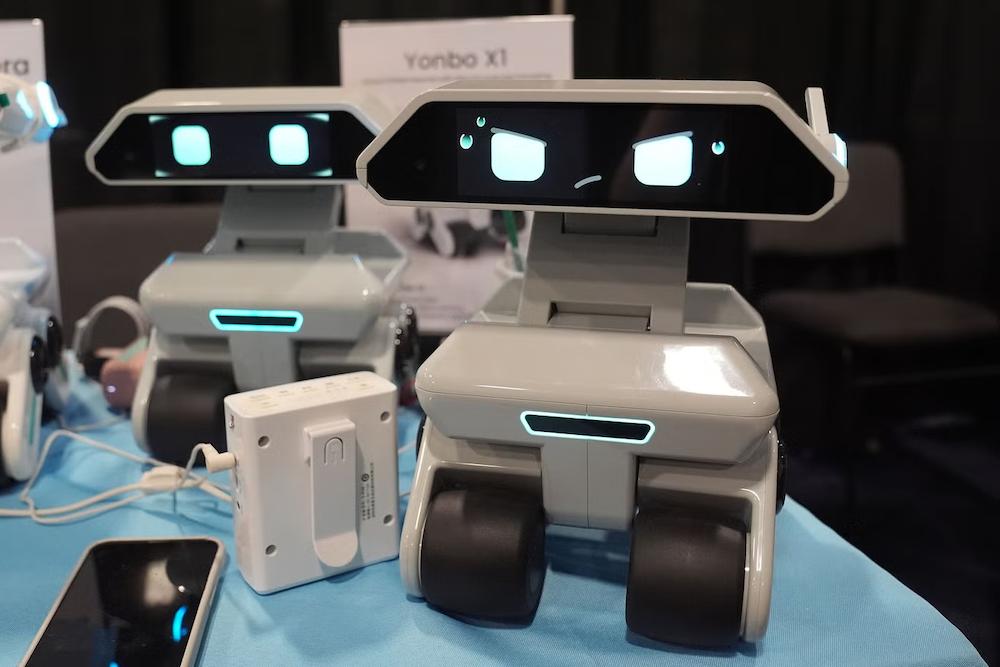
Xuanyuan Technology's Yonbo X1 (Source: the - independent)
Fuzhi Technology's Enabot can be regarded as an AI robot butler that can accompany both people and pets. Enabot can be remotely controlled, play with cats using a laser pointer, initiate video calls, patrol the environment when the user is away from home, and trigger security alarms. Its most unique feature is the integration of pet interaction, home service, and AI companionship.
Enabot also emphasizes its AI dialogue ability, supporting 6 role switches and more than 20 dialect accents.
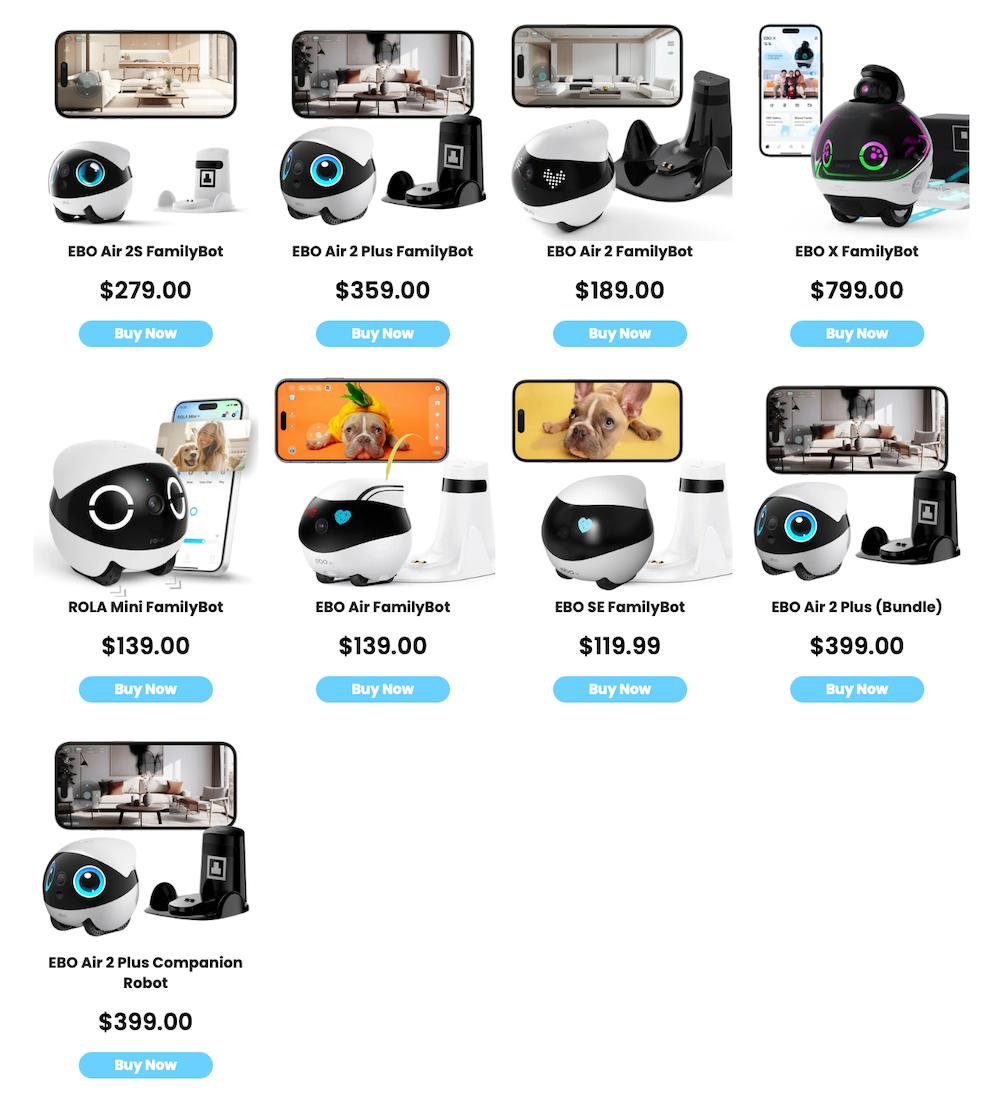
Fuzhi Technology's Enabot
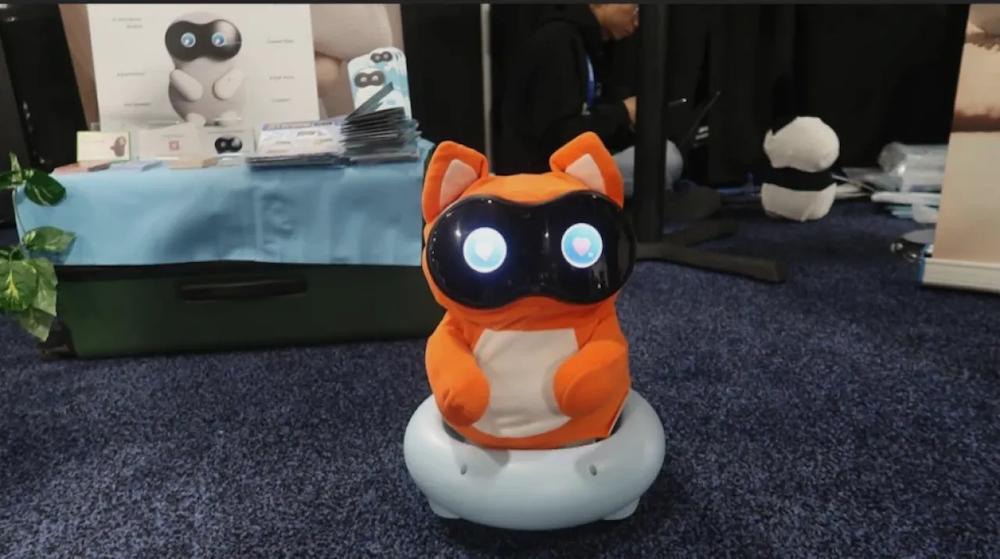
AiMe is a movable home intelligent hub launched by TCL, consisting of a cartoon - style main robot and a roller - type base. The main robot is responsible for emotional companionship and interaction, communicating through actions such as blinking and waving. The camera on its head can recognize the user's emotional changes and adjust the eye expressions in real - time.
The base module provides mobility and charging capabilities for the device. It can perform patrol and monitoring tasks when there is no one at home or at night.
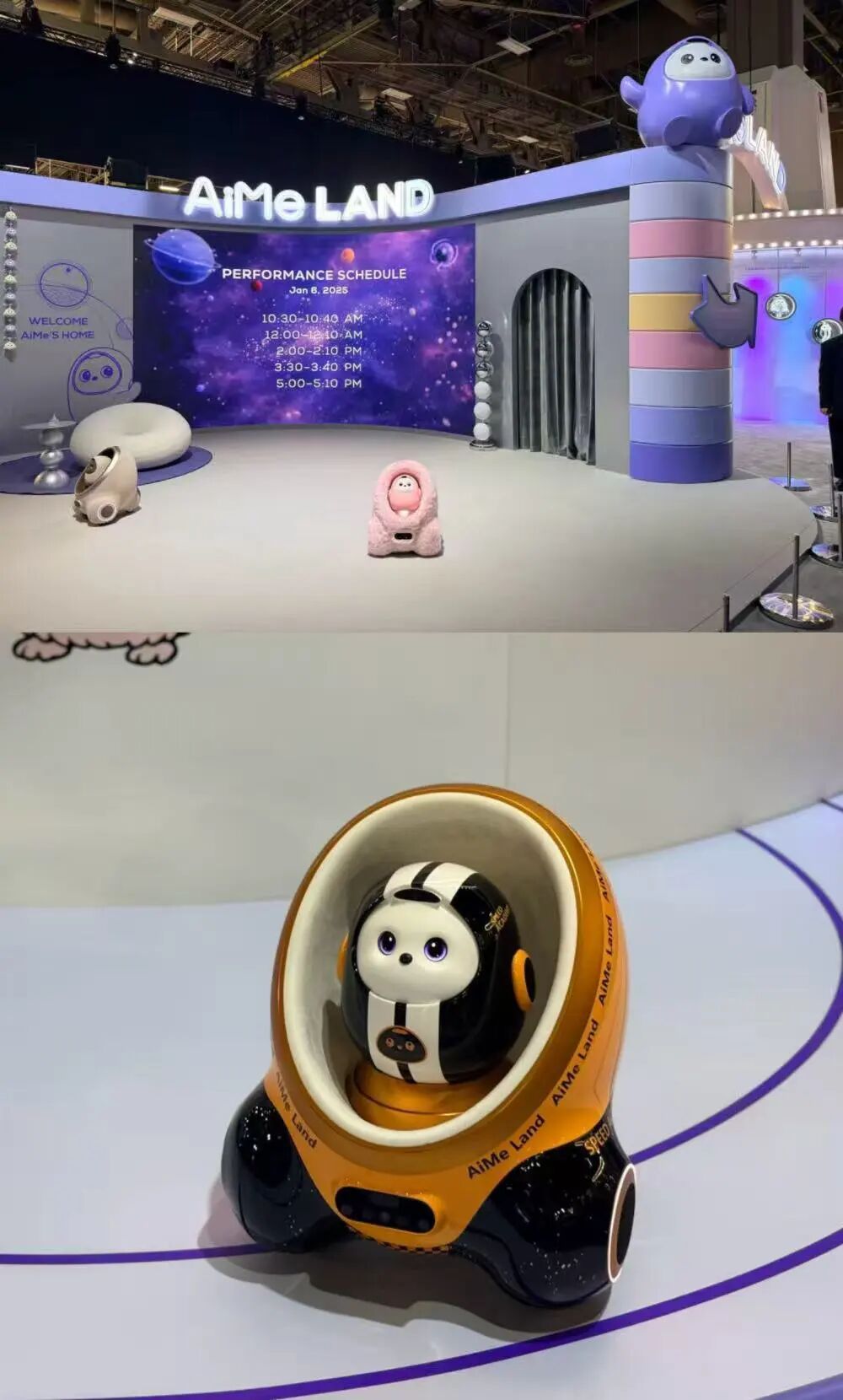
TCL's AiMe (Photo by Zhidx)
Lingyuzhou also brought its Luka picture - book reading robot to CES again. Luka supports the automatic recognition and reading of a vast number of Chinese and English picture books, covering more than 70,000 Chinese and English picture - book resources. It also supports bilingual (Chinese and English) modes and various reading styles.
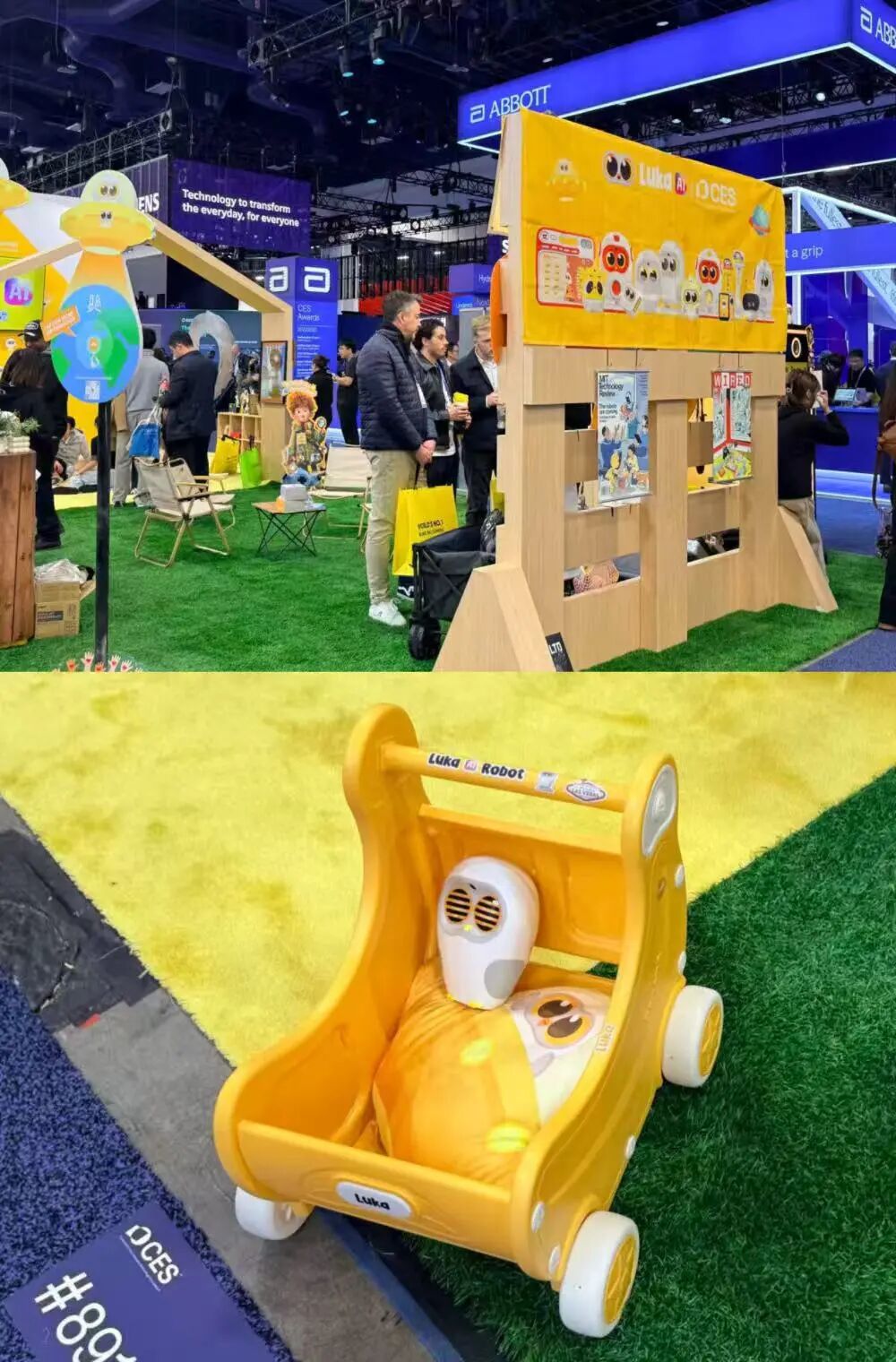
Lingyuzhou's Luka picture - book reading robot (Photo by Zhidx)
02. Bionic Furries, Flying Fairies, and Personality Cultivation Show Their Skills
Huichang Communications showcased its Ollobot cyber - pet system at CES 2026, which includes two products with different forms.
Ollo has a round cone - shaped design and is more for "static companionship", with a built - in perception system.
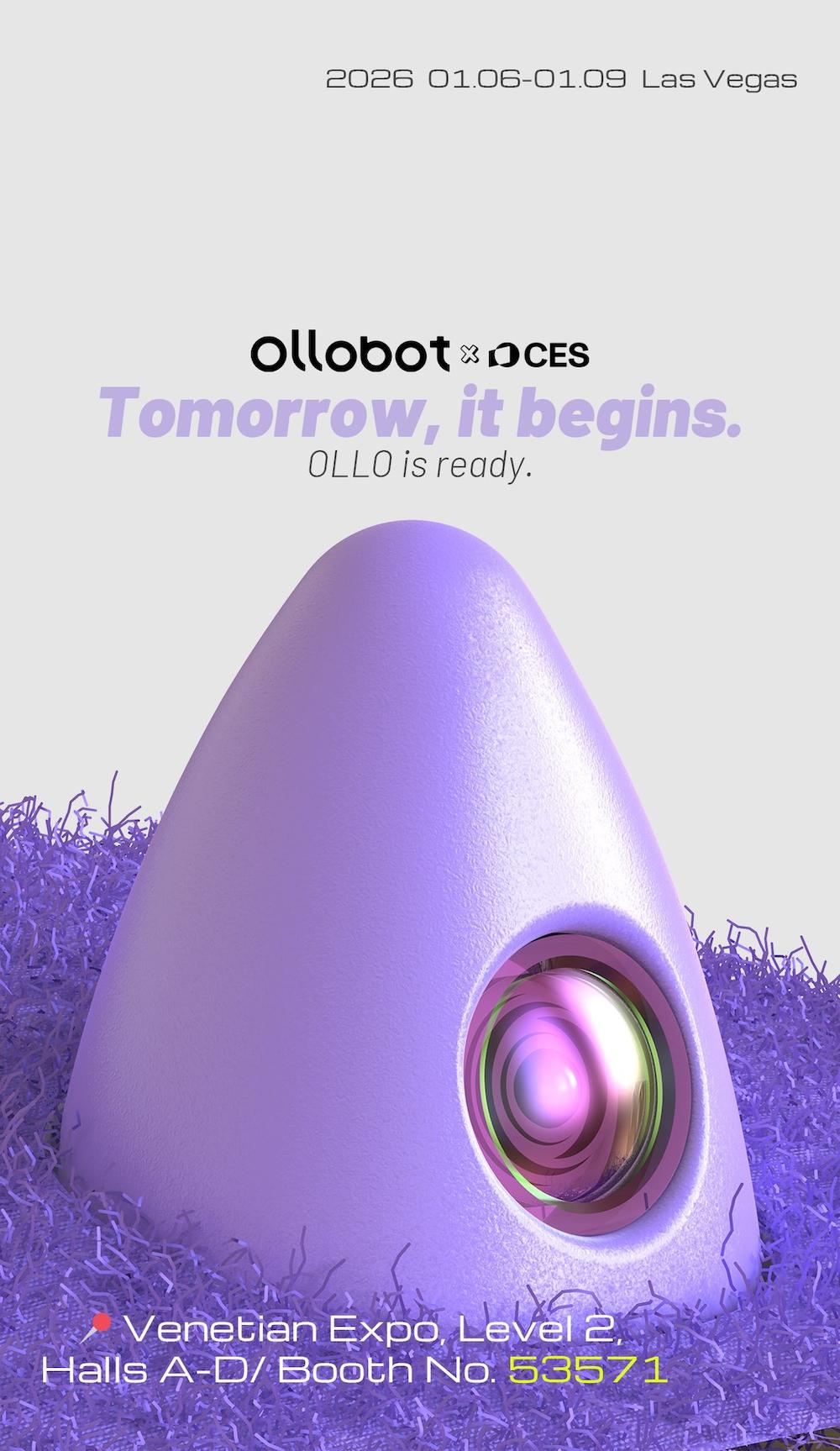
Ollo
OlloNi has evolved to have an expression screen and a retractable "neck".
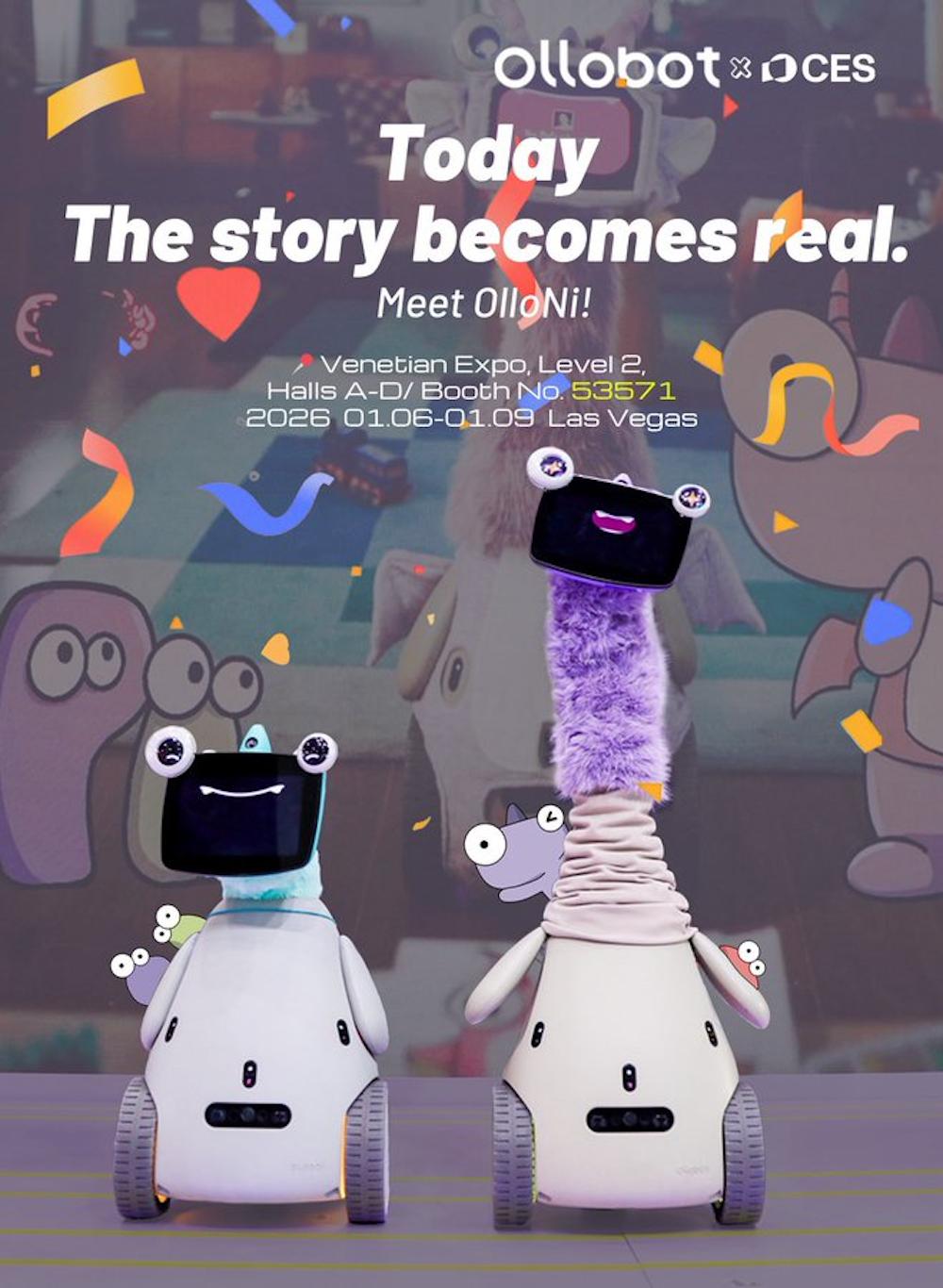
Both products can continuously sense the user's state and environmental changes and update their behavior patterns during interactions. Ollo and OlloNi are also part of a larger character IP universe, corresponding to different personalities.
Yuling Infinite introduced a flying emotional companion robot called BOOBOO. Driven by AI, BOOBOO adopts a bionic flapping - wing design, making it more suitable for indoor environments.
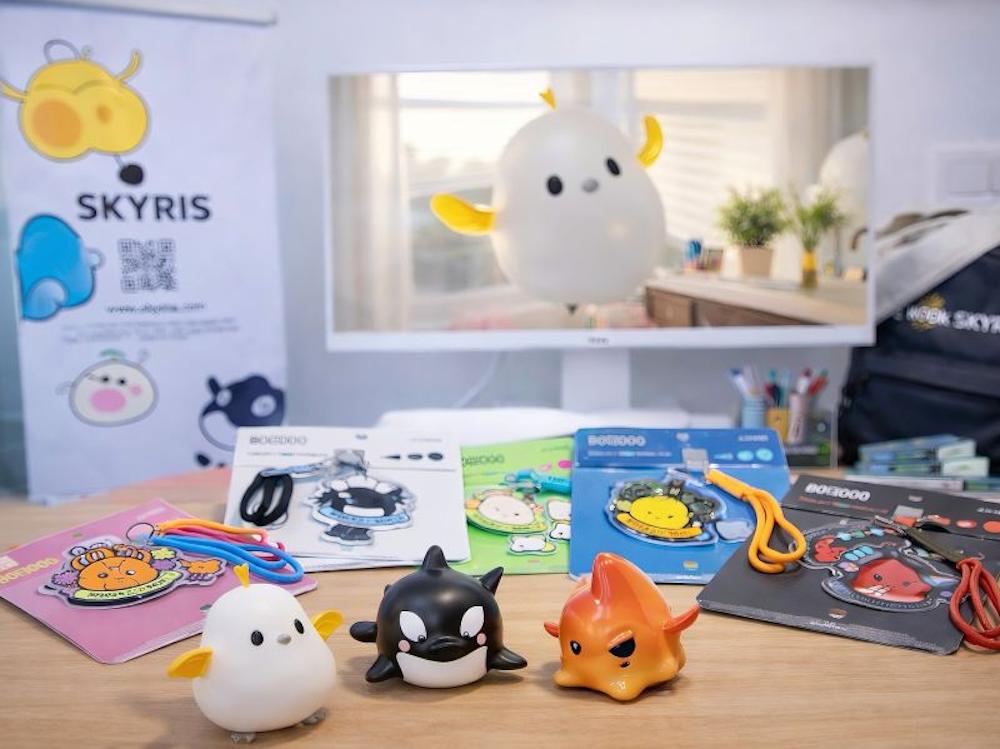
BOOBOO can also actively establish an emotional connection with people through lights, actions, and voices. It can hover, approach, and recognize the user's emotional changes in real - time. Zhang Yunuo, a post - 00s founder with a NASA background, brought this flying cute pet to CES, attracting a lot of attention.
Ludens Intelligence also brought two products: one that moves on the ground and one that stays on the table. Cocomo is a robot pet that can move autonomously on a wheeled chassis. It can follow the user in a home environment. The temperature of its shell is set close to that of the human body, about 37°C under normal use and can rise to 39°C when frequently touched. Cocomo doesn't communicate through language but conveys emotions through non - semantic grunts.
Ludens Intelligence's Cocomo (Source: teknoport)
Inu is a small "alien puppy" designed for the desktop. It reacts to sounds and touches, and its interactions such as tail - wagging and blinking animations are quite cute and realistic.

Ludens Intelligence's Inu (Source: teknoport)
Zero - Motion Future's Huahuatang is very much like an AI version of "Tamagotchi". It weighs only 89g, can be carried around, has a body temperature, can remember things, gets hungry, and acts coquettishly. Huahuatang can accompany you anytime and anywhere, stays connected even when you travel, and allows you to make friends by "touching". It is an AI pocket pet that starts with children and plans to expand to all age groups.
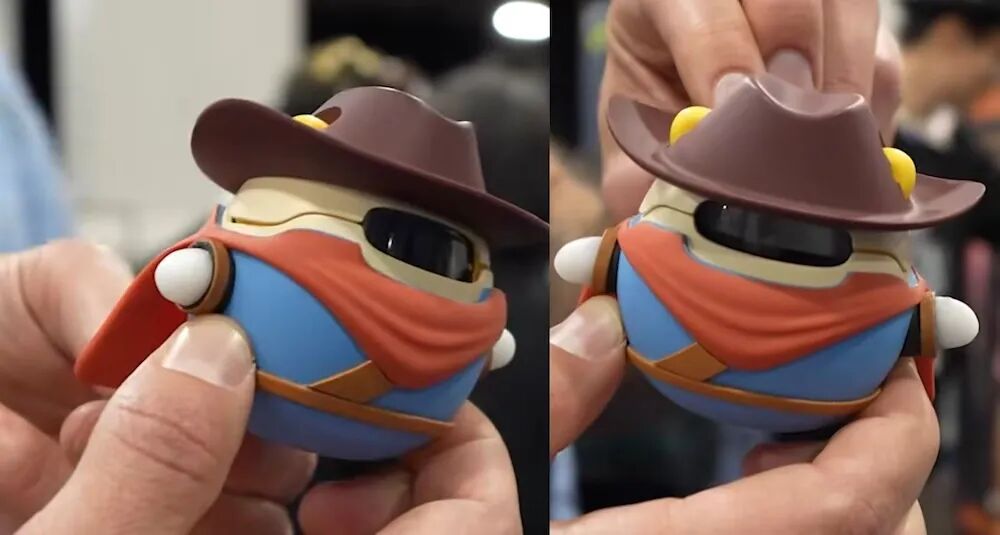
Zero - Motion Future's Huahuatang (Source: Facebook)
Alpha Egg's Eggi makes exercise part of pet - raising. Eggi earns coins and unlocks skills by moving, enabling children to cultivate personalities and learn to take care of a "digital life" during interactions. It can also go through a "rebellious period" and have disputes with the user. It has emotions, needs, and can gradually "grow up".
Alpha Egg's Eggi
Leimeng Technology's AI trendy toy life - form looks like an electronic relative of LABUBU. Bibo can recognize faces, tones, and actions, judge your state through emotional AI, and initiate interactions proactively.
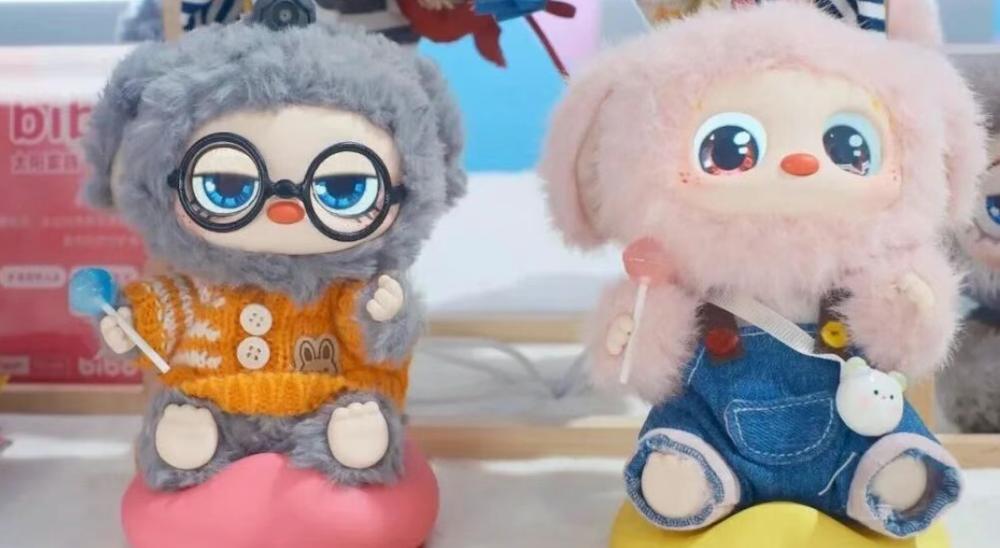
Moon - cute tribe Bibo (left) and Sun - cute tribe Bibo (right)
Wang Shouchang, the founder of Leimeng Technology, was deeply involved in the design of IPs such as Taobao's "Taoxiaobao".
The "AI version of Wall - E", W1, is launched by Lele Technology's new brand Yuandian Intelligence. It is an "indoor + outdoor" interactive robot priced at about 40,000 yuan. The product's appearance is similar to Wall - E in "WALL - E" and has obtained Disney's IP authorization.
Like Wall - E, W1 has wheels and eyes, supports emotional interaction, and can take pictures during outdoor camping. It can not only detect falls but also help carry things and listen to music with you. It is an emotional "camping buddy".
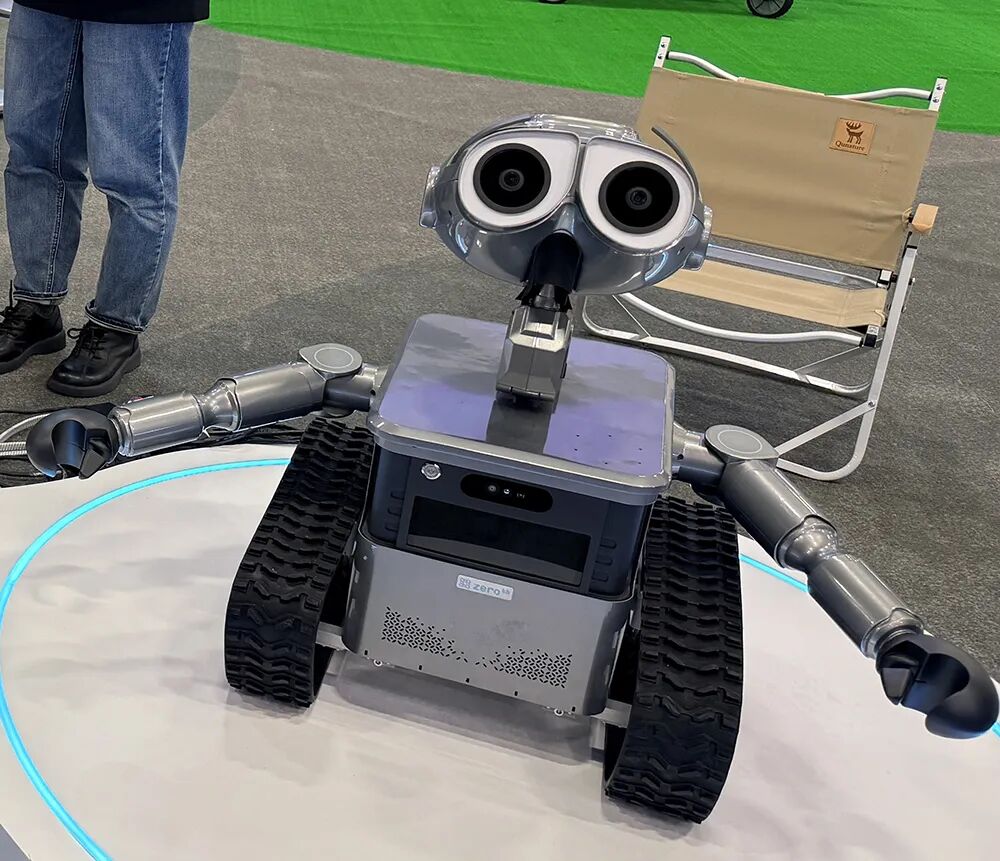
Lele Technology Zeroth's W1
Tuya Smart showcased an AI pet robot with rich expressions.
