Embodied AI in 2025: From "Toys" to "Colleagues", a Striking Rite of Passage
When it comes to the technology and industry sectors in 2025, embodied intelligence is an unavoidable keyword. How did it catch the public's attention? The Spring Festival Gala stage in the Year of the Snake should be the starting point. Sixteen humanoid robots made their real "breakthrough" for the first time, kicking off a storm of embodied intelligence.
From a professional perspective, embodied intelligence is understood as an intelligent entity that has a physical body, can perceive the environment, make autonomous decisions, and interact with the dynamic world. It not only represents a "paradigm shift" of artificial intelligence from the virtual to the physical, but is also regarded as a deep integration of artificial intelligence and robotics.
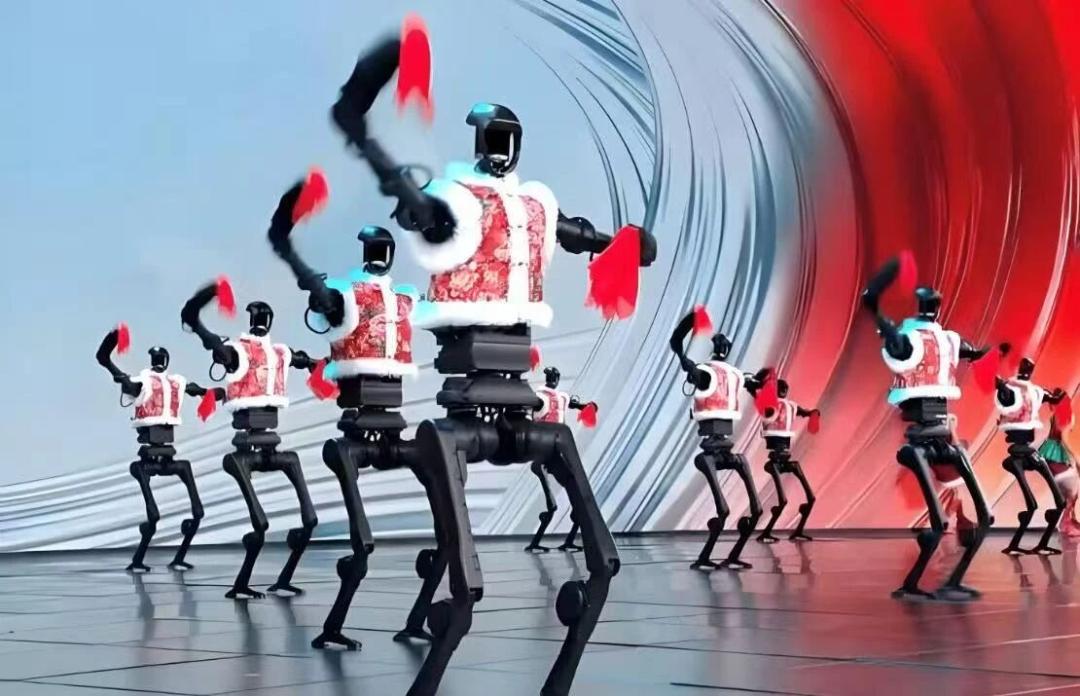
Image source: Unitree robots at the Spring Festival Gala in the Year of the Snake
In 2025, embodied intelligence was written into the "Government Work Report". The "15th Five-Year Plan" proposal reviewed and approved by the Fourth Plenary Session of the 20th Central Committee listed it as one of the future industries for forward-looking layout, marking the official recognition of the strategic value of this cutting-edge technology by the state.
In 2025, embodied intelligence became the core battleground for manufacturers to bet on and capital to pour in. The related sectors were booming, and the relevant concepts continued to heat up. According to statistics from Kaiyuan Securities, the total financing amount in the field of embodied intelligence in China has exceeded 50 billion yuan, and the number of financing events has exceeded 200, a growth of more than 400% compared with the whole year of 2024.
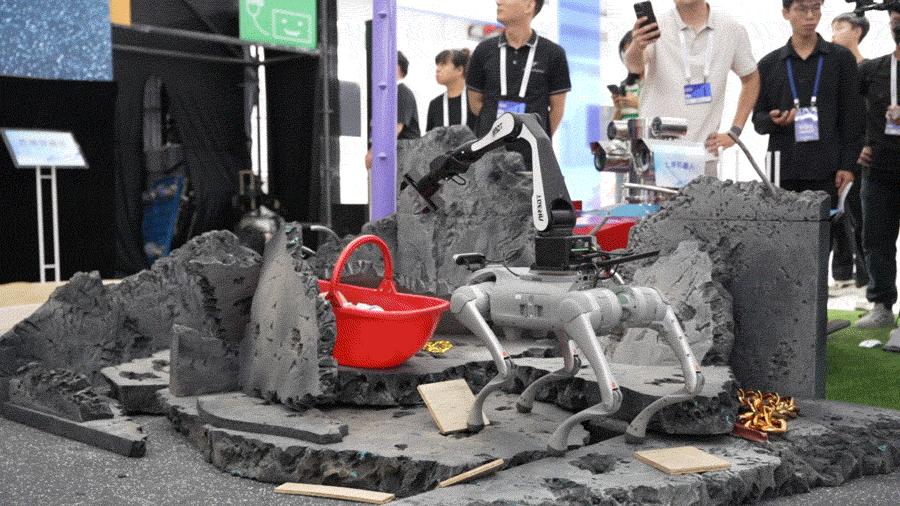
In 2025, a large number of embodied intelligence products stepped from the virtual digital world into the real physical space: some can enter factories for assembly and handling, some can act as chefs to cook and make coffee, some can give explanations, receive guests, and provide cultural and commercial performances, and some can even wash the hair of the elderly and do moxibustion...
Standing at the starting point of this storm, we can see enterprises gradually moving from showing cool demos to verifying technologies, polishing products, and finding application scenarios. The influx of capital and the implementation of application scenarios are intertwined, jointly promoting this cross - species with "AI growing limbs" out of the laboratory.
However, the concerns have not dissipated. The industry still faces challenges in models, entities, and data, and embodied intelligence is far from achieving generalization ability. There is still much room for discussion on the maturity of the technology chain, whether the market expectations are over - heated, and what the future of human - machine coexistence will be like.
Keyword 1: Technology - From Understanding the World to Autonomous Action
The most significant change in embodied intelligence in 2025 is the transformation of the technical architecture.
According to the "Top Ten Development Trends of Embodied Intelligence Robots in 2025" released by the World Robot Conference, embodied intelligence is evolving comprehensively from "embodied perception driven by the coordination of physical practice, physical simulators, and world models" to "multi - level end - to - end embodied decision - making".
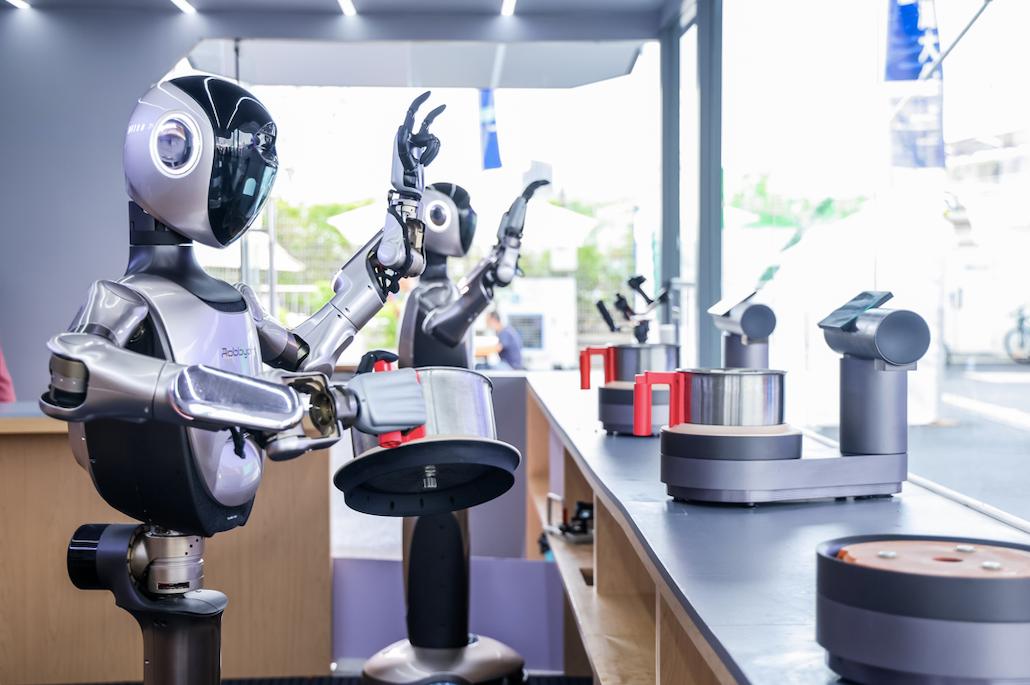
Image source: The Bund Conference 2025
To understand what this means, we need to make a simple breakdown and understand the concepts of physical practice, physical simulators, world models, and multi - level end - to - end.
Imagine that you ask a household robot to "clean up the dining table". For humans, this is a simple instruction, but the robot needs to identify various items, understand the meaning of "clean up", plan the sequence of actions, and deal with unexpected situations - such as a moving pet or a slipping tableware.
The core of achieving this goal not only relies on the algorithms of large models but also closely links the robot's physical structure and its interaction with the environment. This requires the robot to establish a cognitive foundation of the physical world, just like how human infants learn the operating laws of the world through touch, observation, and interaction.
Physical practice is the fundamental way for robots to learn. It allows robots to accumulate experience in interacting with the real environment, understand the properties of objects, mechanical laws, and the consequences of actions.
A physical simulator can be regarded as an efficient "training ground". Robots can conduct millions of trial - and - error learning in a high - fidelity virtual environment to accelerate the mastery of skills.
The world model is the "imagination engine" of robots. It extracts the operating laws of the environment from massive data, enabling robots to "think" before taking actions and predict the possible results of different actions.
Once the robot has the basic ability to understand the world, the challenge turns to how to transform these understandings into actual actions - this is exactly what "multi - level end - to - end embodied decision - making" aims to solve.
The multi - modal large model plays a key role in this transformation. It can integrate various information such as vision, language, and touch, understand the deep meaning of complex instructions, and generate corresponding action plans. It's like embedding a "brain" in embodied intelligence, significantly improving its intelligence level in reasoning, interaction, and other aspects.
Under this technological paradigm, two mainstream architectures are developing in parallel: the end - to - end embodied model (such as VLA) and the hierarchical decision - making model, which represent two completely different technological philosophies.
End - to - end embodied model: It can achieve direct end - to - end conversion from human instructions to machine execution. That is, the input is images and text instructions, and the output is actions.
Hierarchical decision - making model: The large model acts as the commander, and traditional control technologies act as the executors. This is the current mainstream engineering idea, and its core lies in decoupling "thinking" and "execution" to form a clear decision - making chain.
The future trend is not a simple choice between the two but an organic integration of hierarchical and end - to - end. On the one hand, high - level task planning and semantic understanding will remain modular to ensure interpretability; on the other hand, the execution of low - level skills will become more and more general, flexible, and adaptive through end - to - end learning or training of the "world model".
It should be noted that in 2025, the data foundation is still the key bottleneck and breakthrough point for the development of embodied intelligence. Embodied intelligence needs hundreds of millions of training data to reach the fully autonomous level, but the largest existing public data sets are only in the order of millions.
To solve this problem, the industry is working in two directions: constructing large - scale and high - quality embodied intelligence data sets based on physical entity collection and simulation synthesis. At the same time, the scientific research community hopes to "reduce" the data scale while ensuring the quality and improve the training efficiency through more efficient data utilization.
It can be predicted that enterprises that can gain the right to speak in data in 2026 will not have a bad time.
Keyword 2: Industry - Differentiated Paths and Competition Patterns of Leading Enterprises
In 2025, the national policy support for the embodied intelligence industry reached a new high. Embodied intelligence was written into the government work report for the first time and became a key area for the country to cultivate future industries. At the same time, cities such as Beijing, Shanghai, and Shenzhen made simultaneous efforts. Through measures such as setting up hundreds of billions of industrial funds, carrying out special projects for core technology research, and improving infrastructure support, an industrial development pattern of "national - local" coordinated promotion was formed.
Statistics from Morgan Stanley show that in the second half of 2025, the total order amount disclosed by Chinese embodied intelligence manufacturers exceeded 2 billion yuan. The embodied intelligence industry is standing at the threshold of industrialization.
Along with the "order wave", the industry competition has been upgraded from the product level to the ecological level. Different types of embodied intelligence enterprises have chosen differentiated development paths, forming a diversified industrial ecosystem - the industrial school, the technology school, and the application - scenario school.
Industrial School
They are deeply involved in manufacturing, pursuing swarm intelligence and efficient production, represented by Ubtech and Zhipingfang.
Ubtech's proposed "Swarm Brain Network Software Architecture" promotes the evolution of industrial humanoid robots from single - machine autonomy to swarm intelligence. Currently, it has reached cooperation agreements with many automobile enterprises such as Dongfeng Liuzhou Motor, Geely Automobile, and BYD.
Zhipingfang has completed the closed - loop path of "model + scenario" and achieved commercial implementation in multiple high - value scenarios such as automobile manufacturing, biotechnology, and semiconductor manufacturing. The company has cooperated with Bloomage Biotechnology to deploy robots to perform tasks such as material transfer and intelligent unpacking in a sterile workshop. In April 2025, it released the all - domain and whole - body VLA large model and cooperated with Dongfeng Liuzhou Motor to apply robots to the entire scenario of automobile manufacturing.
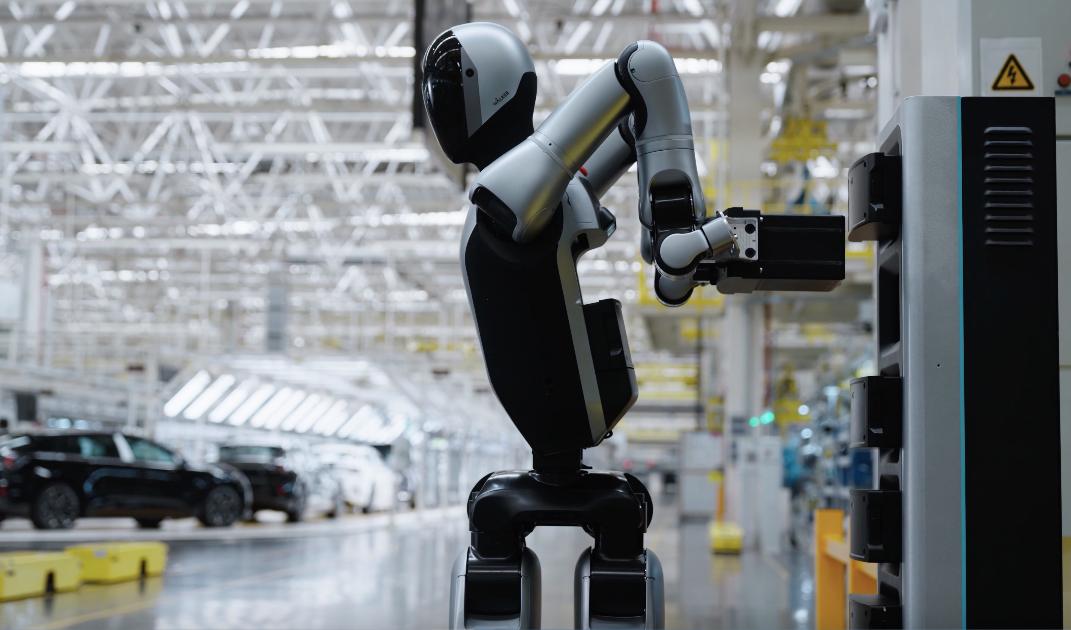
Image source: Ubtech official website
Technology School
They focus on breakthroughs in core models and algorithms and explore the boundaries of general intelligence, represented by Unitree Technology and ZHIYUAN AI.
In 2025, ZHIYUAN AI launched the world's first "personal robot", Qiyuan Q1, mainly targeting users such as geeks, families, and scientific research and education institutions. This small - sized whole - body force - controlled humanoid robot can be folded and put into a backpack, greatly reducing the cost of scientific research trial - and - error.
Unitree Technology continues to optimize the robot's motion control ability. At the 7th Beijing Zhipu AI Conference, the Unitree G1 demonstrated agile fighting actions, as well as excellent voice dialogue, environmental perception, and action decision - making abilities. CEO Wang Xingxing clearly stated that these performative demonstrations are not the ultimate goal, and liberating human productivity is the mission of robots.
Application - Scenario School
They go deep into vertical industries to solve specific pain points, represented by DeepRobotics.
DeepRobotics has started the tutoring for A - share listing. Its main products include quadruped robots, humanoid robots, and core components. The quadruped robots have achieved functions such as going up and down stairs and autonomous navigation and are applied in fields such as power inspection and emergency rescue. Currently, its Jueying X30 quadruped robot has achieved an average of more than 1000 hours of trouble - free operation in the power inspection scenario and can autonomously judge the battery level and go to the charging pile for charging.
More impressively, DeepRobotics' robots went deep into the Hoh Xil uninhabited area, disguising as "mechanical Tibetan antelopes" to observe wild animals up close, demonstrating excellent adaptability in extreme environments.
In October 2025, the "Embodied Intelligence Industry Map" was officially released, clearly presenting the industrial ecological layout, the collaborative relationship between upstream and downstream, and the distribution of key enterprises, providing a panoramic industrial "navigator" for practitioners. In terms of the expansion of application scenarios, the 2025 Technology Innovation Conference released the "Top Ten Application Scenarios of the Embodied Intelligence Industry", covering key fields such as logistics, retail, manufacturing, the ocean, and energy.
The speed of industrial implementation is remarkable. ZHIYUAN AI's robots are expected to have a real shipment volume of more than 5000 units and a sales volume of more than 1 billion yuan in 2025. The total order amount of Ubtech's Walker series of humanoid robots in 2025 has reached 1.3 billion yuan (excluding the full - size scientific research and education humanoid robot "Tianggong Xingzhe" and the small humanoid robot "AI Wukong"). The production capacity of its industrial humanoid robots has reached 300 units per month, and the expected annual delivery volume will exceed 500 units.
However, in reality, core challenges still exist. A report from Morgan Stanley points out that in many "large - scale orders" high - profile announced by manufacturers, a considerable part are framework agreements or intention orders rather than definite purchase contracts, and insufficient production capacity has become a common pain point in the industry.
The policy level has also put forward requirements. At a press conference on November 27, 2025, the National Development and Reform Commission clearly pointed out that with the accelerated entry of emerging capital, it is necessary to "focus on preventing risks such as the 'crowded' listing of highly repetitive products and the compression of R & D space". This means that the survival space of enterprises that lack core technologies and only rely on assembly and imitation will be sharply reduced.
Keyword 3: Market - From "Performance Economy" to "Value Creation"
If we use one word to describe the development status of embodied intelligence in the capital market in 2025, "fanaticism" might be the most appropriate.
According to incomplete statistics, in the first three quarters of 2025, there were 610 new first - level market financing events in the domestic robot industry, with a total financing amount of about 50 billion yuan, 2.5 times that of the same period last year. The venture capital data platform IT Juzi shows that as of December 18, 2025, at least 165 embodied intelligence enterprises completed 303 financings, with a cumulative financing amount of nearly 37 billion yuan, a growth of nearly 260% compared with the whole year of 2024.
While capital is pouring in hotly, embodied intelligence also completed the transformation from performance - oriented to practical - oriented in 2025.
In the first half of the year, from the performance of humanoid robots on the Spring Festival Gala stage in the Year of the Snake to the deployment of intelligent security - checking robots in Shenzhen Metro and the opening of the world's first humanoid robot marathon in Beijing, these high - profile appearances not only attracted public attention but also brought unprecedented attention to the industry.
During this period, the value of embodied intelligence was mainly reflected in attracting investment, enhancing brand image, and public education. Interactions such as dancing, shaking hands, doing handstands, and boxing were highly pre - set, and the environment was strictly controlled. Robots were required to "complete the task successfully" regardless of cost and stability.
This "skill - showing" - oriented development model soon showed its limitations. Some people bluntly said that this kind of performance was more like a show built under the slogan of changing human life.
The transformation occurred with the implementation of the multi - modal large model. This technology enables robots to no longer rely on pre - set programs to perform tasks but to have the ability to understand intentions, plan actions, and deal with disturbances in an open environment.
During this period, the core of embodied intelligence is to integrate into the production process and service chain, solve specific problems, and prove its economic viability. The value is directly reflected in cost reduction, efficiency improvement, and the enhancement of safety and quality. For example, in a factory, a worker only needs to tell the robot to "pick out the burr - ridden parts for rework", and the robot can autonomously complete the whole set of actions through visual recognition and path planning.
At the 2025 World Robot Conference, we saw visible progress. More than 200 domestic and foreign enterprises collectively displayed their implementation results. Robots were no longer statically arranged in a uniform way but entered scenarios with high repetition, high risk, and high cost. They transformed from simple production tools to "all - around players" capable of data collection, experience precipitation, and even intelligent contribution.