Chinese robot army "besieges" Boston Dynamics
Abstract:
Beyond the Chinese robot legions competing head - to - head with Boston Dynamics, there are robots that can fit in your pocket, AI that can talk to kids all day long, and robotic dogs that can climb up and down. Here is an in - depth revelation of the first day of CES, the global tech extravaganza.
Stepping into the CES 2026 exhibition hall in Las Vegas, you might think you're in China for a moment. As the scale hits a new high this year, over 4000 companies are participating. However, at this global event, Chinese companies account for up to a quarter. Many booths are surrounded by Chinese faces.
Last year, many complained that CES had transformed from a consumer electronics show into an AI show, with almost all the popular booths related to native AI. This year, there are still many new gadgets—AI pendants, AI companion dolls, psychotherapy pods, AI table lamps, etc. But the biggest change is the largest - ever group appearance of Chinese robot companies. According to the exhibitor distribution map, the number reaches 21, accounting for 58.8% of the total 38 exhibitors—almost four times the number of American exhibitors. South Korea has only 5, while Japan, Germany, the UK, and France each have only 1 representative.
An on - site exhibitor sighed that after three days in Las Vegas, they stayed up until 4 am for two consecutive days, "working on both domestic and foreign projects." Another exhibitor also told Phoenix Tech, "This year at CES, Chinese companies are going all out."
If last year's AI seemed a bit abstract and hypothetical, this year's products show that AI has truly integrated with hardware. Those seemingly useless products with little practical use at present might be the real picture of the future world.
Enabling faster implementation of AI is precisely China's strength.
By the way, Boston Dynamics, the pioneer of the first - generation robots, also brought its mass - produced electric Atlas, which is ready for factory work, to the show. It has been 13 years since its birth. In contrast, a Chinese company established just 2 years ago can already deliver 5000 robots annually.
However, despite taking many detours, Hyundai Motor said on - site that it plans to produce 30,000 Atlas robots annually by 2028. The robotics industry has reached a critical point. As NVIDIA CEO Jensen Huang announced in his keynote speech on the opening day: "The robotics field has officially entered its 'ChatGPT moment'."
The second - generation Atlas makes a stunning debut, but the 'Chinese apprentices' are here to compete
This year, Hyundai Motor, which acquired Boston Dynamics, brought the newly - developed second - generation electric Atlas out of the laboratory for the first time and made a high - profile appearance. It performed a flexible "Tai Chi" routine on the stage.
Thanks to the powerful combination of "Google providing the brain and Hyundai providing the body", the debut of the new Atlas was truly amazing.
"Its waist can rotate 360 degrees, which is really impressive," a Chinese humanoid robot industry practitioner told Phoenix Tech. "It's mainly because of its special configuration." It has a highly symmetrical design without a distinct front and back, allowing algorithms to distribute the center of gravity, joint angles, and movement trajectories.
Compared with the commonly - seen "stumbling" robots on the market, Atlas has extremely high flexibility. Its joints can flip and twist. It can even stand up from a lying position and hold objects with its hands in a reverse grip. According to Hyundai's description, its design goal is to create a useful robot rather than just one that "looks human".
Atlas is 1.9 meters tall and weighs 90 kg, with 56 degrees of freedom throughout its body. It walks naturally and smoothly. Its biggest highlight is that every joint and component of its body can be quickly disassembled and replaced, and most joints can rotate 360 degrees without blind spots. In the demonstration video, it can lift 50 - kg automobile parts with one hand, avoid people automatically, replace the battery, and work continuously throughout the day.
This all - directional joint rotation design can break through movement limitations and make the robot more suitable for workshops and factories with highly complex working environments. It can be said that its initial purpose was to "work in the factory".
Since its birth, Boston Dynamics has been the benchmark for global robot development. It wasn't until 2022 when Elon Musk introduced the humanoid robot Optimus and the Silicon Valley startup Figure was founded that there were more leading references.
With continuous breakthroughs in large language models, especially in the multi - modal field, the possibility of AI breaking into the physical world has increased rapidly.
The Chinese robot legions officially entered the arena at this time, and this year's CES is their first overseas group appearance.
Phoenix Tech has also compiled a list of on - site exhibitors. These Chinese companies are as follows:
Unitree Robotics. Different from last year when its B2W robotic dog carrying a person went viral, this year it set up a ring at the show and sent the mass - produced version of its most "fighting - capable" boxing and fighting small robot G1. The booth was surrounded by Chinese faces. Someone in the comment section astutely commented, "Just looking at the audience, you'd think CES was being held in China."
ZhiYuan Robotics demonstrated the interaction and motion intelligence of the Expedition A2, the interaction ability of the Lingxi X2, and core components such as dexterous hands. It also launched an open - source simulation platform Genie Sim 3.0 driven by a large language model on - site, pioneered the scene generalization technology driven by a large language model, and simultaneously open - sourced a simulation dataset of tens of thousands of hours. In essence, it is an attempt at the full - process ability from digital asset generation, scene generalization, data collection to automatic evaluation.
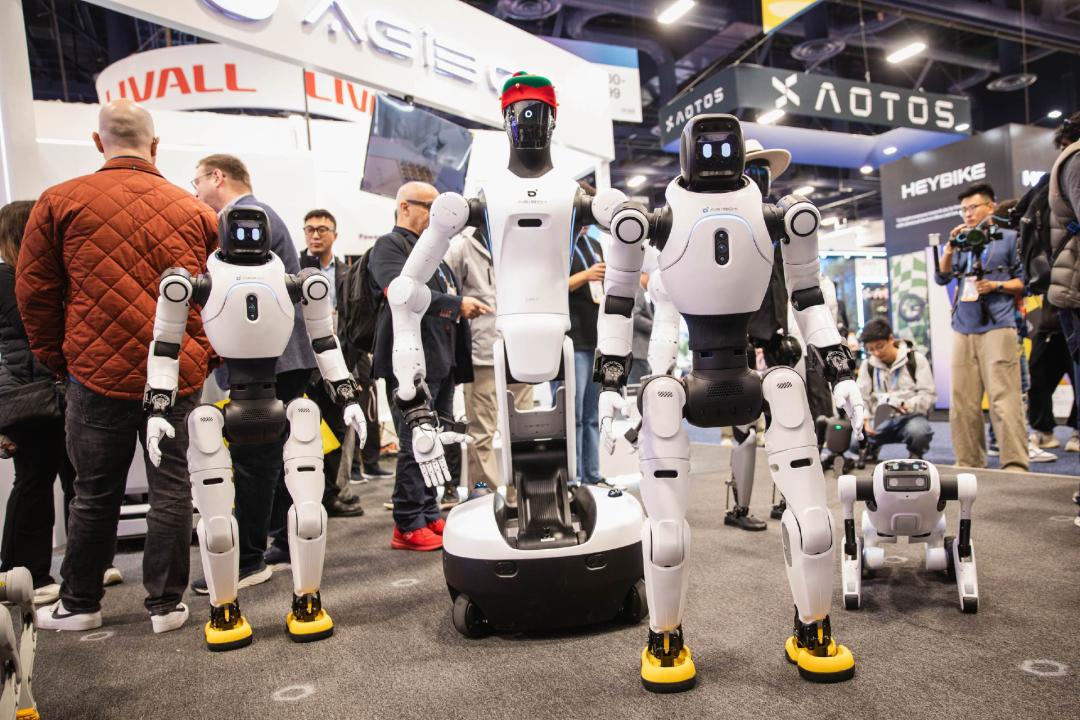
The Beijing Humanoid Robot Innovation Center brought multiple robots such as the "Embodied Heavenly Craftsman 2.0" and the "Embodied Heavenly Craftsman Ultra" to CES 2026. The latter is the one that once won the marathon race championship.
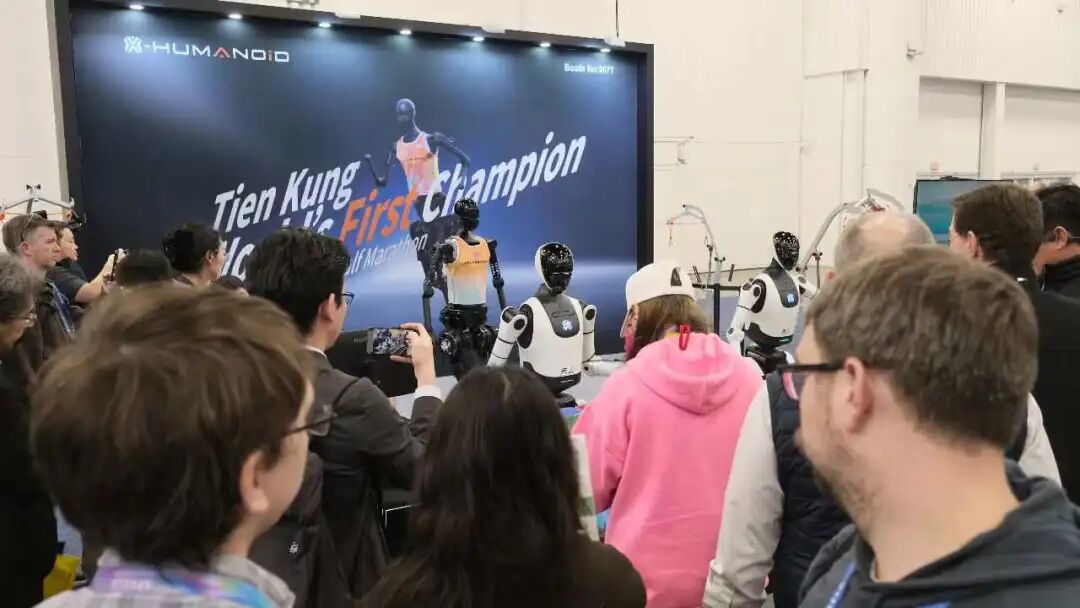
Fourier Intelligence launched the new - generation full - size humanoid robot "GR - 3 Cat Head"; Zhongqing Robotics made its debut with the full - size, extremely high - efficiency general humanoid robot Zhongqing T800; Galaxy Universal focused on demonstrating the motion stability and AI decision - making ability of its general humanoid robot platform.
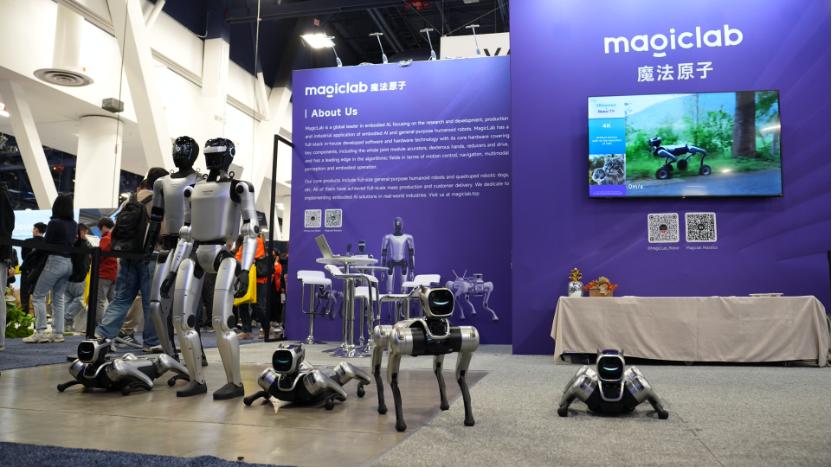
Magic Atom presented a "full package", launching the full - size general humanoid robot Gen1, the high - dynamic bipedal humanoid robot Z1, and the world's first "head - to - tail linked" quadruped robot MagicDog.
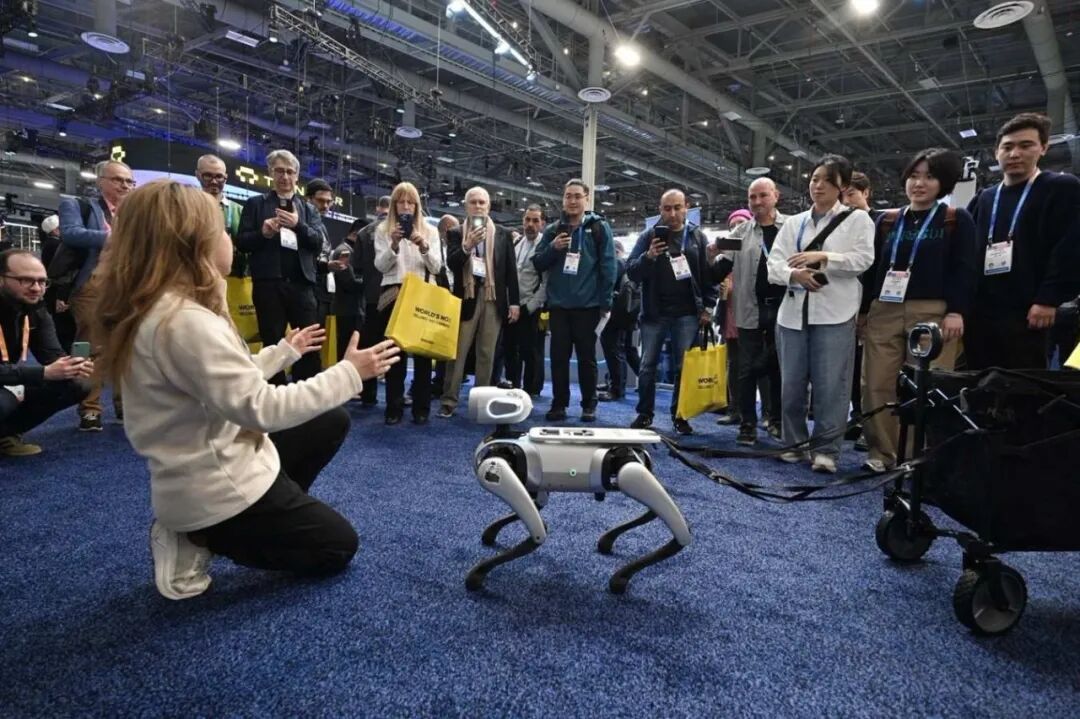
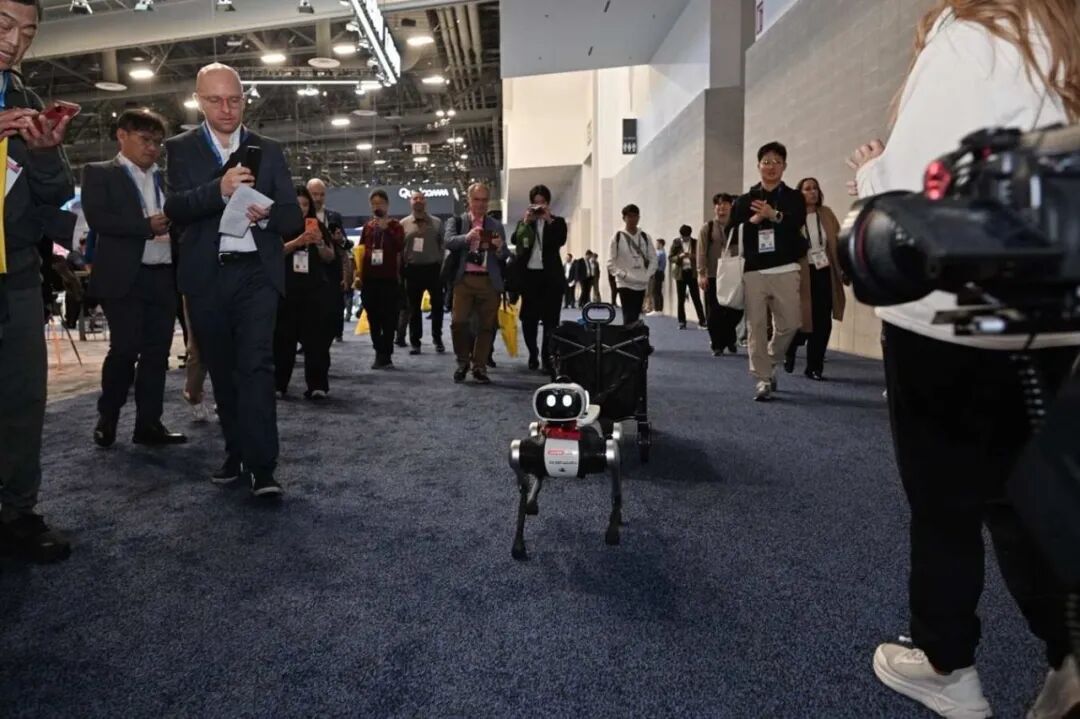
The robot that can "run freely" without a remote control is also a highlight of this exhibition. The consumer - grade robot Vbot Super Power Dog from Vita Dynamics, which may be the first to enter households, is expected to be officially launched globally in Q2 of 2026. The first batch of products will be launched in markets such as North America, Europe, and the Middle East.
Accelerated Evolution should be the company with the largest number of robots on display among the exhibitors. Dozens of Booster K1 robots formed a robot matrix and brought synchronized dance performances with different themes such as the lucky cat and New Year blessings.
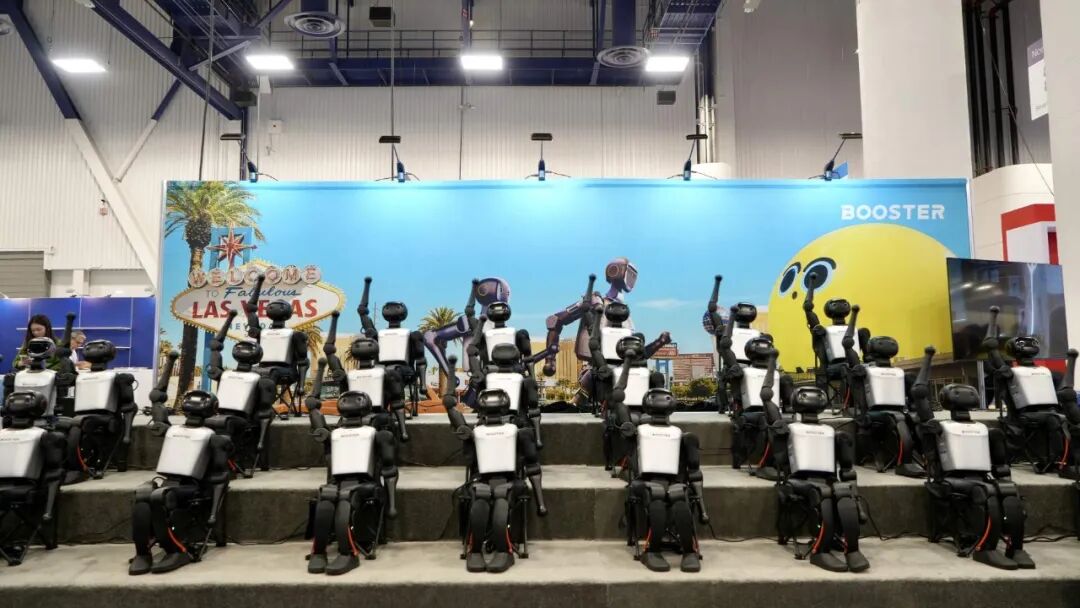
Songyan Dynamics, the runner - up in the first - ever robot marathon, brought its core product "Little Rascal N2" to the exhibition, demonstrating its high - performance joint modules and power system; Tron2 from Zhujji Dynamics can quickly switch between three core configurations of double - arms, double - legs, and double - wheeled legs, and also supports morphological reconstruction such as humanoid and quadruped.

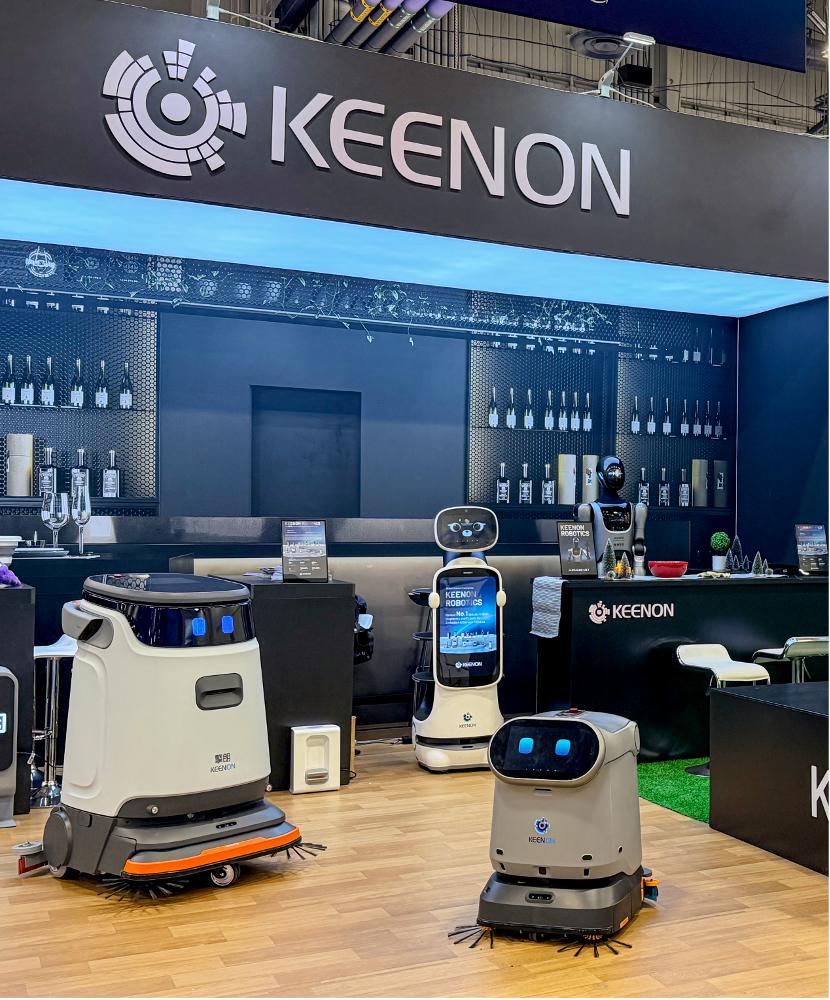
Among other robot forms, Yun Shen Chukeji brought the wheeled - legged "Lynx M20" robot, which can operate normally in the temperature range of - 20°C to 55°C; the commercial robot company Qinglang Intelligence brought the humanoid robot XMAN - R1, the cleaning robots C40 and C55, and the delivery robot T10, and demonstrated on - site the service process of multiple robots "going on duty" in cooperation.
Is AI becoming practical? Here are some new ideas
Compared with previous years, there has been an obvious shift in the focus of global companies at CES 2026—from concept demonstration to practical implementation.
If AI was more of a vision before, 2026 is the year when the AI track collectively "shows its strength" in terms of implementation. Robots are the most typical representatives, with abilities such as boxing, dancing, climbing up and down, and even working in factories and entertaining kids at home. The Booster series robots from Accelerated Evolution are directly targeted at specific scenarios such as scientific research and competitions. The relevant business person in charge told Phoenix Tech that the robots taken to overseas competitions by the official are always snapped up. "Judging from the usage, the utilization rate is also very high."
This time, the Booster robots directly performed a lion dance on - site, attracting many foreigners to watch.

The Vbot from Vita Dynamics currently has the highest computing power density among similar domestic robots. It has achieved initial intelligence, can follow people intelligently without a remote control, and can easily pull carts and carry loads. You can buy it home to help entertain kids.
In addition to robots, Chinese companies are integrating AI capabilities into various industries.
In the field of intelligent cleaning, Dreame Technology rented three large booths at CES 2026, covering intelligent cleaning robots such as floor - sweeping robots, floor - mopping machines, and lawn - mowing robots, as well as new product categories such as intelligent home appliances and electric vehicles. The new car made its debut here.
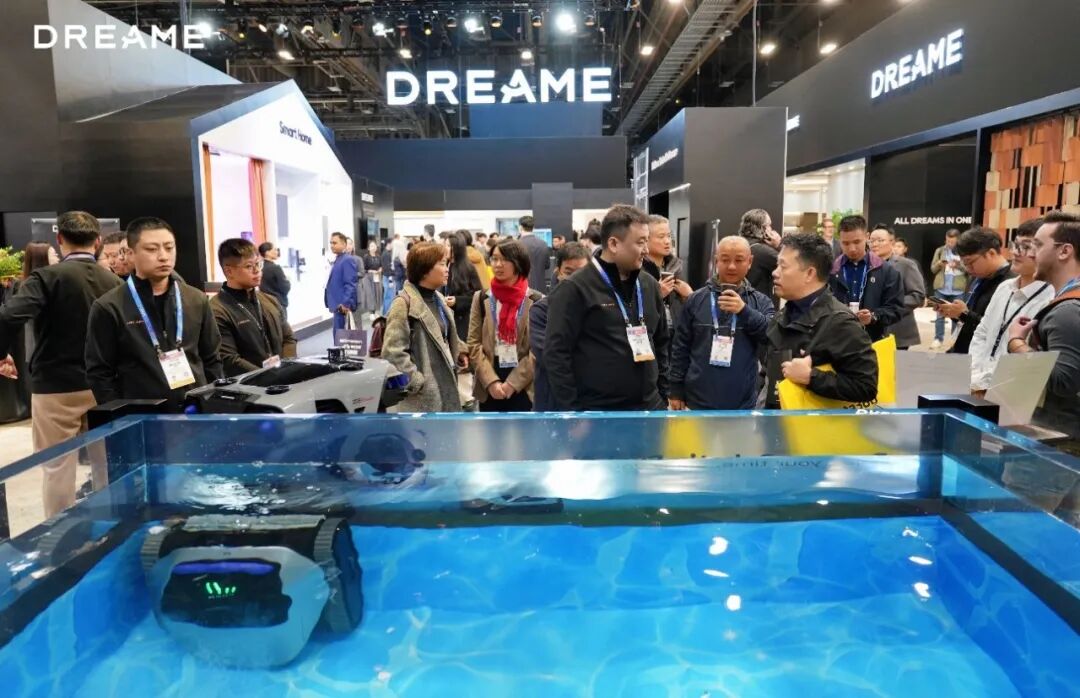
Roborock created a floor - sweeping robot that can climb stairs this time.
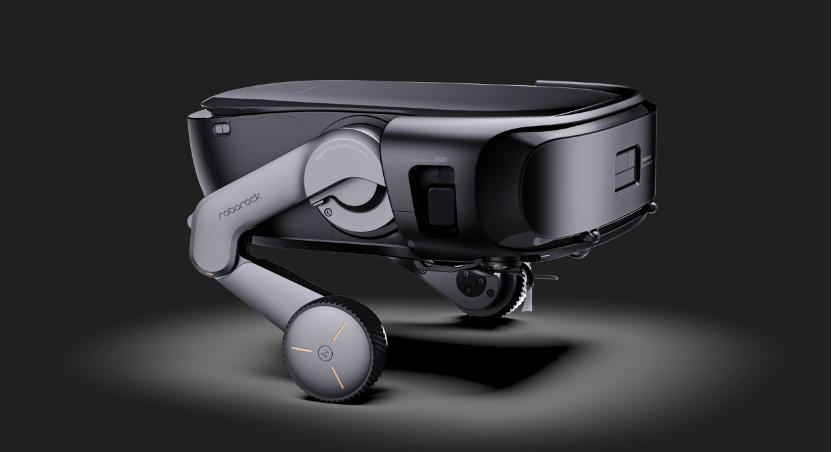
The R2 Pro from Shenzhen startup Robotin, as the world's first fully modular household robot system, integrates vacuuming, mopping, and deep carpet cleaning. It can autonomously clean and dry a 400 - square - foot carpet within three hours.
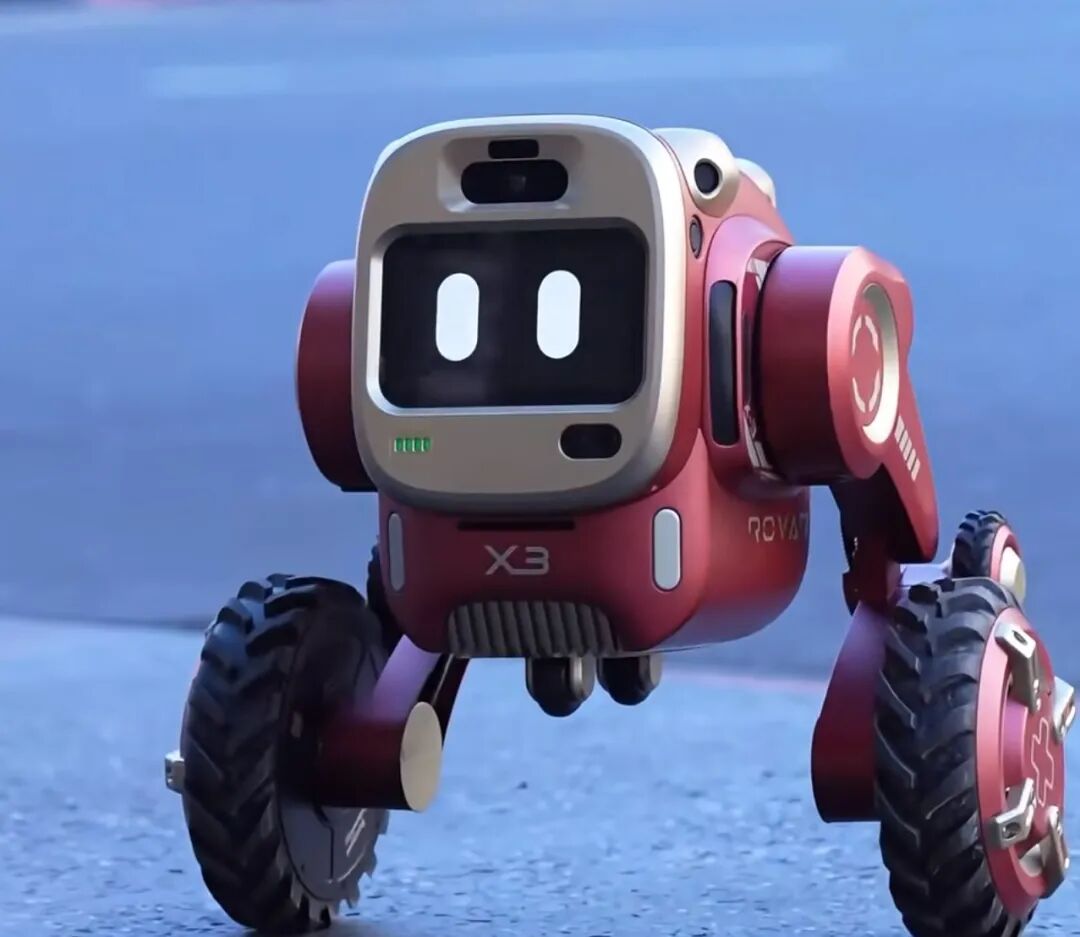
The robot company Shentingji, which focuses on outdoor companionship, brought a small robot similar to WALL - E, focusing on outdoor travel scenarios with the core goal of reducing the burden.
The startup Teeni.AI, which focuses on teenage AI agents, positions its new product Mooni Pro as a robot that kids can carry around. It can perform interactions such as taking photos and having conversations. Its core exploration is how AI can enter the lives of the next generation of teenagers.
