Is the cross-border expansion of consumer electronics a blue ocean or a fruitless rat race?
From drones to panoramic cameras, from mobile phones to AI glasses, in the past year, a "war" centered around technology, ecosystem, and users has already begun.
DJI released its panoramic camera Osmo 360 in July 2025. Immediately afterwards, Insta360 spread the news that it would launch a panoramic drone. The two companies have intersected in each other's core businesses. Another example is the smart hardware field. Whether it's large manufacturers or mobile phone brands, they have all flocked to the AI glasses industry, trying to get a share of the pie.
As the boundaries of the consumer electronics industry become increasingly blurred, former "competitors" are breaking into each other's territories. Is this the helpless involution due to the market reaching its peak, or the growing pain before technological integration?
Why Cross - border and "Involution" Have Become the Mainstream
In the past year, DJI and Insta360, two giants originally in different sectors, resolutely chose to "fly" into each other's domains.
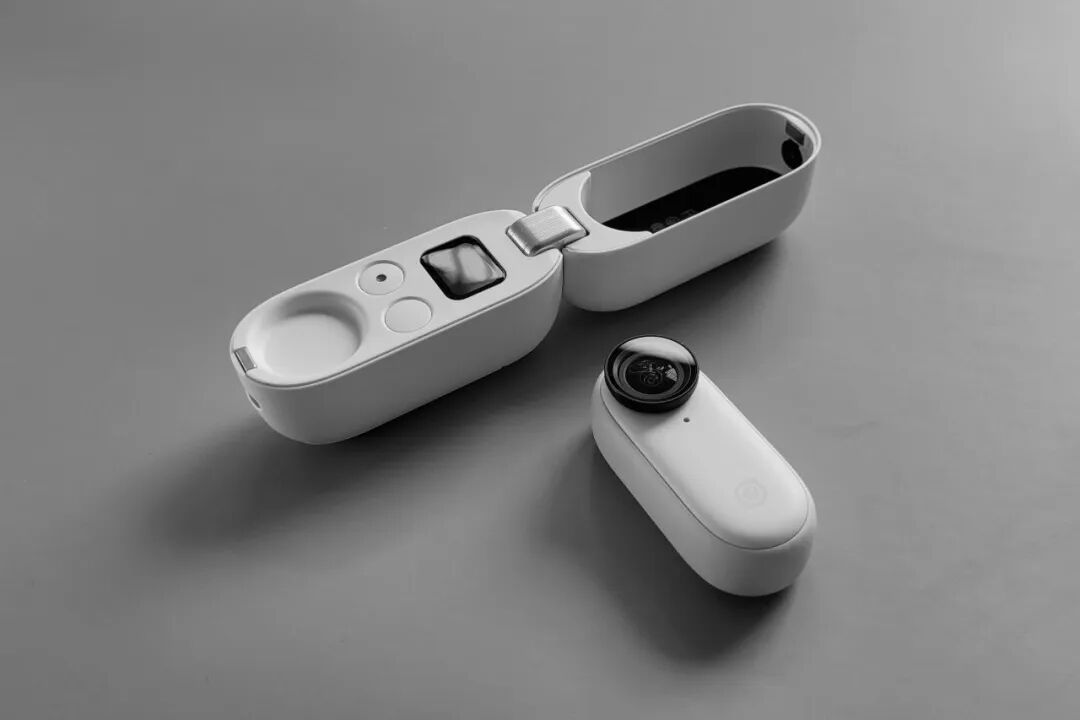
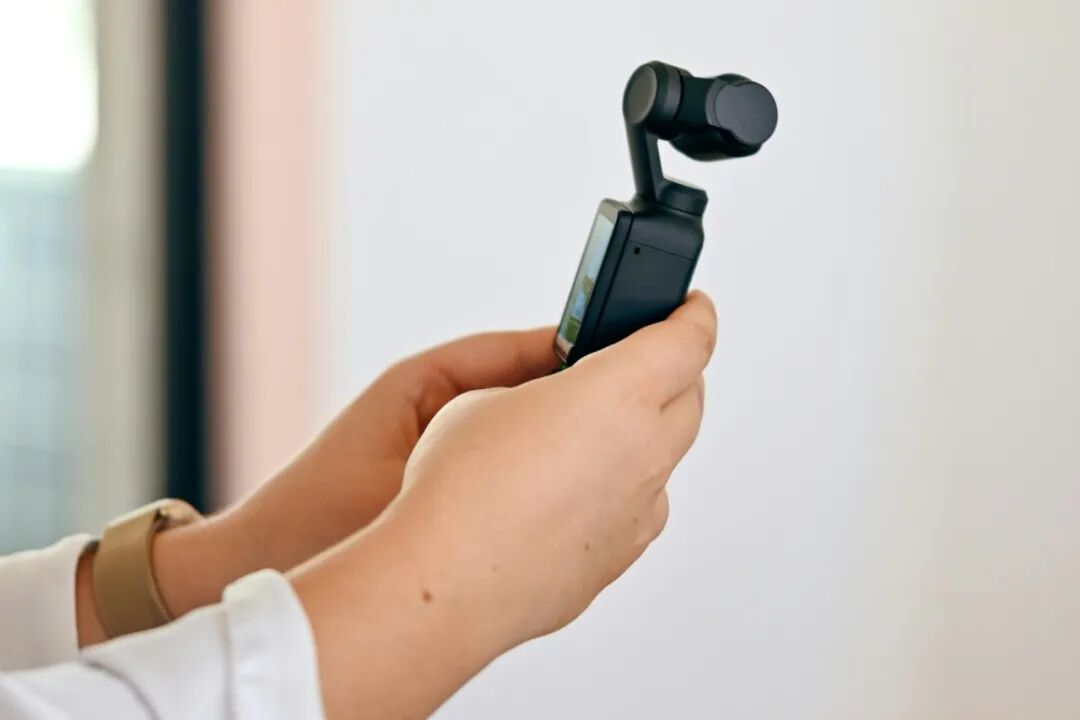
In July 2025, DJI, which has long focused on drones as its core business, officially launched its first panoramic camera, Osmo 360, priced at 2,999 yuan, 800 yuan lower than the initial price of Insta360's flagship product, Insta 360 X5.
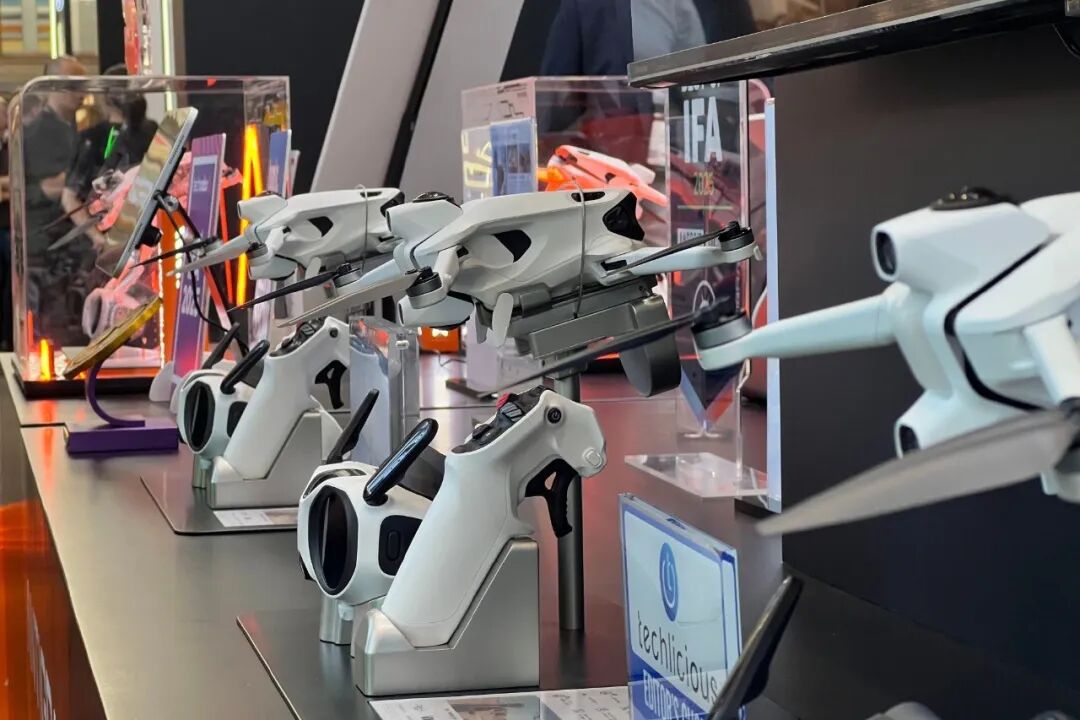
In response to the offensive, Insta360 launched the Insta360 X4 Air just three months later, positioning it as the "world's lightest 8K panoramic camera." It also revealed in its third - quarter report that based on the extension of panoramic imaging technology, the company has entered the drone sector and plans to launch two drone brands. Among them, the public beta of the panoramic drone "Antigravity" jointly developed with a third - party is almost over, and it is expected to be trial - sold in some regional markets in the fourth quarter of 2025. Insta360 clearly stated that this will fill the gap in the current market for panoramic drones and open up a new growth curve for the company.
On December 5th, Insta360 "earlier than the market expected" launched the world's first panoramic drone, the Antigravity A1, starting at 7,999 yuan, and 6,799 yuan after national subsidies.
Picture/ Antigravity's official Weibo
Liu Buchen, an observer in the home appliance industry, pointed out: "The cross - border moves of DJI and Insta360 are the inevitable result of technological development. Although the individual sectors of panoramic photography and drones are also trends, only the integration of the two represents the biggest sector."
The same logic is also playing out in the AI glasses sector, which is regarded as the next - generation entry point.
2025 is a crucial year for the implementation of AI glasses. In June, Xiaomi launched its AI glasses, and in November, Baidu launched the improved Xiaodu AI Glasses Pro, with multiple capabilities optimized compared to its initial debut.
For example, the Xiaodu AI Glasses Pro can achieve real - time translation and broadcasting with only a 3 - second delay, and can actively summarize meeting minutes and organize to - do lists. In the same month, Alibaba also launched its first self - developed dual - display AI glasses, the Quark AI Glasses S1. By integrating the Alibaba ecosystem, it attempts to create a differentiated experience in scenarios such as near - eye navigation, scan - to - pay, and product price comparison.
Alibaba told "Phoenix WEEKLY Finance" that the Quark AI Glasses aim to redefine the new standard for AI glasses. It not only wants to be a pair of beautiful and comfortable glasses but also a portable super assistant and an all - weather, multi - scenario smart terminal.
From drones to panoramic cameras, from the mobile phone ecosystem to AI glasses, consumer electronics giants are either actively or passively involved in a boundary - less melee.
Liu Buchen told "Phoenix WEEKLY Finance" that the logic of the mutual penetration of AI glasses is the same as that of DJI and Insta360. A few years ago, some people predicted that mobile phones would disappear, and the services provided by mobile phones must have a new carrier. AI glasses are one of the most promising options.
Some people say that in the consumer electronics industry, the old stories can no longer be told. The era of performance involution, which simply involves increasing pixels and memory, has come to an end.
"In the past 20 years, the development of consumer electronics has advanced by leaps and bounds. However, in recent years, with market saturation and a slowdown in innovation, cross - border exploration for new space has become an inevitable choice." Zhang Yi, the founder of iiMedia Research, said.
The Predicament of "Pseudo - innovation" Behind the Melee
The melee is like two sides of a coin. It not only injects vitality into the industry but also brings challenges. On the one hand, the most direct result of competition is to stimulate technological innovation and even activate market education, thus expanding the entire "pie."
In Zhang Yi's view, the emergence of AI technology has broken through the underlying technological bottlenecks, making the technological homology among multiple categories increasingly high. "The reuse and integration of technology among mobile phones, automobiles, and consumer electronics have lowered the threshold and cost of cross - border R & D, making the explosion of new categories possible." Zhang Yi told "Phoenix WEEKLY Finance".
A report released by the international research institution IDC also confirms this trend: In the first half of 2025, the global shipment of smart glasses (AI glasses) reached 4.065 million units, a year - on - year increase of 64.2%. The shipment of Chinese smart glasses manufacturers exceeded 1 million units, a year - on - year increase of 64.2%, accounting for 26.6% of the global market share.

Behind the growth, mobile phone manufacturers, internet giants and other players have flocked in, leveraging their advantages in AI algorithms and ecosystem linkage to jointly heat up the market and achieve technological inclusiveness.
The same "expansion effect" has also occurred in the panoramic camera field. Recently, two market research reports in this field have attracted external attention.
Data from Frost & Sullivan shows that in the third quarter of 2025, Insta360 ranked first in the global consumer - grade panoramic camera market with a 75% market share, while DJI's market share was 17.1%. On the other hand, a report released by Jiuqian Zhongtai shows that in the third quarter of 2025, Insta360 captured a 49% global market share in the panoramic camera field, and DJI's market share was 43%.
Although the data in the two reports "conflict" due to different statistical calibers, they also reflect the rapid expansion of the market scale under market competition.
Liu Jingkang, the founder of Insta360, once said, "Our greatest misfortune is that there is a DJI in the sector, but our greatest fortune is also that there is a DJI in the sector." There is concern about competition in his words, as well as the intention to build momentum with the help of DJI.
Insta360 also said at its third - quarter 2025 earnings meeting that the competition from its peers has objectively promoted market expansion. At the same time, Insta360 emphasized that the accuracy, completeness, and authority of some data circulated by third - parties cannot be verified and reminded investors to be aware of risks.
However, beneath the hustle and bustle, there are still concerns. When many players flock to the same sector but can only carry out minor innovations and price competition on similar supply chains and similar technological paths, the entire industry will fall into low - level repetitive resource consumption and even the predicament of "pseudo - innovation."
Recently, a piece of news that has attracted market attention is that the price of a high - end 12GB LPDDR5X memory chip has soared to $70, more than double the price at the beginning of 2025. This means that the memory cost of a pair of AI glasses or a flagship mobile phone may increase by dozens of dollars. In the view of industry analysts, when all manufacturers are competing for the same "general solution," any change in core components will make this cross - border war more intense.
In addition, although the market is growing rapidly, no manufacturer has yet integrated all aspects from materials, optics, software and hardware, systems to algorithms. Especially in terms of core hardware, most domestic manufacturers rely on general - purpose solutions such as Qualcomm Snapdragon AR series, which are essentially variants of mobile phone SoCs and are not designed for the all - weather, ultra - low - power scenarios of AI glasses.
It seems that the result of the melee is destined to be complex and multi - dimensional.
The Ultimate Goal of Cross - border: Seeking Deep Binding of Scenarios
Zhang Yi pointed out that the upgrading of demand directly forces enterprises to transform from "product manufacturers" to "scenario solution providers." The competition between DJI and Insta360, and the competition among mobile phone giants and internet giants in the AI glasses field all follow this underlying logic. They are not blindly expanding but trying to integrate their own advantages with new technological capabilities (such as flight platforms, panoramic imaging, mobile ecosystems, or AI services) into a broader range of hardware carriers to seize the entrance to future smart scenarios.
Many experts interviewed by reporters said that this cross - border competition "will definitely intensify in 2026." The intensity of the competition and the imperfect competitive landscape of emerging categories, but with great expansion potential, are also the key factors attracting capital and enterprises to keep pouring in.
Therefore, the core of crossing the cycle, avoiding involution, and truly winning future competition lies in whether enterprises can build differentiated and sustainable competitive advantages.
In terms of specific paths, increasing investment in technological R & D and building underlying technological barriers are the most important foundations. Enterprises must break out of the comfort zone of pursuing "general solutions" and achieve breakthroughs in underlying technologies such as advanced materials, dedicated chips, and core algorithms.
Secondly, focus on specific new scenarios and new business forms and provide suitable products. As Jack Trout, the founder of positioning theory, once pointed out, the success of a brand often depends on whether it occupies a certain category or a special position in consumers' minds.
For example, in the drone field where DJI has a wide moat, Insta360 positions its drones as "exclusive flying cameras for panoramic content creators" rather than general aerial photography tools.
Some digital bloggers said that in terms of algorithms and technology, Insta360 and DJI are actually on a par, and deep binding of scenarios is one of the best ways to achieve commercial value.
Finally, to break through the involution, it also lies in achieving excellence in the category.
Liu Buchen gave an example. Before Fat Donglai became well - known, almost everyone thought that the retail industry had reached its ceiling. However, Fat Donglai succeeded in this seemingly "hopeless" sector because it achieved excellence in the retail industry. Looking at other industries, those who can understand this point can also achieve success like Fat Donglai.
Looking forward to the consumer electronics battlefield in 2026, victory will not belong to those who "cast a wide net" and follow the trend, but to those "long - termists" who can deeply cultivate technology, define scenarios, and integrate into the ecosystem. The industry melee will eventually move in a new direction under technological innovation and value return.
This article is from the WeChat official account "Phoenix WEEKLY Finance". Author: Tao Yajie. Republished by 36Kr with permission.