The Hydrogen Energy Business Unit has been officially established, marking a significant restructuring within the China National Energy Investment Group.
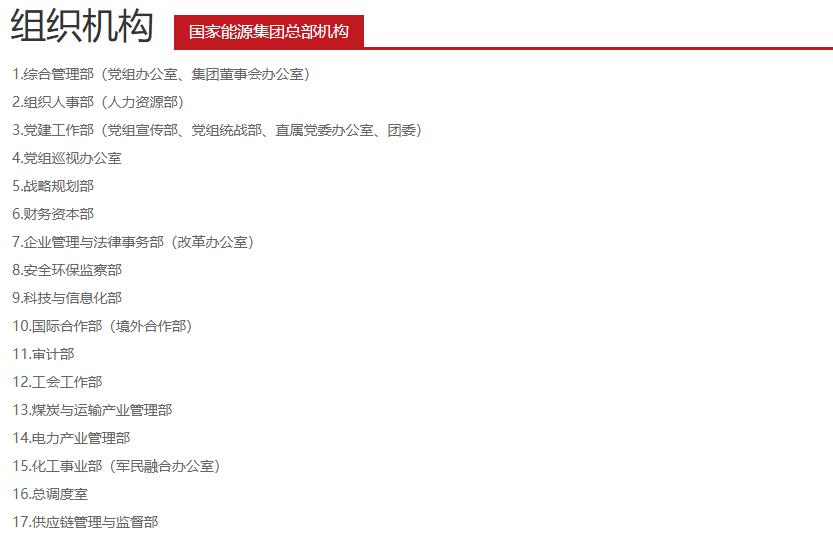
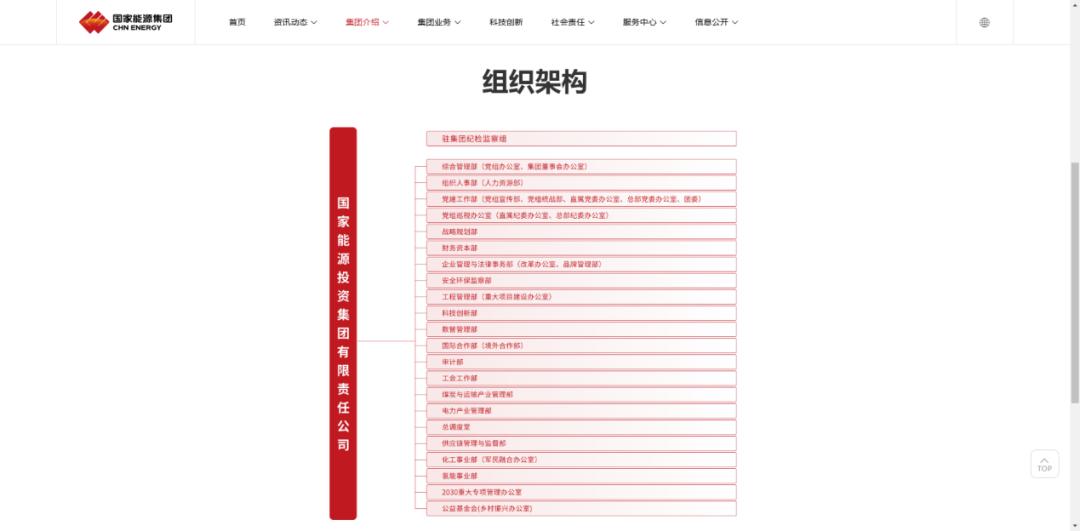
The official website page has been quietly updated, and the major adjustment of the organizational structure of China National Energy Group has surfaced - the headquarters structure has changed from the previous 17 departments to the new "1+22" pattern. Silently, a transformation concerning future layout has been completed internally.
Foresee Energy has noticed a subtle signal: In the third quarter of 2025, the frequency of leadership adjustments among the top five power generation groups dropped to the lowest point since the power reform in 2015. This may mean that energy giants are no longer relying on frequent leadership changes to cope with changes, but are starting to make internal changes and accumulate strength through organizational restructuring.
No longer covering everything: Hydrogen energy and digitalization become "special zones"
The classic model of traditional energy enterprises is to cover the entire industrial chain. From coal mines and railways to power plants, China National Energy Group was really familiar with this model in the past. But the rules have changed in the new energy game. Photovoltaic, wind power, hydrogen energy... Each track requires professional players and flexible strategies.
This year, the hydrogen energy platform invested hundreds of millions of yuan by China National Energy Group in Ordos, Inner Mongolia, was included in several national lists. Perhaps many people didn't realize that this was a foreshadowing for today's "Hydrogen Energy Division". With an independent division, it means that the hydrogen energy business is no longer a "small project" under a certain technical department, but a "vanguard" with independent budgets, independent assessments, and the ability to forge ahead on its own.
This change is very practical. In the past, the new energy business in the traditional structure often had to compete with coal power and coal, the "cash cows", for resources and attention. Now that it is independent, its progress depends entirely on its own capabilities. The tracks are clear, and the responsibilities are also clear.
Similarly, the "Department of Science, Technology and Informatization" has been split. In the past, technology and informatization were bundled together. Now, "Technological Innovation" and "Digital and Intelligent Management" have become independent departments. This split shows a lot: Technological innovation aims at future technological breakthroughs, and digital and intelligent management is responsible for improving current operational efficiency. We need to grasp both and make them both strong.
This is not just the choice of China National Energy Group. For example, since the end of 2024, China National Power Investment Corporation has announced the launch of more than 200 projects at once, with a total investment of more than 500 billion yuan. This also poses a problem: With so many projects, how to manage them? The newly established "Engineering Management Department (Major Project Construction Office)" of China National Energy Group is the answer - dedicated people to focus on dedicated matters.
The brand and special project office focus on practical results, not on empty talk
A sign of the "Brand Management Department" has been added behind the "Enterprise Management and Legal Affairs Department". Traditional energy enterprises are often perceived as "digging coal and generating electricity with their heads down", and brand building doesn't seem that urgent.
But in reality, when energy enterprises start to provide comprehensive energy services, attract young talents, and tell stories in the capital market, the brand becomes a hard power. This adjustment by China National Energy Group officially acknowledges that a good brand can also be a source of livelihood.
Even more practical is the "2030 Major Special Project Management Office". The name itself brings a sense of urgency with the countdown - there are only a few years left until carbon peak in 2030. People in this office probably have countdown signs on their desks.
This office is not just an empty shell. In October last year, China National Energy Group started to solicit global proposals for the "Public Projects of Major Coal Special Projects in 2026". From the selection of technological routes, investment in R & D resources, to industrialization, this office is responsible for a complete innovation chain.
Technological innovation in the energy industry, especially low - carbon transformation technology, often requires large investments, has a long cycle, and is high - risk. Without special management, it's easy to spread resources thinly, and the money may be spent without results. Now, the establishment of a special office is to use resources effectively and ensure that every cent of R & D investment can contribute to the goal of carbon peak.
The discipline inspection and supervision team is listed separately, and the public welfare foundation is included
In the organizational structure chart, the "Discipline Inspection and Supervision Team stationed in the Group" is placed at the front and listed separately. This change in position may seem like just a layout adjustment, but the signal it conveys is clear: The independence of supervision has been raised to an unprecedented height.
The energy industry is capital - intensive and has numerous projects, with investments often reaching billions or tens of billions. Strong supervision is not to "shackle" the business, but to "clear obstacles" for development. In the deep - water area of industry transformation, a clean and healthy organization is more important than short - term speed.
It's also worth noting that the "Public Welfare Foundation (Rural Revitalization Office)" has been included in the headquarters structure. In the past, such social responsibility work was often just a decoration, an "extra move". Now, being included in the organizational structure chart means it has become a "required move" and an organic part of enterprise operation.
This foundation of China National Energy Group is not just for show. As of April last year, they had rescued more than 30,000 children across the country and donated hundreds of millions of yuan in total. Behind this change, there is actually a transformation in the value orientation of energy enterprises. In the past, energy enterprises were mainly measured by power generation and profits. Now, social responsibility, community relations, and comprehensive value also need to be considered. Writing the public welfare foundation into the organizational structure is to translate this transformation from concept into system.
This organizational adjustment of China National Energy Group seems to be just the addition, reduction, and merger of departments on the surface, but actually it is a shift in strategic focus. Behind each newly established department, there is a corresponding actual business: the Hydrogen Energy Division corresponds to the test platform in Inner Mongolia, the 2030 Special Project Office corresponds to the ongoing R & D projects, and the Public Welfare Foundation corresponds to the public welfare network with hundreds of millions of yuan in investment.
The competition in the energy industry has shifted from the past scale and speed competitions to a deep - seated competition in organizational capabilities and strategic endurance. The fact that the frequency of leadership adjustments among the top five power generation groups has dropped to the lowest in a decade is very telling - the era of frequent leadership changes is over, and now it's about organizational strength.
China National Energy Group has taken the lead in completing this organizational restructuring. Will other energy giants follow? When hydrogen energy, digitalization, brand building, and special R & D are upgraded from "departmental functions" to "strategic units", the competitive landscape of the energy industry may be redefined.
This quiet organizational transformation may have a more profound impact on the future direction of the Chinese energy industry than any high - level personnel change. When the signs change, the routes also change.
Attached picture: Organizational structure adjustment of China National Energy Group
Before adjustment:
After adjustment:
(Source: Official website of China National Energy Group)
This article is from the WeChat public account "Foresee Energy", author: Zhao Jianan. Republished by 36Kr with permission.