The Three Lives of Robots: How Industrial AI Evolves from Simulation to Partnership
01 Overview
Cogito Tech's "Three Lifecycles of Robots" framework represents a fundamental shift in the field of industrial robotics. It views robots as evolving systems rather than static tools, and they go through three distinct lifecycle stages: simulation training, actual deployment, and continuous adaptation. This approach directly addresses the key obstacles in AI applications - safety, data scarcity, and integration costs - making it crucial for manufacturing, logistics, and supply chain operations seeking scalable AI implementation.
02 The Three - Stage Lifecycle of Industrial Robots
The AI lifecycle of industrial robots represents a fundamental departure from traditional automation methods. In the past, factories purchased off - the - shelf robots pre - programmed to perform specific tasks. Now, they can cultivate adaptive robot systems that can go through different development stages. This framework, pioneered by Cogito Tech, redefines industrial robots as learning entities with three consecutive lifecycles: first operating in a simulated environment, then in a controlled real - world environment, and finally becoming continuously adaptive partners in a dynamic industrial environment.
The timing of adopting this strategy couldn't be more critical. According to Deloitte's "2025 AI Trends Analysis Report", organizations are accelerating the adoption of advanced AI technologies, but the road ahead is "full of both opportunities and challenges". Traditional robotics often hits a bottleneck when faced with unexpected variables -
For example, a manufacturing robot may assemble components perfectly during testing but fail when there are changes in lighting or when it encounters slightly irregular parts. The "Triple Life" framework systematically addresses these transition points, creating robots that can bridge the " simulation - to - reality gap " defined by Cogito Tech, which is a difficult problem for traditional technologies to solve.
First Life: Why Perfecting Robots in a Simulated Environment is Crucial
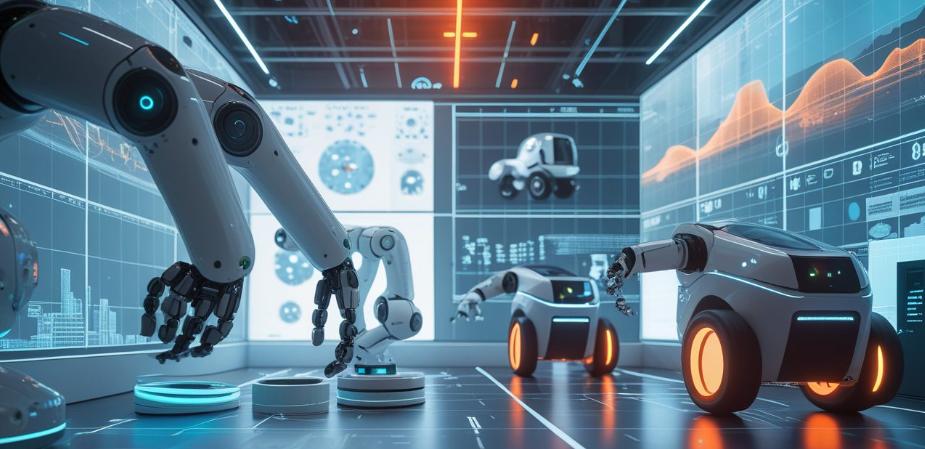
The initial stage of robot AI is not on the factory floor but in a carefully constructed digital environment. In this initial stage, robots undergo intensive training through simulation and synthetic data generation - Cogito Tech describes it as generating "a large amount of labeled data" in a virtual environment that mimics the physical and visual effects of the real world. This simulation approach addresses one of the most challenging problems in the field of industrial AI: how to obtain sufficient training data without physical robots or equipment.
Imagine an alternative scenario: Training a robotic arm to detect defects in manufacturing parts requires thousands of perfect and defective samples - which is almost impossible for factories with high - quality standards. Simulation technology bypasses this limitation by generating an infinite variety of defects, lighting conditions, and material appearances. As a robot team found, "By training in a simulation environment first, robots can learn safely and cost - effectively before being tested in the real world."
The commercial value of this first - use simulation goes far beyond cost reduction. A global logistics provider mentioned in the Deloitte research report uses autonomous AI agents that can "negotiate delivery routes and dynamically respond to weather - related delays and supply chain bottlenecks". Such complex decision - making requires exposure to countless scenarios - and simulation is the most effective way to generate these scenarios. This approach directly addresses one of the biggest challenges that Deloitte believes AI applications face: "Integrating with legacy systems and addressing risk and compliance issues". By allowing robots to learn without disrupting existing operations.
Second Life: How Robots Transition from the Virtual World to the Real World
The second lifecycle of industrial robots perhaps represents the most critical transition: from digital operations to actual physical operations. At this stage, robots leave the perfect simulation environment and enter what Cogito Tech calls the "real - world environment". At this stage, they will encounter unpredictable factors in the actual industrial environment. This stage utilizes human - guided learning techniques, including learning by demonstration and imitation learning. Robots "learn skills by observing and imitating human trainers".
During this transition stage, human expertise becomes crucial through methods such as remote operation and kinesthetic teaching. Industrial operators can physically guide the robot's arm through complex assembly sequences, while the system records these "state - action pairs - the environmental information it perceives and the exact actions taken by the trainer at that moment". This human - robot knowledge transfer creates what a Forbes article on robotics describes as "generalist partners" that "can adapt, learn, and collaborate across different tasks and industries".
This second stage directly addresses one of the fundamental challenges in popularization identified by Deloitte: employee skills and readiness. At this stage, robots do not replace human workers but learn from them, mastering delicate skills that cannot be programmed by traditional methods. As the CEO of Fictiv said in a Forbes magazine article, "We no longer ask 'What can robots replace?' but explore 'How can robots enhance human capabilities, adapt to the human environment, and collaborate with humans to solve our most difficult problems?' "
Third Life: Why Continuous Adaptation Sets Advanced Robotics Apart from Basic Automation
The third lifecycle stage of robot AI represents the final stage of this framework: creating systems that can continuously learn and adapt in the real - world environment. Different from traditional automation that performs fixed and repetitive tasks, these third - life robots continuously improve their performance through what Cogito Tech calls "reinforcement learning from human feedback (RLHF)". Human experts rank or compare different attempts to help robots improve their methods.
This continuous learning ability changes the economic landscape of industrial robots. Traditional robots may become obsolete when production requirements change, while "Triple - life robots" can adapt to new tasks, materials, and environments. This addresses one of the biggest application challenges pointed out by Stack AI: "Integration with traditional systems". Because adaptable robots can work within the existing infrastructure without a complete overhaul.
In industries such as manufacturing and logistics, this competitive advantage will become undeniable. Deloitte's analysis points out: "Physical AI will no longer be regarded as an experimental technology but will become an important part of front - line operations in industries where safety, scale, and human - robot collaboration can bring measurable economic benefits." This third life reflects this transformation - from an experimental technology to an important infrastructure that becomes more powerful over time.
03 How This Framework Transforms Manufacturing, Logistics, and the Supply Chain
The Triple Life Framework provides particular value for manufacturing optimization, enabling what Deloitte calls "physical AI" to be applied in "manufacturing, logistics, and agriculture". In fact, it means that robots can master complex tasks such as quality control and predictive maintenance through simulation training, be safely integrated into the production environment in the second lifecycle, and continuously optimize operations through adaptation in the third lifecycle.
The framework is particularly important in the logistics and warehousing fields because in these fields, autonomous mobile robots (AMRs) must operate in a dynamic environment in collaboration with human staff. According to Cogito Tech, these AI - driven systems "can autonomously avoid obstacles and adjust routes in real - time", and this ability runs through all three levels of the framework. The result is as described in a Forbes magazine article: "Clusters of mobile robots operate in a coordinated manner like dancers, avoiding bottlenecks while accelerating order fulfillment."
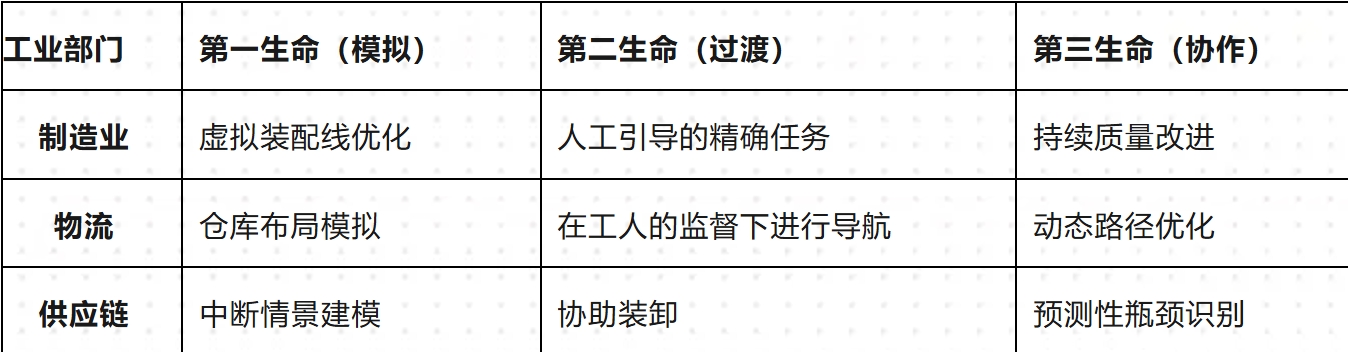
Table: The "Triple Lifecycle" Framework across Industries
04 Implementation Challenges: Data, Workforce, and Integration Barriers
Despite the promising prospects, the implementation of the "Triple Life" framework still faces many significant obstacles. Stack AI points out that "data quality and bias" are the main challenges and emphasizes that "low - quality or biased data will lead to unreliable AI output and undermine trust". For robotics, this means that the simulation environment must accurately reflect real - world conditions; otherwise, robots will encounter difficulties during the transition to the second deployment.
Workforce readiness is another key obstacle. Deloitte's research found that 35% of AI leaders believe that "infrastructure integration" is the biggest challenge they face in physical AI, while 26% think it is "employee skills and readiness". The "Triple Life" framework addresses this problem through what Cogito Tech calls "human - robot interaction annotation", which "transforms messy multimodal data into actions approved by experts". In essence, it is to establish a collaboration agreement between humans and robots throughout all three stages of their lifecycles.
Perhaps the most persistent challenge lies in the transition points between different life forms. Robots that are good at simulation may perform poorly when faced with various factors in the real world - Cogito Tech calls this phenomenon the "simulation - to - reality gap". Their approach uses "digital twin feedback" and "real - time correction" to ensure a smooth transition, but organizations must budget for these integration stages when implementing the framework.
05 The Future of Industrial Robots: From Specialized Tools to General Partners
Looking to the future, the "Triple Life" framework aligns with the "structural shift" in the robotics field pointed out by Forbes: "The convergence of AI foundation models, humanoid robot hardware, distributed supply chains, and advanced manufacturing platforms is transforming robots from specialized tools into general partners." The shift from single - purpose automation to adaptive collaboration represents the ultimate manifestation of the third - life concept.
This framework also supports the emergence of what Deloitte calls "agent - based AI systems", which have "huge transformative potential because they can adapt to changing environments, make complex decisions, and collaborate with humans and other agents". As these systems develop through their three lifecycles, they are increasingly able to handle uncertainties in the real industrial environment outside the controlled factory environment.
For industrial operations, this evolution means rethinking robotics. Instead of viewing it as a capital expenditure with fixed functions, it should be seen as a learning system whose value increases over time. As a robotics industry executive said in a Forbes magazine article, "In the next decade, it won't be robots replacing humans, but humans and robots working side by side." The "Triple Life" framework provides a structured approach to achieve this collaborative future on a large scale.
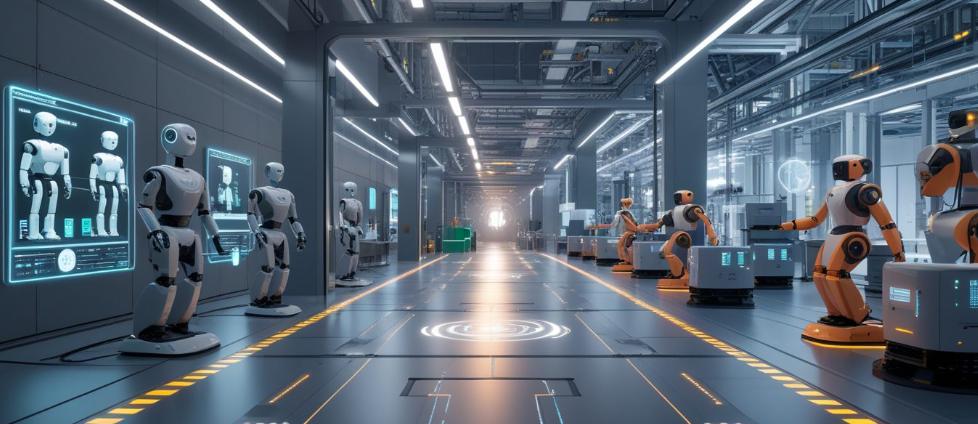
Cogito Tech's "Three Lifecycles" framework offers more than just a technical roadmap. It represents a fundamental shift in the way industries automate. By viewing robots as evolving systems rather than static tools, enterprises can navigate the complex process from experimental AI to production - ready partners. This approach directly addresses the most pressing adoption obstacles identified in the 2025 research: data quality, employee readiness, and system integration.
For industry leaders, the situation is clear: the future does not belong to those who simply buy robots but to those who nurture them throughout their entire lifecycle. As emphasized by Deloitte's research results, "Successfully adopting autonomous, physical, and independent AI requires more than just technological investment. It requires an overall strategy covering integration, governance, compliance, and employee readiness." The "Triple Life" framework provides a strategic and holistic approach.
The transformation has already begun. From the production floor to the logistics hub, robots are going through a simulated childhood, an apprentice - like adolescence, and finally maturing to work side by side with human colleagues. Companies that embrace this development model today will lead their respective industries in the future.
This article is from the WeChat official account "Data - Driven Intelligence" (ID: Data_0101), author: Xiaoxiao, published by 36Kr with authorization.