From tool platforms to industrial operating systems, who can be called upon for the long term?
Editor's note: Recently, the results of the "Cross - industry and cross - domain Industrial Internet Platforms in 2025" were publicly announced. The COSMOPlat Industrial Internet Platform of Kaos won the highest "Class A" evaluation and has ranked first for seven consecutive years. Haier Kaos is becoming an important example for observing the evolution of the industrial Internet industry.
Standing in front of the intelligent production line of modern industry, robotic arms precisely complete welding tasks, AGV trolleys automatically shuttle for distribution, and real - time data of the entire process is constantly flashing on the screen. Behind these well - ordered automated scenarios lies the in - depth integration of equipment, data, personnel, and decision - making.
The manufacturing industry is forming an invisible yet crucial "digital neural network". It connects the originally fragmented production links, enabling factories to move from "automation - capable" to "collaborative, optimized, and evolvable". This is the industrial Internet, quietly changing the way industries operate.
As the core engine driving the high - quality development of the manufacturing industry, the industrial Internet completed the infrastructure - level construction during the 14th Five - Year Plan period. With connection, cloud - based operation, and single - point intelligence as the core keywords, it tackled the basic issues of "existence" and "connectivity". With the help of technologies such as cloud computing, big data, and the Internet of Things, tens of thousands of production lines and hundreds of millions of industrial devices were connected to the cloud, and a cross - regional and cross - enterprise digital industrial system was initially formed.
However, all this is just the starting point.
Entering the window period of the 15th Five - Year Plan, the industry's transformation is clear enough. New - type industrialization is shifting from the exploration stage of demonstration projects to the stage of large - scale replication. Intelligence is no longer confined to a single factory but is beginning to extend to the park - level, industrial - chain - level, and even cross - industry collaboration.
The industrial Internet is looking forward to an "operating system".
Against this background, COSMOPlat of Kaos, incubated from Haier, has become a typical example of industry evolution.

Ranked first among the national - level "dual - cross" platforms for seven consecutive years and the first to obtain the "dual - cross Class A" certification, its brand value increased by more than 82% during the 14th Five - Year Plan period, reaching 116.335 billion yuan in 2025... Behind these figures lies the changing role of Haier Kaos. It is evolving from a "platform provider" to an "industrial intelligent infrastructure".
More importantly, the path selection of Haier Kaos has changed: instead of deepening its single - platform capabilities, it is trying to build a complete industrial intelligent operation system, enabling the industrial Internet to move from point - based breakthroughs to large - scale expansion.
This is not a simple technological upgrade but a systematic bet on the future industrial collaboration model. Whoever can complete the construction of this "operating system" first is more likely to define the boundaries of the industrial Internet in the next stage.
I. Building Real Underlying Capabilities
What kind of industrial Internet platform does COSMOPlat of Kaos aim to build?
"It is an industrial Internet ecosystem where users participate throughout the entire process." At the 9th Forum on the Leading Role of the Individual - Order - Integration Model in September 2025, Haier Kaos gave this answer. The key to this statement lies not only in the "ecosystem" but also in the "entire process", indicating a leap in the capabilities of the industrial Internet: from a collection of tools to a system - level operation.
The root cause of this change is not complex - the industrial Internet is approaching the "operating system" moment. As the complexity of industrial scenarios continues to increase and large - scale replication becomes a hard constraint, the industry's requirements for platforms have undergone a fundamental change. In the past, the focus was on "connection" and "functioning at a single point", but now the questions to be answered are "can it operate smoothly, expand, and be repeatedly called for a long - term and stable period?"
The real challenge lies right here. The biggest obstacle to the industrial Internet has always come from the high fragmentation of scenarios. Different from the consumer Internet, there is almost no natural universal solution in the industrial world. The equipment interfaces, process flows, and data standards vary greatly among different industries, factories, and production lines. As a result, single - point applications can work, but the difficulty increases significantly when trying to replicate across scenarios.
The equipment maintenance system in the petrochemical industry cannot be directly transferred to automobile manufacturing; the quality inspection model in an electronics factory is also difficult to adapt to the high - temperature and high - dust environment in the steel industry. Each "replication" almost means re - development, with high digitalization costs and highly uncertain results.
When the industry enters the 15th Five - Year Plan, the cost of this fragmentation is further magnified. The problems of data inaccessibility, process disconnection, and inconsistent standards are exposed, and data islands and application islands are no longer just technical issues but systematic bottlenecks.
This forces the industrial Internet to make a fundamental shift in thinking : from a tool - based mindset to a system - based mindset.
A platform with real expansion capabilities must be like an operating system. It should support applications and intelligent decision - making on the upper layer and adapt to complex and diverse industrial equipment on the lower layer. Through unified standards, interfaces, and collaboration mechanisms, it enables "replicability" across different scenarios.
Haier Kaos was built under this premise. With its full - stack capabilities of "software + hardware + platform", it aims to build an industrial intelligent foundation that can operate across scenarios, enterprises, and industries, rather than simply stacking more isolated functions.
In this system, the industrial brain is the key hub. Centered around the Tianzhi Industrial Large - scale Model, Haier Kaos has built a new - type industrial brain system, covering enterprise - level industrial Internet platforms, twin manufacturing, industrial intelligent agents, and smart energy - carbon management platforms.
It is not a traditional data analysis platform but an intelligent system for overall optimization, capable of simultaneously scheduling the data flow, business flow, and capital flow at the industrial - chain level. In key areas such as production scheduling, quality control, and supply - chain collaboration, the industrial brain plays the role of "unified decision - making", rather than an auxiliary tool for post - event analysis.
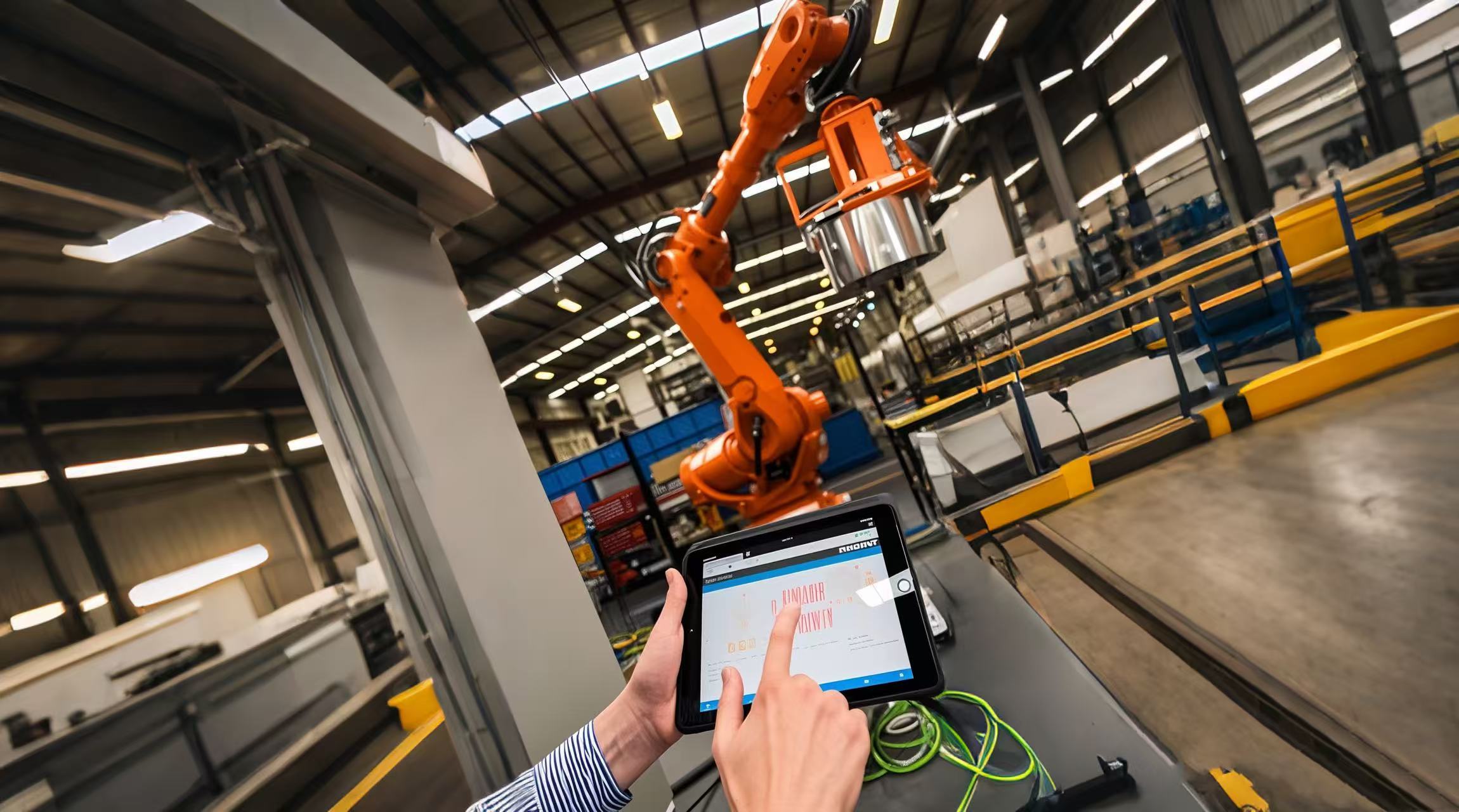
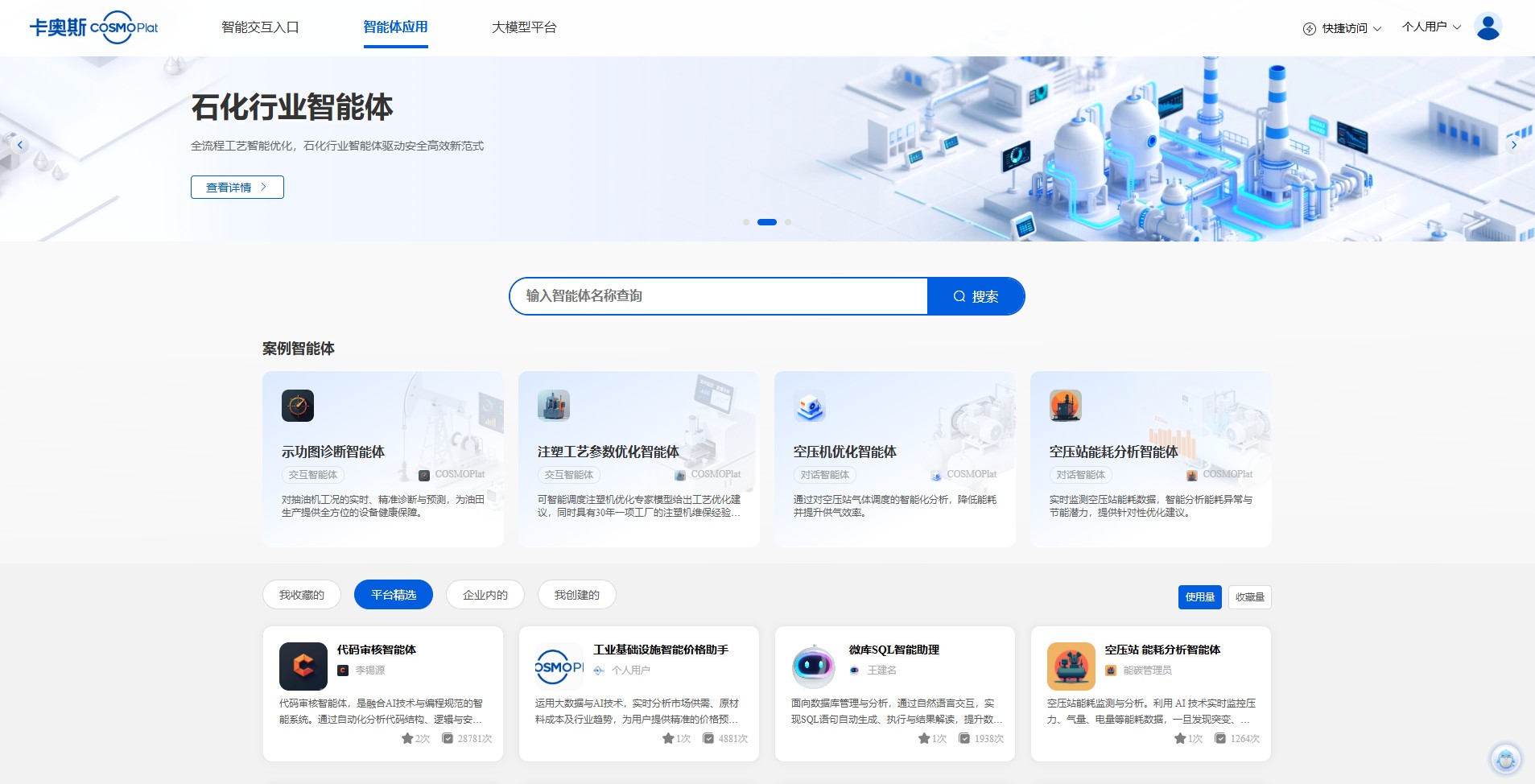
In the practice of Yanchang Petroleum Group, the long - standing information barriers between different business segments were broken, and the long - fragmented demand, R & D, process, and production were integrated into the same system. When there is a customized demand for anti - static materials from downstream, the platform can directly transmit the demand to Yanchang Petroleum, and multiple intelligent agents collaborate to complete the process from new - material R & D to production execution. This kind of cross - industry collaboration was almost unimaginable in the past.
Currently, the Tianzhi Industrial Large - scale Model of Kaos has accumulated more than 200 expert algorithms and has been implemented in 45 high - value scenarios in 9 major industries such as home appliances, automobiles, and chemicals. Behind these figures, it means that industrial AI has for the first time a realistic basis for system - level reuse and large - scale implementation.
As the industrial Internet enters the deep - water area, what really makes the difference is no longer "the existence of a platform" but who can build an industrial operating system that can evolve in the long term.
II. ONE - COSMO: The Industrial Internet Begins to Take on a Systemic Form
If the "industrial operating system" is still an abstract concept, then ONE - COSMO is the specific form presented by Haier Kaos.
In terms of results, ONE - COSMO is no longer a single product but an emerging industrial intelligent operation system. Its evolution path essentially aims to continuously raise the "lower limit of capabilities" of industrial Internet platforms.
Looking back to 2021, Haier Kaos was still facing a typical early - stage problem: how to implement the industrial Internet. The solution at that time was quite standard, including device cloud - connectivity, data platforms, industrial applications, and industry solutions. The goal was also clear, which was to enable production factors to be systematically managed for the first time and provide factories with the basic conditions for digitalization, visualization, and management.
However, the industry's problems soon changed.
As connection and visualization gradually became standard features, enterprises began to realize that the real cost lies not in the first - time implementation but in the second and third replications. The success of a single project does not mean the establishment of a replicable path. Difficult replication, slow promotion, and uncontrollable costs have become the common hidden ceilings for the industrial Internet.
It was at this point that the product portfolio of ONE - COSMO of Kaos was officially proposed in 2023. Instead of expanding around single - point capabilities, it reconstructed the platform logic from the architectural level: industrial problems were re - disassembled at three levels of scenarios, enterprises, and industries, and a single system was used to meet different levels of complexity requirements.
This step marks the transformation of the industrial Internet from a "project - based product" to a "system - based capability".
What really made the difference was the product focus after 2024. With the maturity of the end - cloud integration capability and the continuous standardization of lighthouse factory practices, the form of ONE - COSMO was streamlined into two clear product lines: the lighthouse factory for the factory - level and the industrial cloud brain for a wider scope of collaboration.
This is not a simple product split but a clear stratification of capabilities. It clearly defines which problems should be solved within the factory and which problems need to be addressed at the industrial level.
The lighthouse factory addresses the issue of "replicability" in factory - level intelligence. It is no longer a one - time customized project. Through the end - cloud integration architecture, it encapsulates device access, process modeling, data governance, and intelligent decision - making into standard modules, forming an "industrial model room" that can be repeatedly used. It also attempts to answer a long - standing yet unsolved question in the manufacturing industry: Why is it always difficult to replicate good factories on a large scale?
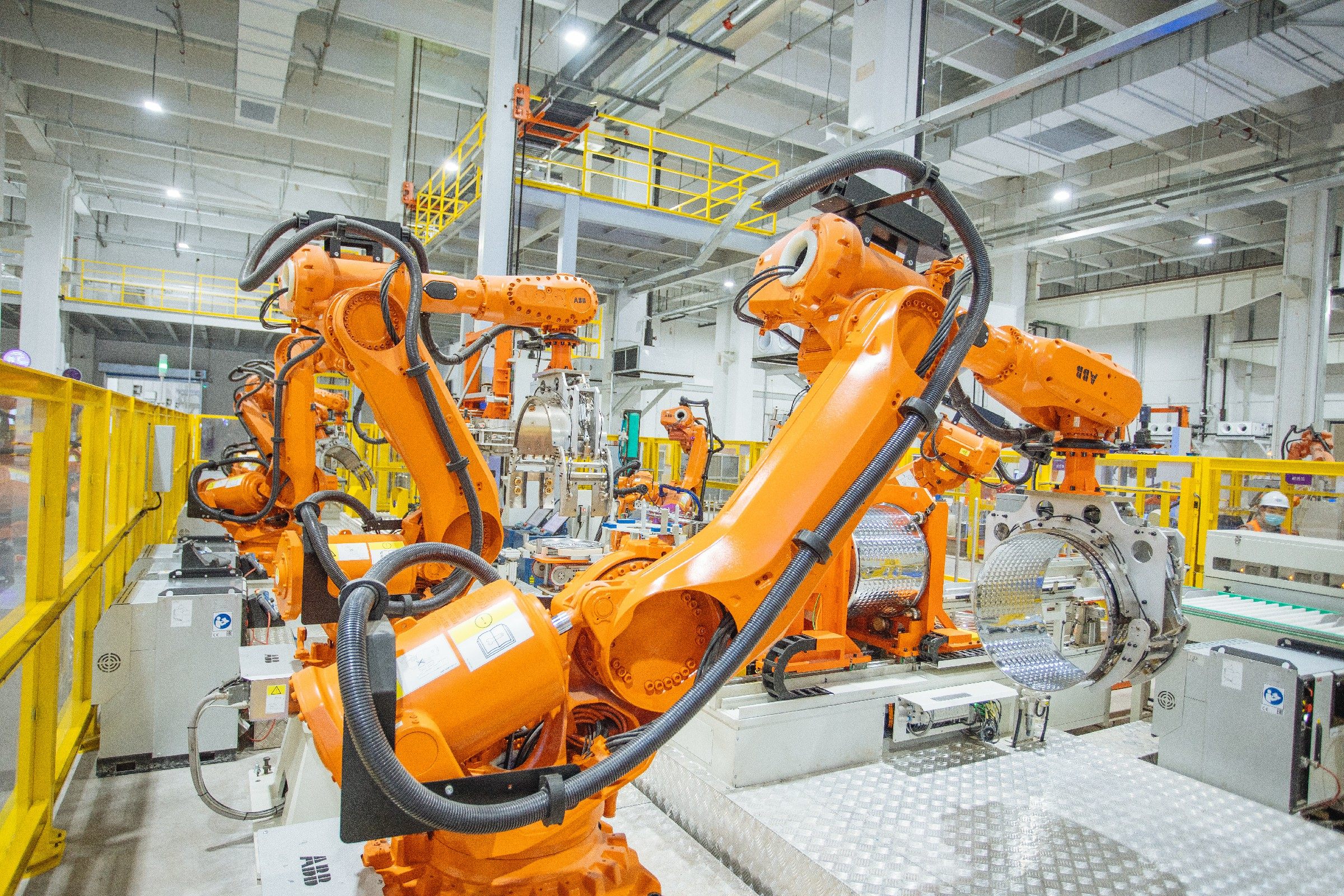
The Haier Tianjin Washing Machine Connected Factory is a highly representative example. It is a "sustainable lighthouse factory" built by a Chinese local enterprise. Instead of starting from "technology demonstration", it was systematically reconstructed under the multiple constraints of "dual - carbon" goals, production efficiency, and flexible manufacturing.
During this process, Haier Kaos got involved from the planning and design stage, integrating equipment selection, production - line layout, energy systems, and digital architecture into the same logic. During the construction and implementation stage, it connected production data, device status, and energy data through the end - cloud integrated industrial Internet architecture. During the operation stage, it embedded AI capabilities into the energy management and production scheduling systems, forming a closed - loop for continuous optimization. Eventually, it helped the factory generate 5 million kWh of green electricity, save 1 million kWh of electricity, save 40,000 tons of water, and reduce carbon emissions by 1,467 tons within a year.
The key to these achievements lies in system - level collaboration. How to match the production rhythm with energy fluctuations, how to dynamically adjust device strategies according to the load, and how AI decisions can directly affect the on - site execution layer. This is the dividing line between a lighthouse factory as a demonstration project and a replicable capability. Currently, Haier Kaos has participated in empowering 17 global lighthouse factories, forming a "lighthouse cluster" with a leading scale and wide coverage.
The industrial cloud brain deals with higher - level issues.
As intelligence extends beyond factories, the collaboration efficiency between parks, enterprises, and upstream and downstream of the industrial chain has quickly become a new bottleneck. How to enable data to flow across different entities, how to uniformly allocate resources, and how to make consistent decisions on a larger scale. These are problems that a single enterprise cannot solve.
In May this year, Woerxin activated its enterprise data elements through the Gongfu Shanghe Industrial Cloud Brain built by Haier Kaos for the Shanghe Demonstration Area. It not only reduced the defect rate by 10% and shortened the delivery cycle by 20% but also successfully entered a larger market in the Qingdao intelligent home appliance industrial cluster, with a significant increase in orders. By August this year, it had completed the order tasks for the whole of last year.
The involvement of the industrial cloud brain means that the industrial Internet is starting to approach the boundaries of an "industrial operation system".
On the surface, the lighthouse factory and the industrial cloud brain are two different product paths, but from a higher perspective, they point in the same direction. As the industry enters the deep - water area, what really matters is no longer "the existence of a product" but who can build a system that can evolve in the long term and support large - scale collaboration. ONE - COSMO is not the end, but it is raising the competition threshold to a new level.
III. Competition Deeper Than Technology: Standards, Rules, and Discourse Power
The competition in industrial operating systems is on the surface about platform capabilities, connection scale, and algorithm efficiency. In essence, it is a battle for the "default option", and the barriers lie not only in code and computing power but also in standards and regulations.
In this regard, the path of Haier Kaos is highly representative.
During the 14th Five - Year Plan period, Haier Kaos participated in a total of 98 national and industry standards. Globally, it led the formulation of multiple international standards in the field of artificial intelligence, including intelligent interaction engines, industrial large - scale models, and intelligent flexible assembly, and was recognized by international authoritative standard - setting organizations such as IEEE. Recently, the ISO international standard upgrade project for large - scale personalized customization led by Haier Kaos COSMOPlat officially passed the DIS vote.
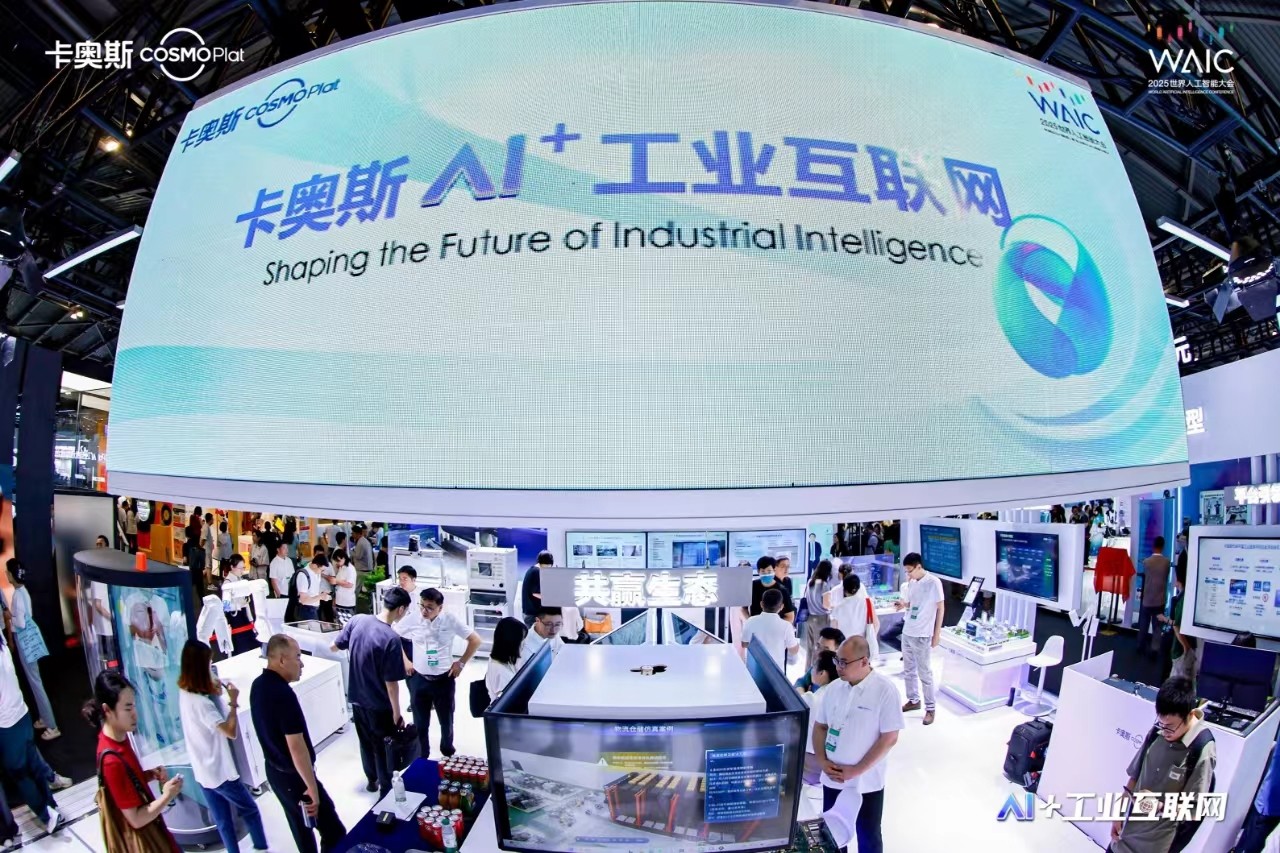
It is not difficult to see that Haier Kaos is involved in the underlying rules of how the industrial intelligent system is defined, disassembled, and called.
These standards are more like the "underlying grammar" of the industrial world: how the system is layered, how data flows, how interfaces are opened, and how capabilities are called. Those who set the standards are more likely to be called upon in the long term.
This is the most fundamental difference between the industrial Internet and the consumer Internet.
The moat of the consumer Internet comes from user scale and traffic aggregation, and platforms can quickly switch users through subsidies, experiences, and content. The industrial Internet is more like infrastructure,