Is investment targeting animated films?
In the rather gloomy film market of 2025, the only bright spot was the full - scale explosion of animated films.
Domestic animated films have firmly occupied half of the box - office market. The total national box - office in 2025 reached 51.832 billion yuan (official data from the National Film Administration on January 1st). Among them, the box - office of domestic animated films was 25.207 billion yuan, accounting for 48.63%, more than doubling the peak in 2019. Four out of the top ten highest - grossing films of the year were animated films. Among them, "Ne Zha: Rebirth of the Demon Child" alone accounted for 29.8% of the total annual box - office, truly the "stabilizer" of the annual film market.
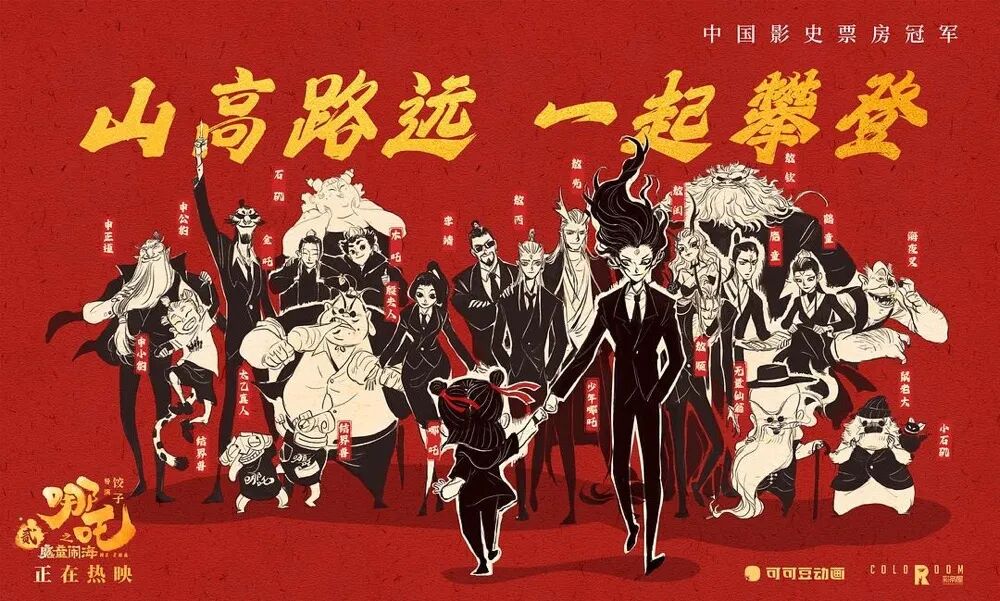
"Ne Zha: Rebirth of the Demon Child", which topped the domestic film box - office list with 15.446 billion yuan, outperformed the runner - up, "Detective Chinatown 1900", by more than 11.834 billion yuan, showing a significant lead. "The Little Monster from Langlang Mountain" grossed 1.719 billion yuan, breaking the record for domestic 2D animated films. The leading and mid - tier films were well - connected, forming a healthy echelon.
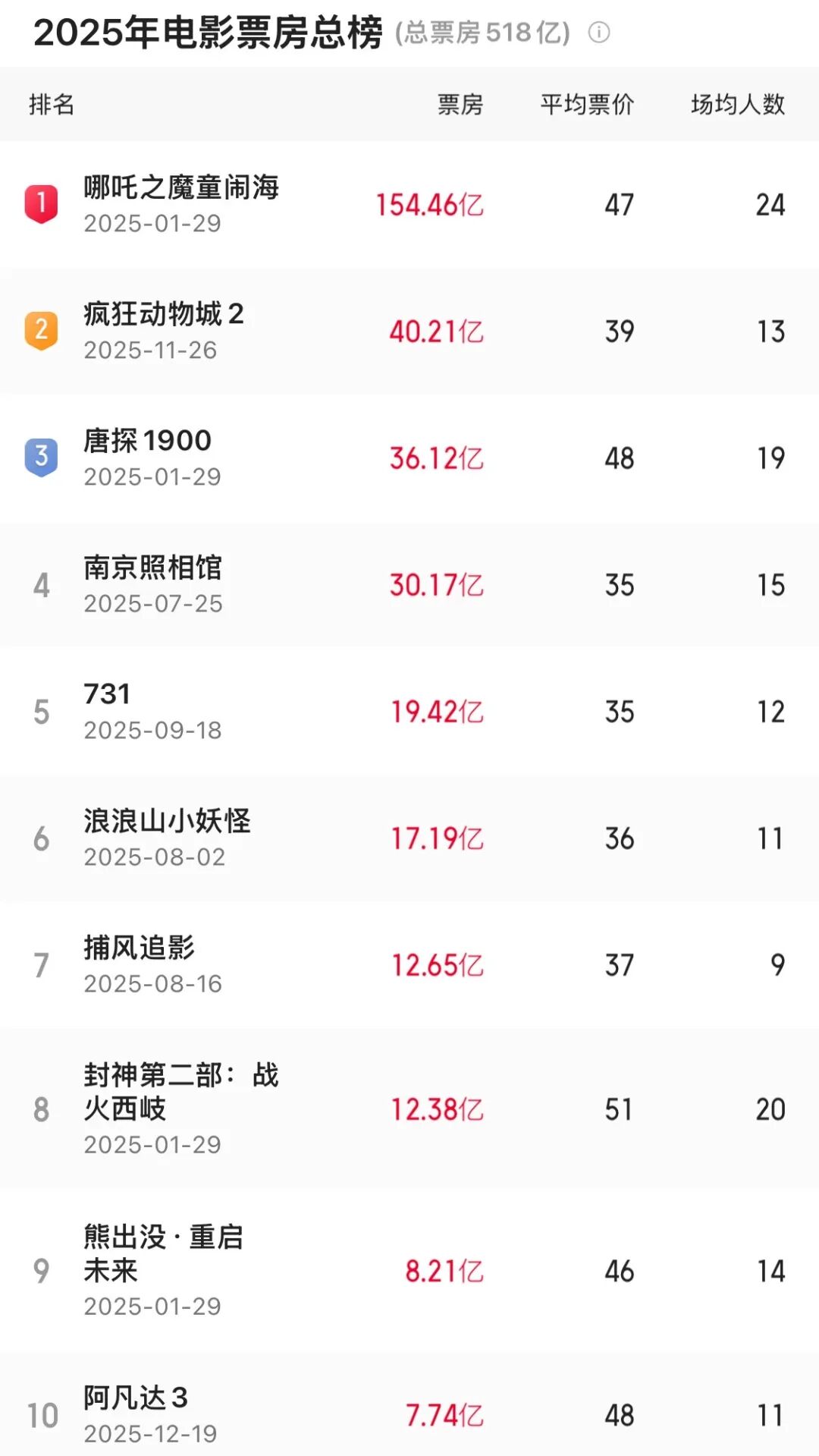
The situation is similar globally. The performance of overseas animated films also proves the commercial value of this genre. "Zootopia 2" grossed over 400 million US dollars in its global opening weekend and 4.021 billion yuan in the domestic market, becoming the runner - up of the 2025 domestic film box - office. "Demon Slayer: Infinity Castle Arc" grossed over 780 million US dollars globally and 678 million yuan in the domestic market, ranking 13th in the 2025 domestic film box - office.
Amid the high - growth trend, capital has quickly increased its investment. Leading companies such as Light Chaser Animation, Colored Pencil Animation, and Shanghai Animation Film Studio have accelerated capacity expansion and IP layout. Platforms like Tencent Video and iQiyi have entered the market through special investments and IP incubation. Traditional film and television companies such as Huayi Brothers and Bona Film Group have established animation subsidiaries to enter the field.
This trend is directly reflected in the filing data. In 2022, only 53 domestic animated films were filed. Last year, the number doubled to 127, and this year it has exceeded 150, reaching a five - year high. The rising number of filings directly reflects the enthusiasm of investors. In the current context of cautious investment in the entertainment industry, why do investors focus on animated films? The core logic lies in three dimensions: cost, threshold, and market.
Low cost + Low risk = Optimal choice
It has become a consensus that the film and television industry has entered a period of rational investment. In recent years, there have been numerous examples of live - action films with a cost of billions of yuan failing at the box - office. This has made many investors who want to enter the entertainment industry value the advantages of animated films, such as "low cost, low risk, and high tolerance for errors".
From the cost perspective, animated films are "much cheaper" than live - action films. Investor Jin Bin has a deep understanding of this. He said bluntly that the cost difference is the primary reason that attracted him to the animated film industry. In addition, due to strong controllability, the risk is also much lower. "For me, animated films offer better cost - effectiveness because as long as the funds are in place, every aspect is controllable."
Yaoyao, a producer who has worked in the animation industry for many years, told Guduo that the cost of live - action films is prone to fluctuations. Besides the difficulty in estimating the box - office, the stability of the shooting process is often disrupted by various events. For example, if the outdoor shooting is delayed due to weather problems, the cost will increase accordingly. In contrast, the cost structure of animated films is clear and transparent, mainly concentrated in the pre - production art design, mid - production animation creation, and post - production rendering. Every investment can be planned in advance.
"Since the domestic animation production process is now very complete, when the script is determined, we are 90% confident that we can complete the project as planned." Yaoyao's team has years of experience in producing animated series. After participating in animated film production, they can accurately control the labor and time costs of each stage, and skillfully avoid the process pitfalls they encountered in series production. This not only saves the trial - and - error costs of novice teams but also improves the overall production efficiency and further reduces unnecessary expenses.
In Jin Bin's view, the investment risk of animated films is far more controllable than that of live - action films, which is also the key reason for his decision to invest in animated films. Previously, he participated in investing in a live - action film. Due to the decline in the film's reputation, the lead actor refused to cooperate with the subsequent promotion activities, making the project even more difficult. "The actor's cost was actually the largest cost of that film, and the lead actor was the most appealing. If the lead actor doesn't cooperate, how can the film recoup its cost?"
In addition, Jin Bin's confidence in the animated film market also comes from the IP development of animated films. He believes that once a hit animated film is made, it can be monetized in the long - term through derivative product development, sequel production, copyright licensing, offline theme activities, etc., instead of relying solely on the box - office of a single film.
Even if facing losses, the investment losses of animated films are easier to bear than those of live - action films. "All investments carry risks, but after several years of research, I think investing in animated films can minimize the risk."
Firstly, the investment scale of animated films is relatively smaller than that of live - action films, but the same amount of money can account for a higher share. Take 40 million yuan as an example. This amount of money may not have much influence in a live - action film project, but it's different in an animated film. With an investment of 40 million yuan, one can almost become the main decision - maker of the film, deeply participate in the core decision - making of the project, and have the right to speak in script polishing, production control, and promotion strategies. This allows for timely avoidance of unreasonable expenses and firm control over the investment initiative.
Secondly, as an investor, the investment projects and investment cycles are carefully calculated. Assume that a film with a 40 - million - yuan investment incurs losses. The established profits from other projects can offset this loss, preventing the failure of a single project from affecting the overall capital chain or disrupting the long - term investment layout. The risk - resistance ability is much higher than betting on high - cost live - action films.
Thirdly, the digital assets of animated films have high reusability. The digital assets developed in the early stage can be used in different projects such as animated series, online animated movies, comic dramas, and overseas - oriented animations. This dilutes the early - stage development cost of a single animated film, allowing a single investment to generate multiple returns. Even if the box - office of a single film fails to meet expectations, the losses can be compensated through the monetization of derivative content, maximizing the value of every investment.
Quality competition is timely
In addition to the core advantages of low cost and low risk, the characteristic of animated films that breaks the inherent barriers of live - action film and television investment is also one of the reasons for Jin Bin and his team to overcome their concerns. "We entered the entertainment industry only in the past two years. When the film and television industry was booming before, we hesitated due to the high investment amount. After several years of research, we finally decided to start with the easy - to - operate category of animated films."
For new investors in the entertainment industry, it is extremely difficult to enter the live - action film and television field. Without industry accumulation, it is very difficult to find reliable projects. "The resource allocation in the film and television industry has a fixed circle. Which aspect doesn't rely on long - term accumulated personal connections, such as star schedules, top - tier director teams, and high - quality theater promotion channels?"
Jin Bin said that his investment style is "not to act until there is a sure chance of success". He must have in - depth understanding before participating. Therefore, animated film projects that rely less on personal connections and more on strength are very attractive to him. "Most of the current animation projects are adaptations, which is also the reason why we are confident to invest. Because with the original work as a foundation, the risk is indeed a bit lower."
On the other hand, Jin Bin's team observed that the domestic animation production industry has completed a crucial reshuffle period. "When the animation industry boomed a few years ago, a lot of capital rushed in blindly, giving rise to a large number of small - scale animation companies. These companies either lacked core technology or were unable to polish high - quality content. They could only ride on the wave of popularity with low - cost and shoddy works, scaring away many investors."
After years of market screening, the weak and short - sighted small teams have basically been eliminated. Most of the remaining animation production companies have mature production processes, solid technical skills, and high - quality creative teams. The industry ecosystem is becoming healthier.
"Now, when entering the animation industry, there's no need to worry about encountering shell companies or makeshift teams. We can just choose partners based on leading films and major platforms." Jin Bin believes that after the reshuffle period, the competition logic in the animation industry has shifted from quantity to quality. The industry structure is clearer and the development is more stable, which is the best time to enter the market.
He also understands that IP cultivation is not an overnight thing. Therefore, his team will try to invest in different types of animation content, accumulate through quantitative changes to achieve qualitative changes, and gradually establish a foothold in the animation field. "We have already entered the fields of animated films and comic dramas. Most animated series are mainly controlled by various platforms, leaving no room for us, so we haven't ventured into that area. Everyone says that IP development is a long - term cause, and we also hope to have a place in this industry ten years from now."
Expansion of the pan - two - dimensional user base
"I believe that more than 70% of people today won't refuse to watch a film just because it's an animated one, but that might not have been the case ten years ago." Jin Bin believes that although animated content is not yet a mainstream entertainment option like TV dramas, movies, and variety shows, it is undeniable that the public's acceptance of animation is increasing day by day.
The box - office and social media data are the best evidence. The nearly 50% box - office share of animated films this year, combined with billions of views on social platforms, have completely dispelled his concerns about the market capacity. The paid - user stickiness and fan base shown by animated series have made him see a sustainable business model.
The data further supports this trend. The "2025 Research Report on the Growth Trend and Future Development of Chinese Youth Animation Talents" shows that the number of domestic pan - two - dimensional users is nearly 580 million, and the number of core users exceeds 120 million. The base number that exceeded 500 million in 2024 confirms the high - growth potential. The Z - generation is the main consumer group, and the audience has covered all age groups, including children, young office workers, and middle - aged people.
The consumption report on Xiaohongshu also reveals that this group has a strong demand for IP - derived consumption. The search volume for two - dimensional figurines has increased by more than 220% annually, and the average customer spending of 25 - 35 - year - old office workers has increased by 35%. The full - chain consumption potential is prominent. Animation has long broken the label of being "exclusive to children".
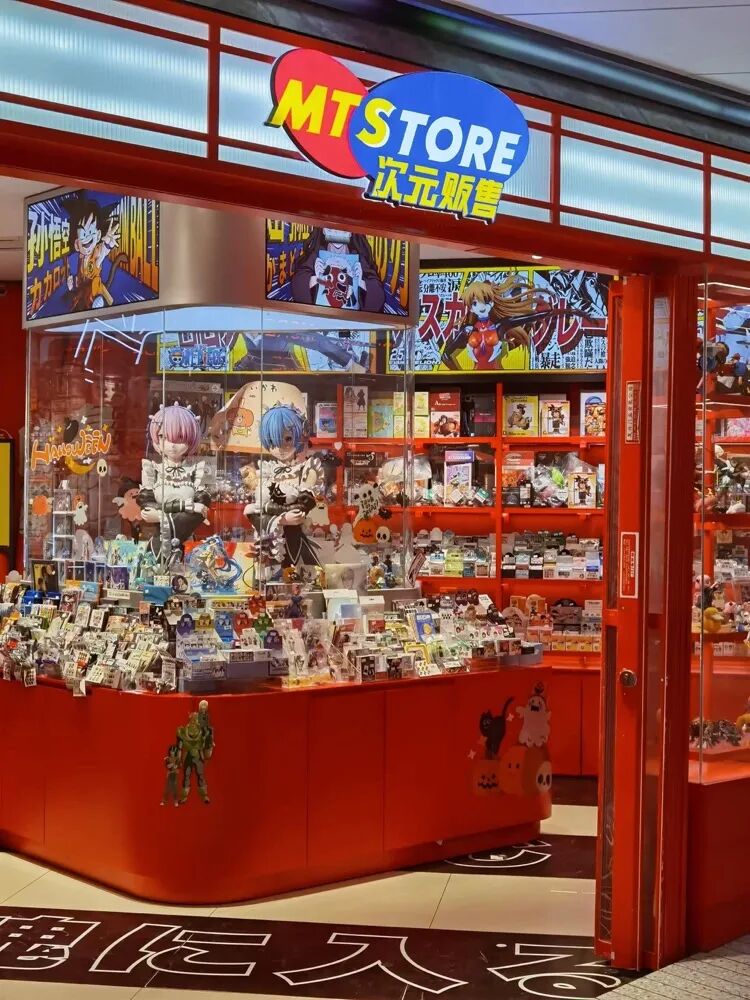
"Our research shows that the audience for animated films covers all age groups, and all - age - oriented content design can reach more audiences." The user profile on Xiaohongshu also confirms the diverse needs of the 18 - 45 - year - old group, which has strengthened their determination to produce all - age - oriented animations.
What makes investors even more at ease is the market certainty of animated films. Sequel films of high - quality IPs and adaptations of traditional culture are highly recognized categories. According to the ten - year report of China International Online, from 2015 to 2025, the total box - office of domestic animated films was 44.3 billion yuan, and traditional cultural themes accounted for 57%. The cumulative box - office of adaptations of classic IPs such as the "Ne Zha" series exceeded 25.3 billion yuan. The data on Xiaohongshu also shows that the discussion volume of topics related to the anticipation of IP sequels has increased by more than 250% annually, and the number of collections of notes on traditional cultural themes is higher.
Jin Bin believes that with a mature audience base and high willingness to pay, the investment return of animated films is more predictable. "Animated content has strong certainty, combined with the high willingness to pay of the pan - two - dimensional group, which has become a high - quality genre with a wide audience and stable returns. It is also our priority when arranging the entertainment industry."
Of course, he is also clearly aware that even though the animation market has unlimited potential, a good story is the most important thing. "There are also many examples of failed animated films. It's easy to say that you want to make a good animation, but it's very difficult to actually do it." When investing in Yaoyao's team, Jin Bin promised to regard animation as an area that the company will continue to invest in for the next ten years, using time and patience to accompany the growth of high - quality content.
This article is from the WeChat official account "Guduo Network Film and Television" (ID: guduowlj), author: Baozhu. Republished by 36Kr with authorization.