$8.15 billion, Snoopy has been sold.
Dogs are humanity's best friends, so much so that each generation has its own dog-themed emojis.
People born in the 1970s and 1980s love the Shiba Inu DOGE, while those born in the 1990s and 2000s are fond of the Line Dog. In the classic American animated series Family Guy, which premiered in 1999, the most popular character is a Labrador named Brian. Rick and Morty, which started airing in 2013, took inspiration from this and designed a "Snowball" for the main character Morty. Nowadays, everyone who surfs the internet has developed the habit of using a "dog head emoji" to protect themselves when joking. The ultimate otaku, Elon Musk, has even made DOGE his personal brand, issuing a virtual currency called "DOGE" and naming a department formed under the Trump administration "DOGE" as well.
If we were to select the most classic dog IP among all the celebrity dogs, it would probably be Snoopy. Snoopy is classic not only because it was born in 1950 and has been popular for over 70 years, transcending the aesthetics of several generations. More importantly, Snoopy established the "standard template" for dogs in animation: There is no concept of "pet" and "owner." It gets along with humans as true friends, thinks, lives, and perceives the world like a human being. Brian and Snowball, mentioned earlier, vaguely bear the shadow of Snoopy.
Recently, Snoopy has embarked on a new journey: Recently, Sony announced an investment of $475 million (approximately RMB 3.35 billion) in Peanuts Holdings LLC, the parent company of Snoopy, and will merge it as a subsidiary of the group. After the transaction is completed, Sony will hold an 80% stake. Previously, Sony made its first investment in Peanuts Holdings LLC in 2018, purchasing a 39% stake. Based on this calculation, the current valuation of Peanuts Holdings LLC has reached $1.16 billion (approximately RMB 8.15 billion).
The Most Famous, the Most Superficial, the Most Profitable
Just as Disney created Mickey Mouse, the birth story of Snoopy has been highly totemicized today. Charles Schulz painstakingly drew Charlie Brown and Snoopy by hand for fifty years, only putting down his brush three months before his death. He was very candid in telling everyone that his creative inspiration came from "curiosity." He couldn't understand "why dogs can always tolerate the strange behaviors of children." He also generously shared his methodology: "Keep a relaxed and happy mood and draw something that you find interesting."
He wasn't even as calm and composed as the stereotypical masters. He remained excited even as he aged: "When a composer gets inspired, the flow of music is faster than his ability to conceive. The same goes for me. When I get a good idea, I can't wait to write it down. I'm afraid the inspiration will slip away before I put it on paper. My hands tremble with excitement when I draw because I really enjoy the creative process."
It can be said that the birth of Snoopy was extremely idealistic, full of love, curiosity, innocence, and fantasy.
But in fact, this is only one side of Snoopy's birth story. Although Snoopy has been serialized since the 1950s from the consumer's perspective, the literary and artistic circles have never stopped criticizing Snoopy. The sharpest critics believe that Snoopy has a fatal "artistic flaw," namely "never truly participating in the topics of the era." Christopher Caldwell, a well - known American media person and the author of The Age of Entitlement: America Since the Sixties, believes that Snoopy, a work famous in the 1960s, is "too superficial" and "stands out like a sore thumb" compared with other works of the same era.
Charles Schulz was deeply troubled. In an interview in 1977, he publicly complained: "People always ask me 'Have I ever satirized the social status quo?' I'm really annoyed. I'm actually satirizing almost every day. I know they want to ask me if I've satirized political topics. I would say that I focus on love, hate, distrust, fear, and insecurity. These things are more important than politics."
He even tried to use his own growth experience to respond to these doubts. Charles Schulz showed very obvious "Asperger's" tendencies since childhood. He was extremely shy and inarticulate, to the extent that he couldn't integrate well into the school classroom. Even though he showed early talent in painting, due to his fear of "being in a large classroom full of geniuses," he finally chose "correspondence courses" - completing his paintings at home and sending them to his school teachers, who would provide guidance through letters.
Influenced by the criticism, Charles Schulz often reflected on this experience for a long time. He thought that if he had the chance to do it all over again, he would definitely choose "better education." "If my writing skills were better, maybe I would have tried to become a novelist. If my painting skills were better, maybe I would have tried to become an illustrator or an artist." But what's done is done. "Everything I've experienced has made me very suitable to be a cartoonist."
Fortunately, Charles Schulz didn't have to be immersed in the evaluation system of the literary and artistic circles because Snoopy's commercial performance was excellent:
In 1950, when "Snoopy" was just starting serialization, it didn't have its own distribution channels. Charles Schulz had to submit his works to seven newspapers regularly to earn a weekly payment of $90. By 1953, he was already earning a stable annual income of $30,000 from Snoopy. According to the inflation rate, $30,000 in 1953 is equivalent to about $270,000 today (approximately RMB 1.9 million).
In 1955, Snoopy got its first advertisement and became the spokesperson dog for Kodak cameras. In 1965, Snoopy made its way onto the TV screen. While its influence expanded further, Schulz completely achieved social class leap.
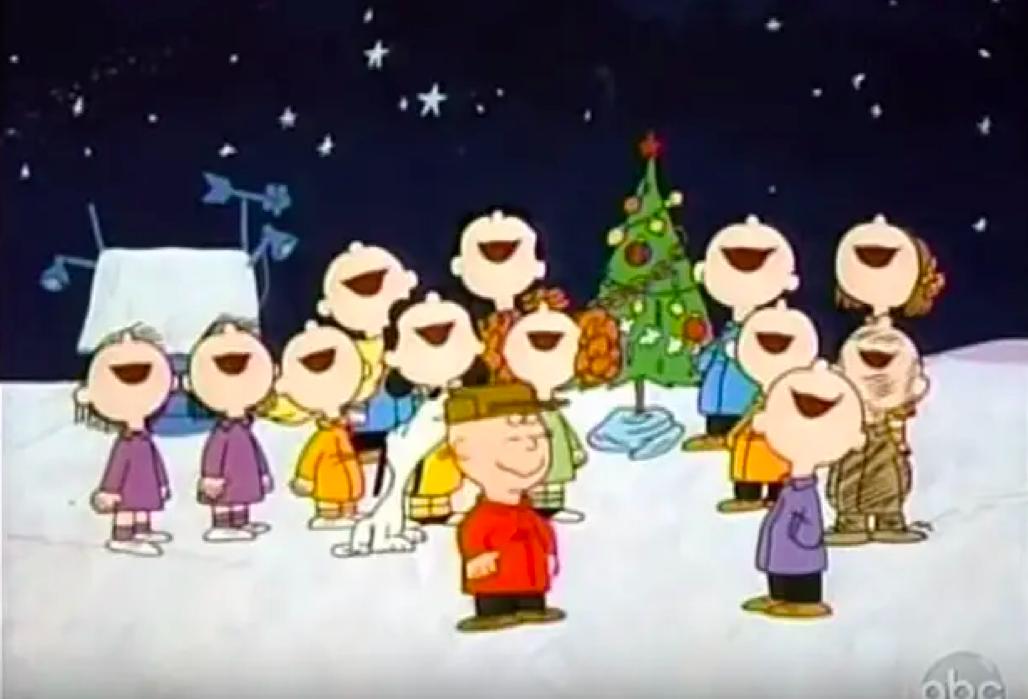
(The first Snoopy animation, A Charlie Brown Christmas)
In 1989, Charles Schulz was included in the Forbes "Global Wealthy in the Literary and Artistic Circles" list, with an annual income of $32 million. He successfully transformed from a totem in the literary and artistic circles to a totem in the business world. Jim Davis, a well - known American cartoonist, publicly stated that it was the unprecedented success of Snoopy in IP development that made him decide to create a comic starring an animal, which led to the later Garfield. Schulz also gave up trying to prove his innocence in the literary and artistic circles, and the creation story of Snoopy got a new beginning:
"I draw stories about kids because this kind of comics sells well. I didn't know exactly what to draw at that time. I just felt that the editors seemed to like the kids I drew the most. So, in 1950, I sent a batch of comics to the United Feature Syndicate in New York. They said they liked them, and since then I've been drawing kids." That is to say, the warm and loving core of Snoopy's story has made many people overlook its inherent commercial gene. Even the brand name "Peanuts" shows no "creator's thinking."
It is said that Charles Schulz hated the name "Peanuts" very much. The original name he designed was Li'l Folks, and there isn't a character named "Peanuts" in the work. The United Media Group named his comic column "Peanuts" simply because the most popular children's TV show in the United States at that time was The Howdy Doody Show. There was a spectator stand in it called the "Peanut Gallery," and the kids on the stand were called "peanuts." The editors thought it was a hot topic to ride on.
In February 2000, Charles Schulz passed away. By then, Peanuts had become the most commercially successful comic studio in the world. Their works were published in 2600 publications in 75 countries in 21 languages every day. With the income from comic distribution, endorsement fees, IP licensing fees, etc., the annual sales of Peanuts reached about $1.1 billion.
Snoopy, Labubu, Gundam, a Dream Collaboration?
By now, you may be curious: Why is the valuation of a well - known big IP that could generate $1.1 billion in revenue in 2000 still hovering around $1.1 billion 25 years later?
It's a long story.
Let's go back to 2010. With the rise of social media and the impact of the financial crisis, traditional media outlets were facing a survival crisis. The United Media Group, the distributor of Peanuts, was no exception. After numerous arguments, the United Media Group reached a consensus that focusing on news and publication distribution was more conducive to the long - term development of the enterprise. Under this premise, selling the IP license of Peanuts became an option:
On the one hand, the annual sales of Peanuts - related merchandise had exceeded $2 billion, and it was easy to sell at a high price in the market, thus reserving funds for the subsequent strategic transformation. On the other hand, according to the agreement reached between the United Media Group and the Schulz family, the United Media Group, as the licensee, could only get a small portion of the income. With annual sales of $2 billion, the income was only $92 million. The room for business growth was very limited, and the operating cost was rising.
In June 2010, the United Media Group announced that they sold all the IP development rights related to Peanuts to Peanuts Worldwide LLC, a joint - venture company established by the well - known cultural and media group Iconix and the Schulz family, for $175 million. Iconix held an 80% stake, and the Schulz family held a 20% stake. After the acquisition, Iconix said that Peanuts would bring at least $75 million in fixed IP licensing income to the group every year.
In September 2010, the United Media Group announced that it transferred the comic distribution rights to the Universal Press Syndicate, officially parting ways with Snoopy. Snoopy's "IP operation" entered a new era after that. In 2014, the number of Snoopy's IP licenses exceeded 700, and Snoopy - related merchandise could be bought in over 100 countries around the world. In 2016, on the 50th anniversary of the broadcast of A Charlie Brown Christmas, the first major film of the Snoopy series, The Peanuts Movie, was released.
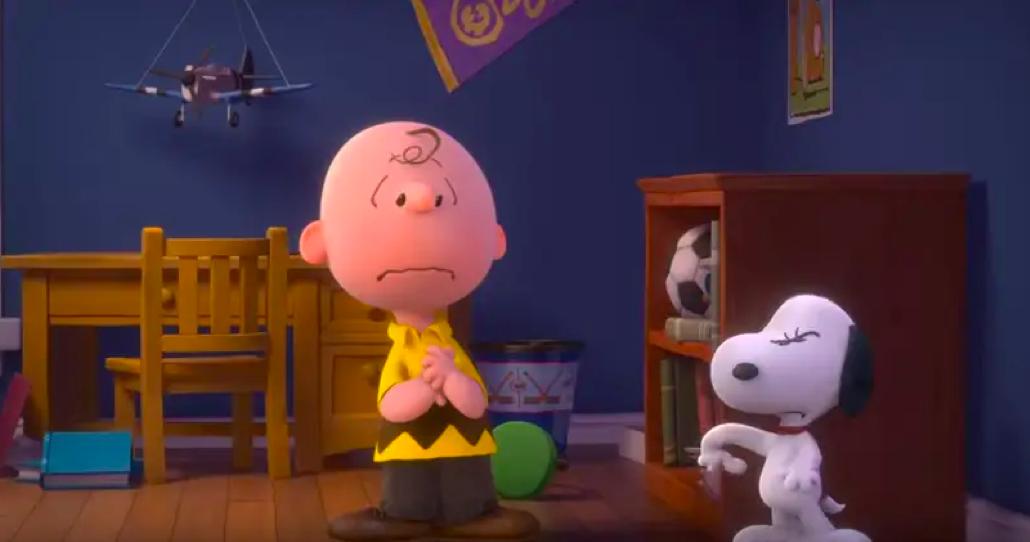
(Movie screenshot)
But IP operation is a tough and tiring job, especially for Snoopy, which has been a popular cultural symbol for over 70 years. How to make Generation Z interested in it and how to make it keep up with the aesthetics of the era are quite difficult questions to answer. Specifically in terms of business operations, by 2016, Iconix was in a situation where the profit brought by Peanuts was only $30 million. Big clients like MetLife gradually terminated their cooperation with Snoopy for various reasons, and Iconix's debt reached $1.3 billion in the same period.
Under pressure, they decided to sell Peanuts to cut losses in time. And this deal was finally completed at almost the "same price" in June 2017: DHX Media, a Canadian media group and the IP owner of "Teletubbies," announced that it bought Iconix's entertainment division for $345 million. This included not only Peanuts of Snoopy but also another classic IP, Strawberry Shortcake, which Iconix acquired for $105 million in 2015.
But DHX is not a company good at IP operation. Like the United Media Group, it is a traditional media enterprise with a long - standing pedigree. Its prototype can be traced back to the British children's film and television production company FilmFair founded in 1968. It also needs to transform to cope with the impact of social media. So, since its reorganization in 2006, it has been trying to transform its business through mergers, acquisitions, and strategic cooperation. The aforementioned "Teletubbies" was bought by them for $27.7 million in 2013.
However, hard work alone isn't enough in many cases. Especially in the cultural and media field, the successful methodology is invariably the long - term accumulation of a thinking system, which is hard to buy no matter how much money you spend. So, when DHX acquired Iconix's entertainment division in 2017, it had reached a point of "going all out." The quarterly financial report showed a net loss of $18.3 million, and the stock price dropped by 20% in a single day. The Bank of Montreal in Canada pointed out that if DHX couldn't turn a profit within two years, it would face the risk of bankruptcy.
That is to say, Snoopy had just changed its owner because of the "transformation crisis" but soon fell into a new "transformation crisis." Sony's first contact with Snoopy also happened at this stage, and the deal was still at the "same price": In May 2018, Sony Music Entertainment (Japan) Inc. ("SMEJ") acquired a 49% stake in Peanuts Worldwide LLC for $185 million.
Fortunately, compared with DHX and Iconix, Sony is obviously more professional. Spider - Man, Sonic the Hedgehog, and Venom are all Sony's masterpieces. Coupled with business segments such as games and TV streaming media, its rich IP development experience is very suitable for breathing new life into Snoopy. Peanuts completed the transaction with a "price increase" for the first time in many years, and its valuation returned to $1.16 billion (approximately RMB 8.15 billion). To some extent, it can be understood that Sony is satisfied with the IP development results of the past few years. Toshisuke Muramatsu, the CEO of Sony Music Entertainment, said after the deal: "Through this additional equity acquisition, we are very glad to be able to further enhance the value of the Peanuts brand with the help of Sony Group's extensive global network and collective expertise."
It's worth mentioning that this isn't Sony's only recent investment. In July this year, Sony invested $464 million in Bandai Namco, the IP developer of Mobile Suit Gundam. In November this year, Sony announced that it obtained the film adaptation license of Labubu and will invite Paul King, the director of The Peanuts Movie and Paddington, to direct the production.
So, for consumers, this investment not only means that we may see new Snoopy animations and play Snoopy - adapted PS games in the future. More importantly, maybe one day in the future, we can see Snoopy, Labubu, and Gundam appear in the same movie, a dream collaboration that will blow our minds.
This article is from the WeChat official account "China Venture Capital". Author: Pu Fan. Republished by 36Kr with permission.