Won the top prize at the Xiaohongshu Developers Conference at 28, and received investment from ZhenFund in the seed round | Exclusive report by Yingke
Yingke has learned that "Action&Link", an enterprise focusing on intelligent somatosensory game peripherals, recently completed a seed-round financing of several million yuan. "Action&Link" was established in 2023, and its founder, Rong Sijia, is a post - 95s entrepreneur. For him, this entrepreneurial venture is a combination of interest, thinking, and technology. We have summarized the information of this round of financing and several highlights of the company:
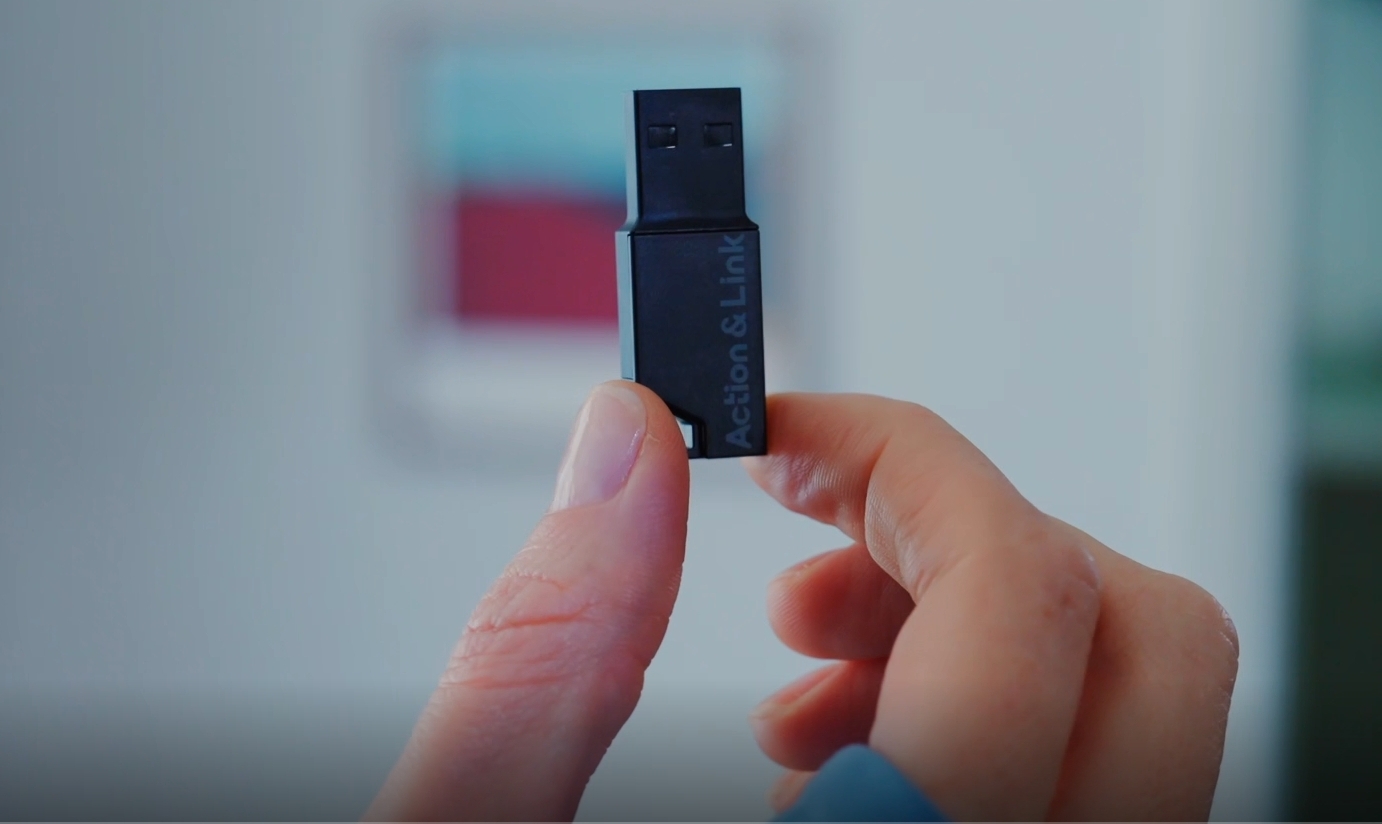
Action&Link Portal Somatosensory Controller
1. Financing Amount and Investment Institutions
Financing Round: Seed Round
Financing Scale: Several million yuan
Investor: ZhenFund
Use of Funds: Expand the team, especially recruit software algorithm R & D personnel and operation staff. Establish the supply chain to achieve mass production of products.
2. Basic Company Information
Establishment Time: 2023
Registered Address: Shanghai
Product and Technology Highlights: The Action&Link Portal Somatosensory Controller is an innovative somatosensory interaction device. Whether on the PC, Switch, or mobile platform, and whether it is a 3A blockbuster or a casual mini - game, it can transform familiar games such as "Genshin Impact" and "Black Myth: Wukong" into a full - body somatosensory experience. Simply put, when you wave your arm, the character in the game will also swing the sword synchronously. Your body is the most natural controller. Currently, all 1000 products made through 3D printing by the company have been sold out, and mass production through mold - opening is in progress.
3. Team Background
The founder, Rong Sijia, graduated from Sichuan University with a bachelor's degree. He won the second prize in the National Robotic Contest of the Ministry of Education in his freshman year. Later, he transferred to the University of Pittsburgh, majoring in mechanical engineering and computer science. After returning to China, Rong Sijia joined the Xiaopeng Motors Robotaxi project and participated in the writing of remote driving programs. Subsequently, he went to the startup Fitplay to work on open - world somatosensory games, mainly responsible for the somatosensory engine algorithm.
4. Q&A with the Founder
Yingke: Why did you initially want to develop such a product?
Rong Sijia: I myself am quite fond of playing games, especially being a loyal fan of RPG and open - world games. I've been paying attention to somatosensory games for years. Plus, I used to be a programmer. After work, I got home very late. On one hand, I really wanted to play games, like completing the daily quests of the then - popular "Genshin Impact". On the other hand, my weight was increasing day by day, and my health became a concern. At that time, I thought about whether I could combine playing games with exercise.
In terms of technology, I was also inspired by my previous work on Robotaxi at Xiaopeng. I found that the core framework of autonomous driving is that image signals come in, control signals are output, and the vehicle is controlled. In essence, somatosensory games are similar. They perceive human movements through vision and then convert them into control signals to drive the game.
At first, when I just finished the demo and showed it to my friends, they were all very interested. So, without any income, I continued to work on it for some time. I also posted a video on Bilibili of playing games with the demo, which got more than 400,000 views and became very popular. I realized that there were still many people in the market interested in this, so I continued with it.
Yingke: Compared with traditional somatosensory peripherals, what are the characteristics of the Action&Link Portal Somatosensory Controller?
Rong Sijia: First of all, traditional somatosensory peripherals take a specialized path. They develop dedicated somatosensory engines and are paired with dedicated somatosensory games, such as fruit - cutting games and "Just Dance". However, our judgment is that the market ceiling of this direction is limited. Generally speaking, players are migrating to games with higher degrees of freedom, from 2D to 3D, and now there are more and more open - world 3D games. The existing traditional somatosensory game engines, which mainly rely on perception, are increasingly difficult to support the control of current games with high degrees of freedom and complexity. Therefore, I want to introduce the well - developed concepts of prediction and control in autonomous driving to solve the problem of this complex control scenario.
So, what we want to do is to introduce more high - freedom game content to the somatosensory game industry, which was originally dominated by low - freedom games. At the same time, we want players to be able to experience high - freedom somatosensory games at a low cost. This is what we bring new to this industry.
In addition, our product does not create a new and independent closed system. Instead, it actively supports compatible games on the market, just like an iPhone having all the functions of a Nokia. It is easier to popularize compared with solutions such as VR. An open platform, open protocols, and open standards are what can truly grow the market.
Yingke: You went from having no viewers in your live - stream to winning the first place at the Xiaohongshu Developers Conference. Can you share your experience at that time?
Rong Sijia: We started live - streaming e - commerce on December 26th last year. The first week was really tough because the number of viewers in the live - stream room was often in single digits. Later, I thought of using the somatosensory peripheral to play "Black Myth" during the live - stream. Unexpectedly, it immediately became the top in the traffic ranking of the niche category. After that, the traffic remained good. Many people watched me play and thought it was interesting, so they placed orders to buy. Gradually, after having a basic sales volume, the conversion rate also increased. You can see many positive reviews in the comment section. We also shoot videos to teach people how to play. So, in the next two months, we sold out all the remaining inventory, about eight or nine hundred units.
It was also by chance at the beginning. We saw this event of Xiaohongshu at an exhibition. At that time, we mainly focused on the prize money. The ordinary prize was 50,000 yuan, and the grand prize was 500,000 yuan. So, we decided to participate. At the competition, when I used the Action&Link Portal to control the character in the game, the whole audience cheered. I was really happy at that time and felt that the past one or two years were not in vain.
Yingke: What are your future plans?
Rong Sijia: We have always adhered to the spirit of lean startup, so the number of full - time employees is very small. Next, we will expand the team size, mainly in software algorithm R & D. We will also gradually recruit operation staff according to the operation rhythm. At the same time, we are developing the next - generation product. We will involve mature supply - chain manufacturers at an earlier stage to optimize the overall product design with us. As the team improves, I hope to provide more valuable software updates for our old users and bring an unprecedented high - freedom somatosensory game experience to more new users.
5. Views of the Investor
An investor from ZhenFund said: Using somatosensory technology to achieve a more immersive interaction and engage with the virtual world is a common aspiration of many people. However, for a long time, there has been no hardware with a truly low threshold and reasonable price. Action&Link is exactly doing such a thing. Rong Sijia was engaged in visual sensing - related work at Xiaopeng. After leaving, he has been committed to the somatosensory game startup. He has experienced the stage of persevering alone, showing rare perseverance and vitality. At the same time, he has a deeper understanding of somatosensory games, not just stopping at the "somatosensory" itself but constantly pursuing a more immersive experience.