The Kodak keychain camera priced at 200 yuan is selling like hotcakes, but the picture quality is almost non-existent. Is this Kodak's last-ditch effort?
If you were asked which would be the best camera in 2025, I believe everyone would have their own answer in mind. But if you were asked which would be the hottest camera in 2025, then you must mention Kodak's Charmera - a "toy camera" no bigger than the palm of your hand.
Recently, the well - known imaging media Peta Pixel released its annual camera awards, and Kodak's Charmera won the Best Popularity Camera Award in 2025. This "keychain camera" launched in September has sparked intense discussions globally since its release. It sold out on the first day of sales, and it is still being "resold" on platforms like eBay at prices much higher than the official price.

(Image source: Kodak)
Leikeji pre - ordered a set of Charmera as soon as it went on sale and didn't receive the goods until December. After playing with it for a few days, we've found the reasons why Kodak's Charmera has been selling like hotcakes.
Poor image quality, mediocre in every aspect
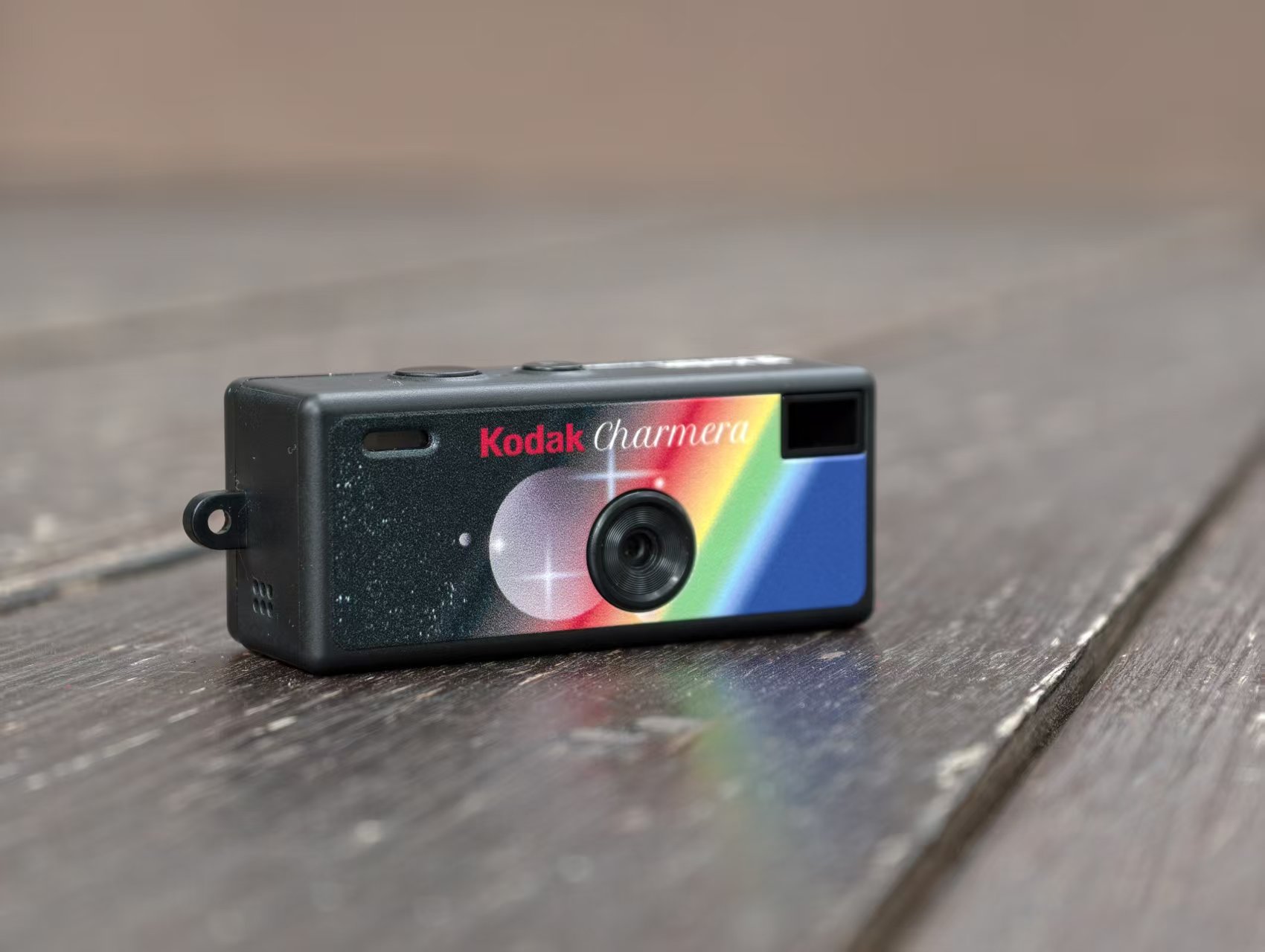
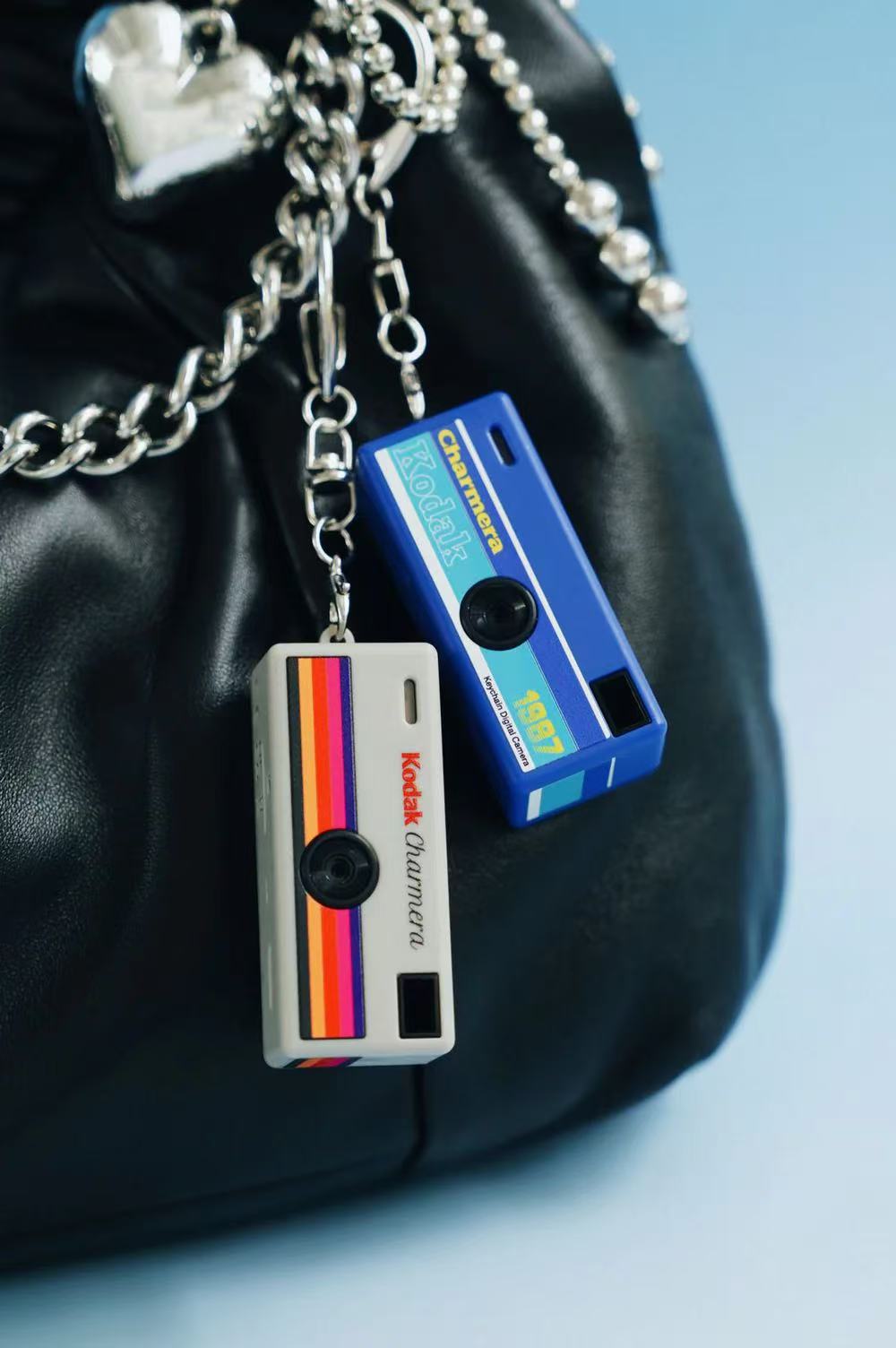
In the official materials, Kodak's Charmera is called a "Keychain Camera". Indeed, when we first got our hands on it, we were extremely surprised by its size: it's even smaller than an AirPods Pro. The Kodak Charmera also has almost no weight issue. With its all - plastic body weighing just over 30g, it's even lighter than a pack of chewing gum.
With such a lightweight body, it's natural that we can't expect much from its performance. The Kodak Charmera is equipped with a 1.6 - megapixel, 1/4 - inch CMOS, with a lens focal length of 35mm and an aperture of F2.4. These parameters are actually inferior to today's mainstream smartphones. Even if we don't compare the pixel count, the main cameras of some budget phones usually have at least a 1/2 - inch sensor. No wonder many users say that the Kodak Charmera is actually a repurposed dash - cam, but in fact, even dash - cams wouldn't use such a configuration.
(Image source: Shot by Leikeji)
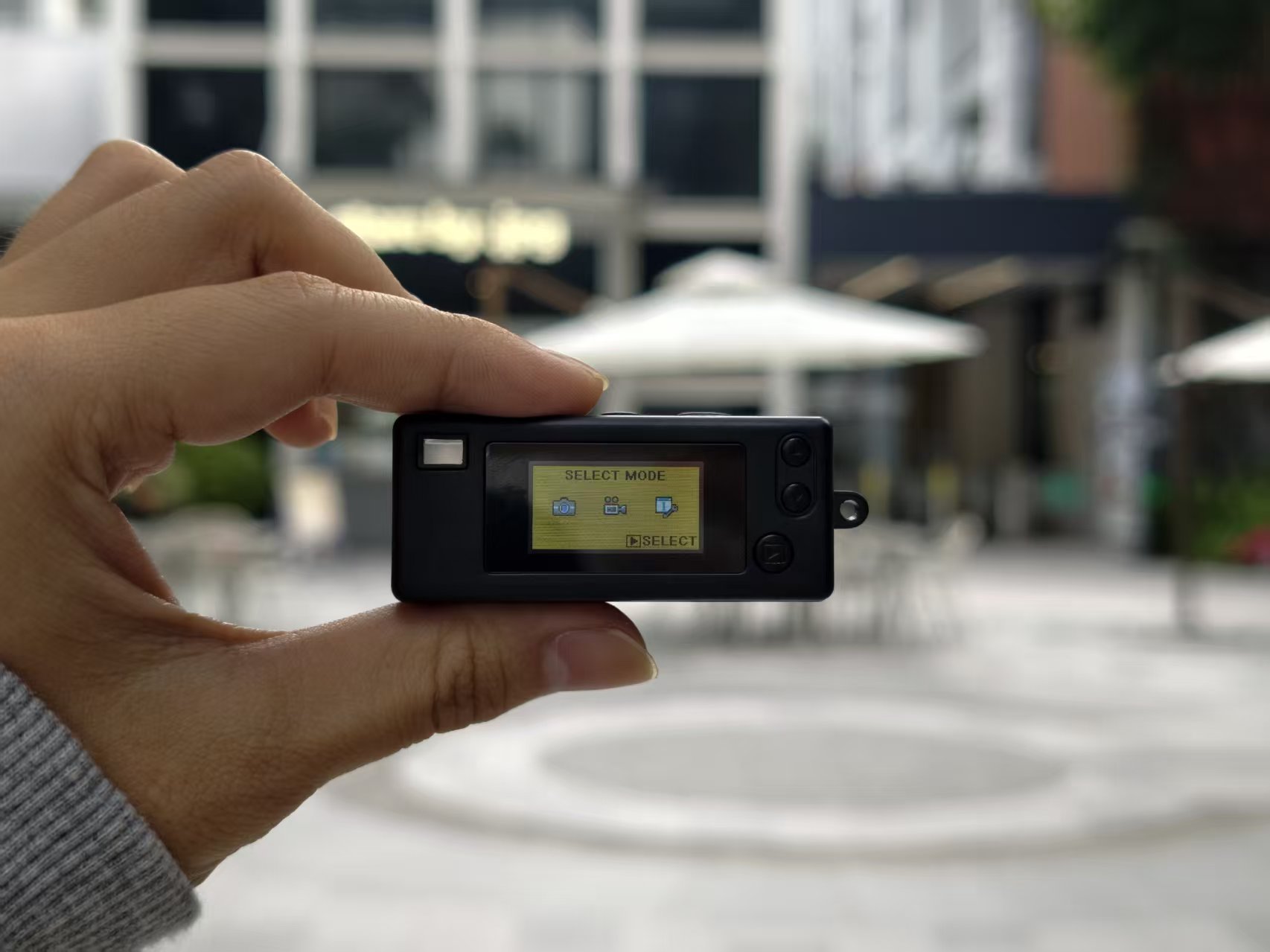
However, the Kodak Charmera comes with a comprehensive set of buttons. There is an on/off button and a shutter button on the top, and there are up/down page - turning buttons and a playback button on the right side of the screen. Yes, the Kodak Charmera even comes with a color LCD screen. In addition, it is fully equipped with a viewfinder, a speaker, and a microphone, and it even has a USB - C port. Just this alone makes it more user - friendly than many toy cameras.
Although the performance of the Kodak Charmera is quite average, its built - in filters are quite interesting. It offers 7 filters + 4 special borders, such as classic black - and - white, cool - tone, and yellow/red/blue pixel filters. After talking about so much, how does the Kodak Charmera actually perform in terms of image quality?
(Image source: Shot by Leikeji)
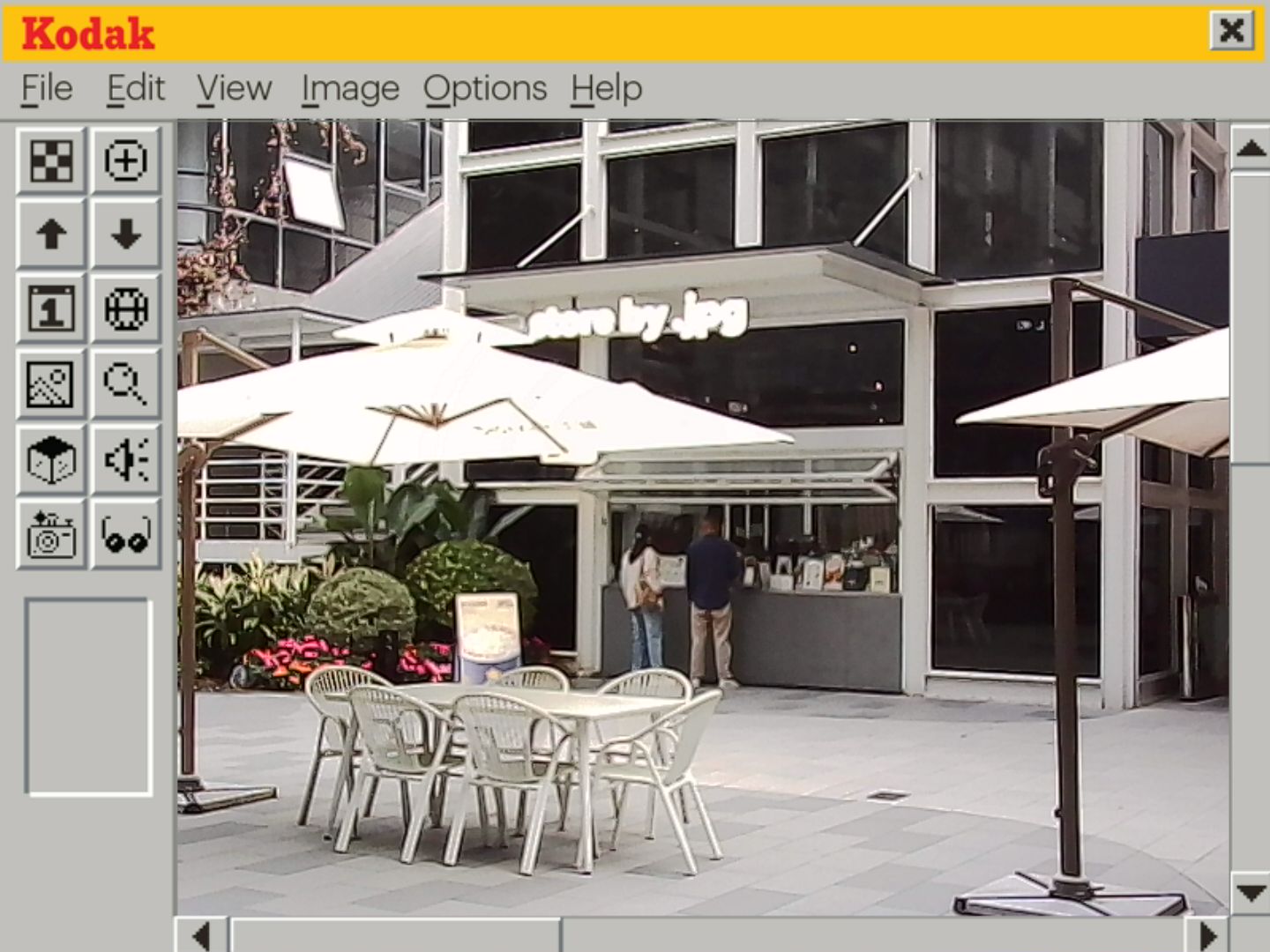
In well - lit environments, the photos taken by the Kodak Charmera have a certain "retro feel". The noise overflow caused by the low pixel count does give it a bit of a "CCD" vibe. Although the Kodak Charmera has an LED light, its illumination is very low and doesn't help much.

(Image source: Shot by Leikeji)
The biggest problem with the Kodak Charmera's photography is its poor overall exposure control, and it also takes a long time for focus recognition. For a camera designed more for street photography, this is very unfavorable for candid shots. In many sample photos, the Kodak Charmera has severe over - exposure in highlights.

(Image source: Shot by Leikeji)
The most distinctive filters are the red/yellow/blue pixel filters. They retain the highest - contrast parts of the image, and the rest is covered with a single color. If you can master the light and dark scenes well, you can still take some quite "artistic" works.

(Image source: Shot by Leikeji)
After the experience, apart from the pixel filters being impressive, the other filters aren't very attractive. The cool - tone and warm - tone filters, which are more for daily use, only offer mediocre results. However, the biggest significance of the Kodak Charmera is to provide emotional value for photography, and image quality isn't that important.
(Image source: Shot by Leikeji)
It's worth mentioning that the Kodak Charmera actually supports video recording at a frame rate of 30fps, but the video format is only AVI and doesn't support MP4.
The Kodak Charmera is actually a camera full of flaws. It has extremely poor image quality, the shutter button has no rebound feeling, and it doesn't come with a decent flash. But as mentioned before, for a product positioned as a "keychain camera", it's really hard for us to criticize its shortcomings from the perspective of a regular camera. However, if it were more practical, it might be more popular. As a "keychain" priced at $29.99 (about 209 yuan), it's not exactly cheap.
But this camera, which seems mediocre in every aspect, has been out of stock since its release. Why is the Kodak Charmera so captivating?
Selling nostalgia, the last struggle of an established company
In the late 19th century, Kodak formed an almost monopolistic force in the imaging industry with its integrated strategy of film, photo - printing, and photo - paper channels. At its peak, more than half of the photos taken globally were related to Kodak. In the 1980s, Kodak launched an all - in - one film camera called the Fling 35. With its delicate, compact, portable design and foolproof operation, it became the first camera for countless ordinary consumers.
However, in the 21st century, as the imaging industry fully entered the digital era, manufacturers like Sony, Canon, and Nikon quickly seized the market, and the once - mighty film - camera giant, Kodak, gradually declined. In 2012, Kodak officially declared bankruptcy. Its patents were sold to different technology companies, and its subsidiary businesses were split up.
Perhaps to pay homage to the film era, the Charmera launched by Kodak this year is actually designed and made based on the Fling 35, except that it's a digital camera instead of a film camera. It's not hard to understand why the Charmera has attracted the attention of countless imaging enthusiasts as soon as it was launched.

(Image source: Kodak)
However, just getting attention isn't enough to make these enthusiasts willing to pay for this little gadget. So Kodak came up with another idea: blind boxes.
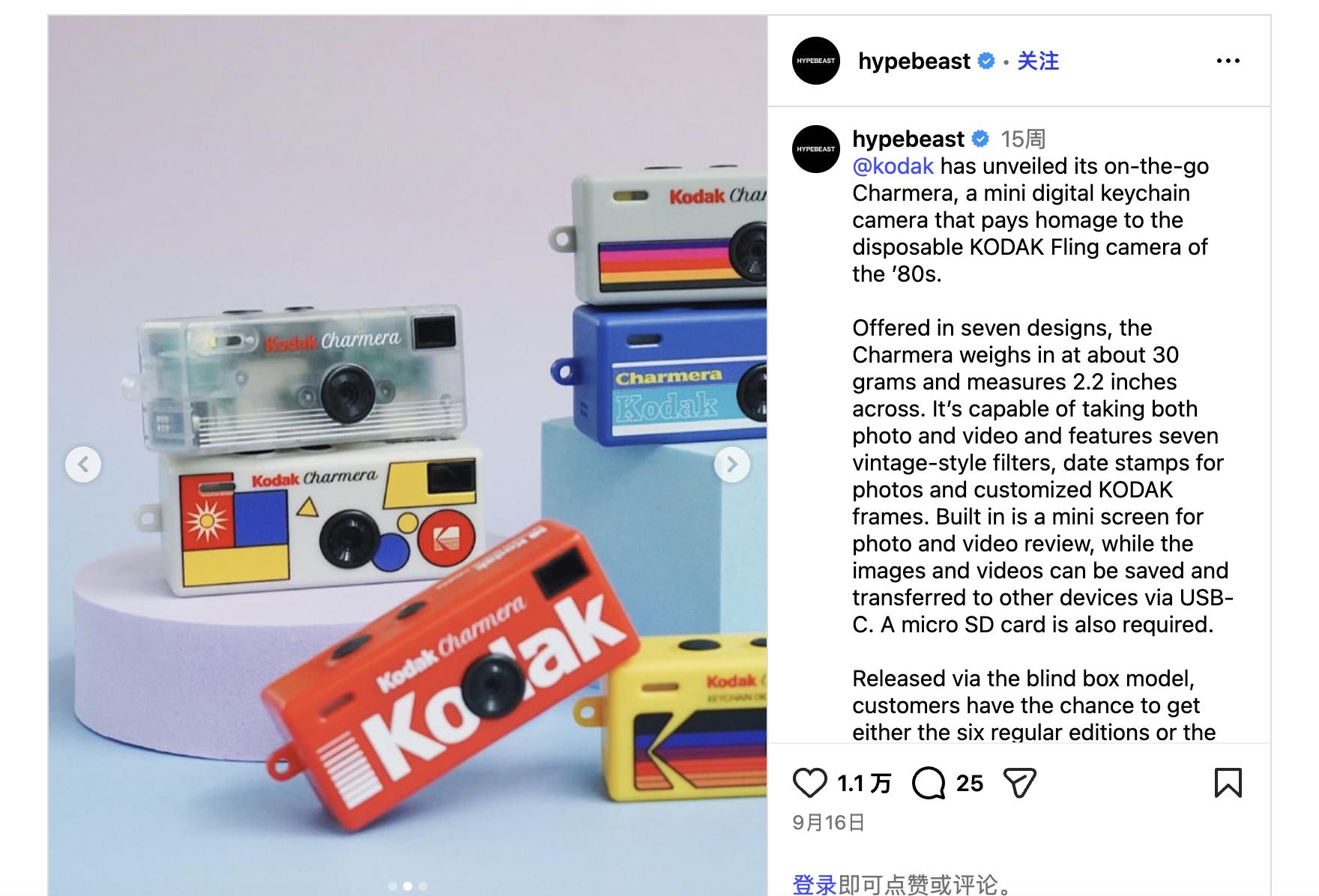
Yes, the Kodak Charmera is sold in a blind - box format. There are a total of 7 color schemes for this camera, and the transparent one is the hidden version, with a winning probability of only 1/48. Although there are no differences in performance and configuration among them, different designs and color schemes often arouse consumers' desire to buy.
More importantly, selling in the form of blind boxes gives the Charmera a natural advantage in secondary promotion. Different from ordinary digital products, the Charmera makes consumers want to share as soon as they get it. For example, they'll wonder if the color is a rare one, if they've got the color they wanted, or if it's different from their friends'. These things are often shared on social media, leading to secondary promotion.
Since its release, the Kodak Charmera has been selling better and better. In the North American market, it's almost impossible to find one in stock, and there are countless resales at high prices on eBay. If it's the hidden transparent - design version, its price has soared to $451 per unit.

(Image source: eBay)
It can be said that Kodak has accurately grasped the two most popular marketing elements at present. One is "retro". In the past two years, there has been a trend of pursuing retro styles on social platforms, and keywords like "CCD" and "low - pixel" have become new trends in the imaging industry. The other is "blind boxes", which use consumers' excitement about "uncertain" things to stimulate their repeated consumption desires.
(Image source: Instagram)
However, the success story of the Kodak Charmera isn't suitable for mainstream camera manufacturers to follow. After all, the Kodak Charmera is just a "toy camera". Its price of around 200 yuan means it's not a serious camera product. If mainstream manufacturers adopt this retro - nostalgia + blind - box sales model, it may even cause dissatisfaction among consumers. But it also proves that in this era, a camera doesn't have to focus on high performance; emotional value is also an important part.
So, is the Kodak Charmera a rip - off?
I think we need to discuss the value of buying the Kodak Charmera in two parts.
It must be clear that the Kodak Charmera isn't a professional camera product. It's even inferior to many "CCD cameras" popular on social platforms. If you have high requirements for image quality, then the Kodak Charmera isn't worth buying. Especially when it usually requires a premium in the market, there's no need to blindly purchase the Kodak Charmera.
However, if the Kodak Charmera is used as an accessory or a gift, then I don't think it's a rip - off. It's a small toy that can provide a lot of fun and also offers emotional value. Especially when given as a gift to a friend, whether in the form of a blind box or with its retro design, it's very worthwhile.
(Image source: Kodak)
As usual, let's summarize the advantages and disadvantages of the Kodak Charmera:
Advantages:
1. Small and portable
2. Long battery life, can take photos for almost a week on a single charge
3. Retro design, can be used as an accessory
Disadvantages:
1. Too small, resulting in a poor photography experience
2. Doesn't come with a memory card, so it can't be used right out of the box
3. Poor workmanship
Anyway, from the perspective of a "keychain camera", the Kodak Charmera is a product that far exceeds the passing mark, but only in this regard. Fortunately, apart from being a "camera", it can also be used as an accessory. You can hang it on your backpack after you get bored with it, so it serves its purpose.
This article is from