As technology-enabled elderly care becomes a new trend, how can China find its own local solutions?
Technology-enabled elderly care is emerging as a new trend.
In the United States, the startup Inspiren has quickly become the focus in the industry with the first integrated solution that "addresses the core pain points of senior communities". As an AI prediction engine, the function of Intelligence is not to record "what happened to the elderly yesterday", but to analyze "what is happening now" and tell you "what potential dangers there might be tomorrow".
Specifically, Inspiren uses the "Geometric Exoskeleton Monitoring (GEM)" technology of its proprietary hardware AUGi to track the human body's bone geometry and movement trajectory in real-time. The collected data is centrally managed and analyzed by the cloud-based SaaS platform, ultimately solving the four core pain points in senior communities in one go - resident safety protection, refined nursing billing, rapid response to emergency calls, and intelligent staffing.
Take a simple example. Information such as "a 15% slowdown in movement speed" and "getting up four times at night" collected by Inspiren will be translated into a clear signal: "Warning: Grandpa Liu is at high risk of falling."
Market recognition further proves the value of the technology. Inspiren only took 18 months to enter 150 regular senior care communities and 33 dementia care communities, covering over 180 offline scenarios. Since its establishment in 2023, Inspiren has received over $155 million in financing.
On the other side of the globe, Japan, known as the "global benchmark" in the elderly care industry, is also leveraging technology to upgrade its elderly care services. Since the early 2000s, the Japanese government and private enterprises have started to invest heavily in nursing robot technology. By 2018, the government alone had invested over $300 million in the R & D of such devices.
At the SilverWing Nursing Center in Osaka, caregivers wear a type of powered exoskeleton called HAL (Hybrid Assistive Limb). These devices developed by Cyberdyne can detect the wearer's muscle electrical signals and provide additional strength when needed.
In a nursing home in Setagaya-ku, Tokyo, 88-year-old Grandma Tanaka is gently stroking a small white seal. It blinks, makes soft calls, and even rubs against the old person's palm affectionately. However, this "seal" is not real - it is PARO, a therapeutic robot worth $6,000.
As more countries reshape the growth curve of the elderly care industry with technology, how will China, standing at the forefront of technology, combine local needs to embark on a differentiated path of technology - enabled elderly care?
Technology should adapt to the elderly, not the other way around
"We will all live to be 100 years old. In the era of longevity, what should we do about our lives and work?"
In the introduction of the sociological book The 100 - Year Life: Living and Working in an Age of Longevity, British scholars Linda Gratton and Andrew Scott posed this soul - searching question that hits the heart of the era.
This proposition concerning humanity's future is becoming increasingly urgent in China at present -
The acceleration of population aging and the continuous expansion of the group of empty - nesters and solitary elderly have become an inescapable social reality. The Statistical Bulletin on the National Economic and Social Development in 2024 released by the National Bureau of Statistics shows that as of the end of 2024, the population aged 60 and above in China had reached 310 million, accounting for 22.0% of the total population. According to data from the National Health Commission, the proportion of empty - nest elderly in China has reached 54%, among which the number of solitary elderly exceeds 12 million.
Longevity is a gift from the era, but also a challenge. The medical system is the first to bear the brunt.
Currently, China's medical system adopts a fragmented medical model dominated by specialized departments, which has problems such as lack of continuity, low control rate of chronic diseases, high risk of multiple drug use safety, and serious waste of medical resources. International experience has proven that primary care led by general practitioners is the key to dealing with aging. Although the domestic general medical system has received policy attention, it has not been truly implemented.
When the traditional medical model struggles to meet the needs of the era of longevity, the "integration of medical care and elderly care" empowered by technology provides a new way to break the deadlock.
In high - quality senior care communities, professional rehabilitation hospitals or general hospitals are gradually becoming a standard feature, achieving the integration of medical and elderly care facilities at the spatial level and meeting the requirement of the 30 - minute golden emergency rescue time. The elderly can enjoy convenient and efficient medical support within the community.
Of course, many people may wonder: My home is right next to a top - tier hospital, and it's very convenient for me to see a doctor on a daily basis. Why do I have to move into a senior care community?
The key point here is "predictability".
In China, there have been many local practices benchmarking against international frontiers. In the Taikang Homes of Taikang Insurance Group, cutting - edge technologies such as AI, the Internet of Things, and big data are deeply integrated into every aspect of the medical and elderly care scenarios, creatively building a smart medical and elderly care system of "perception - decision - execution" in one trinity.
For example, the small emergency location alarm card integrates functions such as one - key alarm, precise positioning, two - way call, access control, and consumption payment. The elderly only need to press a button, and the butler, security, and medical teams will receive the distress signal simultaneously and arrive at the scene immediately for emergency rescue. The intelligent mattresses provided for residents with needs can monitor core data such as breathing, heart rate, and in - bed status for a long time. Once there is an abnormal fluctuation, the system will automatically trigger an alarm.
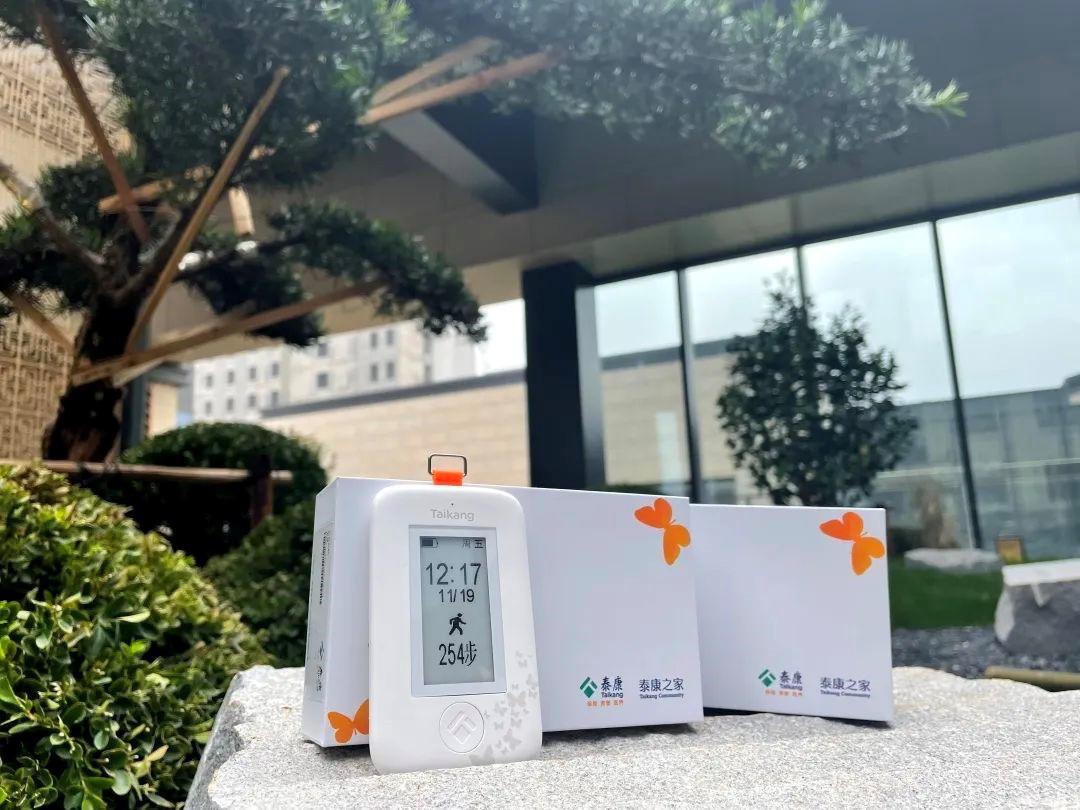
Emergency location alarm card
With the support of these intelligent terminals, Taikang Homes automatically creates a dynamically updated personal digital health record for each resident. At the same time, relying on large - model technology to continuously train and learn from massive health data and professional medical knowledge graphs, it can accurately match each elderly person's physical condition, living habits, and health needs, and output customized health management, chronic disease intervention, and rehabilitation nursing plans.
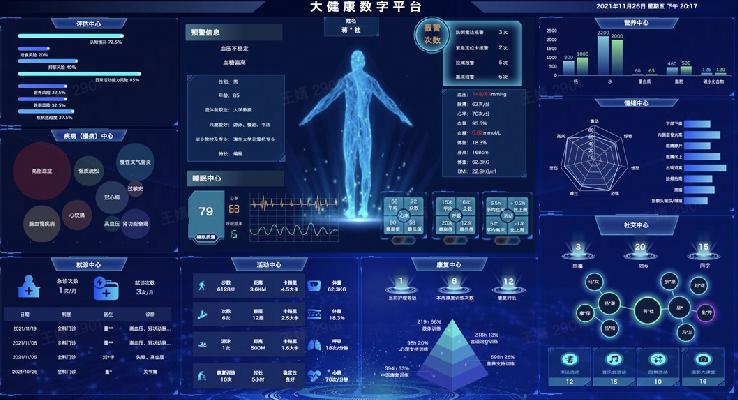
Taikang Homes' big - health digital platform
More importantly, behind the realization of all these is the strong perception, decision - making, and execution capabilities of Taikang's self - developed AI - native smart medical and elderly care operating system - Taile OS, which provides technical support, permeating the three elements of artificial intelligence into every aspect of the business processes and forming a data and knowledge flywheel.
It's worth mentioning that Xiaotai Smart, an important companion for the residents of Taikang Homes in their daily lives, is the intelligent assistant for the elderly. This year, through Taikang's self - developed large model, search - enhanced RAG technology, and multi - agent architecture, it has achieved three core functions: emotional companion chat, Taikang knowledge query, and automatic execution of Taikang services. It enables the elderly to conveniently enjoy various services just by speaking, truly realizing that "technology should adapt to the elderly" rather than the other way around.
Of course, technology can also have a "warmth".
According to the prediction of AR KInvest, starting from 2024, the annual revenue in the global "AI + emotional companionship" field will explode from a mere $30 million to a huge market worth $150 billion per year in an optimistic scenario. One of the core audiences supporting this huge potential market is the elderly population.
The "Peipei" robot introduced in the First Social Welfare Home in Chongqing can not only provide psychological counseling through emotion recognition but also monitor indicators such as heart rate and blood pressure in real - time and has entertainment interaction functions. The Hyodol robot in South Korea can automatically issue an alarm when detecting abnormal activities of the elderly.
The AI companion robot has evolved from "emotional supplement" to a comprehensive solution integrating companionship, health, and safety, meeting the multi - level needs of the elderly. However, it should be noted that in the short term, emotional companion - type AI products are still in their infancy, with problems such as weak active interaction and situational awareness capabilities and deep cultural and dialect barriers.
Therefore, for the elderly who choose to stay at home, community care and family visits are still more realistic sources of emotional support. For the elderly who choose to live in senior care communities, they can obtain more comprehensive physical and mental nourishment through rich community activities, peer - to - peer social interaction, and professional care.
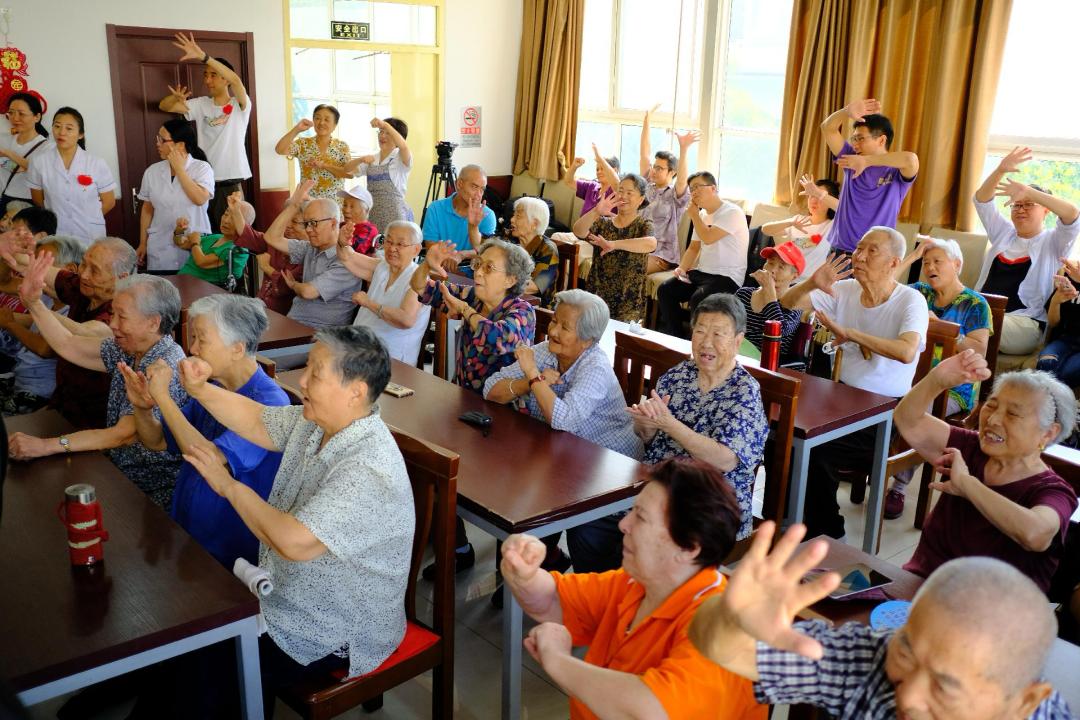
Take the well - known domestic senior care community Taikang Homes as an example. As of the end of 2025, the communities in operation across the country have offered nearly 600 courses and have about 350 resident clubs, enabling the elderly to enjoy more spiritual value, a sense of gain, and happiness. From knowledge sharing to interest cultivation, from social interaction to public welfare practice, these carefully built platforms not only reconstruct a close social network for the elderly but also allow each resident to gain a sense of belonging and achievement in their hobbies and companionship.
How can the "Disneyland for the elderly" be within reach?
Young people love to go to Disneyland in pursuit of fairy - tale - like joy and healing. For the elderly, all - cycle health protection, a rich and colorful spiritual life, and the comfort and peace like a fairy - tale secret realm make high - quality senior care institutions their "Disneyland" of longing.
However, there is an insurmountable gap between this beautiful longing and reality. Economic pressure and the lack of service accessibility make it difficult for most elderly people to enjoy the high - quality services even though they know they are good.
Economically, according to data from the National Health Commission, the current elderly care pattern in China is the "9073" model: about 90% of the elderly live at home, about 7% rely on community - supported elderly care, and 3% live in institutional elderly care. The core reason for this huge disparity is the serious mismatch between the price of elderly care services and the payment ability of the elderly.
The Basic Data Bulletin of the Fifth Sampling Survey on the Living Conditions of Urban and Rural Elderly People in China shows that in 2021, the annual per capita income of the elderly in China was 32,027.4 yuan. Among them, the annual per capita income of urban elderly was 47,270.8 yuan, and that of rural elderly was 14,105.4 yuan. In the income structure, social security income remains the main source of income. The average monthly fee of private senior care institutions ranges from 4,000 yuan to 8,000 yuan, showing a certain gap with the payment ability of the elderly.
In terms of services, high - quality elderly care services are mostly concentrated in mid - to - high - end institutions, which are out of reach for ordinary families. Moreover, traditional elderly care services have problems such as lack of personalization, lack of supervision, and uneven professional levels. Even if some elderly people can afford the fees, it is difficult for them to enjoy high - quality services.
How to break the dilemma of "longing but difficult to reach"?
As early as 2019, the National Medium - and Long - Term Plan for Actively Responding to Population Aging issued by the Communist Party of China Central Committee and the State Council gave a clear answer: Strengthen the scientific and technological innovation ability to respond to population aging, regard technological innovation as the primary driving force and strategic support for actively responding to population aging, and comprehensively improve the intelligent level of the national economic industrial system.
It should be noted that an important reason for the under - development of China's elderly care services is the deviation between price and cost, and the improvement of residents' income and the enhancement of elderly care consumption ability are a long - term process. This makes reducing the institutional cost of elderly care services the key to breaking the deadlock, and using technology to reduce costs and increase efficiency has become an inevitable choice.
The good news is that devices such as AI - assisted diagnosis and treatment, rehabilitation training, and health monitoring are gradually being applied in chain - style and large - scale senior care institutions. Behind this successful implementation is the strategic focus of senior care institutions, which provide support for the implementation of technology by investing core resources in the upgrading of medical equipment and the training of professional talents.
Specifically, using intelligent monitoring devices to replace some manual patrols can improve operational efficiency. At the same time, the in - depth application of AI - assisted diagnosis and treatment systems not only improves the accuracy of chronic disease management, ensures the professionalism and stability of services but also effectively controls labor costs.
The chain - style layout further magnifies the cost - reduction effect of technology. Centralized procurement of medical equipment, unified output of service standards, and digital management of operation processes... The scale effect dilutes the upfront technology investment cost, making the price of high - quality senior care services gradually more accessible to ordinary families.
If technology and the chain - style layout solve the problems of "high cost and scattered services", then the innovation of the payment model provides key support for the elderly to cross the economic threshold.
In 2012, Taikang launched the "Happy Promise" product that links insurance with physical senior care communities, for the first time implementing the innovative model of "life insurance payment + elderly care services": By purchasing life insurance products, the elderly can not only enjoy long - term compound interest income and reserve stable funds for their later years but also lock in the residence qualification of Taikang Homes senior care communities decades in advance with the policy rights, without having to worry about future service price increases or bed shortages.
This model precisely addresses the pain points of "high current payment pressure and lack of future elderly care security", and has received enthusiastic market feedback. As of now, the cumulative sales of the "Happy Promise" have exceeded 300,000 units, becoming an important path for ordinary families to achieve high - quality elderly care.
Looking at the entire industry, China's social welfare system is steadily moving from a "complementary" model to a "moderately inclusive" model and then to an "inclusive" model, and the concept of business for the good is becoming an important driving force in this process.
Taikang launched the "Happy Colorful Public Welfare Policy Plan", which, from multiple dimensions such as talent training in the elderly care industry, material donations, and value leadership, reduces the service cost of the entire elderly care industry, improves the grass - roots service ability, injects continuous public welfare momentum into inclusive elderly care, and at the same time continuously extends the value boundary of high - quality elderly care.
When the cost - reduction and efficiency - increase of technological innovation, the scale - enabling of the chain - style layout, the precise solution of the payment model meet the public welfare extension of business for the good, the "Disneyland for the elderly" in the hearts of the elderly is no longer out of reach.
Searching for a Chinese - style elderly care solution
Is the elderly care industry a profit - seeking business track or a livelihood answer sheet carrying social responsibility?
From the perspective of the industry as a whole, the 310 - million elderly population not only gives rise to a market dividend in the tens of billions but also poses a timely proposition under the strategy of "active aging": The ultimate value of the elderly care industry has never been limited to meeting basic care needs. Instead, with technology for the good as the core, it lies in activating the human resources of the elderly through a sustainable model, enabling the elderly to continuously realize social value in a high - quality and dignified later life. This is its true "sunrise" characteristic.
However, in reality, the industry development is still deeply trapped in the dilemma of "short - sighted profit