The prices of essential items for workers are skyrocketing, but Generation Z isn't worried at all.
“Some goodbyes are neither sentimental nor decent. Instead, without even saying a single 'goodbye,' it's a farewell with no future meetings.”
This quote isn't about the approaching end of 2025 but a magazine named Computer Fan. After its complete disappearance, netizens born in the 1980s and 1990s wrote this elegy.
Long - time readers know that this old - fashioned magazine, founded in 1993, announced its suspension in 2024, only retaining new media accounts such as its website, official WeChat account, and Douyin account. In October this year, someone noticed that the main company of the magazine had been deregistered, and its new media platforms were quietly deregistered in December. The website had stopped operating long ago, completely becoming an Internet relic.
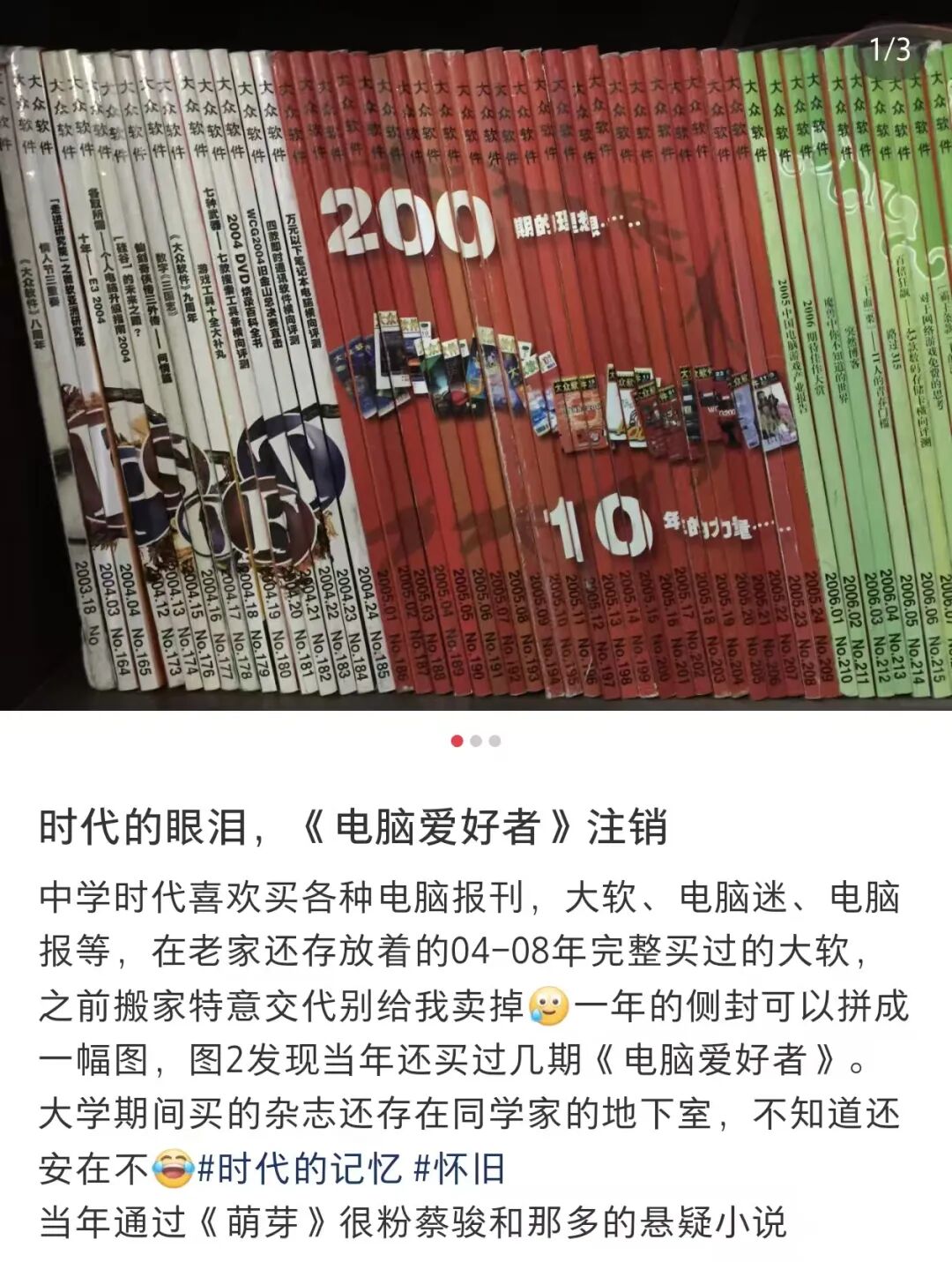
The suspension and deregistration of Computer Fan have turned the youth of many people born in the 1980s and 1990s into memories. (Photo/Screenshot from Xiaohongshu)
Of course, in this era dominated by AI, the disappearance of any established magazine is hardly unexpected. However, Computer Fan - a computer popular science magazine dedicated to being 'understandable to everyone' - being phased out in the information age still seems abstract and ironic.
You know, after all, a quarter of the 21st century has quietly passed. For today's Chinese young people, mobile phones and tablets are the entry - level devices for accessing the Internet. Trying hard to popularize how to use a computer - more precisely, a traditional PC (personal computer) - makes one feel as if they've gone back to the primitive society.
People may not need to buy their first computer until they go to college at 18, and they may have used more than one mobile phone before that. Not to mention the difference in the frequency of using computers and mobile phones among ordinary people, the cost of configuring a computer, which is almost the same as that of a high - end flagship mobile phone, is enough to deter many young people without a strong demand for productivity.
Due to the continuous fermentation of the price fluctuation of memory chips, global mainstream computer manufacturers unanimously decided in December 2025 to raise the prices of computers next year. For example, Dell, which caters to office workers' needs, has increased the prices of all its computers by 15% - 20% since December 17. Almost at the same time, major computer manufacturers such as HP, Lenovo, ASUS, and Acer also firmly stated that they would follow suit and increase prices.
Five leading computer manufacturers, Dell, HP, Lenovo, ASUS, and Acer, have recently announced that they will comprehensively increase the prices of computers starting in 2026. (Photo/Unsplash)
Although the prediction, analysis, and discussion about the price trend of computers have sparked a lot of discussions among netizens, many young people don't care about it. Therefore, the topic of 'whether young people still use computers' has been brought up again by some busybodies.
01
"There won't be cheap computers next year."
How expensive will computers be after the comprehensive price increase? Take a mid - range laptop originally priced at 4,000 yuan as an example. After a 20% price increase, you'll have to spend an extra 800 yuan. This price increase will surely surprise the 'wait - and - see' crowd. Will there be no more 'cheap computers' to snap up in the future?
The well - known consulting firm International Data Corporation (IDC) has even given a rather pessimistic prediction: "The global shipment of personal computers will decline by 4.9% in 2026, and it will be the most difficult year to buy a computer."
"2026 will be the most difficult year to buy a computer." (Photo/Visual China)
This has dealt another heavy blow to the computer market that recovered in 2024. According to IDC data, after the global shipment of personal computers increased by 14.8% year - on - year to about 349 million units in 2021, it decreased by 16.3% and 13.9% year - on - year for two consecutive years. In 2024, the shipment of personal computers increased slightly by 1% year - on - year to 262.7 million units, barely showing signs of a rebound.
The situation in 2025 gave the industry a long - awaited glimmer of hope. At the beginning of the year, AI became the most talked - about topic in human society. Even people with the slowest internet speeds have witnessed the power of AI.
As an important production tool in modern society, the computer is undoubtedly the first bridge for human society to access AI. With the gradual popularization of processors with AI computing power, a large number of AI PCs have been put on the shelves both online and offline.
Most office workers eager to improve their productivity are willing to try the changes brought about by AI PCs. Compared with traditional computers that require manual operation to perform all tasks, an AI PC is more like an intelligent assistant. It can not only handle repetitive and boring work for humans but also provide creative ideas, achieving remarkable results with little effort.
After AI became the most popular topic in human society, AI PCs emerged accordingly. (Photo/Her)
In China, with the support of government subsidies, the computer market has also recovered significantly. Statistics released by the technology research and consulting firm Omdia show that the domestic computer shipment increased by 12%, 12%, and 2% year - on - year in the first three quarters of 2025 respectively, with a cumulative shipment of about 30.4 million units, presenting a prosperous scene.
The rigid demand is obvious, and the collective price increase of computer manufacturers is also in line with the market. Although ordinary people may feel more or less dissatisfied, the enterprises also have their own hardships to tell.
The price increase is indeed related to costs. Everyone has felt that memory sticks are the hottest financial products nowadays. Their prices are rising faster than gold, and they change every day. As an essential component of a computer, the price of a memory stick directly determines the price of a computer.
In fact, it's not just computers that are affected. Mobile phones, tablets that young people like to use, and even electric cars have also been forced to increase prices due to the soaring memory prices. The cause of the memory price increase is also the crazy AI. The whole world is going crazy for AI and building their own AI platforms, so the demand for memory has increased explosively.
In order to make huge profits, memory manufacturers have tilted most of their production capacity towards high - bandwidth memory required by AI. The production lines for ordinary consumer - grade memory used in computers and mobile phones have to be put on hold temporarily.
In this way, the gap between the supply and demand of memory has become larger and larger, resulting in the current crazy price increase of electronic products. The 'memory shortage' crisis that plagues the world cannot be resolved in a short time. The industry consensus is that the upward trend of memory prices will last at least until the end of 2027.
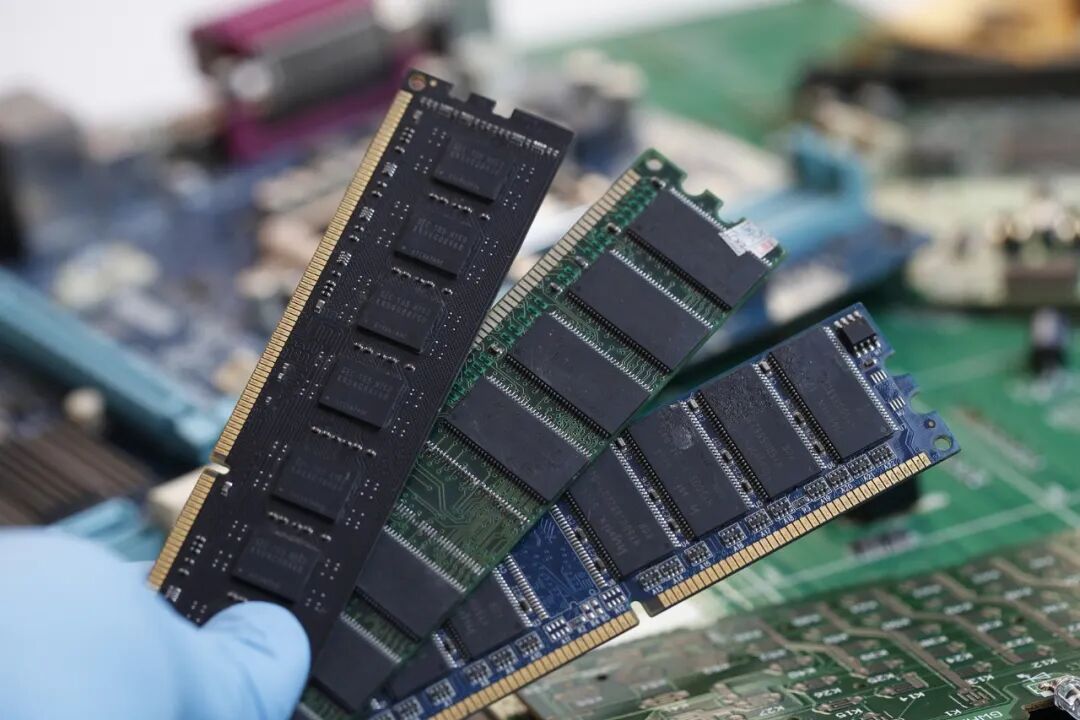
Since the beginning of this year, the prices of memory sticks have risen faster than gold, driving up the prices of downstream electronic products. (Photo/Visual China)
As for consumers who believe that 'waiting will eventually pay off,' they either have to face the fact of buying electronic products at high prices or continue to wait for a long time. Or, learning to develop new productivity tools might also be a viable option.
After all, younger netizens have proved that a computer is really not a necessity for surfing the Internet.
02
The Replaced Computer
Regardless of how computer prices change, smartphones and tablets have actually replaced the computer and become the real 'necessities for surfing the Internet' in the new era.
The reason is obvious. After the full popularization of smartphones, more and more people have shifted their entertainment, online shopping, and learning from computers to mobile phones. Their dependence on mobile phones is just like the joke in the talk - show actor Liang Haiyuan's skit: "Now I can eat without rice and go to the toilet without toilet paper, but I can't be without my phone."

New Weekly pointed out in the Phone People 2.0 special report: "If you don't take your phone with you one day now, you'll definitely be in a complete daze." (Photo/Unsplash)
Later, tablets that integrate the functions of mobile phones and computers came out. Their advantage of being more portable than laptops further undermined the status of computers. In 2011, the global computer shipment reached a new record of 365 million units, which is still an unbreakable 'ceiling' to this day. Even during the 'mini - boom' in sales during the pandemic, the declining popularity of computers could not be reversed.
The latest Statistical Report on the Development of the Internet in China reveals that as of June 2025, there were 1.123 billion Internet users in China, and 1.116 billion of them used mobile phones to access the Internet. Mobile phones are the absolute mainstream. According to data from the National Bureau of Statistics, in 2024, the average number of computers per 100 households in China was 44.8, while the number of mobile phones was 253.5, which means that each person has two mobile phones on average.
For digital natives born in the 2000s and 2010s, the computer is more like an insignificant 'extra.' Their growth has coincided with the era of the mobile Internet explosion. Information has become more accessible, and mobile devices are very user - friendly, so they don't need to tinker with computers at all.
Young netizens who understand computers have thus become a minority. Is this a good thing? Obviously not.
On Zhihu, some busybodies once directly asked netizens born in the 2000s: "As 'digital natives,' why do many 00s often struggle with basic computer operations?"
The answers given by the respondents were also diverse - not knowing how to extract files, not knowing how to use common office software, not knowing how to install software, not knowing how to take screenshots, not knowing how to free up space on the over - occupied C drive, not knowing how to use shortcuts, and typing on the keyboard with only two fingers, and so on.
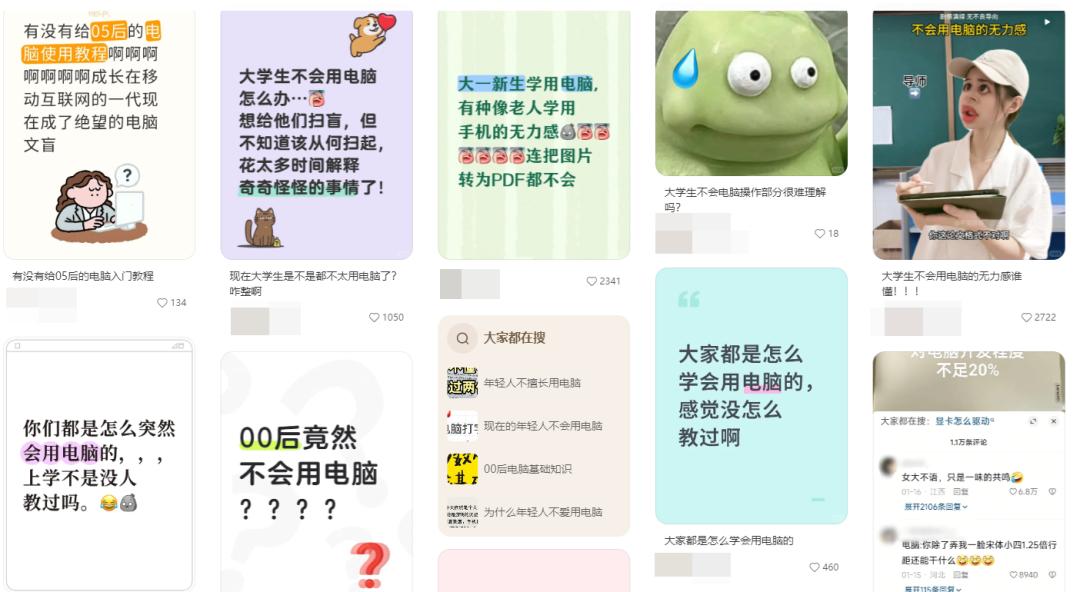
Netizens sighed that many 00s, who are supposed to be 'digital natives,' actually don't know how to use computers. (Photo/Screenshot from Xiaohongshu)
To put it bluntly, after using mobile phones has become the first lesson for young people on smart terminals, applying the logic of operating mobile phones to computers. This kind of 'cyber illiteracy,' although laughable, is not unexpected after careful consideration.
Ordinary office workers take these as jokes, but in fact, they are also part of the joke. Nowadays, everyone in the subway has a mobile phone and is immersed in their own world. More advanced users take out their tablets with attached keyboards, find a coffee shop, and can start working anywhere.
With the rapid advancement of technology and 'phone people' enjoying themselves, a 'computer - free' trend has formed in the entire social environment: computers are not a necessity in life but a replaceable professional production tool with a certain threshold.
03
Computers Won't Disappear,
And 'Cyber Illiterates' Don't Need to Despair
No one will deny that although mobile phones and tablets can only undertake part of the production functions, they have covered more aspects of life. In contrast, the bulky computer has become a useless ornament gathering dust, which has also raised many concerns about 'the death of the computer.'
Xiaowan, a 00 - post teaching assistant who once worked at a university, complained to me that her students each bring a laptop to class now, but most of them are just for show. "The group assignment requires using PPT to present the course results. As soon as I assigned it, many people in the course group started complaining, saying 'it's too difficult' and asking to change the presentation method. I told them to search online by themselves or ask the school's PPT club for help. I even spent a whole tutorial class teaching them how to make a PPT in a 'cramming' way, but most of them just ignored it."
But this isn't what troubles her the most. "The school requires students to make an appointment in advance by email to see the teacher, but many students don't know how to express their requests through email. They just keep adding the teacher and the teaching assistant on WeChat, assuming that the teacher is available 24/7."
Xiaowan remembers that one of her students asked her in the course group on Friday night if they could modify the group assignment the next day. She replied to the student, "Please make an appointment by email on weekdays." But when writing the teaching evaluation form at the end of the semester, she saw that some students evaluated her as not caring about the students, saying that "she didn't do her duty to tutor them."
Rather than worrying about her own career development, she is more concerned that these students who are only a