Lim Kok Thay's Infinite War
If one were to review the rise of China's semiconductor industry, the name "Chen Liwu" would definitely merit a dedicated chapter.
On the business front, he is on par with Jensen Huang and Lisa Su in the Chinese - speaking world. He once helmed Cadence, one of the world's top three EDA companies, achieving a remarkable 3000% increase in the company's stock price. In 2022, he received the Robert N. Noyce Award, the highest honor in the semiconductor industry. In terms of investment, Walden International, under his leadership, is the most active investment fund in the semiconductor field. Since its establishment in 1987, it has invested in over 100 semiconductor companies, initiating the stories of iconic enterprises such as SMIC, AMEC, VeriSilicon, Montage Technology, and GigaDevice.
Historically, Chen Liwu and Walden International entered China in 1993, recommended by the Ministry of Finance and the State Science and Technology Commission. At that time, only 7 years had passed since the establishment of the China New Technology Venture Investment Corporation, and less than 3 years since the opening of the Shanghai Stock Exchange. "Venture capital" was a brand - new concept in China. It can be said that Chen Liwu and Walden International have been actively involved in numerous "from 0 to 1" moments in China's venture capital history, especially in the semiconductor field.
In Chapter 13, "Igniting the Era of State - owned Capital" of The History of China's Venture Capital, it is described that before 2018, there were mainly three types of institutions investing in Chinese chip companies in the primary market. Apart from professional institutions like Zhongke Chuangxing, which rely on research institutes or universities, and state - backed funds like the National Integrated Circuit Industry Investment Fund, dollar - denominated institutions represented by Walden International were the only source of market - oriented capital.
To this day, Chen Liwu's story continues and he is still highly regarded. After appointing Chen Liwu as CEO in March this year, Intel publicly stated in response to media inquiries: "The board believes that Intel must fully leverage Mr. Chen's extensive network to seize the next wave of industry innovation and opportunities." True to expectations, Chen Liwu quickly delivered on the board's hopes. In August 2025, SoftBank announced a $2 billion investment in Intel to support its semiconductor manufacturing business. In September 2025, Intel received a $5 billion investment from NVIDIA, and the two parties will jointly develop customized data center and PC products.
However, unexpectedly, before 2025 ended, the "investor" identity has become Chen Liwu's biggest "challenge": According to multiple media reports, Chen Liwu's extensive investment network has triggered a severe trust crisis within Intel. Many employees have chosen to leave due to their dissatisfaction with the perceived "conflicts of interest".
Controversy Triggered by an Acquisition
As described earlier, as a "master" in the semiconductor industry, Chen Liwu's joining is undoubtedly a significant "boon" for any company, and Intel is no exception.
Before Chen Liwu became CEO, Intel was going through its toughest year since its founding, setting a new quarterly loss record of $16.6 billion (approximately RMB 116.9 billion). On the day Chen Liwu took office, Intel's stock price soared by over 25%. SoftBank, which announced its investment in Intel in August this year, had Chen Liwu serve as a director of the group from June 2020 to 2022. NVIDIA, which announced its investment in September, had already collaborated with Chen Liwu during his tenure at Cadence. Jensen Huang and Chen Liwu have been friends for 30 years.
If Intel appointed Chen Liwu in the hope of leveraging his extensive industry resources to regain its leading position and ride the wave of the artificial intelligence era, then based on the current results, Chen Liwu has actually accomplished the task admirably.
So why has Intel's senior management developed a serious trust crisis towards such a person? Is it a case of biting the hand that feeds, or is it a manifestation of the "big - company disease" and being caught up in office politics? This starts with an acquisition case.
In September this year, Meta, which has long hoped to achieve a breakthrough in the artificial intelligence field, announced that it would attempt to acquire the chip - design company Rivos. As of the latest round of external financing, Rivos was valued at $2 billion. Its business focuses on designing chips based on the RISC - V architecture. RISC is an open - source, flexible, and scalable reduced - instruction - set architecture (ISA). ARM processors are microprocessors based on the RISC architecture, and "V" represents the fifth - generation RISC architecture, which consumes less energy than ARM processors and is more "consumer - friendly". Meta believes that if the acquisition is successful, it will be able to further develop the ability to manufacture "AI system - on - a - chip", enabling it to build a full - stack AI system and fundamentally reduce the associated infrastructure costs.
The decision - making logic is reasonable, but the difficulty is obviously high. So, the deal dragged on from autumn to the end of the year without a conclusion, and an unexpected competitor emerged. In December, media reported that Intel had also joined the bidding for Rivos, driving up Rivos' asking price from $2 billion in September to $4 billion currently.
Of course, up to this point, the situation is still normal. Nowadays, every major technology company dreams of sharing the pie in the artificial intelligence era, especially Meta and Intel, which were successful in the previous technological era. Even if they compete fiercely for a key asset like Rivos, it can be understood as a "market - economy behavior".
But the problem lies in the fact that Rivos is a company incubated by Chen Liwu.
Back in 2021, Chen Liwu, then the chairman of Cadence and seeking business expansion, was evaluating the possibility of acquiring ARM. He believed that although ARM was an undisputed industry leader in terms of revenue, brand, and market share, with the arrival of a new technological era, there would be a huge demand for complementary solutions in the chip - design field. Under this premise, rather than spending a large amount of money to acquire ARM, it was more feasible to find a suitable investment target in new technological solutions like RISC - V.
After further research, Chen Liwu found that for a RISC - V startup to survive and thrive in the market, it needed to meet at least three core requirements: first, it must be fully compatible with the existing data - center ecosystem; second, it must have a processor architecture that can achieve high performance at low power consumption, with an operating frequency of 3.1 to 3.5 GHz; third, it must establish a deep partnership with at least one top - tier industry customer. Under this premise, there were very few RISC - V startups worth investing in, and they were often already under the radar of large capital and did not lack funds.
After much thought, Chen Liwu made a decision: Walden Catalyst would take the lead in inviting his friends, including Amarjit Gill (founder of the well - known semiconductor company PA Semi), Puneet Kumar (a software - architecture engineer who has worked at Apple and Google), and Mark Hayter (a hardware engineer who has worked at Apple and Google), to form a new startup team.
In September 2021, Rivos was officially established, and the startup team mentioned above became the core management. Puneet Kumar was appointed as the CEO of the company, and Chen Liwu became the chairman of the board. Walden Catalyst also became the lead investor in Rivos' first - round financing.
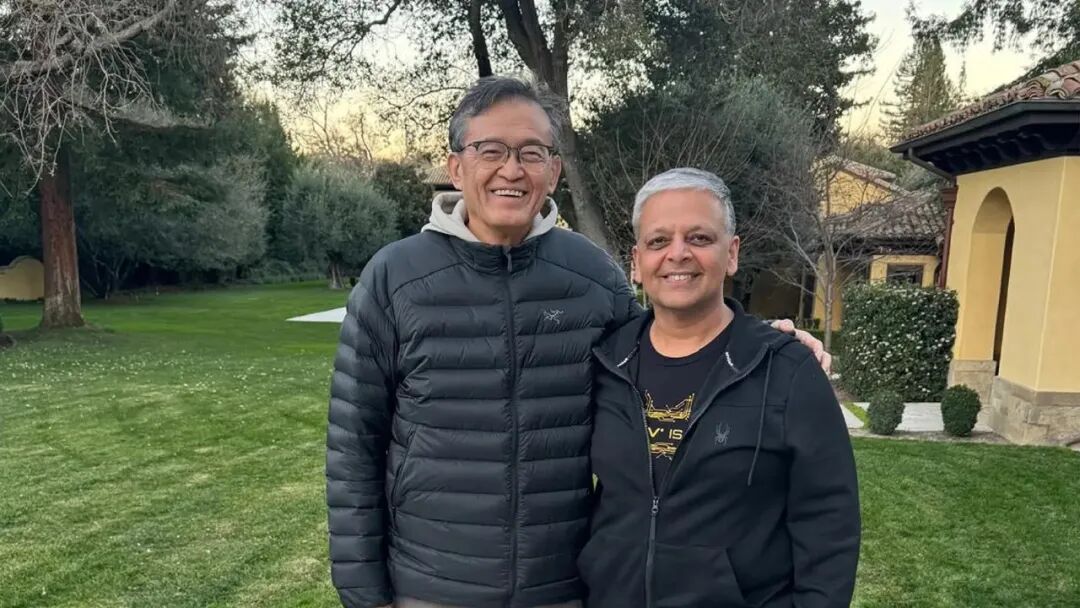
(Chen Liwu and Kumar, Source: Walden Catalyst's official website)
Now, it is not difficult to understand the doubts of Intel's senior management: Although Intel has reasons to acquire Rivos, as a board member and one of the early investors of Rivos, Chen Liwu could also make a substantial profit from the acquisition, which inevitably raises suspicions of "conflicts of interest".
Media reports indicate that in fact, Chen Liwu promoted the Rivos acquisition case last summer. At that time, Intel's board of directors asked him to recuse himself from the decision - making meeting due to the "conflicts of interest" in the deal and ultimately rejected the proposal. The reason for restarting the Rivos acquisition this time was simply triggered by Meta's acquisition offer. According to sources, after the first acquisition proposal was rejected, Chen Liwu's team began to draft an AI business plan to be submitted to the board, attempting to justify the acquisition of Rivos from a strategic perspective.
What makes them even more "suspicious" is that besides Rivos, Chen Liwu seems to be promoting Intel's acquisition of other invested companies. For example, SambaNova, a full - stack generative AI platform and customized - chip R & D company founded in 2017. Walden International led its Series A financing of $56 million in 2018, and in 2021, it received an investment from SoftBank Vision Fund 2 (during Chen Liwu's tenure as a director of SoftBank Group). Currently, Chen Liwu still serves as the chairman of SambaNova. Media reports suggest that Intel officially submitted an acquisition offer in early December, with an expected transaction price of $1.6 billion.
Compared to Rivos, SambaNova has a special situation: "The company is in a rapid decline" and is a "victim of the large - scale money - printing in 2021". According to sources, SambaNova's cash flow was on the verge of drying up in 2024, leading to a major layoff in April 2025 (15% of the employees were laid off).
Although SambaNova later alleviated the crisis through "additional financing from existing investors", due to its long - standing poor business conditions, the reality seems to be that "they are planning a new round of financing, but the capital market is uninterested". The few potential buyers hope to significantly reduce its valuation from $5 billion in the 2021 financing round to around $2 billion.
People also believe that the investments in Rivos and SambaNova are just the beginning. Some statistics show that since 2019, Intel's venture - capital department has co - invested with Chen Liwu or his related investment companies 12 times.
In short, many anonymous Intel employees say that these deals have caused an uproar within the company. The proponents argue that one should not avoid recommending the worthy just because of personal relationships. One should simply evaluate whether the assets are of high quality. Whether the CEO has a personal interest and whether there is a certain degree of conflict of interest between the company and the project are minor issues in the context of reversing the company's decline.
The opponents are much more vehement. As mentioned at the beginning, many extremely dissatisfied colleagues have chosen to leave the company because they believe that Chen Liwu has seriously violated the Intel Code of Conduct, which represents Intel's core values. The code requires senior executives to disclose potential conflicts of interest to the company's board of directors and the highest - level legal and compliance officers, who will then decide on the handling plan. The code also emphasizes that employees must be vigilant against "conflicts of interest arising from holding equity in Intel's suppliers, customers, or competitors" and "situations where external employment relationships interfere with the performance of Intel duties".
The opponents therefore suggest that Chen Liwu should quickly dispose of the shares in his investment portfolio, establish a confidential trust, or form a special board committee to eliminate potential conflicts of interest arising from his personal investments. In addition, Chen Liwu needs to transfer the decision - making power of Intel's venture - capital investment committee to the chief financial officer, David Zinsner.
"Investor" vs. "Entrepreneur"
In the short term, the "investor" label will bring more troubles to "entrepreneur" Chen Liwu, and the doubts he faces are not limited to "conflicts of interest". For example, the semiconductor - equipment supplier ACM Research was accused this year of violating relevant US government regulations by providing key technologies to other countries. A key piece of evidence for this accusation is that Chen Liwu, who has extensive semiconductor investments in China, is an early investor in the company and has served as a member of the advisory board since 2017.
In the long term, this controversy is unlikely to shake Chen Liwu's position at Intel because there are two unchangeable realities in the semiconductor industry:
1. Regardless of the specific segment of the semiconductor industry, for a company to grow and succeed, its products must have a sufficient number of functions, and its production lines must be able to support a sufficient number of products. This helps to spread out R & D costs and infrastructure - building costs (such as production lines and semiconductor equipment) and amplify profits through economies of scale.
2. As the most complex product category in the contemporary industrial system, the semiconductor industry stands out in terms of R & D investment. The proportion of R & D investment to annual sales has remained above 20% for many years, always higher than that of industries we typically consider to have high R & D intensity, such as biomedicine and computer software.
Under this premise, it is completely unrealistic for a company to grow and succeed through its own efforts alone, even in the United States, which we perceive as the most advanced in this field. Statistics show that the US government and universities fund over 70% of the basic research in the semiconductor industry. Even in the product - development stage, 15% of semiconductor companies' R & D investment depends on government subsidies. This further determines that the history of the semiconductor industry is actually a history of industrial investment. In more mature markets, a model of "small companies for innovation, large companies for mergers and acquisitions, and a rolling development of venture capital and mergers and acquisitions" will emerge.
Specifically for Intel, a long - established large company that has not kept up with the latest industry trends but still has a solid foundation and certain brand advantages is well - suited to use the "mergers and acquisitions + industrial investment" strategy for transformation. Given the situation where "everyone knows you want to transform", "everyone knows you have money", and "everyone knows there are few high - quality assets", to ensure a reasonable premium and a suitable target, there is no one better than Chen Liwu, who has been a member of Intel's board since 2022 and has invested in many semiconductor companies through Walden International.
Based on the current public information, we can find two examples to prove that Intel and Chen Liwu have reached a consensus on this issue:
First, after becoming Intel's CEO, Chen Liwu has mentioned his "investment achievements" at length in at least two public speeches. In March this year, in his first public speech after taking office, he focused on his investment layout in the semiconductor field. In October this year, at a semiconductor - industry forum in Phoenix, USA, he focused on Intel's industrial - investment situation, and SambaNova, mentioned above, was included in the PPT at that time.
Second, after suffering an epic loss, Intel divested many assets to reduce operating costs, including Intel Capital, which is responsible for industrial investment. However, after Chen Liwu took office, the divestment plan for Intel Capital was halted. At the earnings conference in April, Chen Liwu clearly stated: "We have decided not to divest Intel Capital. Instead, we will work with the team to monetize the existing investment portfolio while being more cautious about new investments, only supporting strategies that will help us achieve a healthy balance sheet. We also plan to start the de - leveraging process this year."
Moreover, when we combine the above - mentioned accusations with the US government's investment in Intel and Trump's demand for Chen Liwu to resign (and then retract it), it is not difficult to see that what people are targeting is not the "investor" label. In many foreign - media reports after Chen Liwu took office, almost all authors quoted a segment from his interview with a Chinese self - media in 2018:
"I am an overseas Chinese with a deep - rooted affection for China."
When facing Trump's accusations a few months ago, he also said that "the United States is my home where I have lived for over 40 years". On one hand, there is an emotional attachment, and on the other hand, there is a sense of home. What is being tested is not only Chen Liwu's ability to handle complex relationships. It is obvious what people are targeting, questioning, or being vigilant about. Perhaps what Chen Liwu is facing is an endless war without boundaries in time, space, or means.
In fact, those who make these accusations are well aware of the problem. Chris Miller, a professor at Tufts University and a columnist for The New York Times, wrote in his 2022 book Chip War: The Fight for the World's Most Critical Technology: "It is the pressure from the US government that has forced the entire chip industry to rethink its relationship with China - a difficult transition for many in the chip industry because they grew up in an era when economic ties with China were not only considered acceptable but also the right way to make money."