Ecovacs' participating fund has invested in a flexible tactile sensing company, and its products have been installed in leading new - energy vehicle startups | Exclusive Report from Yingke
Author | Huang Nan
Editor | Yuan Silai
Yingke learned that Shanghai Zhishi Intelligent Technology Co., Ltd. (hereinafter referred to as "Yaole Technology") has completed a nearly 100 million yuan Pre-A round of financing. Yundao Capital serves as the long - term exclusive financial advisor. We have summarized the information of this round of financing and several highlights of the company:
Financing Amount and Investment Institutions
Financing Round: Pre - A Round
Financing Scale: Nearly 100 million yuan; previously, it had received the first - round financing from Xiaomi Group.
Investors: Led by the Yinfeng Lanxiu Fund, in which Ecovacs has a stake, followed by Silicon Port Capital and Chuhui Capital.
Use of Funds: The funds from this round will be mainly invested in core technology iteration, expansion of overseas markets, and large - scale mass production of hardware.
Basic Company Information
Establishment Time: 2015
Registered Address: Xuhui District, Shanghai
Enterprise Positioning: Yaole Technology is a provider focusing on the research and development of flexible fabric pressure sensors and solutions. Based on the platform - based "flexible tactile perception" technology, it provides one - stop intelligent perception solutions for sensor design, software, hardware, and algorithms to B - end customers. For the C - end and overseas markets, it independently creates a "1+N" health perception product matrix covering high - frequency human contact scenarios.
Team Background: Lv Liyun, the founder and CEO, once worked as the chief architecture engineer at Harman, an international leading enterprise in automotive electronics, leading the research and development of multi - modal sensor fusion computing platforms and having rich experience in the fields of in - vehicle perception systems and hardware architectures. The core team members mostly come from well - known institutions such as the Chinese Academy of Sciences and the University of Michigan, with the R & D ability across the entire chain from underlying sensing materials to upper - layer intelligent algorithms.
Technological Highlights: Yaole Technology takes its independently developed flexible fabric sensing technology as the core and has built the vertical integration ability of the entire industrial chain from fiber yarns to sensor finished products. The company innovatively proposed the concept of "fabric as a sensor", directly weaving conductive yarns into the fabric substrate to form an intelligent material with a pressure - sensitive effect, which can achieve the invisibility and high fit of the sensing structure.
Based on the pressure distribution testing technology of the flexible fabric substrate, its core adopts a "sandwich" structure piezoresistive design. The electrode layers are arranged orthogonally horizontally and vertically on both sides of the pressure - sensitive layer, enabling high - density and highly consistent pressure lattice measurement. It also has skin - like characteristics such as high sensitivity, stretchability, and fatigue resistance, can closely fit complex curved surfaces, and is suitable for dynamic wearing and long - term use scenarios. At the same time, by further integrating multi - modal perception capabilities such as pressure distribution, dynamic posture, and contact recognition, combined with its self - developed algorithm, it can achieve accurate analysis and state monitoring of behaviors.
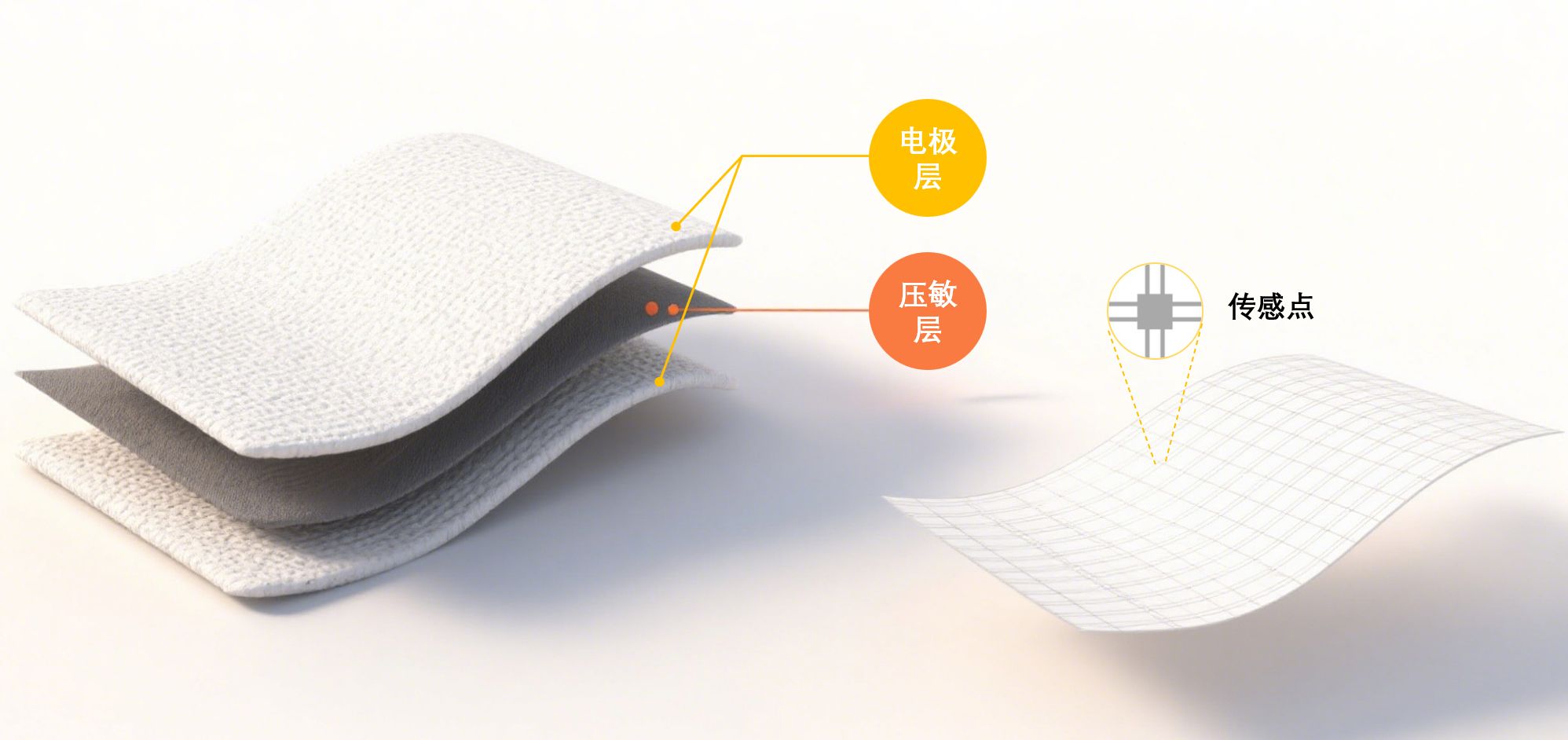
"Sandwich" Structure (Source/Enterprise)
Market Size
A report from Grand View Research shows that the global smart sensor market reached $51.42 billion in 2023 and is expected to continue to expand at a compound annual growth rate of 19.0% from 2024 to 2030. Among them, as a highly potential niche area, the market demand for flexible sensors has shown an explosive growth. A relevant report from the Zhongshang Industry Research Institute predicts that the compound annual growth rate of the global flexible sensor market size will be approximately 18.5% from 2024 to 2030.
Business Progress
Yaole Technology has formed a clear dual - business model for the B - end and C - end.
In the B - end market, the company has entered the supply chains of several leading automobile manufacturers as a core supplier, providing intelligent cockpit pressure perception solutions for multiple models with monthly sales of over 10,000 units. Its business covers more than 100 customers in industries such as intelligent vehicles, medical rehabilitation, and robotics. The products have achieved stable mass production in fields such as automobiles and two - wheeled vehicles and have expanded to overseas markets such as Italy, South Korea, and North America.
On the C - end, the company has established an overseas team and built an ecosystem from vertical products to panoramic human health perception. It plans to launch a series of intelligent health products in the North American market in the near future.
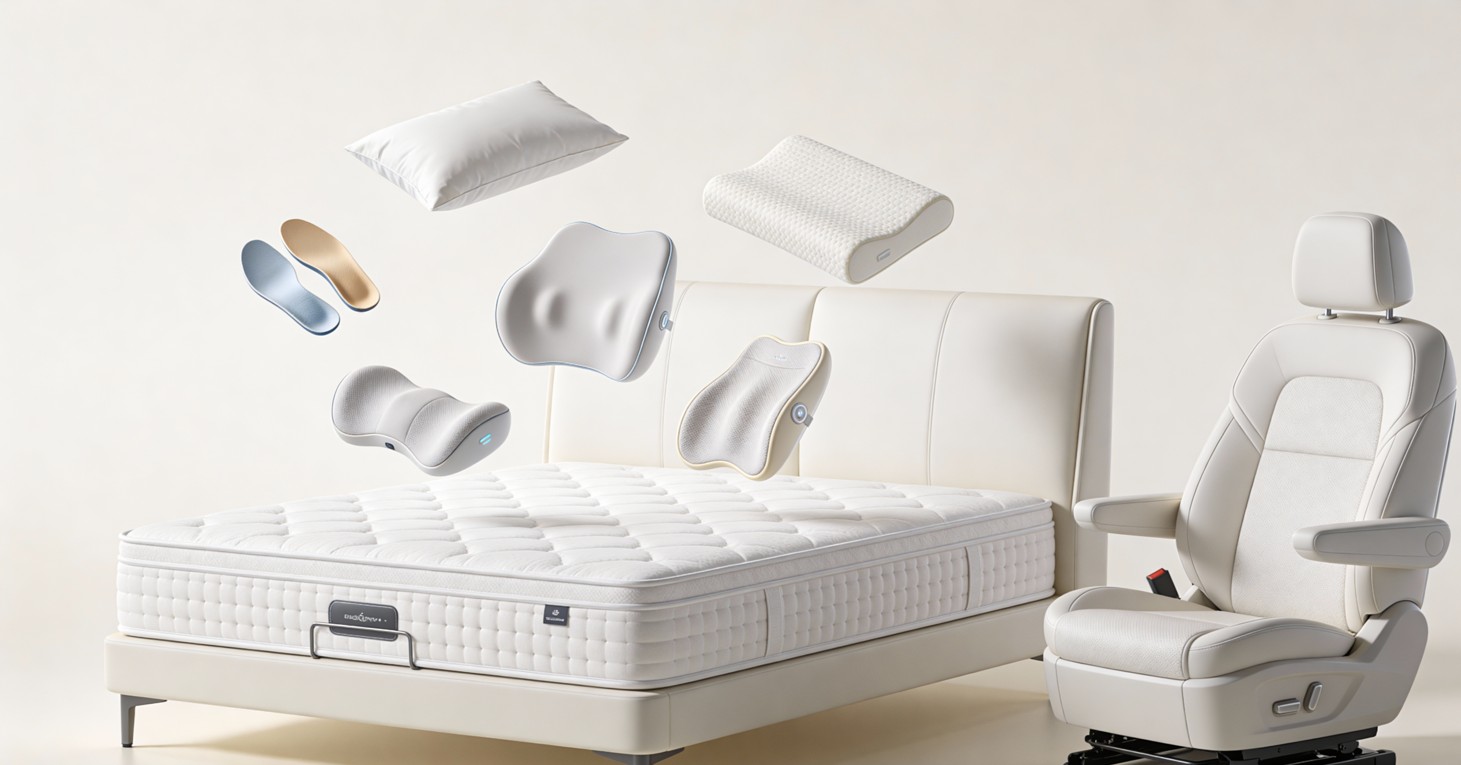
Consumer - level Application Scenarios (Source/Enterprise)
Founder's Thoughts
Yingke: From the business perspective, in which sectors are the growth points of flexible smart sensors mainly concentrated at present?
Lv Liyun: From the perspective of the customer structure, the cross - border entry of automobile manufacturers has become an important trend, and their supply chain systems overlap highly with the robotics industry. In the current explosive growth of flexible smart sensors, the automotive field has become a "high - level test field" for technology implementation and commercial verification. Its strict supply chain standards, performance requirements, and mass - production pressure have actually established strict and clear technical standards and screening mechanisms for the tactile sensor industry.
Currently, when selecting technical solutions, automobile manufacturers mainly focus on three dimensions: performance, that is, the accuracy, reliability, and consistency of sensors; cost control, which needs to meet the economic requirements of large - scale mass production; in addition, whether it has actual mass - production experience is also a key decision - making factor. Mass - produced solutions usually enter the supplier list first.
Since the second half of the year, Yaole Technology has completed mass - production implementation in key industries such as automobiles, smart homes, electric vehicles, and child safety seats, and its business has entered the large - scale stage. Among them, several projects in the automotive field are in the mass - production and delivery stage, and about ten projects are expected to be mass - produced next year.
Yingke: What are the mainstream robot tactile perception solutions in the market? In comparison, what are the unique features of fabric sensors?
Lv Liyun: In the current field of robot tactile perception, mainstream solutions mostly rely on materials such as thin films, TPU, or silicone elastomers. With their natural elastic properties, these materials can give the robot surface an amiable and gentle tactile feedback, so they are particularly commonly used in key parts with high requirements for interaction fineness, such as dexterous hand operations.
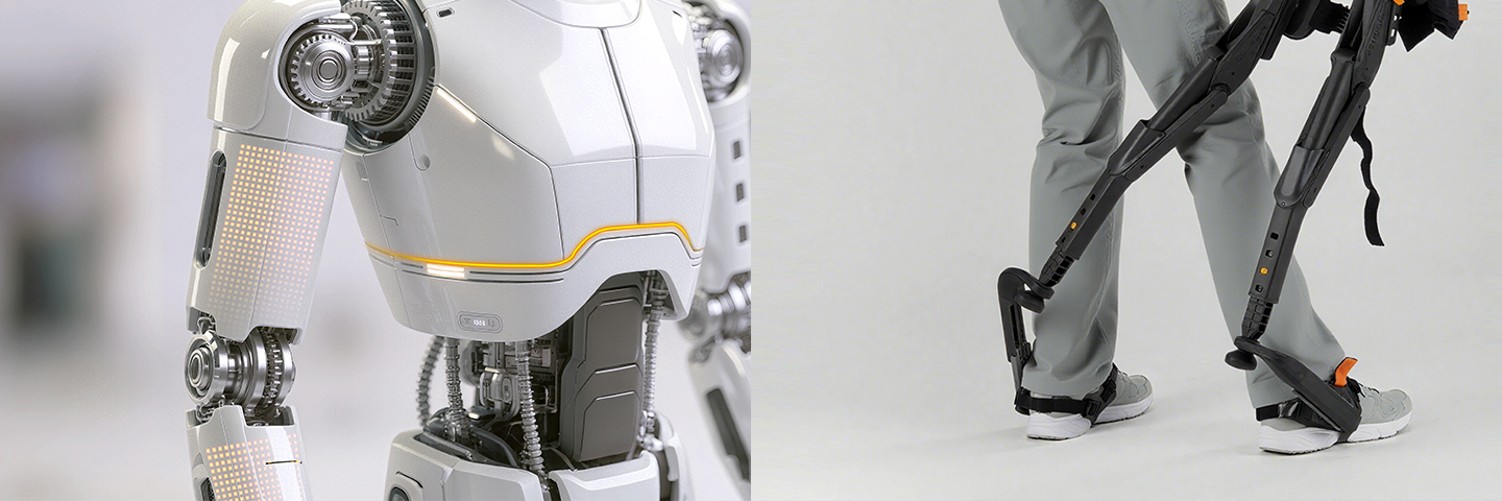
Robot Tactile Perception Scenarios (Source/Enterprise)
The fabric tactile sensor solution adopted by Yaole Technology has its uniqueness. First, in terms of installation and maintenance, the modular design of "fabric covering" enables flexible replacement, allowing the robot to "wear customized clothing", with stronger adaptability and no need to modify the robot's body structure, solving the pain point of the cumbersome disassembly and assembly of traditional thin - film and elastomer solutions.
Second, in terms of perception response, the design of directly integrating the sensing layer with the fabric surface eliminates the intermediate conduction link, bringing not only faster and more direct signal capture (its response speed can be comparable to human skin), but more importantly, it can simultaneously sense vertical pressure and the sliding trend of objects. This ability is the key for robots to achieve precise and stable grasping. At the same time, its perception performance is not affected by surface coverings, with higher stability.
Third, it has unique scalability in large - scale applications. The fabric solution supports large - area seamless coverage and can directly wrap complex curved surfaces, solving the problems of signal blind spots and connection breaks in traditional thin - film solutions at joints and other parts, thereby reducing the complexity of system integration and long - term maintenance risks.
In summary, the fabric sensor is not simply a replacement of materials or processes. Instead, through the flexibility, wearability, and scalability of the fabric itself, it reconstructs the system design paradigm of machine touch, enabling robot touch to move from "point" accurate measurement to "surface" intelligent interaction and from the laboratory level to industrial durability. As the robotics industry gradually moves from technology demonstration to large - scale delivery, the fabric solution that combines performance, cost, and reliability has received more and more attention and recognition from robot customers.
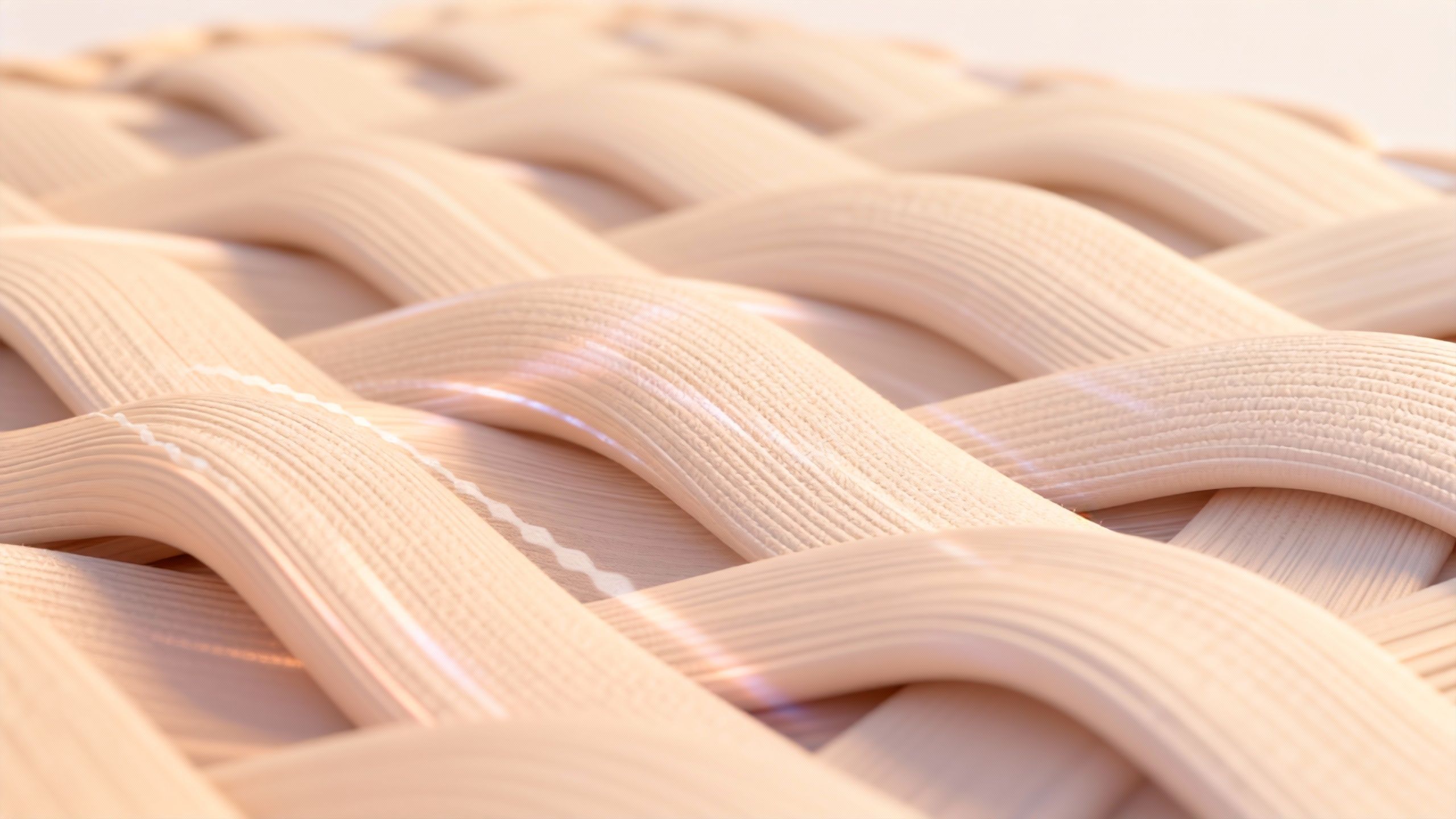
From "Point" to "Surface" (Source/Enterprise)
Yingke: As embodied intelligence is implemented in actual scenarios, will different technical routes gradually converge? What different trends will the application of tactile sensors in different parts such as hands and torso present in the future?
Lv Liyun: In the automotive industry, it usually takes a long cycle from order introduction to mass production, which constitutes a high industry entry barrier. The market demand in fields such as adaptive seats usually begins to be concentrated about two years in advance, and the current market pattern has basically stabilized. New solution providers need to go through a one - to two - year certification and verification process if they want to enter the supply chain, resulting in limited entry opportunities for new solution providers in the industry at present.
From the perspective of the upstream industrial chain, the technical routes in the field of embodied intelligence have not fully converged yet. It is expected that different sensor solutions will form differentiated advantages in different application scenarios in the future. For example, some solutions may perform outstandingly in dexterous hands or fingertip touch, while we focus on large - area flexible sensing of the torso.
As robots gradually enter actual application scenarios such as home companionship, rehabilitation care, and industrial production lines, their demand for tactile perception will significantly increase. Especially in environments where frequent interaction with humans is required, tactile ability will become a necessity, especially for large - area tactile coverage of the torso. This is also the key direction of our next - step layout.
Investors' Thoughts
The Yinfeng Lanxiu Fund said that it has long been concerned about touch, a core upstream component of robots, which is also the key for robots to improve their perception and generalization abilities. Currently, various technical routes are blooming. Yaole's fabric tactile solution has obvious competitive advantages in terms of stability, durability, and cost. After years of polishing, its products have been certified and purchased in batches by many automotive industry customers. We look forward to Yaole's leading technology and mature products being implemented more quickly in scenarios such as automobiles, robots, and consumer goods, promoting the practical use of flexible touch and opening up a larger market space.
Silicon Port Capital said that Yaole Technology has fully demonstrated its original innovation and scarcity in the field of flexible fabric sensors. Its core materials and structural design combine high sensitivity and durability. Combined with its unique algorithm advantages, it forms a one - stop intelligent perception solution, building significant technical barriers. The team not only has solid technical skills but also shows the commercialization ability to accurately connect cutting - edge R & D with major industrial needs in industries such as automobiles, medical care, and robotics. We believe that with the explosion of demand in scenarios such as intelligent vehicle interaction, health monitoring, and embodied intelligence, the company will become a key enabler and leader in promoting the digitalization of the physical world and realizing the upgrade of the perception layer.
Chuhui Capital said that as the key underlying ability for tactile perception and closed - loop adjustment of various intelligent hardware, flexible sensors are at the inflection point of accelerated verification and large - scale implementation of downstream application scenarios. Yaole Technology has long been deeply involved in the research and development of fabric - level flexible sensing solutions and has accumulated rich experience in material and structural design and mass - production processes. Its products have comprehensive advantages such as high reliability, high durability, and high cost - effectiveness. Yaole's product solutions have been implemented on a large scale in consumer scenarios such as vehicle seats and smart homes and are accelerating their expansion into high - growth tracks such as embodied intelligence. We believe that Yaole will continue to empower downstream applications with underlying sensing technology and is expected to fully enjoy the broad market opportunities brought by hardware intelligence.