The big showdown between Beijing and Shanghai has driven the price of robots down to 3,000 yuan.
In the winter of 2025, the final showdown in China's robotics industry was not decided between Beijing and Shanghai in a "two - city rivalry," but rather locked in through the collaboration of the "three - pole balance."
Beijing aims to be the "brain" that defines standards, Shanghai wants to be the "body" that validates models, and Zhejiang has become the "application" rooted in real - world scenarios.
These three forces are completing a "powerful integration" based on China's advantages in the entire industrial chain.
The core path is already clear: While the world is still debating the "end - to - end" concept of software, China is relying on the closed - loop of "mass production of hardware - scenario penetration - data feedback." Leveraging a supply - chain cost advantage three times that of Europe and the United States, it has transformed robots from champions on the field into silent laborers in factories.
In the past two months, our team conducted a comprehensive review of the domestic robotics industry chain.
From the precision - oriented hardware manufacturing bases in the Pearl River Delta, to the non - stop component supply - chain clusters in the Yangtze River Delta, and then to the cost - centers in central China that leverage labor and land advantages, we tried to piece together a complete picture of China's robotics industry.
However, when we finally focused on the "Beijing - Shanghai" corridor, we realized that the real battle was not just a game between two cities, but a national - scale integration of resources.
Beijing and Shanghai, as the two poles of China's technology industry, are often regarded as two extremes in the robotics industry.
Beijing is an idealist looking up at the stars, trying to inject a soul into machines and define "standards." Shanghai is a pragmatist grounded in reality, trying to validate "business" within a commercial closed - loop.
But despite the excitement in Beijing and Shanghai, both have a fatal flaw: Beijing has the brain but lacks real - world scenarios, causing algorithms to be detached; Shanghai has the body but lacks the brain, often resulting in insufficient intelligence.
Amid the competition between these two powerhouses, Zhejiang, the easily overlooked "third pole," is quietly filling in the last crucial piece of the puzzle - "application."
The picture is now extremely clear: Beijing uses the "rigid constraints" of policies to drive the development of fully autonomous technical standards, and Shanghai uses the "market price" to accelerate the defoaming of hardware.
The key to connecting standards and prices, and bridging the gap between the brain and the body, lies in the clothing production lines and laboratories in Zhejiang.
Beijing sets the standards, Shanghai nurtures the industrial chain, and Zhejiang deepens the roots. The integration of these three forces in the winter of 2025, in essence, transforms "high - end" technologies into "down - to - earth" businesses.
This is the real trump card for China's robotics industry to win the global competition.
The Violent Demystification of the 3,000 - Yuan Floor Price
At the end of December, a highly symbolic signal emerged in Shanghai's robot rental market, a crisp sound indicating the collapse of the price system.
According to the backend data disclosed by leading platforms, the orders for commercial service robots in the fourth quarter increased by an astonishing 300% quarter - on - quarter.
However, at the same time, the daily rental price dropped from a high of 25,000 yuan at the beginning of the year, finally breaking through the psychological barrier of 3,000 yuan at the end of the year.
Why did the price collapse so severely? After digging into the data, it was actually the supply chain that took the first swing at the price.
Relying on the complete new - energy vehicle industrial chain in the Yangtze River Delta, the localization rate of core components such as servo motors, reducers, and controllers was close to 90% in 2025.
This is the huge technological spill - over effect brought by the electric - vehicle supply chain. Imagine that the production lines of high - efficiency motors originally used to drive electric - vehicle wheels can, with a slight adjustment, continuously produce joint modules required by robots.
Under this scale effect, the "big three" components, which once accounted for a large part of the BOM cost, have become extremely cheap. The pressure of over - capacity forced manufacturers to find a way out, so a large number of surplus hardware bodies were forced into the rental market to seek monetization.
As hardware became cheaper, the game naturally changed. In the past, customers were asked to pay hundreds of thousands of yuan to "buy equipment," now they are coaxed to pay a few thousand yuan to "buy services."
Facing the global market, which is expected to reach $79.2 billion by 2032, manufacturers have to turn to the RaaS (Robot as a Service) model.
How crazy is this transformation? Just before we sent this article, a poster reading "Rent for 1 yuan, Unbox for the New Year" went viral on WeChat Moments.
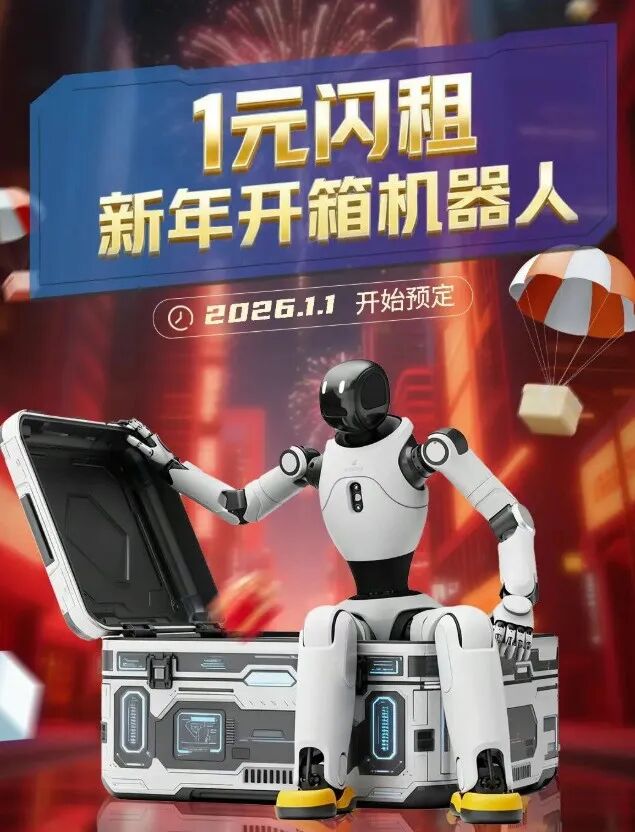
The rental companies in Shanghai have gone all out. They not only broke through the 3,000 - yuan floor price but also directly adopted the Internet's "burn - money for traffic" strategy, turning robots into "New Year goods" that can be experienced for just 1 yuan.
This is not just a marketing gimmick; it is an industrial indicator.
For B - end customers, this pricing means that the trial - and - error cost is almost zero. In Shanghai's business logic, the math is clear: Get in early, occupy the scenario, even if it means making a loss for the sake of popularity.
This pricing strategy has directly moved robots from the heavy "balance sheet" to the flexible "cash - flow statement," greatly reducing the business entry threshold.
But the cruel truth behind this is the complete shift of the value anchor.
The market no longer pays a premium for the "technological attributes" or "sci - fi appearance" of robots. Customers' focus has shifted from "whether it looks like a human" to "whether it can do the job." Pricing power has returned to the labor cost it replaces.
According to industry data, the quarterly deployment of such service robots in the Yangtze River Delta region has exceeded 5,000 units.
This marks that domestic robots have officially entered the "general - tool" stage, transforming from delicate precision instruments in the laboratory into standardized, replaceable, and even disposable intelligent infrastructure.
While robots abroad tend to be built as inviolable precision instruments, China's industrial chain is reshaping them into ubiquitous infrastructure.
While Silicon Valley is still discussing ethics and philosophy, Shanghai's industrial chain has turned robots into "programmable intelligent production units" that can be used at any time and flexibly scheduled.
Rejecting the Creation of Large - Scale Remote - Controlled Toys
If Shanghai is using price wars to test the lower limit of business, then Yizhuang in Beijing is using "rigid constraints" to re - define the upper limit of technology.
In response to the long - standing pseudo - intelligence phenomena in the industry, such as "pretending to be fully autonomous with remote control" and "relying on video editing at press conferences," Yizhuang in Beijing introduced highly guiding new regulations for the 2026 humanoid robot half - marathon.
This detailed rule can be regarded as the "technical roadmap" for China's robotics industry, and its core intention is very straightforward: to clarify the technical route.
The most direct change comes from the physical - level mandatory isolation.
Referring to the official detailed rules, the new regulations clearly state that "personnel following is prohibited," and controllers are required to operate from the support vehicle throughout the process and are not allowed to get off the vehicle unless necessary.
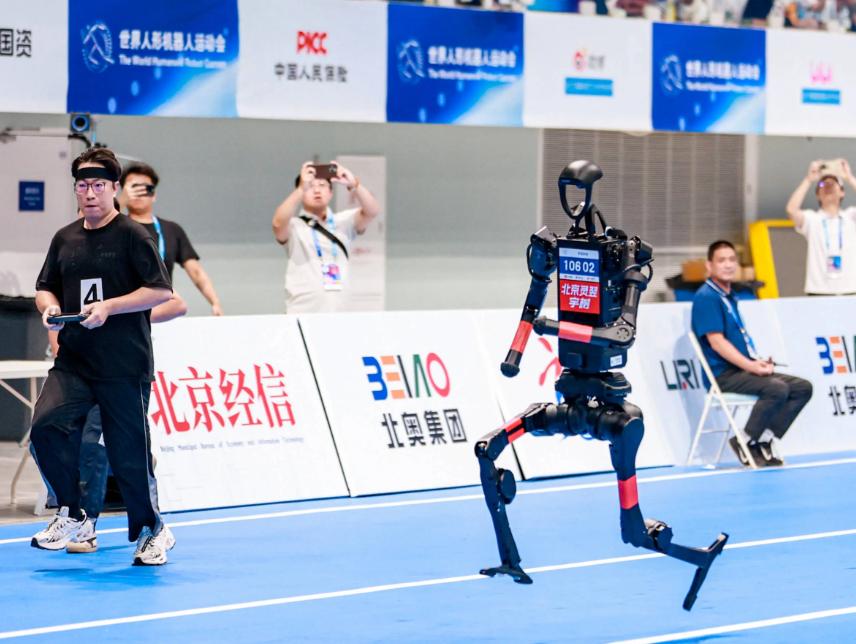
This regulation directly cuts off the possibility of "human - robot accompaniment." In many previous demonstrations, engineers often followed closely behind the robots, ready to intervene with the remote control to handle balance problems or path - planning errors.
The new regulations force robots to face unexpected situations on the track independently through physical isolation.
If physical isolation is just "setting up checkpoints," then the institutional - level blow is the real "deterrent."
The official regulations state that the results of the remote - control group must be multiplied by a coefficient of 1.2. This means that at the same speed, the results of remotely - controlled robots will be directly 20% behind those of autonomous robots.
This is not just a competition rule but also an industrial indicator: The official does not support the transitional route of "human - robot coupling," strongly guiding enterprises to overcome the technical high - ground of "fully autonomous decision - making."
Beijing's logic is that although you are allowed to control the robot from the vehicle, this way of participating in the competition, which is physically isolated and subject to result penalties, is itself a blow to "non - autonomous" technologies.
As the birthplace of the "Embodied Heavenly Workers" robot, Beijing has the "Huisi Kaiwu" platform, which is comparable to GPT - 5, and the densest AI talent pool in the country.
Data shows that the average R & D investment ratio of Beijing's robot enterprises exceeds 45%, twice the national average. Among the top 50 AI enterprises in China in the 2024 Hurun list, 20 are from Beijing.
Relying on high - density computing resources, Beijing is promoting the open - sourcing of robot body blueprints and software architectures.
This initiative aims to establish industry standards similar to the L4/L5 levels of autonomous driving. Beijing's strategic intention is clear: Instead of competing in low - end hardware, it is better to focus on overcoming the core bottleneck of the "embodied intelligent large - model."
By raising the competition from "hardware stacking" to "algorithm robustness," Beijing is trying to replicate the ecological status of "Android" or "HarmonyOS" in the robotics field, mastering the core ability to define the next - generation intelligent terminal.
The Rise of the Third Pole: Zhejiang Activates the Data Flywheel
Although Beijing and Shanghai are in fierce competition, there has long been a pain point in the industry: Low - end robots with real - world scenarios are too stupid, while high - end robots with advanced algorithms are too expensive.
Beijing's large - models are very smart, but they lack high - quality real - world data.
Currently, training highly depends on the simulation environment, but there is a huge gap (Sim2Real Gap) between simulation and reality. The friction in the physical world, contact materials, and complex lighting are difficult to be perfectly simulated by computers.
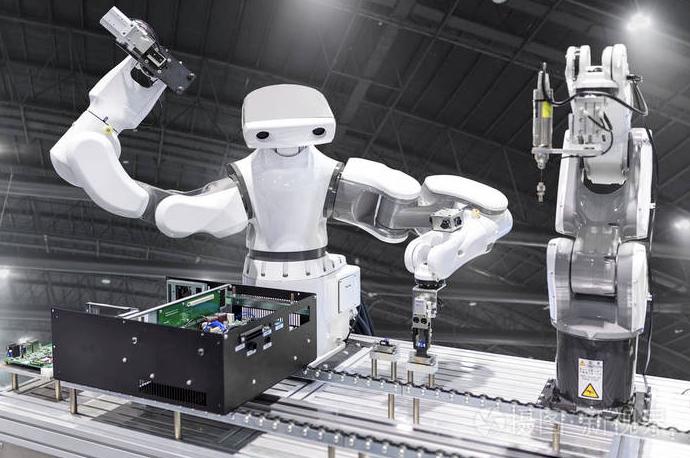
At this time, Zhejiang, as an "expert in industrial implementation," is quietly filling in the crucial link.
Zhejiang is not like Beijing, which likes to define platforms, nor like Shanghai, which is keen on building ecosystems. Instead, it puts the technological achievements of Beijing and Shanghai into specific scenarios such as clothing production lines and laboratory automation for "training."
It does not produce dazzling algorithms or a large number of robot bodies. Instead, it translates the achievements of the former two into an operation deviation of ±2mm and a pipetting error of <1mm.
These dull industrial - level parameters prove that robots are no longer just dancing toys, but tools that can produce efficiency.
But this is not all. Zhejiang's real trump card is that it has activated the most core "data flywheel" of the industry.
Tens of thousands of robots "working" on Zhejiang's production lines. Every time they fail to grasp an object, make a recognition error under complex lighting, or slip on an oily floor, these massive "unexpected" data are being transmitted in real - time to Beijing's algorithm platform and Shanghai's simulation system.
This data with real - world "noise" is the gold that can never be obtained in the laboratory.
They are used to continuously fine - tune Beijing's basic large - model, accelerating the elimination of the gap between simulation and reality.
The "Beijing Brain" becomes smarter, and the next - generation design of the "Shanghai Body" is closer to real - world pain points.
This real - time data closed - loop driven by Zhejiang's scenarios and spanning Beijing and Shanghai constitutes a dynamic moat that is difficult to replicate in the Chinese model.
Down - Grade Counter - Attack: The Victory of an Industrial Philosophy
The breakthrough point came at the end of 2025. As capital tightened, the industrial elements in Beijing, Shanghai, and Zhejiang were substantially integrated.
To put it simply, this is not just a matter of production capacity, but rather, we and the Americans have different end - goals in mind.
The US path stems from its leading software and original innovation capabilities, pursuing the "holy grail" of general intelligence. For example, Tesla and FigureAI focus on breakthroughs in "end - to - end neural networks."
In contrast, the Chinese path is rooted in the world's most complete and agile manufacturing network, good at rapid iteration and cost reduction through large - scale applications.
To be honest, this may not sound very exciting, or even a bit "tacky."
We may not be the first to create the "smartest" robots, but we are very likely to be the first to manufacture the most "useful" and "affordable" robots. The business world does not believe in elegance but in efficiency.
Data and cases are validating the feasibility of this path:
In the high - end manufacturing field, the "Embodied Heavenly Workers 2.0" of the Beijing Humanoid Robot Innovation Center has successfully entered the Foton Cummins engine factory. In a real workshop full of noise and complex equipment, it completed the precise handling of production - line materials, proving the anti - interference ability of domestic algorithms in an industrial environment.
In the consumer - goods manufacturing field, the first - generation humanoid - like robot "Meiluo" developed by Midea Group has been "on the job" in the Jingzhou washing - machine factory for more than half a year, becoming a "permanent employee" on the production line. This continuous verification in the large - scale consumer - goods manufacturing scenario marks that robots are starting to adapt to the high - intensity industrial rhythm.
In terms of mass - production scale, Zhipu Robotics announced the mass - production of its 5,000th general - purpose embodied robot. Ubtech's Walker S2 has started mass - production and delivery, with a planned annual production capacity of 5,000 units in 2026. The industry has officially moved from the "hundred - unit demonstration" stage to the "thousand - unit mass - production" stage, and the cost is entering a rapid decline channel.
This convergence directly reflects China's terrifying cost advantage in the supply chain:
According to a special report "Global Humanoid Robot Supply - Chain Cost Analysis" released by Morgan Stanley in October 2025, the BOM cost of humanoid robots using the Chinese supply chain is currently about $46