Breaking through boundaries with strength, why has the Mate 80 series become the high-end benchmark for Chinese technology?
At the end of 2025, China's mobile phone market witnessed a substantial "reshuffle moment".
When key components, led by memory, entered a price - increasing cycle, the pricing logic of the mobile phone industry was reshaped accordingly. $600 quickly became a distinct market dividing line. The mid - and low - end markets continued to shrink under cost pressure, while the high - end market, leveraging AI, imaging, and system ecosystems, became one of the few growth segments with certainty.
At the end of the competition in China's mobile phone market in 2025, Huawei finally made a strong comeback. According to data from market research firm BCI, since the release of the Huawei Mate 80 series, Huawei's domestic market share of mobile phones has exceeded that of Apple for two consecutive weeks, regaining the top spot in the domestic market.
Specifically, in the 48th week of 2025, Huawei captured 27.81% of the domestic mobile phone market, significantly surpassing Apple's 17.12% market share. In the 49th week, Huawei once again topped the domestic mobile phone market with a 22.89% market share, while Apple ranked second with an 18.65% share.
Not only did Huawei regain the top position in China's mobile phone market, but it also showed significant growth in the highly competitive high - end flagship market. According to Counterpoint Research data, in the first three quarters of 2025, Huawei maintained the top position in the Chinese market with a 32% share in the $600 - $800 price range and increased its market share to 30% in the market above $800, firmly ranking among the top two in the domestic high - end market.
These market signals are not just short - term sales fluctuations or share changes caused by single blockbuster products. They are a direct indication that the competition in China's high - end mobile phone market is shifting. As the cost cycle rises and the technological dividend fades, the criteria for success in the high - end market are shifting from parameter gimmicks to the construction of systematic capabilities.
This is why, while many industry competitors are still wavering in short - term technological trends, Huawei, with the return of the Mate 80 series, has once again taken a central position in the high - end competition.

However, it also sends a clearer signal: the significance of the Mate 80 series has long transcended that of a single - generation flagship. Marked by "breaking through with strength and opening a new chapter", it announces that the Mate series has officially entered a new stage centered on systematic maturity - from re - entering the competitive arena to promoting the upgrade of the high - end competition paradigm with systematic capabilities.
When the double - ring becomes the footnote of systematic capabilities: the Mate 80 series reaches the "breakthrough moment"
In the highly homogeneous smartphone market, the identification value of symbols is often underestimated by the outside world.
This is because, as the hardware supply chain becomes more shared and the marginal value of functional innovation decreases year by year, parameters alone are no longer sufficient to form a sustainable competitive barrier, and the product differences between different manufacturers are being rapidly erased.
However, when looking at brands that have withstood the test of time, it is found that almost all of them have established a clear and stable symbol system. This symbol is not just a decorative design language but a visual manifestation of technological breakthroughs, consumer value choices, and brand spirit.
This is exactly the symbolic value that the Mate series possesses. When Huawei made a strong comeback, the focus of industry competition was no longer just performance, imaging, or form. The Mate series needed to consider how to use a stable and dynamic visual language to express the core spirit of "infinite exploration" that runs through multiple generations of products.
The "double - ring design" is the answer given by the Mate 80 series. It is derived from the iconic circular camera module of the Huawei Mate series. After continuous evolution in previous generations, it was upgraded to a double - ring design in the Mate 80 series. By approximating the image of the Möbius strip, it conveys a determination for infinite exploration and continuous breakthrough.
This exploration and breakthrough are first implemented in the all - metal design. In the industry consensus, an all - metal body has long been considered an unfeasible solution. High - frequency communication has extremely high requirements for signal integrity, and most flagships can only make compromises through breakpoints or hidden structures. The Mate 80 series with an all - metal design represents that Huawei has overcome the technical problem of signal interference caused by metal materials and achieved double breakthroughs in design aesthetics and structural engineering.
This breakthrough is not limited to the appearance but extends to real extreme scenarios through the construction of systematic capabilities.
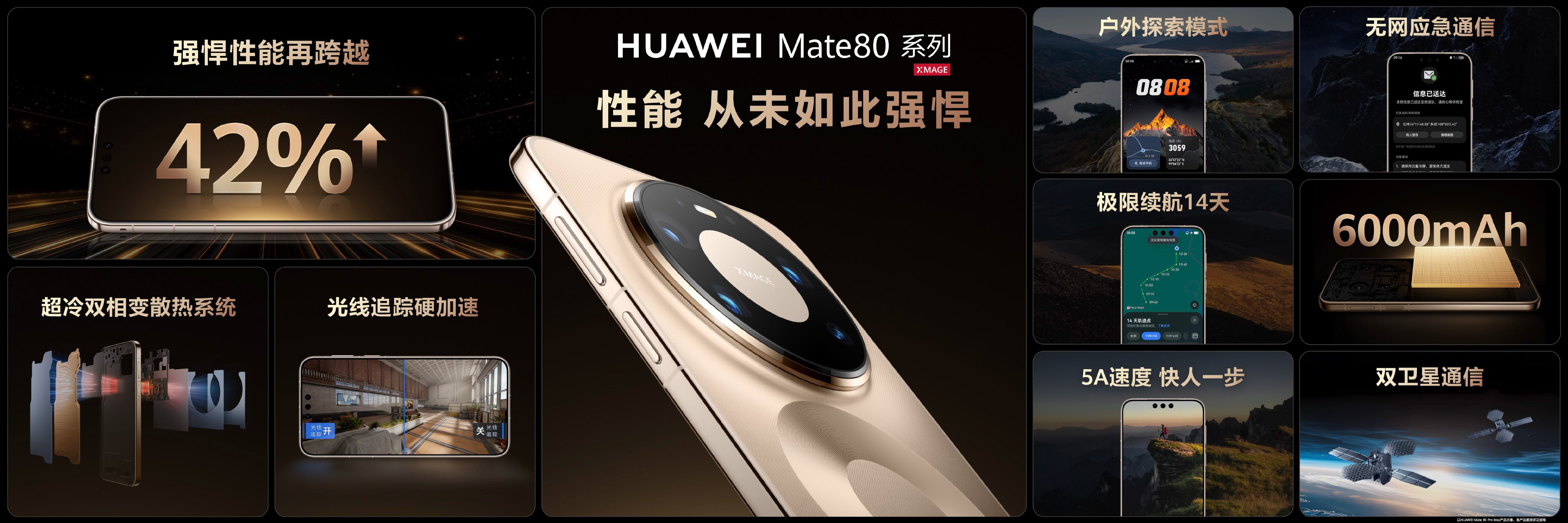
In terms of screen display, the Huawei Mate 80 Pro Max is equipped with a new ultra - bright and transparent Linglong screen. This screen, which uses a double - layer OLED architecture, can achieve a peak brightness of 8000 nits at 1% APL and 4500 nits at 20% APL, solving display problems such as poor visibility and color loss in strong outdoor light.
In the field of imaging, the Mate 80 series is equipped with the second - generation Red Maple imaging system, achieving a "what you see is what you get" real - image expression. Through the vertical integration of sensors, ISP, and algorithms, the color restoration under complex lighting conditions has been deeply optimized, ensuring that every color is true to the original rather than over - rendered.
In terms of basic capabilities such as communication and battery life, the Mate 80 series also chose high - difficulty solutions. It supports 2.4GHz seamless connection communication without a network and can achieve a stable connection up to 7 kilometers away in a signal - free environment. At the same time, through in - depth collaborative optimization of system power consumption and core modules, the Mate 80 series can achieve a maximum battery life of up to 14 days in specific extreme scenarios.
From display and imaging to communication and battery life, the Mate 80 series does not focus on single - function breakthroughs but builds a systematic combination of capabilities.
It is precisely this set of systematic capabilities that gives the Mate 80 series the confidence to enter real extreme scenarios. In the outdoor exploration mode, based on the cooperation between Petal Maps and Two Steps Road to provide more than 10,000 selected outdoor routes, users can have a safe and reliable mobile phone experience in complex environments, thus better exploring the boundaries of the unknown.
Meanwhile, with the support of HarmonyOS 6, the Mate 80 series also has system - level AI capabilities based on A2A. This means that, based on the new system foundation of HarmonyOS 6, Xiaoyi can collaborate on the same screen with other intelligent agents.
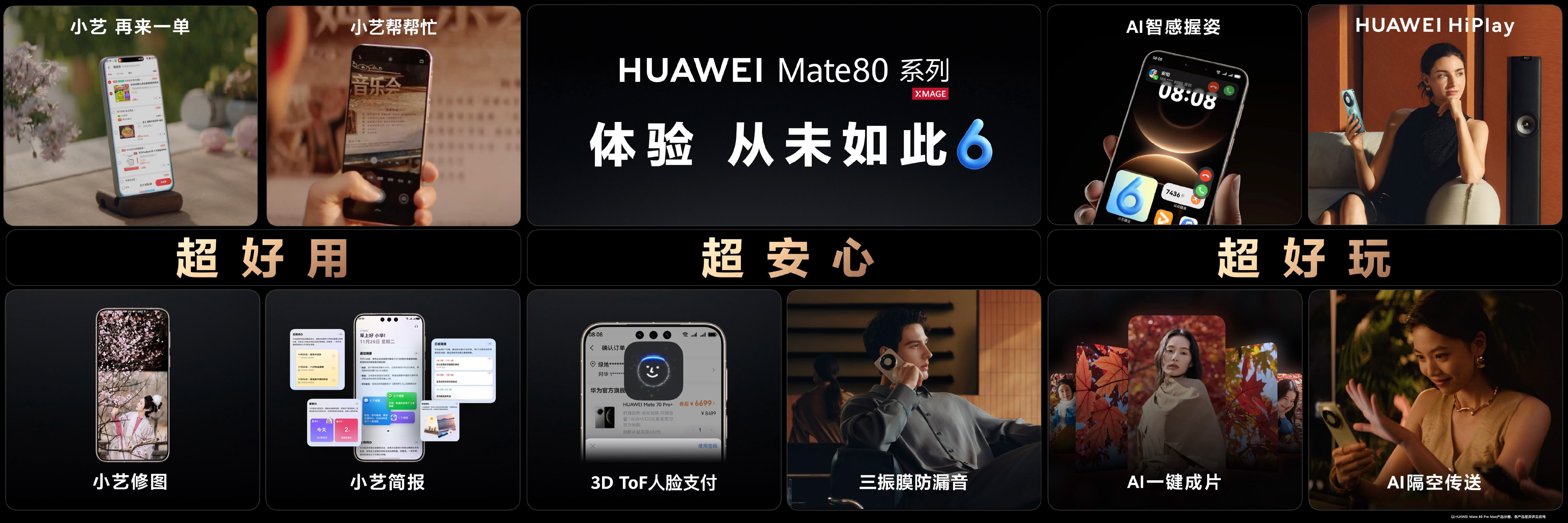
The newly upgraded Xiaoyi also supports autonomous learning and step - by - step teaching. It can not only make restaurant reservations and travel plans with one click but also support convenient functions such as contactless transfer and AI call assistant, as well as features like AI magic expressions and one - click video editing. This system - wide AI experience also makes the Mate 80 series more user - friendly.
In terms of the ecosystem, the Mate 80 series is also an important milestone for the HarmonyOS ecosystem to become more user - friendly. As of now, the HarmonyOS ecosystem can provide more than 350,000 applications and meta - services, with a compatibility rate of up to 95%. Behind this is an innovation answer sheet jointly submitted by more than 10 million HarmonyOS developers for Chinese technology.
With both hardware and software improvements, the Mate 80 series has been praised by many users as the "best - value Mate ever". When the prices of core components such as memory continue to rise and high - end flagships generally increase their price ranges, the Mate 80 series chose to lower its price, which is a clear and rare statement of attitude.
This is why, after the official release of the Huawei Mate 80 series on November 28th, it quickly became a market hit, recreating the "hard - to - find" breakthrough moment. The starting price of the standard version was set at 4,699 yuan. Despite the increased configuration, the price was lowered, directly triggering a rush to buy.
This is not simply about giving benefits to users but is based on the long - term technological accumulation and systematic capabilities of the Huawei Mate series. Only when the system, screen, imaging, and communication gradually form a self - consistent closed - loop can price no longer be a passive outcome but an active market choice for the Mate 80 series.
Systematic innovation: the Huawei Mate series becomes a new starting point for Chinese technology
In the highly mature competition of the smartphone industry, continuous leadership is counter - intuitive.
As the technological dividend fades quickly and the supply chain becomes highly transparent, any single - point innovation is almost always quickly copied, matched, or even surpassed within one or two product cycles. The "glory moments" of most brands often only last for a single - generation parameter breakthrough and are then erased by the parameter competition, eventually leading to their exit from the mainstream competition.
Therefore, products that can continuously push forward the technological boundaries and improve user experience over a time span of more than a decade are extremely rare. They do not rely on accidental innovations or aim for short - term blockbusters. Instead, they make the right choices at each stage through a long - term and stable technological path.
In China's high - end flagship camp, the Huawei Mate series is a highly representative example. From establishing its high - end positioning in the early days to the gradual formation of systematic capabilities, the Huawei Mate series is not just a flagship update every year but an exploration path that has lasted for twelve years and has fully led every technological trend.
From the Ascend Mate in 2013, which expanded the experience boundary with its large - screen form, to the Mate 7, which introduced fingerprint recognition into the high - end mainstream market; from the three - dimensional navigation of the Mate 8 and the super - fast charging of the Mate 9 to the first introduction of AI imaging capabilities in the Mate 10, the Mate series has always been doing one thing in the early stage: transforming technologies that originally belonged to the "future" into scalable user experiences.
After 2018, this leadership began to shift from single - point breakthroughs to systematic innovation. The Mate 20's wireless reverse charging and the continuous breakthroughs in imaging structure and optical design of the Mate 30 and Mate 40. At this stage, the Mate series began to form a sustainable iterative innovation system.
Even after the technological environment tightened suddenly, the Huawei Mate series did not stop exploring. From communication and imaging to interaction methods, the Mate series has always led the technological upgrading of smartphones.
In 2022, the Huawei Mate 50 series was the first to launch Kunlun Glass and became the world's first mobile phone to support Beidou satellite messages. In 2024, the Huawei Mate 70 series was the first in the industry to launch the Red Maple primary - color camera, achieving a qualitative leap in imaging color through its "image - level" spectral information capture ability.
These seemingly scattered technological inflection points actually form a clear main line of technological evolution: continuously expanding the capabilities of mobile phones around users' demand scenarios. This is the value of the Mate series: not in the short - term leadership of a single - generation product but in the determination and ability to continuously turn the impossible into reality.
Looking at it this way, since its inception, the Huawei Mate series has carried the mission of infinite exploration, thus shaping a spiritual symbol of technological self - reliance.
The "Populus euphratica spirit" emphasized by the Mate 40 series corresponds to the perseverance to grow tenaciously under extreme pressure; the "Kunlun spirit" proposed by the Mate 50 series takes this tenacity to a more challenging level - continuously climbing in extreme environments and not avoiding difficulties.
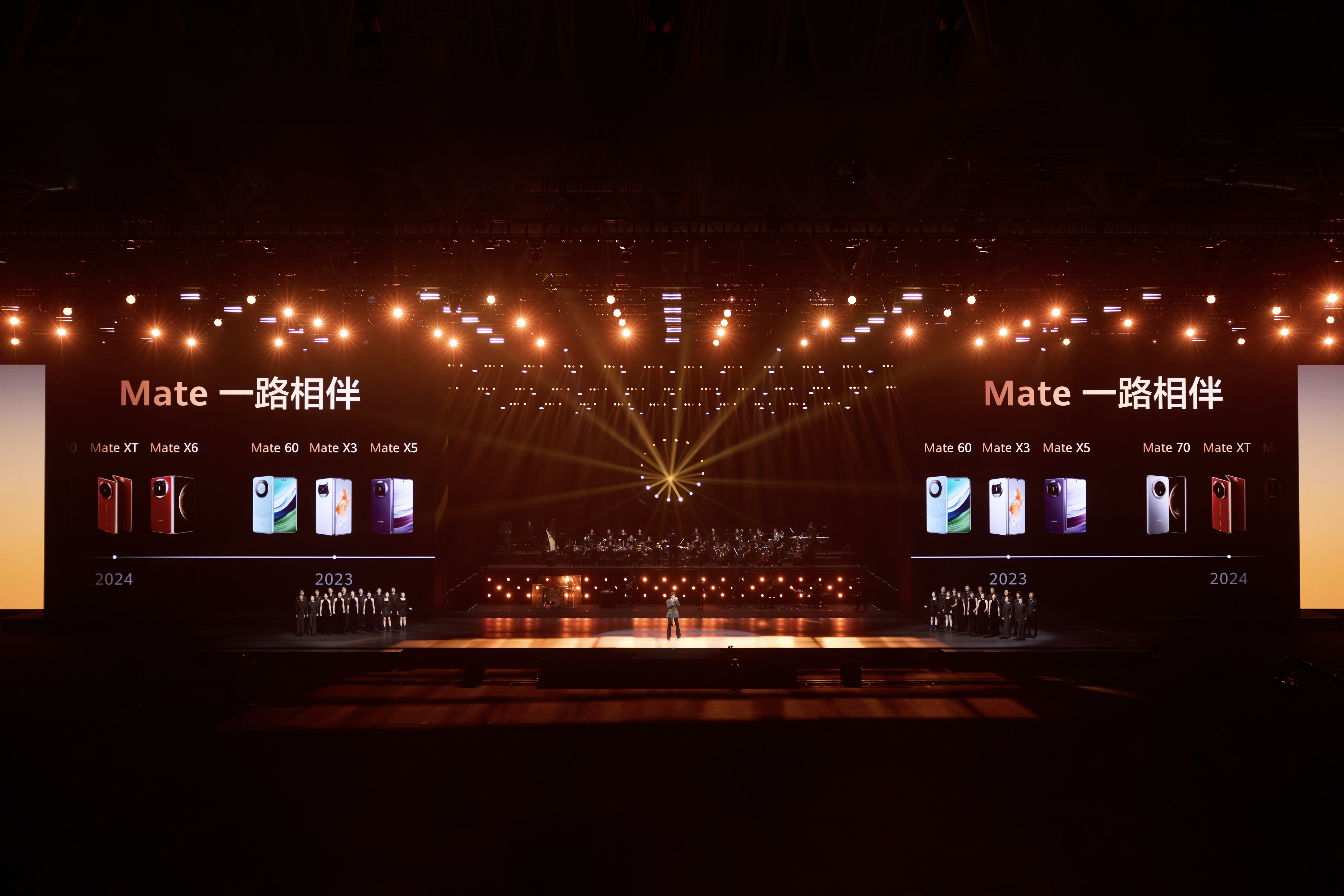
With the Mate 60 series, the brand narrative further shifted to "uniting as one", emphasizing respect for the magnificent power of unity; and the "walking hand in hand, moving towards the new" concept of the Mate 70 series takes this collaborative relationship to a more open and vibrant stage.
Against this evolutionary background, the Mate 80 series becomes a new spiritual node for the entire Mate series. It condenses the past tenacity, breakthroughs, and collaboration into a more pioneering brand connotation: a tribute to the courage of infinite exploration.
Looking back at the twelve - year history of the Mate series, it is no longer just a flagship product line of Huawei but a high - end sample for Chinese technology to move into the "uncharted territory".
At each key technological inflection point, the Mate series has not only achieved a leap from technological following to technological parallelism and then to technological leadership but has also proven through continuous product iteration that true high - end is not the instantaneous advantage of parameter leadership but the long - term realization of systematic capabilities in complex environments.
Therefore, from infinite exploration to "breaking through with strength", it has never been a single - point explosion but the result of the convergence of the Mate brand, products, ecosystem, and users. As the tides ebb and the cycles change, the emergence of the Mate 80 series has become a new starting point for Chinese technology to continue moving forward in the high - end field.