Breaking the situation with open source and gathering energy through competitions, vivo's Blue River has stirred up a "Rust Storm".
As artificial intelligence begins to reshape the digital foundation of terminal devices, the operating system, as the hub connecting computing power, data, and hardware, is being forced to transform from a simple resource scheduler into a "gatekeeper" of intelligent services. However, in this AI era with exponential growth in computing power and increasingly complex interactions, traditional underlying systems built on C/C++ are like skyscrapers with aging foundations, facing severe challenges brought on by memory security issues.
This consensus on underlying security has directly driven a shift in the technological trend. On December 21st, the final roadshow of the 3rd vivo BlueOS Innovation Competition successfully concluded in Beijing. This competition not only demonstrated the strength of technical talents but also served as an industry preview focusing on the Rust programming language and directly addressing the reconstruction of the underlying security of basic software.
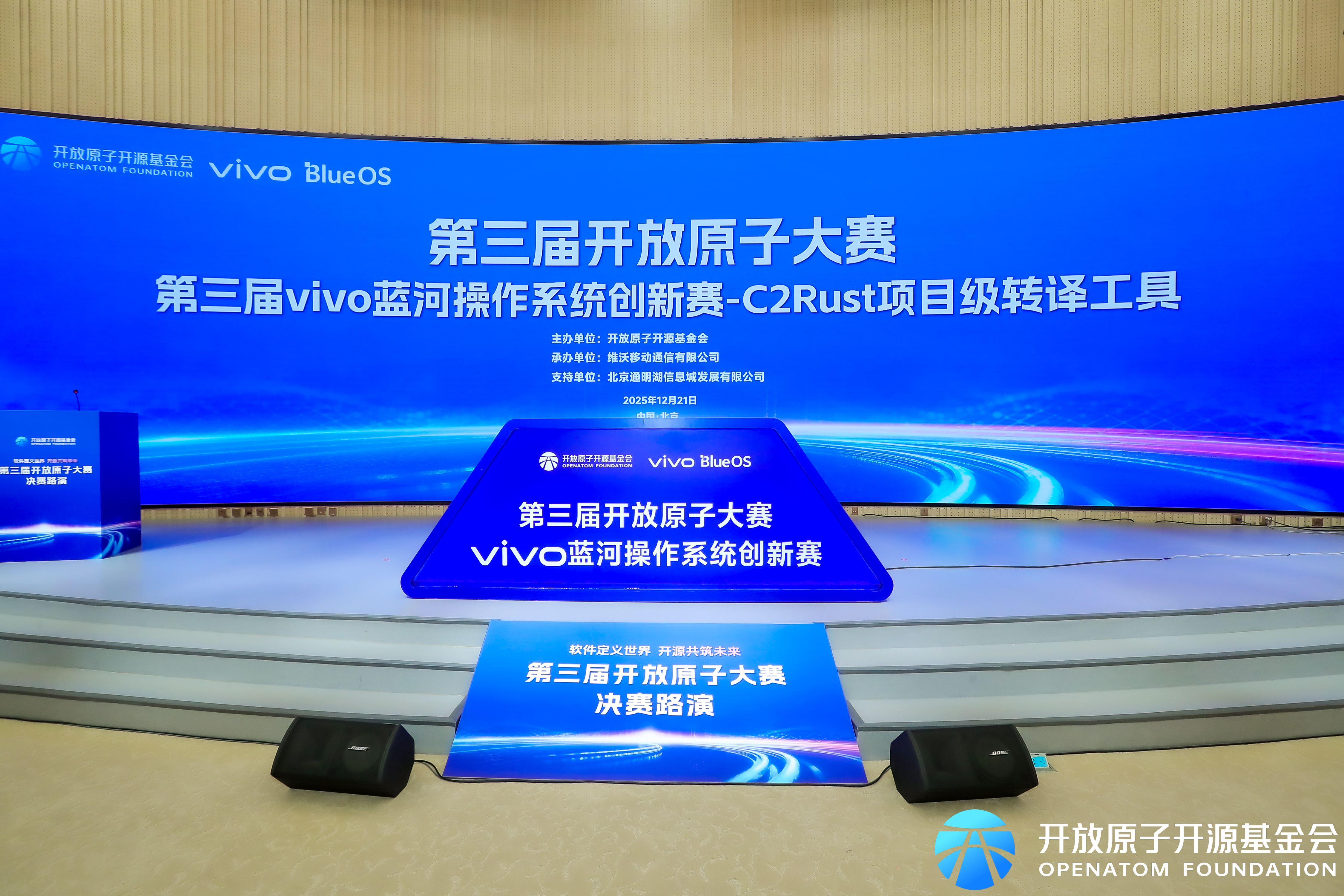
After strict review by an authoritative joint jury composed of Xin Xiaohua, the deputy director of the Software Institute of the First Institute of Electronics under the Ministry of Industry and Information Technology; Tan Zhongyi, the chairperson of the TOC of the OpenAtom Foundation; He Shijun, a TOC mentor of the OpenAtom Foundation; Guo Yao, the deputy dean and professor of the School of Computer Science at Peking University; Xu Mengwei, an associate professor at Beijing University of Posts and Telecommunications; and several technical experts from vivo, the final competition selected 1 first - prize winner, 2 second - prize winners, and 4 third - prize winners from numerous short - listed projects.
Among them, the Blue Lotus team stood out from over 150 participating teams from more than 50 universities across the country and won the first prize with their key technological breakthroughs and innovative solutions in the "C2Rust Project - Level Translation Tool" contest. They overcame the engineering challenges from literal syntax translation to semantic paraphrasing. The winning works in the final competition translated a total of 54 files from 5 open - source projects of different difficulties, approximately 11,000 lines of code, ensuring a 100% test pass rate and over 97.8% syntax security after translation.
This competition was jointly organized by vivo and the OpenAtom Foundation. It not only demonstrated the engineering breakthroughs in the automated migration of C/C++ legacy code to Rust but also reflected vivo's strategic determination in the "deep waters" of basic software.
Different from the common single - point technological breakthroughs in the industry, vivo is building a trinity layout of "full - stack self - research + kernel open - source + industry - academia - research competitions". This model aims to break down the barriers between academia and industry, transform cutting - edge innovation vitality into practical engineering capabilities, and inject continuous driving force into the innovation of the underlying technology of domestic operating systems and the prosperity of the Rust ecosystem.
The AI wave drives the "Rustification" of operating systems
Behind vivo's continuous investment in Rust competitions lies the urgent need of the intelligent terminal industry for operating system security, bordering on anxiety.
As large AI models accelerate their penetration from the cloud to edge devices, the operating system has become the "gatekeeper" for processing core data such as health and finance. Its security directly determines the reliability of AI technology implementation. However, traditional operating systems built on C/C++ are showing signs of fatigue in the AI era. The mechanism that allows arbitrary pointer operations is like driving a racing car without an assisted - driving function. Although it is fast, a minor oversight can easily lead to serious accidents.

Long - term data from Google and Microsoft shows that over 70% of serious security issues are directly caused by memory security problems. The "global blue screen" crisis of Microsoft's CrowdStrike in 2024 and the supply - chain risk of backdoors being implanted in the Linux toolchain have further intensified the industry's concerns about the security of the underlying software supply chain. In the AI era with exponential growth in code volume, relying on patching to fix the inherent defects of C/C++ is no longer sufficient to deal with increasingly complex attack methods.
The emergence of Rust provides a "systematic solution" just in time. As the preferred language for building the next - generation high - security operating systems, Rust introduces a strict ownership mechanism and lifecycle management. It's like having a strict "security inspector" at the code compilation stage (before the software leaves the factory), which can automatically identify and block memory vulnerabilities such as null pointer references and buffer overflows, eliminating risks at the source without having to make up for mistakes after runtime errors occur.
More importantly, Rust achieves a balance between security and performance. Google's research shows that after migrating a project from C++ code to Rust, developer efficiency is more than twice that of C++ teams. It can provide performance comparable to that of the C language and is suitable for various scenarios, from high - performance servers to low - power IoT devices, perfectly meeting the dual requirements of high security and low latency for edge devices in the AI era.
Currently, global technology giants including Microsoft and Google are increasing their strategic investment in Rust. Approximately 21% of the new native code in the Android 13 system is written in Rust, and Microsoft has also called on developers to abandon C/C++ in certain scenarios. In the field of large models, the mainstream deep - learning ecosystem is actively embracing Rust. For example, TensorFlow provides Rust binding support, and large - model infrastructures such as Hugging Face are also extensively refactored using Rust.
Overcoming the century - old problem: from "literal syntax translation" to "semantic paraphrasing"
Facing the chronic problems of the C/C++ languages, migrating legacy code to the memory - safe Rust language has become the generally recognized fundamental solution in the industry. However, the amount of existing C/C++ code globally is vast. Relying entirely on manual rewriting is not only extremely costly but also prone to introducing new logical errors during the rewriting process.
Therefore, developing a tool (C2Rust) that can automatically convert C code to Rust code has become a technological high - ground that the global software industry is competing to conquer. Whoever can achieve high - quality automated translation first will hold the key to the next - generation secure operating systems.
The "C2Rust Project - Level Translation Tool" contest in this competition was designed to overcome this problem, encouraging developers to design and implement automated project - level translation tools to directly translate C language program projects into Rust language program projects.

According to the data disclosed by the final competition jury, the winning works in this competition achieved a milestone breakthrough in technical depth. First, there was a qualitative change in the translation scale. Different from the previous experimental tools that could only handle simple code snippets, the winning works in this final competition successfully withstood the test of real - world engineering scenarios, translating a total of 54 files from 5 open - source projects of different difficulties, approximately 11,000 lines of code. This means that the automated tool has the initial ability to handle complex dependency relationships and large - scale engineering projects.
On the basis of the scale breakthrough, the code security verification achieved excellent results. After translation, the key is whether the code can run correctly and be secure. The actual test data shows that the translated code of the winning works passed 100% of the functional tests, which means that the original functions of the software were perfectly preserved. More importantly, the translated code maintained over 97.8% syntax security. This indicates that the automated tool is no longer simply generating a large amount of insecure Rust code for compilation but is truly beginning to understand and apply the security features of Rust, greatly reducing the cost of manual secondary review and correction.
The technical path has also undergone an intelligent transformation. The excellent works not only significantly improved translation efficiency and stability by introducing mechanisms such as multi - agent collaboration, RAG (Retrieval - Augmented Generation), and parallel translation isolation but also creatively proposed a translation solution based on the natural language abstraction layer. This technical path allows the tool to go beyond simply translating C language words into Rust words and attempts to understand the logic behind the code, thus achieving a leap from "literal syntax translation" to "semantic paraphrasing".
The code generated by this "paraphrasing" method breaks free from the rigid constraints of the underlying details of the C language, has a high degree of Rust nativeness, and makes the code generated by automated translation truly usable and maintainable.
In this regard, industry experts believe that after the file - level translation achieved in the previous competition, the breakthrough in project - level translation in this competition verified the feasibility of automated tools in complex engineering scenarios and accumulated key engineering experience for the continuous evolution of the underlying technology of operating systems.
Based on full - stack self - research, break through with kernel open - source
In this global technological transformation window period, vivo has chosen a more radical breakthrough route: full - stack self - research.
As a pioneer in Rust technology in China, vivo initiated the research and development project of the BlueOS operating system with great foresight as early as 2018.
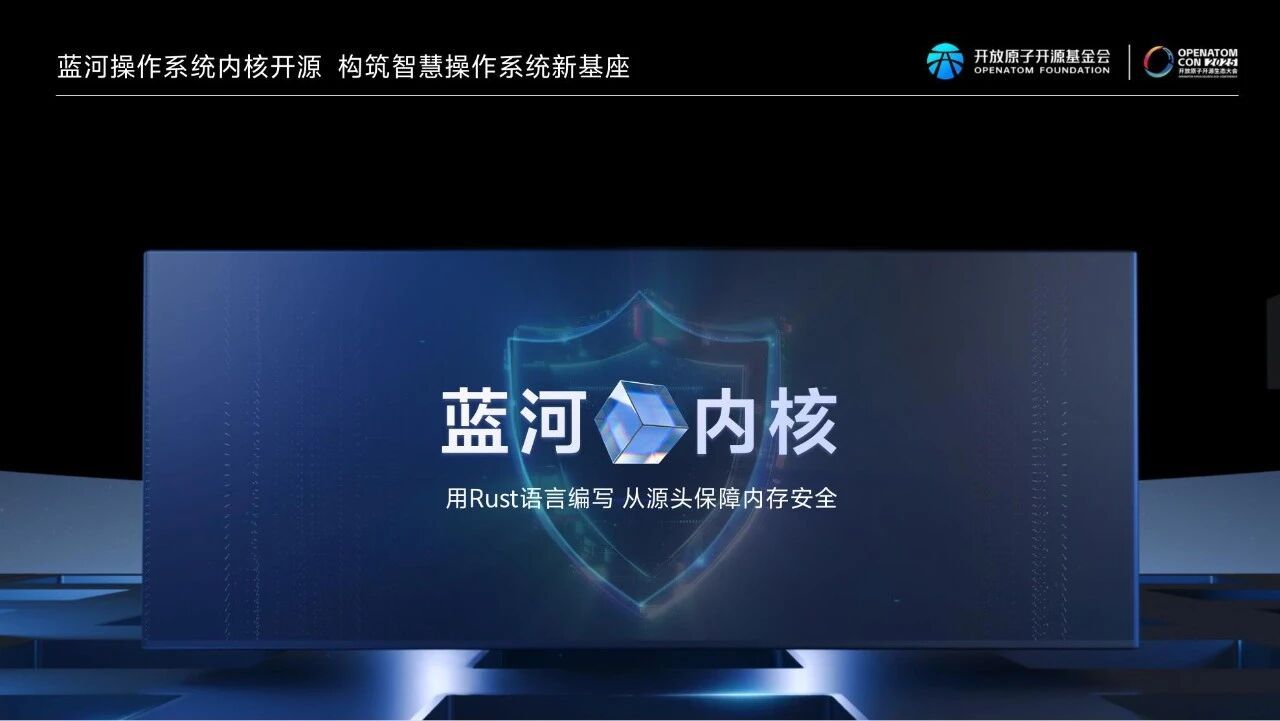
During the long - term technological journey, vivo gradually overcame the challenges of adapting the underlying language to the system architecture. At the end of 2023, vivo released its self - developed BlueOS operating system at the developer conference. The entire system framework is written in the Rust language and is installed on vivo smartwatches. At the 2024 vivo Developer Conference, vivo released BlueOS 2, which uses the Rust language for the entire stack, from the lowest - level kernel to the upper - level system framework. This breakthrough is of pioneering significance in the industry, marking that domestic operating systems have finally broken free from the path dependence on traditional kernel architectures and have their own "new foundation".
Although the Rust language has significant advantages, its ecosystem is still in its early stages. The learning curve is steep, and there is a scarcity of high - quality system - level reference projects, resulting in a high threshold for industry entry. To break through this situation, vivo has formulated an ecological strategy of "open - source co - construction" and "promoting research through competitions", regarding open - source and organizing competitions as the two pillars supporting the prosperity of the BlueOS ecosystem.
On the one hand, vivo breaks down technological silos through open - source initiatives. At the OpenAtom Ecosystem Conference in July this year, vivo announced the official open - sourcing of the BlueOS kernel. Subsequently, on November 21st, at the 2025 OpenAtom Developer Conference, vivo further donated the BlueOS kernel to the OpenAtom Foundation and named it "BlueKernel" as an open - source incubation project.
BlueKernel has three characteristics: security, light - weight, and universality.
In terms of security, BlueKernel is developed using the Rust language and is suitable for embedded platforms and mobile devices. It ensures memory security through static rules at the compilation stage. At runtime, it relies on smart pointers for flexible memory management without additional performance loss for memory recycling, transforming memory security from passive defense to active control.
Thanks to the high - performance and low - overhead design of basic data structures, BlueKernel significantly reduces the demand for hardware resources. The minimum kernel memory footprint is only 13KB, which can meet the needs of various terminal products at a lower cost. In addition, BlueKernel is compatible with multi - chip architectures such as RISC - V and ARM and supports the POSIX interface standard library, facilitating developers to quickly adapt to the existing ecosystem on different platforms. Currently, BlueKernel has completed the adaptation of development boards from multiple chip manufacturers, including the GD32 series from GigaDevice, the BES series from Bestechnic, and the RK series from Rockchip, covering chip architectures such as Cortex - M, Cortex - A, and RISC - V.
This open - source initiative not only reflects vivo's continuous commitment to technological openness but also provides a sustainable technical foundation and practical platform for more developers to participate in system - level innovation based on the Rust language, greatly reducing the threshold for industry transformation.
For the industry, at a time when there is a scarcity of underlying reference implementations for Rust operating systems, BlueKernel fills the gap of high - quality system - level project templates, effectively reducing the technical threshold and trial - and - error cost for the entire industry to transition to Rust and contributing to the construction of an independently controllable basic software ecosystem.
For vivo itself, this is also a crucial step from "going alone" to "going together". By leading ecological co - construction with self - developed technology, vivo not only establishes its leading position in the Rust technology field but also demonstrates its industrial responsibility as a technology giant, committed to promoting domestic basic software to a higher level.
On the other hand, vivo cultivates innovative talents through organizing competitions. vivo has jointly organized the BlueOS Innovation Competition with the OpenAtom Foundation for three consecutive years, making it a Rust competition with high value and influence in the industry. The C2Rust translation contest has gradually advanced from the exploration of code snippets in the first competition to the file - level and then to the engineering practice with project - level complexity in this competition, constructing a clear path for capacity evolution.
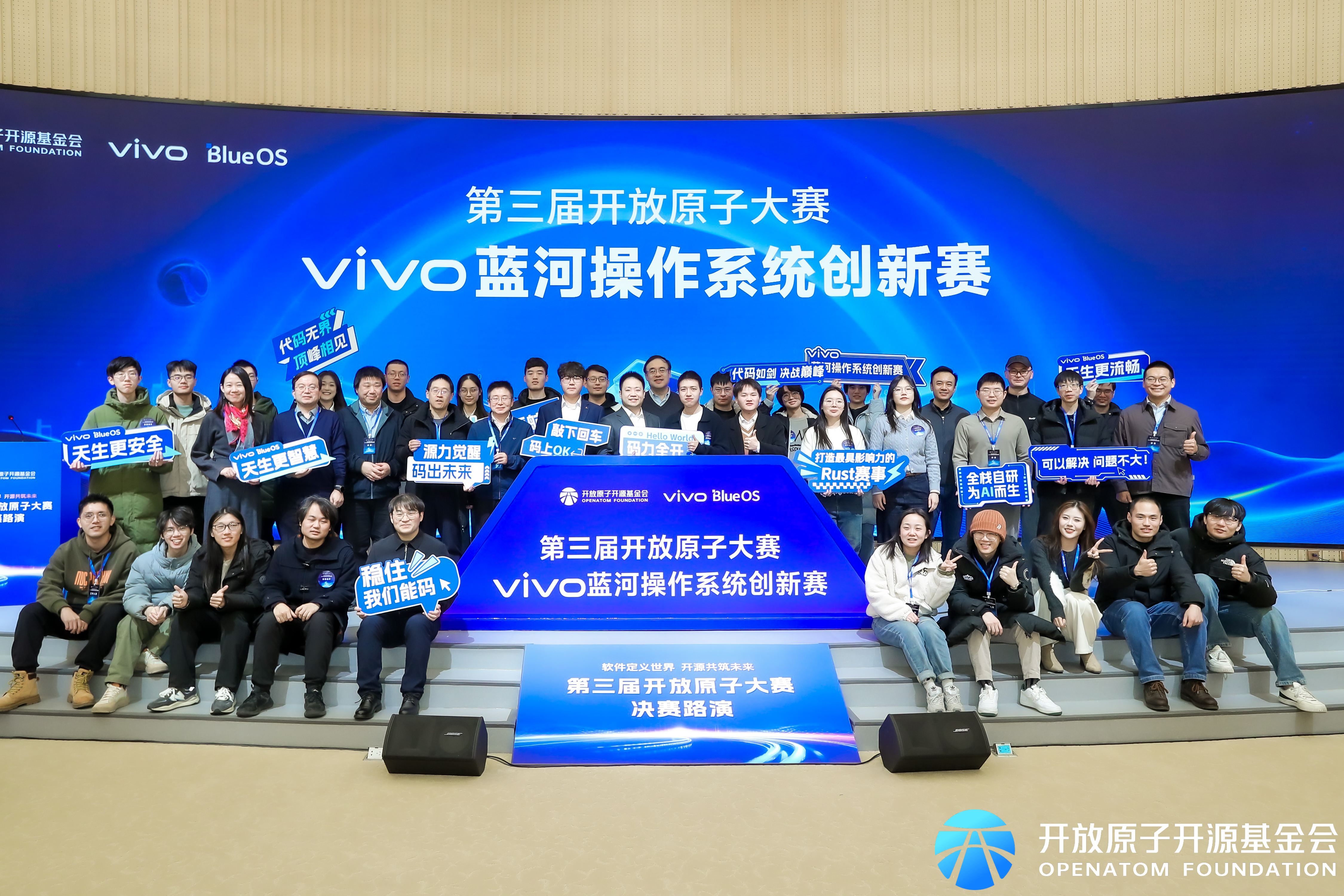
Statistics show that this competition attracted over 150 teams from more than 50 top universities, including Zhejiang University, Nanjing University, and the University of Science and Technology of China. As the scale of the competition continues to expand, the industry influence of the BlueOS Innovation Competition is also continuously increasing. Over the past three years, the competition has covered nearly a thousand teams and hundreds of universities, with a total prize pool of over 2 million yuan, exerting wide influence in the industry.
Through the "promoting research through competitions" model, vivo transforms real - world industry problems (such as C2Rust project - level translation) into research topics for university students. This initiative accelerates the verification and precipitation of cutting - edge technologies and cultivates a group of composite talents with Rust system development capabilities in the field of domestic basic software.
From in - depth full - stack self - research, to sharing through kernel open - source, and then to empowerment through top - level competitions, vivo has built a rigorous innovation closed - loop. This trinity strategic layout helps vivo establish its leading position in the Rust technology field.
At the critical juncture where AGI is reshaping digital infrastructure, vivo uses Rust as a starting point to promote the reconstruction of the underlying technology of operating systems. This not only enhances the technical barriers of the BlueOS operating system itself but also provides strong support for the Chinese basic software industry to gain the right to define the underlying technology in future international competitions.
With the continuous upgrade and iteration of the BlueOS operating system, the continuous activity of the "BlueKernel" open - source community, and the engineering implementation of the competition results, the "BlueOS era" of domestic operating systems is accelerating.