Challenges and Opportunities in the New Era of IoT Connectivity Opened by SGP.32 eSIM
The advantage of eSIM in enabling global IoT connectivity without a physical SIM card presents significant opportunities for enterprises: global IoT connectivity, lower operating costs, and more convenient device management. Especially after the GSMA introduced the Remote SIM Provisioning (RSP) standard SGP.32.
SGP.32 promises to unify and optimize the GSMA's RSP standard and promote the large - scale application of eSIM and iSIM technologies in the Internet of Things field.
Different from the previous SGP.02 and SGP.22 standards, SGP.32 is specifically tailored for IoT (Internet of Things) devices - especially those with minimal user interfaces or limited connectivity. It optimizes the ability to securely manage eSIM profiles on a large scale over - the - air (OTA) in device groups.
When using SGP.32, the trigger point for profile interaction can be either the device side or the cloud/server side. In other words, it supports both push and pull modes, while SGP.02 (push - only) and SGP.22 (pull - only) do not have this two - way flexibility.
The advantages of SGP.32 can be specifically divided into the following four points:
1. Designed for restricted IoT environments: Different from early standards, SGP.32 is optimized for devices with limited memory, unstable connectivity, and no user interface.
2. Modern, modular infrastructure: It introduces two new components: the IPA (IoT Profile Assistant) on the device side and the eIM (eSIM IoT Remote Manager) on the back - end, enabling lightweight and scalable configuration.
3. Based on IP, saying goodbye to SMS operations: SGP.32 replaces the cumbersome SMS - driven method with efficient IP protocols (such as CoAP and DTLS), thereby significantly improving reliability and performance.
4. Global scalability and flexibility: It enables enterprises to deploy and manage IoT devices globally, making connectivity and operator switching easier and smoother.
However, for many enterprises, the reality may be full of challenges. Even with SGP.32, large - scale deployment still poses challenges. The reason behind these challenges is that owning an eSIM is not just about embedding a chip; it also requires investment in infrastructure, systems, and professional capabilities.
In other words, success requires capabilities far beyond chip embedding, including in - depth integration with the device manufacturing process, a secure and stable remote configuration infrastructure, agreements with operators in multiple countries, and continuous device lifecycle management.
Attempting to manage these capabilities independently often requires huge investment and high risks. If an enterprise tries to take on all the complexity of deployment and operation independently, it may fall into a situation of high cost and high risk.
Therefore, forward - looking enterprises usually choose to cooperate with IoT service providers, leaving the complexity to professional teams to ensure that eSIM configuration is feasible and implemented smoothly. By choosing the right IoT service provider, enterprises can convert the potential of SGP.32 into real value.
How to choose an SGP.32 partner? It is necessary to ensure that they have the ability for large - scale deployment, the flexibility of non - binding with operators, complete regulatory compliance, and a complete SGP.32 infrastructure (such as SM - DP+, IPA, eSO, eIM). At the same time, they must ensure the success rate of profile switching offline, the performance of new profiles in terms of coverage, cost, and compliance, and the integrity of the device, security, and application management systems after switching.
Overall, SGP.32 eSIM is an important milestone in IoT connectivity. Although the technology is mature, to fully realize its value, professional infrastructure, ecological cooperation, and strategic planning are required. Choosing an experienced IoT service provider can smoothly, safely, and efficiently unleash the potential of SGP.32.
Wireless Logic is one of these experienced IoT service providers.
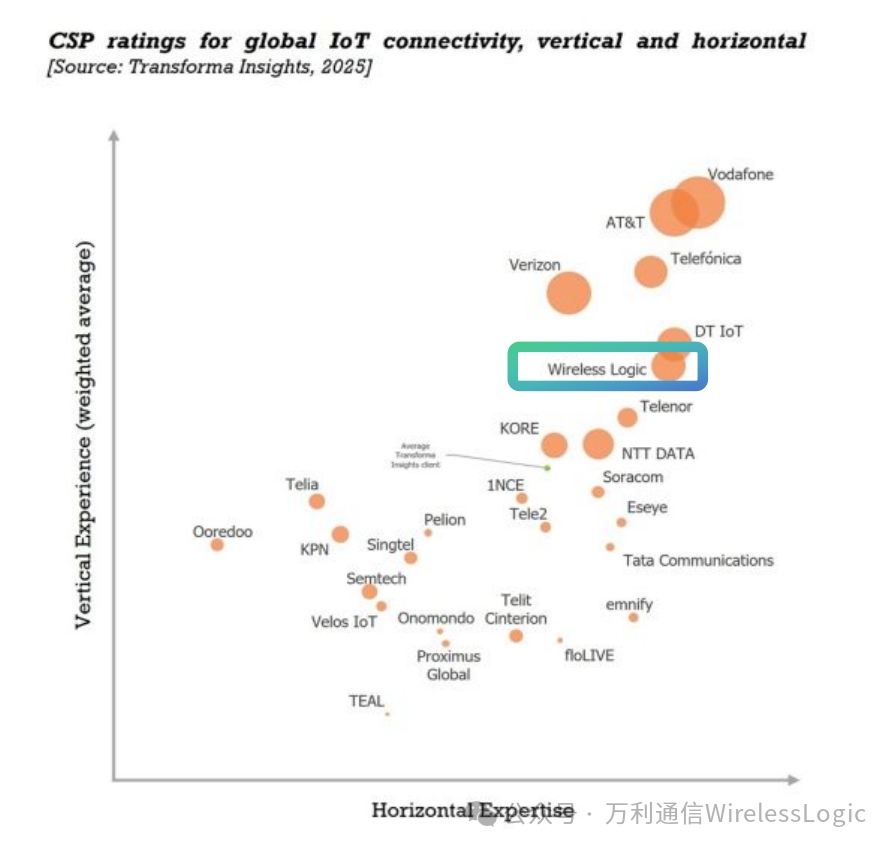
Wireless Logic has been included in the Transforma Insights annual CSP IoT industry benchmark report multiple times. This report tracks and analyzes leading global cellular IoT connectivity providers, and the listed providers are recognized for their scale, global service capabilities, and service innovation.
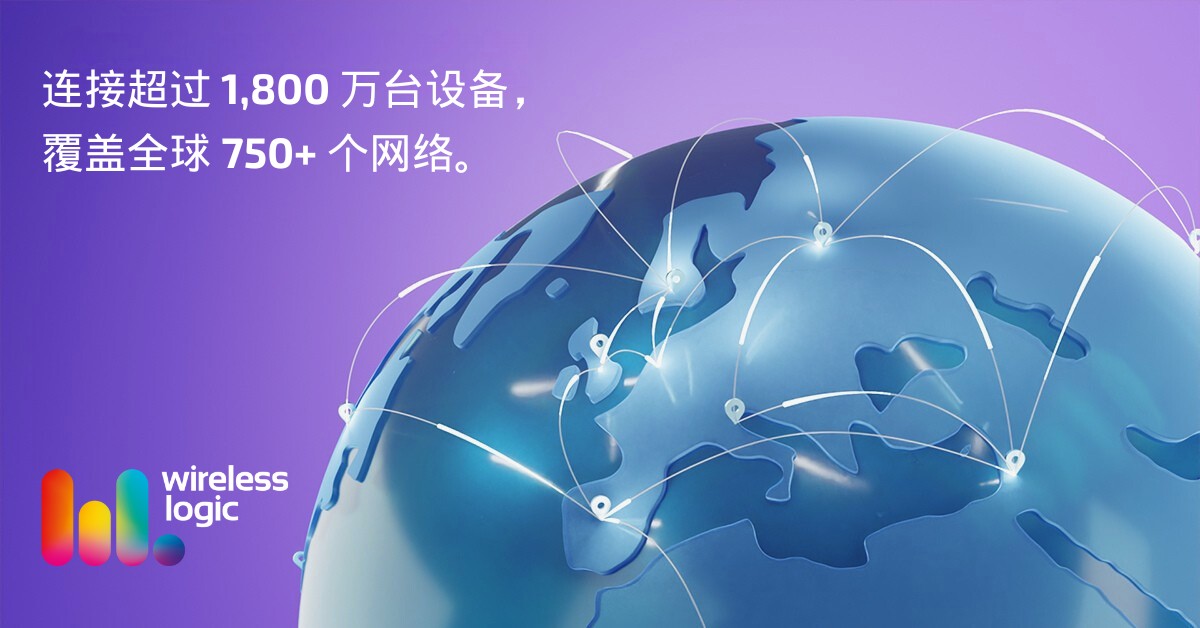
Over the years, Wireless Logic's global scale has continued to expand. Currently, it has branches in 22 countries and provides 24/7 global full - time service support through its operation centers in Asia, Europe, and the Americas.
Wireless Logic's innovation is not limited to IoT connectivity. Through network security, digital twin, and application enablement services, it also helps customers shorten development time, reduce operating costs, and more effectively manage the risks of IoT connectivity.
Previously, Wireless Logic also received a continuation fund of 2 billion euros ($2.3 billion) raised by private equity firm Montagu. According to people familiar with the matter, this transaction values Wireless Logic at approximately 3.5 billion pounds ($4.6 billion).
With its global connectivity ecosystem and powerful platform support, Wireless Logic can provide enterprises with: multi - network access and intelligent switching - helping devices maintain stable connectivity in various regions; localized compliant connectivity solutions - eliminating the risk of permanent roaming and meeting local regulatory requirements; a unified management platform - centrally monitoring SIM status, data usage, and costs; end - to - end secure connectivity - ensuring the integrity and security of data transmission.
Since entering the Chinese market in 2024, Wireless Logic has reached technical cooperation on global connectivity with Chinese technology enterprises in many fields such as communications, intelligent driving, mobile phone terminals, and security, providing efficient solutions for the global IoT of Chinese technology enterprises.
With its secure, compliant, and flexible connectivity services, Wireless Logic creates truly globally competitive IoT connectivity for enterprises, enabling enterprises to achieve a global intelligent layout in the context of increasingly complex regulations and continuously expanding connectivity scenarios.