Can you believe it? DeepSeek's development actually happened this year... How come time seems to pass both quickly and slowly?
As the New Year's Day is approaching, it's time for the (less - watched) Top 10 Global Scientific and Technological Advancements of the Year review!
This year, we've combined the year - end summaries of Nature and Science to list what we believe are the notable global scientific and technological advancements in 2025. To our delight, we found that nearly half of them are related to China!
The Booming Development of Renewable Energy
Since the Industrial Revolution, humans have been highly dependent on fossil fuels such as coal and oil for energy. These fuels have supported the development of industrial civilization but have also brought about a sharp increase in carbon emissions, leading to global warming.
Fortunately, renewable energy, represented by photovoltaic power generation, is booming. According to statistics from the global energy think - tank Ember, in 2025, the global power generation from renewable energy sources exceeded that from coal. The change in the energy landscape brings new hope for sustainable development, which is rare good news in the environmental field.
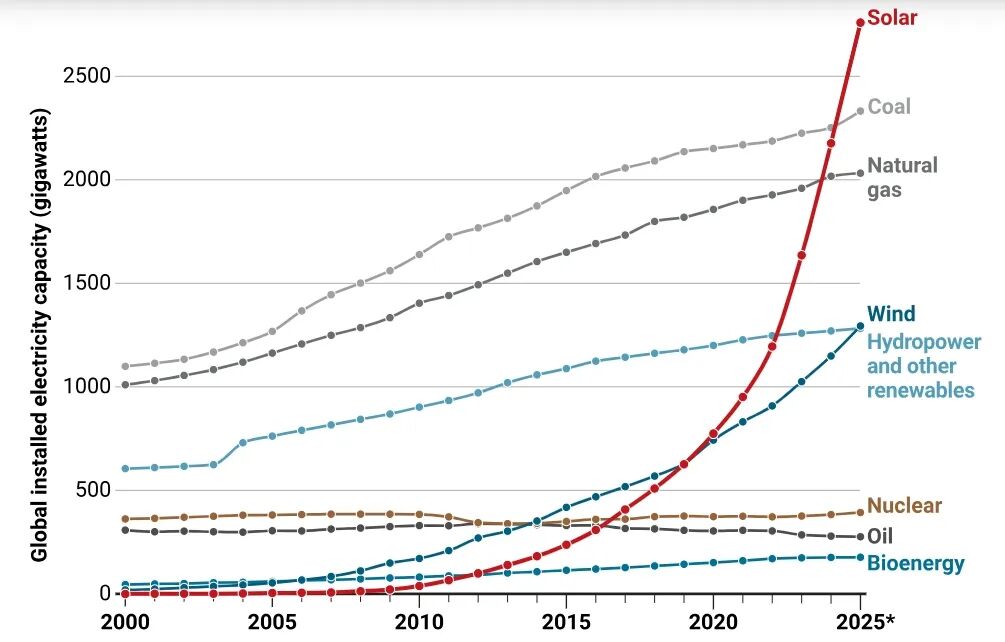
The rapid development of photovoltaic and wind power is leading humanity into a new era of clean energy | V. Penney/Science; (Data) Ember; BNEF
It's worth mentioning that China has played a crucial role in the development of new energy. Thanks to years of subsidies and support, China now dominates the production of technologies related to renewable energy. High - quality and low - cost Chinese equipment has made renewable energy a more economical choice, driving changes in the global energy landscape.
The First Individualized CRISPR Treatment
A baby named "KJ Muldoon" was included in Nature's Top 10 Scientific Figures of 2025. He is the world's first patient to receive customized CRISPR gene therapy.

Baby KJ Muldoon became the world's first patient to receive customized CRISPR treatment | Children's Hospital of Philadelphia
This little boy suffers from a fatal genetic disease called carbamoyl phosphate synthetase 1 (CPS1) deficiency. In response to his genetic mutation, the research team spent six months developing a personalized gene therapy plan for him.
Compared with general - purpose gene therapy, individualized customized therapy can address more diseases caused by rare genetic mutations. So far, this attempt has shown positive therapeutic effects without severe side effects. However, its long - term effects still need further observation.
The Emergence of DeepSeek
In January this year, DeepSeek launched the large - language model DeepSeek - R1 and a chatbot software based on this model. Throughout the year, DeepSeek not only broke the monopoly of American companies in the artificial intelligence market but also changed each of our lives.

The high - performance and free - to - use AI tool DeepSeek swept the world this year | pexels
DeepSeek - R1 is an "inference - type" large - language model. It excels at breaking down complex tasks into multiple steps and publicly demonstrates its thought process to users. It not only has excellent performance but also significantly reduces the cost of model training. The model was released with open weights, meaning it can be freely downloaded and extended, which is a boon for researchers.
In September this year, the DeepSeek team also published the detailed training process of the DeepSeek - R1 model in the journal Nature. This makes it the world's first mainstream large - language model to undergo peer review.
Chinese Scientist Du Mengran Discovers a Deep - Sea Ecosystem
Du Mengran, a geologist from the Institute of Deep - Sea Science and Engineering of the Chinese Academy of Sciences, and Liang Wenfeng from DeepSeek were included in Nature's Top 10 Figures of the Year.
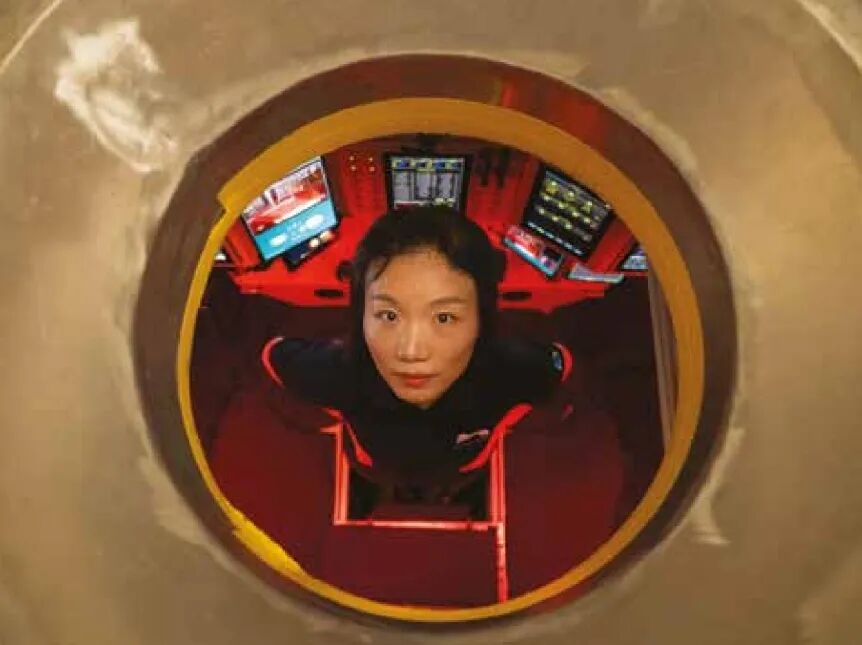
Billy H. C. Kwok for Nature
As the chief scientist, Du Mengran led her team on the "Fendouzhe" submersible to a depth of 9,533 meters in the Kuril - Kamchatka Trench in the Northwest Pacific Ocean, discovering the deepest known chemosynthetic animal ecosystem. These biological communities consist of tube worms, bivalve mollusks, etc., and they rely on chemical reactions for energy in the dark seabed.
This discovery has refreshed our understanding of the survival ability of life at extreme depths and provided a new perspective for exploring the complex mechanism of deep - sea carbon cycling.
Breakthrough in Proving the Three - Dimensional Kakeya Conjecture
The Kakeya conjecture is an important problem in the field of geometric measure theory. Its original version was proposed by Japanese mathematician Soichi Kakeya in 1917, and the modern version aims to prove that the minimum dimension required for a set of line - segments pointing in all directions in n - dimensional space is n.
In February 2025, Chinese mathematician Wang Hong and Joshua Zahl from the University of British Columbia jointly submitted a paper, announcing that they had proved the Kakeya conjecture in three - dimensional space. This breakthrough has received extensive attention this year, and Wang Hong has become a hot candidate for the Fields Medal, a well - known award in the mathematical community. (More reading: A 90s Chinese female mathematician Wang Hong solves a century - old problem and is likely to win the "Nobel Prize" in mathematics!)

Mathematician Wang Hong | Wikipedia
Chinese Researchers Discover a Heat - Resistant Gene in Rice
Researchers at Huazhong Agricultural University have discovered a key gene that enables rice crops to resist high temperatures.
Hot nights can lead to a decrease in rice yield and a decline in rice quality, making the texture coarser. Now, after more than a decade of exploration, Chinese researchers have found the key gene QT12 that controls this process. Experiments have confirmed that introducing heat - resistant alleles into rice or inactivating this gene through gene editing can effectively prevent rice yield losses during hot weather.

Against the backdrop of global warming, improving the heat resistance of food crops is crucial for ensuring food security | Wikipedia
Against the backdrop of global warming and frequent extreme weather, this discovery is very helpful for ensuring future food production. Japonica rice varieties that grow in cooler regions and have poor heat resistance may particularly benefit from this.
Significant Progress in the Treatment of Huntington's Disease
There has been significant progress in the treatment of the rare genetic disease Huntington's disease: Research shows that an experimental gene therapy has successfully slowed the clinical progression of the disease by 75%.
Huntington's disease (Huntington's chorea) is a degenerative disease caused by a genetic mutation. The abnormal proteins produced in patients' bodies lead to increasingly severe brain damage, ultimately resulting in disability and death.
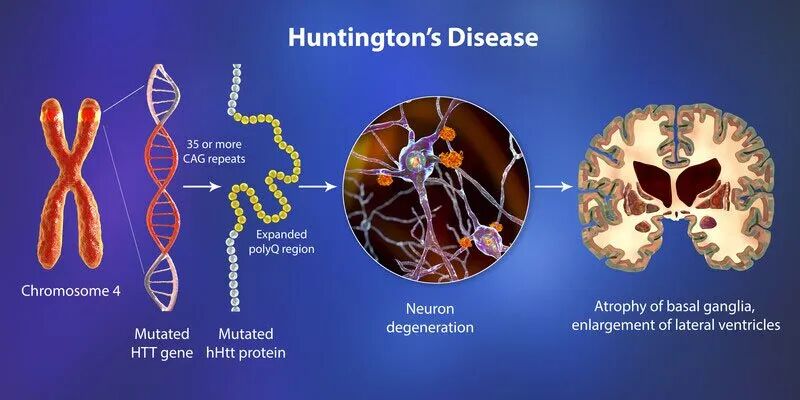
Huntington's disease is a disease in which abnormal proteins produced by faulty genes cause nerve damage | fcneurology.net
This new gene therapy is injected into the brain through a special neurosurgical procedure. With just one injection, it can continuously prevent the synthesis of abnormal proteins through microRNA. The new therapy has shown unprecedented and significant effects in clinical trials, and this is the first time that patients with Huntington's disease have received effective and targeted treatment.
The Completion of the Vera C. Rubin Observatory
In 2025, the Vera C. Rubin Observatory in northern Chile was completed and entered the preparation stage for observations. Next, it will cover the entire sky every three days and record a vast amount of data over a decade, revealing various changes occurring in the universe.

The Vera C. Rubin Observatory | Wikipedia
The core observation equipment of the Vera C. Rubin Observatory is the Simonyi Survey Telescope, which has a primary mirror with a diameter of up to 8.4 meters and a record - breaking 3.2 - billion - pixel large camera. It will capture visible changes in the southern sky with unprecedented completeness, detail, and speed, taking astronomy into a new era, moving away from fragmented and static target observations.
The rich observational data will lead to many new astronomical discoveries, some of which may far exceed our imagination.
Humans See the Appearance of Denisovans for the First Time
Denisovans are an extinct group of archaic humans. Like Neanderthals, they once coexisted with Homo sapiens on Earth. Thanks to the innovative DNA analysis method developed by Chinese researchers, we finally know the exact appearance of Denisovans this year.
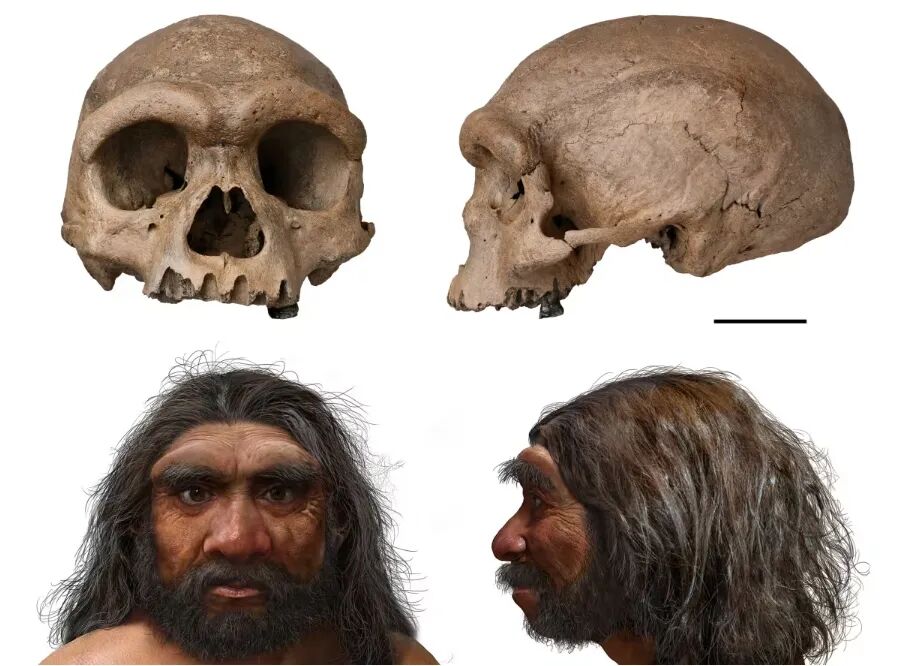
The reconstructed appearance of a Denisovan based on the Longgupo skull | Wei Gao / Chuang Zhao
This research was jointly carried out by the team led by Fu Qiaomei from the Institute of Vertebrate Paleontology and Paleoanthropology of the Chinese Academy of Sciences and the team led by Ji Qiang from Hebei GEO University. The researchers conducted mitochondrial DNA analysis on dental calculus samples and successfully confirmed that a prehistoric human skull (Longgupo skull) discovered in Harbin belongs to a Denisovan.
This skull has solved the long - standing mystery of the Denisovan's morphology and enhanced our understanding of the evolutionary history of archaic humans in East Asia.
Artificial Intelligence Transforms the Landscape of Scientific Research
2025 is a year when artificial intelligence has been widely popularized, and these AI models are gradually changing scientific research.
Throughout the year, many AI - related scientific research attempts have shown initial results. For example, a specially trained version of the large - language model Llama can find the optimal conditions for complex chemical reactions in just 15 experiments, which is equivalent to increasing the research speed by 5 - 10 times. In the field of biology, Google's "AI co - scientist" screens liver fibrosis treatment drugs by reading literature and proposing hypotheses, greatly improving efficiency and accuracy.
The future of AI - accelerated scientific research is worth looking forward to. However, on the other hand, artificial intelligence has also made it easier to fabricate false data and produce low - quality papers. How to distinguish information in this new era has become an issue that both scientists and ordinary people must face.
References
[1] https://www.science.org/content/article/breakthrough - 2025
[2] https://www.newscientist.com/article/2504428 - gene - therapy - for - huntingtons - disease - showed - great - promise - in - 2025/
[3] https://www.nature.com/articles/d41586 - 025 - 03843 - 6
[4] https://www.science.org/content/article/major - breakthrough - natural - gene - variant - protects - rice - heat - waves
This article is from the WeChat official account "Guokr" (ID: Guokr42), written by Steed, You Shiyou, Odette, and Chuang Qiaoyu, and is published by 36Kr with permission.