In the era of AI, what should we learn to avoid being eliminated?
When Sam Altman, the CEO of OpenAI, and his same - sex partner, Oliver Mulherin, welcomed their first child in February 2025, they were asked by reporters:
"What kind of education would you recommend for your son so that he won't be easily replaced by AI in the next 30 years?"
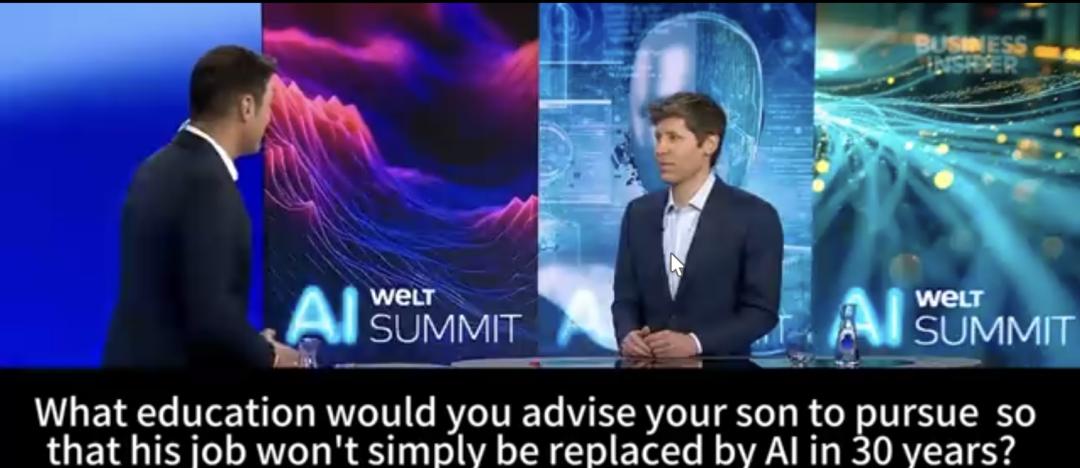
Altman gave three answers:
1. The meta - cognitive ability to learn "how to learn" (The meta - skill of learning how to learn)
2. The ability to adapt to change (learning to adapt)
3. The ability to understand people (learning how to figure out what people want).
These are also the three core abilities that YouCore has been committed to since 2017: Learning ability, thinking ability, and interpersonal ability.
01
The meta - cognitive ability to learn "how to learn"
Sam Altman said that even without AI, society would eliminate half of the jobs every 75 years. The emergence of AI has just accelerated this process.
This means that if we only focus on learning a certain popular technology or tool today, such as the current popular Prompt engineering or a certain AI painting software, it's very likely that these skills will be outdated by the time our children grow up.
So, in the era of AI, the key is not what we can do now, but how quickly we can learn new things.
In the future, the iteration of technology will accelerate, and many new products and tools will emerge. Especially, there are many new technologies and tools that haven't even shown a sign yet, so it's impossible to learn them in advance.
However, if you learn how to learn, you're like a person with excellent fishing skills. No matter which fishing pond you go to, you can return with a full load faster than others.
So, how can we improve the meta - cognitive ability to learn "how to learn"?
The key is to better understand and control your own learning process. There are four specific key points:
1. Be able to evaluate the difficulty of the learning object and the approximate time required for this learning
Take school - age children as an example. They should develop the good habit of previewing.
Through previewing, they can roughly judge whether tomorrow's math content is a "small slope" or "Mount Everest", and then arrange their time reasonably.
2. Be able to more objectively recognize the strength of your own learning motivation and the level of your learning in this field
Through previewing, children can also clearly know whether they are full of curiosity (strong motivation) or feel headache (weak motivation) about new knowledge; whether they already understand most of it or are completely confused.
This self - awareness is the prerequisite for efficient learning.
3. Be able to plan learning goals and plans, and choose appropriate learning strategies
By formulating a learning plan, you can choose different learning materials, different learning strategies, and arrange different learning cycles for different learning contents.
For example, for the tasks of word memorization and math calculation problems, directly choose the exercise books matching the textbooks, adopt the repetitive learning strategy, and complete the tasks within a time limit of 10 minutes;
For the task of Chinese reading comprehension, select special teaching - aid books for reading comprehension, adopt the elaborative learning strategy, and set aside at least 30 minutes for learning.
4. Monitor your own learning situation and adjust according to the learning effect
Through the after - class exercises of each lesson and the tests of each unit, promptly evaluate your mastery situation, and evaluate whether to adjust the learning strategy based on the evaluation results.
For example, if you fail to get all the Chinese new words correct in dictation three times in a row, you need to evaluate whether the repetitive strategy of simply copying multiple times is not suitable for you?
Should you use the organizational learning strategy, such as using mind maps to associate similar characters by radicals?
Should you adopt the multi - sensory elaborative strategy, such as copying while reading aloud?
Should you adopt the immediate memory strategy, such as covering the new words and writing them down for the second time after writing each time?
As parents, shifting the focus from "what the child learns" to "how the child learns" can better help them develop the learning ability to adapt to the future AI era.
02
The thinking ability to adapt and create
Humans have reached the top of the Earth's biological chain thanks to their intelligence.
Therefore, in the past 100,000 years, the technological revolutions of humanity have, in essence, been about saving more time for more mental activities and creation.
From eating raw food to cooked food, we saved the time for chewing and digestion;
From hunting and gathering to farming and settling down, we saved the time for searching for food everywhere;
From relying on muscle strength to relying on energy and mechanical power, we saved the time for physical labor.
It is these saved times that have given us the opportunity to think and create, and for the first time, the number of mental workers has exceeded that of physical workers.
Today, what AI is doing is a continuation of this process - liberating us from low - level, repetitive mental activities and enabling us to engage in more advanced thinking and creation.
Jobs such as junior programmers, graphic designers, and customer service representatives, which highly rely on rules and patterns, are being replaced on a large scale. Positions such as accountants, junior lawyers, and human resources are also facing the same challenges.
It can be predicted that with the development of AI and robot technology, except for those engaged in basic theoretical research and major technological breakthroughs, in the future, the vast majority of people will not need technical abilities (AI and machines will do it for them), and technical abilities will give way to the ability to use technology for creation.
Therefore, as future workers, our brains need to be able to engage in more advanced thinking and creation.
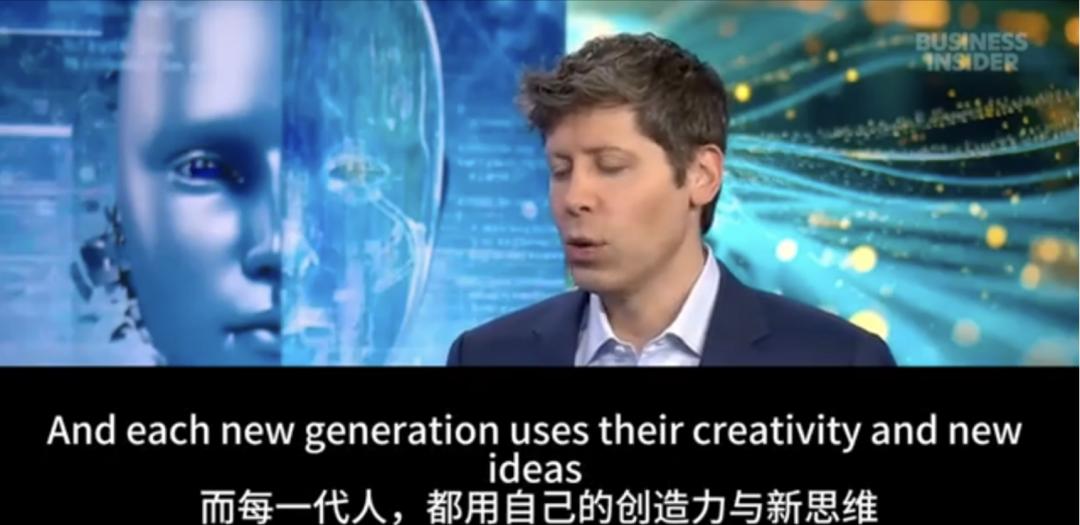
As Altman said, each generation uses their creativity and new thinking, along with the tools left by their predecessors, to create an amazing new world.


So, specifically, how can we make our brains engage in more advanced thinking and creation?
You can do it in two stages:
1. The primary stage: Make good use of AI
First of all, you have to actively embrace AI tools, master them proficiently, and make them an extension of your thinking and an amplifier of your abilities.
But remember, use AI to amplify your thinking advantages, rather than replace your thinking.
For example, you can let AI help you collect materials, sort out frameworks, and generate first drafts. However, the final framework construction, viewpoint refinement, and logical sorting must be led by yourself.
You're not an AI operator, but its product manager, deciding the direction and quality of the final product.
You can refer to the article "Why Do We Still Need to Train Our Own Thinking Abilities with AI?" for more specific methods.
2. The advanced stage: Be more creative than AI
Currently, AI mainly relies on human language data for combination and processing (commonly known as a "patchwork monster"). Real creation still requires human input.
As the famous director James Cameron said at the premiere of "Avatar 3":
"AI can make a movie similar to 'Avatar', but it couldn't have made it before 'Avatar' was released."

This means that we can't be satisfied with the passing results output by AI. Instead, we should take it as a starting point and try our best to do better than AI.
AI can easily help you improve from 0 to 60 points. However, the most difficult and glorious journey from 90 to 100 points can only rely on human - unique insight, aesthetics, and creativity.
Take writing as an example.
For a person who is not good at writing, using AI to generate articles is definitely faster and better than writing by themselves.
However, it's very difficult for the articles generated by AI to be better than those I write.
Although AI has indeed improved my writing efficiency, I still have to conceive or refine and adjust the article framework every time. The final draft also has to be manually added, deleted, and revised by me to reach the level for final publication.
Not to mention the hope of writing better than senior writers.
The same is true for video editing.
The content edited by AI is definitely much better than what I, an amateur video editor, can do.
However, it can't replicate the emotional tension created by a senior video editor through precise rhythm control and shot language, let alone create the "stroke of genius" of a great director like Cameron.
03
The ability to leverage interpersonal relationships
In the future, more emphasis will be placed on interpersonal communication skills, and less on pure technical skills.
We've witnessed many stories of analytical or professional skills being replaced.
Before the emergence of today's AI, AlphaGo Zero of the previous - generation technology could easily defeat the world's top professional Go players after only three days of self - study;
In terms of basic legal consultation skills, IBM Watson of the previous - previous - generation technology could easily achieve an accuracy rate of over 90%, defeating the 70% accuracy rate of graduates from Harvard and Stanford Law Schools and taking away 76% of their jobs.
In terms of investment analysis skills, top financial and securities institutions such as Goldman Sachs and the New York Stock Exchange are already inseparable from AI for a single second, and the once - elite traders have disappeared.
The history of human social development is a history of closer interpersonal relationships.
From the accidental encounters in the gathering society, to the horse - and - carriage exchanges in the agricultural society, to the voice and radio waves in the industrial society, to the Internet in the information age, to today's mobile Internet, and perhaps to the digital twin universe in the future.
The cost of communication between people is getting lower and lower, and the methods are becoming more and more convenient.
In the future, there will be fewer and fewer jobs that can be completed alone without interacting with others (because they are too easy to be programmed), while positions that emphasize communication, collaboration, empathy, and leadership will become increasingly valuable.
Why is that?
Because compared with AI, humans are better at perceiving the real needs and emotions hidden beneath others' words.
Compared with AI, the concern and sympathy expressed by humans can more easily touch another person.
You can try to compare:
When you're in a bad mood, AI can accompany you tirelessly for a whole day and offer you a hundred solutions with citations from classics.
However, this may not be as comforting as a good friend calling you late at night and simply listening to you complain for ten minutes without saying a word.
No matter how many different compliments AI gives you, they can't compare to a single public praise from your boss.
As social animals, the needs for social interaction, belonging, and respect are deeply engraved in our genes.
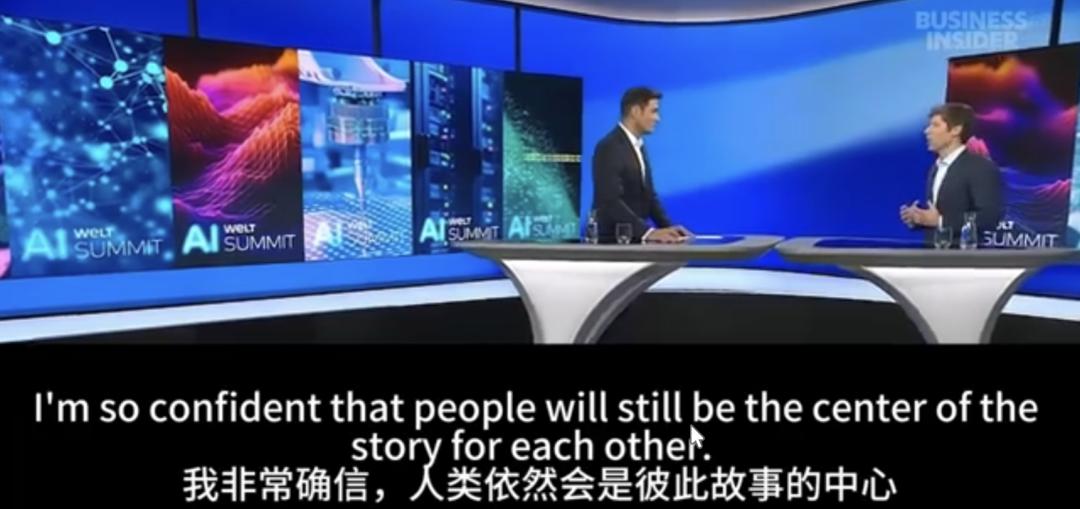
As Sam Altman said: "Humans will still be at the center of each other's stories."

The end - goal of AI technology is to better serve humans;
And the essence of human activities is to better meet each other's needs.
04
Summary
In the future, there may be no jobs that won't be eliminated. From our generation on, we may all have to face two or more career changes.
Although we can't, like our ancestors, stay in the same job until retirement, we can still grasp the three fundamental trends of future changes:
◆ Social changes will be faster and faster
◆ The role of advanced mental activities will become more and more important
◆ Interpersonal relationships will become more and more important
Facing the uncertain future, the best investment is in ourselves. Deliberately polish our three core abilities:
1. Learning ability: The agile ability to adapt to the rapid changes in the future.
2. Thinking ability: The ability