In 2025, embodied intelligence is punishing the "holders".
By the end of 2025, the atmosphere in the embodied intelligence circle was so strange that it was hard to understand.
The supply chain was like a competition of "who's worse off". To clear inventories, some manufacturers were eager to slash prices to the bone, creating an illusion that robots would soon be as common as cabbages. Normally, the market should be rushing to grab these cheap deals at this time, right?
But an extremely ironic scene occurred on December 22nd.
At the Robot Leasing Ecosystem Summit in Shanghai, what I saw was not desolation but crowds - so many people that there was hardly any room to stand in the aisles. This strong contrast created a moment of magical realism: Everyone was talking about the popularization of technology, but their actions were honest as they "abstained" from buying. No one dared to make a purchase.
I saw the eye - catching red data on the summit's big screen - "The market size is aiming for 10 billion next year". In fact, I had my doubts. As an old observer, I knew there was a lot of exaggeration in this figure. But after I digested tens of thousands of words of meeting minutes and had in - depth conversations with more than a dozen industry insiders from VPs to small business owners on - site, I detected a shared but unspoken "risk - aversion sentiment" among B - side bosses.
This is not about "value reshaping" as the nice term suggests, nor is it about the sentiment of the "sharing economy". Peel off those fancy PPTs, and the core logic is actually quite simple. It's just one sentence:
Robots are evolving too fast these days. Whoever buys them is a big fool.
The "Violent Replay" of Moore's Law in the Physical World
In the past two years, the reason people didn't buy robots was simple: they were too expensive. A humanoid robot could cost hundreds of thousands or even millions of dollars. Except for scientific research and using them to decorate showrooms, no normal enterprise could justify the cost.
But in 2025, things were different. The price did come down. However, the strange thing was that people didn't buy them this year because they "didn't dare to".
This sense of fear was very real on - site. Deng Taihua, a partner of Zhiyuan Robotics, told a joke on stage to liven up the atmosphere. He said, "The speed of our industry is incredibly fast now. At the beginning of the year, the products we released walked like old ladies, wobbling and afraid of falling. By the end of the year, the iterative version of the same model can sing, dance, rap, and even do backflips."
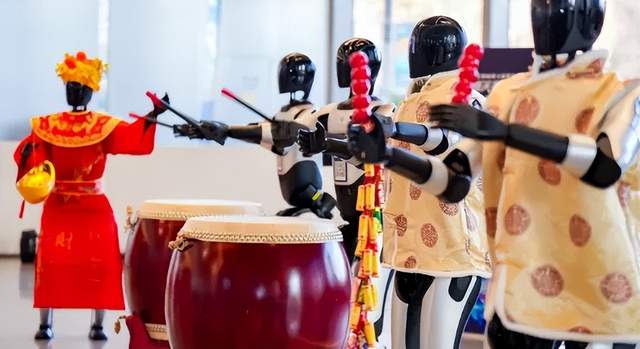
The audience burst into laughter and thunderous applause. But as I sat in the audience, looking at several attendees who were obviously from the B - side (such as catering chains and property management companies), their faces showed no signs of amusement. Instead, they frowned tightly.
For the business owners who actually pay the money, this is not a joke at all. It's a horror story.
Think about it. You're the CFO of a company. You spend a large sum of money to purchase a batch of robots as fixed assets, hoping they'll pay off in three years. But three months later, your neighboring competitor leases a batch of new - model robots.
Even though the exteriors may look similar, the internals are completely different. Their joint motors use the latest torque control technology, outperforming yours in terms of response speed and load - bearing capacity. Their batteries use a new solid - state solution and can run for half a day without charging, while yours need to find a charging station after two hours. The most crucial part is the dexterous hand. Yours can only grab big apples, while theirs can already pick up embroidery needles.
At this point, the equipment that represented "high - tech" just three months ago instantly becomes "industrial waste". What else can you do with it except let it gather dust in the warehouse or sell it at a low price to second - hand dealers who are even reluctant to take it?
Currently, embodied intelligence is in the "adolescence" when the hardware architecture is the most unstable. Instead of the "incremental innovation" like in the smartphone industry, it's a violent replay of Moore's Law in the physical world.
I talked to a general manager who makes servo motors. He complained to me, "The current solutions change every quarter. In March, we were still competing in the field of coreless motors. By June, everyone started working on linear actuators. And by the end of the year, we began researching bionic muscles. In this rhythm, who dares to stockpile goods? Who dares to buy them outright?"
At this time, "ownership" is the biggest risk.
So, rather than saying that the leasing model is so advanced, it's more accurate to say that it's a forced choice. Enterprises would rather pay a seemingly unreasonable monthly rent than bear the heavy burden of "technological obsolescence". This model is simply a "platform ticket" that enterprises buy with money to ensure they can get out at any time for self - protection.
Pay for "Capabilities", Not for "Scrap Metal"
Besides the fear of obsolescence, there's a more painful realization behind this wave of leasing fever, which is also a lesson that many enterprises learned the hard way: A robot without content is just a pile of scrap metal.
Recall 2024. At that time, a batch of so - called "low - cost robots" emerged on the market. Under the banner of popularization, they kept the prices very low. Many bosses bought a few out of curiosity.
What was the result? They found that these robots were "empty - headed".
It could walk and avoid obstacles, but then what? That was it.
Take Haidilao or similar catering scenarios as an example. Do they introduce robots just to carry plates? If it's just for plate - carrying, a delivery robot that costs a thousand yuan is much more stable than a humanoid robot. What they want is the "style" and emotional value that a humanoid robot brings.
They need the robot to sing birthday songs to customers celebrating birthdays, dance the popular "Subject 3" dance for bored customers in the waiting area, and even write the Chinese character "Fu" with a brush to give blessings during the Spring Festival.
These functions may seem simple in videos, but for non - technical enterprises, implementing them on a specific machine is like crossing a chasm.
Where can a hot - pot restaurant owner or a shopping mall manager find engineers who understand ROS (Robot Operating System)? Where can they find tuners who understand large - model prompt engineering? Where can they find experts who can write motion - control algorithms? Even if they can find them, the salary cost may be ten times higher than buying the robot.
This is completely unrealistic.
So, platforms like "Qingtian Rent" are popular now. The fundamental reason is not that they have a large number of robots, but that they have packaged these "tricks". It's a bit like today's mobile phones. The hardware itself is not valuable anymore; it can even be given away for free. What's valuable is the App Store, and apps like WeChat, Douyin, and Honor of Kings that you can download and use immediately.
I noticed an interesting detail at the summit. A customer who does exhibition planning was discussing requirements with a leasing company. He didn't ask at all about the robot's torque or its computing power in Tops. He only asked, "I'm hosting an anime exhibition. Can your robot dance 'Gokuraku Jodo'? Can it recognize the costumes of Cosplayers and greet them?"
The leasing company immediately took out a tablet, opened the backend, and showed him, "No problem. We've connected to Zhiyuan's Lingchuang platform. This skill pack was just updated yesterday. Let me give you a demonstration."
Get it? Now, businesses lease robots just like ordering dishes.
This sense of "ready - to - use" is the real reason that makes B - side customers pay. As for whether it's the "Lingchuang platform" or some large model behind it, customers don't care at all. They only care whether this thing can attract customers for them immediately and generate revenue right away.
The "Shared Bicycle Moment" of Embodied Intelligence
There was a term that the industry used to often mention, called Sim2Real (from simulation to reality). This term sounds very geeky and advanced, but in actual commercial implementation, it's almost a synonym for a nightmare.
In 2023 and even early 2024, if you wanted to rent a robot for an event in a shopping mall, the process was like this:
One week before the event, the technical team had to take the robot there. First, they had to map the area. Even for a few - hundred - square - meter atrium, they had to push the robot around several times. Then they had to adjust the parameters. Is the floor slippery? Will the light interfere with the camera? Is there any reflection from the glass curtain wall nearby?
After a week of hard work, the technicians were exhausted. And on the day of the event, they might only use the robot for four hours. Moreover, during this period, if the mall moved a flower pot or changed the carpet, the robot might just stand there spinning in circles.
With this kind of efficiency and cost, whoever rented the robot would be frustrated. The so - called "poor generalization ability" is reflected in the business report as an extremely low ROI (Return on Investment).
During the group interview session, I specifically asked Jiang Qingsong from Zhiyuan about this question very straightforwardly: "Can the current technology completely eliminate this debugging period? If not, leasing is just a false proposition."
Jiang Qingsong didn't go into too many obscure algorithm theories. He directly mentioned the concepts of "cloud brain" and "plug - and - play".
He said that the logic has changed now. Robots don't need to memorize every map by rote, nor do they need to adjust parameters for each type of floor material. The current VLA (Vision - Language - Action) large model gives robots general knowledge ability.
"For the same dance, if different customers need it, the robot just needs to connect to the platform, click one - click download, and it will automatically learn the ability and then can output it with one click. It's ready to use right out of the box."
As a media person, I'm still a bit skeptical about the complete "zero - debugging" (after all, the on - site network environment is unpredictable). But from the on - site real - machine demonstration at the summit, it's definitely much better than the previous "high - maintenance" operation and maintenance.
If embodied intelligence can really be as convenient as a shared bicycle, where you scan the code, unlock it, and ride away on any road surface, whether it's a concrete or asphalt road, then this market can be considered to have truly entered the mainstream. Otherwise, it will always be just a toy in the laboratory.
Put a Price on the "Fear of the Uncontrollable"
Of course, the biggest risk in leasing doesn't actually lie in technology but in liability. This is also the topic that B - side bosses discussed the most outside the conference venue.
There are people coming and going in the shopping mall, and naughty kids running around everywhere. If a several - hundred - pound metal robot malfunctions due to a sensor failure and suddenly attacks someone, how should this liability be calculated? Should the tenant pay? The platform? Or the manufacturer?
Conversely, if the robot is pushed down by onlookers or short - circuited after being splashed with cola, who should bear the loss of this hundreds - of - thousands - of - dollars equipment?
In the past, these were all issues that led to disputes. Contracts could be dozens of pages long, filled with exemption clauses. But an interesting thing about this summit is that insurance companies finally entered the scene.
And it's not a superficial cooperation. They have actually launched "body insurance" and "third - party liability insurance" specifically for embodied intelligence.
I think this is more important than any algorithm breakthrough.
Why? Because when insurance companies - the most shrewd and risk - averse institutions in the world - start to price the risk of "whether a robot will cause trouble", it means that the reliability of these robots has finally reached a passing level. It means that they've had actuaries calculate, and they believe that these robots are mostly safe. Even if something goes wrong, the probability is within a controllable range.
Moreover, leasing manufacturers have become smarter. They know that customers are afraid of taking on liability, so they've established a very strict "access mechanism".
Jiang Qingsong mentioned that they have a filing and promotion mechanism for "robot operators". Just like you need a license to operate an excavator, you also need a license to operate a humanoid robot.
Combined with the backend data monitoring, the safety factor is maximized - even if there's just a slight abnormality in the vibration curve of the joint motor, the cloud often detects it before the people on - site.
With this combination of "insurance coverage + licensed operation + data monitoring", although it's not completely foolproof, it at least turns the "fear of the unknown" into a "calculable cost". For business owners, this is enough for them to dare to sign the contract.
Finally
After writing all this, does it seem that the leasing model is the perfect solution for the implementation of embodied intelligence?
However, it's not.
As I was organizing materials and looking at those exciting data, I always had a nagging doubt in my mind. As the author of "Technology Can't Be Cold", I feel it's my responsibility to pour some cold water when everyone is getting carried away.
Although leasing is good as it solves the cost problem and the technological anxiety, it's making enterprises lose a sense of "control".
This is not just about money.
Think about it. When the robots you lease are running around in your factory's production line or in your shopping mall store every day, where do the images captured by their cameras and the data collected by their sensors (such as your production rhythm, your customer flow heat map, and even your employees' working conditions) finally end up? On whose server?
Yours? The leasing platform's? Or the robot manufacturer's?
In current leasing contracts, the definition of data sovereignty is often vague, or even a one - sided unfair clause. The platform usually claims the right to use the data by default under the pretext of "optimizing the algorithm".
If one day, you don't renew the lease, or the platform goes bankrupt (which is quite common in the startup industry), can you take away this accumulated business data that's crucial to your enterprise? Or will you find yourself "held hostage" by the platform?
It's like when you've used a SaaS software for several years and suddenly find that you can't export your data. That sense of despair is fatal.
Currently, no one is talking about this. Everyone is busy seizing the market, discussing scale, and striving for that 1 - billion - yuan KPI. But beneath the bustling "1 - billion - yuan expectation", this vague handling of data sovereignty and this vulnerability of the supply chain that's extremely dependent on cloud services may be the biggest risks in the future.
In 2025, robots have changed from "exhibition pieces" to "workers". There's no denying this. But who does this worker really answer to? Whose hands hold its "soul"?
This is probably the most important question that should be discussed next year but is also the most easily overlooked one.
This article is from the WeChat official account "Technology Can't Be Cold", author: Balang. It is published by 36Kr with authorization.