Li Shufu Invests 4.2 Billion, Reviving a Domestic Car Manufacturer with Only 16 Monthly Sales
Polestar has been saved.
Two consecutive new announcements officially stated that this car brand has just received a lifeline of 6.3 billion yuan.
The reason for saying "saved" is that this company only sold 163 cars in China in the first ten months; it had lost 11 billion yuan in nine months this year, and at the end of the third quarter, its cash reserve was only 7 billion yuan, a critical juncture.
Without a cash infusion, it might not survive a year. However, even after the infusion, the burden on Polestar remains heavy.
Who stepped in at this critical moment?
Its "father" - Geely under the leadership of Li Shufu.
Geely Infuses 4.2 Billion Yuan into Polestar
Li Shufu didn't give up on Polestar.
Among the two lifelines Polestar just received:
One came from its largest shareholder, Geely: Geely will provide Polestar with a $600 million subordinated term loan, equivalent to approximately 4.2 billion yuan in RMB.
The other was a subsequent equity investment, participated in by Banco Bilbao Vizcaya Argentaria and Natixis, with each contributing $150 million (about 1.05 billion yuan).
It has to be said that the arrival of this $900 million (about 6.3 billion yuan) is like a timely rain for Polestar.
Because the company is currently in a difficult situation, especially in China, where the sales performance is the most obvious:
In the first nine months of this year, Polestar's cumulative global sales reached 44,482 cars, a year-on-year increase of 36.5%.
However, in the Chinese market, Polestar only sold 163 cars in the first ten months of this year, an average of 16 cars per month.
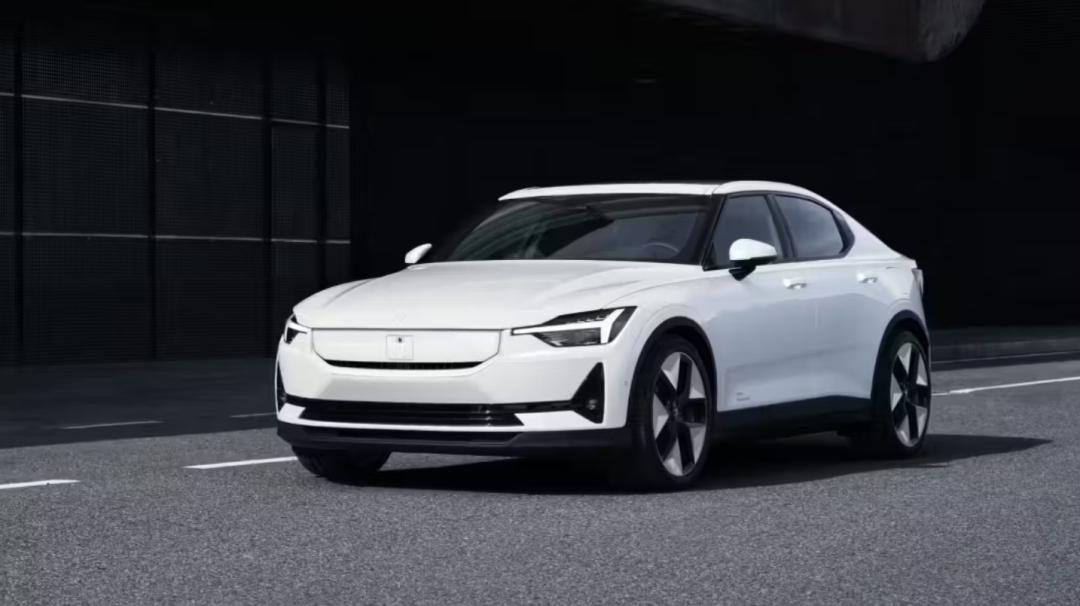
The difficulties are also clearly visible in the financial reports:
Although the company's revenue in the first three quarters increased by 49% year-on-year, reaching $2.17 billion (about 15.25 billion yuan).
Its gross profit margin dropped to -34.5%, significantly lower than -2.1% in the same period last year; the net loss in the first three quarters was $1.558 billion (10.95 billion yuan), a 79.7% increase compared to the same period last year.
This was due to the impact of tariffs. Polestar reduced the recoverable value of the Polestar 3 to $25 million, resulting in an asset impairment loss of $739 million.
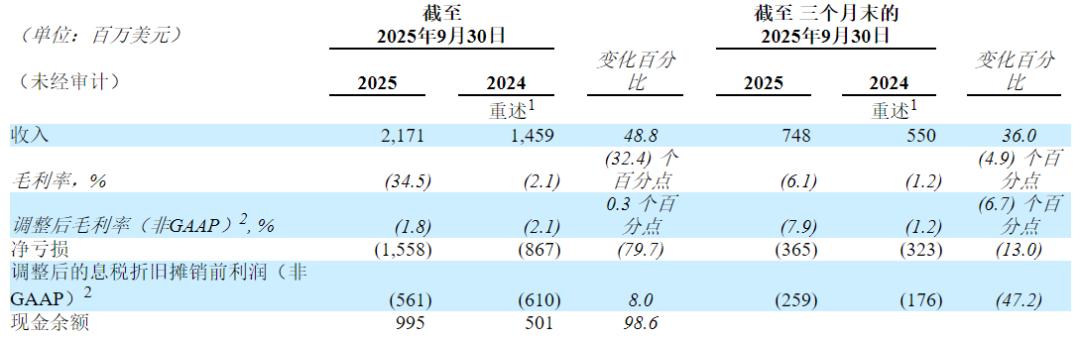
As of the end of the third quarter of this year, Polestar's cash balance was $995 million (about 7 billion yuan).
Judging from the loss rate, without financing, the cash reserve might only last for a year, which is really tight.
Recalling its past extravagance, Polestar spent $7 million on a single advertisement during the Super Bowl, the "Spring Festival Gala" in the United States. In those precious 30 seconds, it even implied criticism of Tesla, Volkswagen, and various new energy vehicle companies.
I wonder if Polestar would feel heartache looking back at such a wasteful move now...
Polestar is also troubled by pressure from the capital market. Compared with the beginning of this year, Polestar's stock price has dropped by about 57%. Compared with the $279 stock price when it listed on the NASDAQ in 2021, it has dropped by more than 95%.
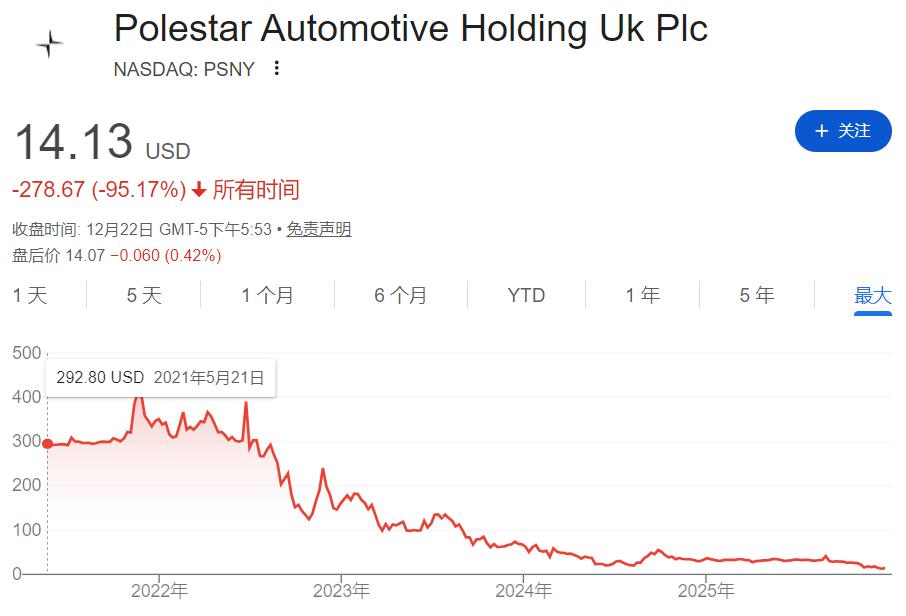
After reaching its highest point this year in August, its stock price started a continuous decline, falling below $1. As a result, Polestar received a delisting warning from the NASDAQ.
At the beginning of this month, Polestar tried to rescue its stock price through a "reverse stock split", adjusting the ADS ratio from 1:1 to 1:30.
The current stock price is $14.13. If calculated based on the pre-split ratio, the stock price has dropped to $0.47.
Except for its overseas sales, Polestar's current situation can hardly be considered positive from any perspective.
Even so, Geely still chose to be Polestar's financial backer. Does it mean that Polestar still has some potential?
Why Doesn't Li Shufu Want to Give Up on Polestar?
There is actually a link between Geely and Polestar, which is Volvo.
Let's start with Polestar. Its predecessor was established in 1996 as a racing car manufacturer. Later, it cooperated with Volvo, another Swedish car company. Its main task was to conduct in-depth performance development and modification based on Volvo's mass-produced cars.
Until 2015, Volvo officially acquired Polestar in full, and since then, Polestar has become Volvo's in-house high-performance R & D department.
Meanwhile, on another timeline, Geely completed the acquisition of all the equity of Volvo Car Corporation in 2010. Since then, Volvo and its assets have become part of Geely's ecosystem.
The two timelines finally converged in 2017 -
Polestar announced its separation from its status as a Volvo department and became an independent high-performance electric vehicle brand jointly owned by Volvo and Geely.
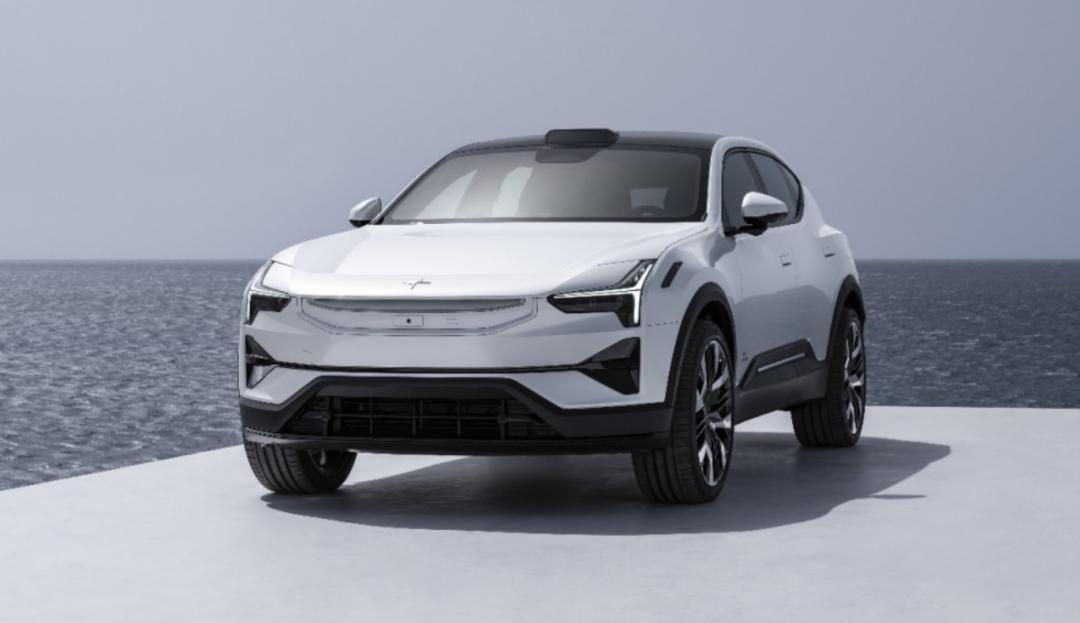
Since Polestar's independence, Geely has played the role of a "big family leader", providing all-round support in terms of funds, technology, production, and global networks.
First, there is the most direct and crucial support, capital infusion.
Since the establishment of the new Polestar brand, the company has been in long - term losses, and Geely has been continuously filling the financial gap for Polestar over the years.
Geely initially injected capital into Polestar through a joint - venture company, and later conducted multiple equity financings through investment platforms such as PSD Investment under Li Shufu.
Even in June this year, Polestar announced that it had received a $200 million investment from PSD Investment.
In terms of technology and resources, Geely also provided support.
Many of Polestar's main models are built on Geely's pure - electric or fuel - powered platforms. For example, Polestar 2 uses the CMA platform jointly developed by Geely and Volvo; Polestar 4 is equipped with Geely's self - developed SEA vast architecture...
Geely's global supply chain system, logistics, and warehousing networks are also open for Polestar to share.

However, despite Geely's strong support, the reality for Polestar is that the competition in the Chinese new energy vehicle market has become extremely fierce. Domestic new - energy startups each have their own differentiated advantages and have formed stable user groups.
Moreover, within the Geely system, brands such as Zeekr and Lynk & Co have also occupied a certain market share.
Under these double pressures, it is quite difficult for Polestar to enter the market. Coupled with its previous wide - ranging pricing strategy, the target customer group of Polestar has become blurred, and its sales have not been able to soar in China.
After a painful reflection, perhaps it's time to change the strategy - since it's difficult to increase sales in the Chinese market, then shift the focus to where it can exert its strengths.
Where are Polestar's strengths? Right, it's its hometown, Europe.
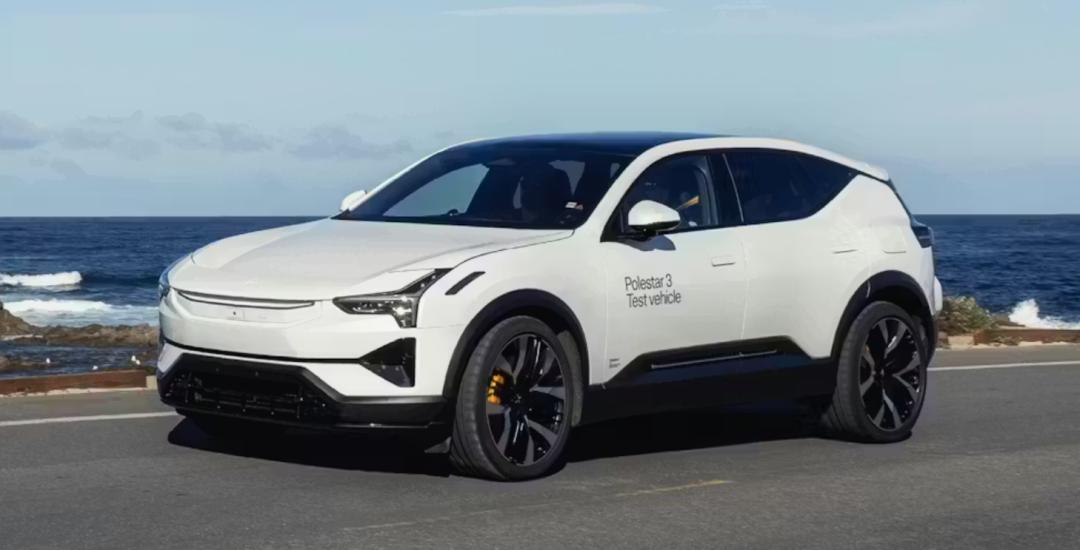
In the second half of this year, Polestar started to adjust its strategy.
It began to shrink its business and stores in the Chinese market. After closing its last direct - operated store in China in October this year, Polestar will adopt an online sales model in the Chinese market in the short term.
Instead, the company has shifted its focus more to the European market. After all, about 75% of Polestar's sales come from Europe, and the UK, Switzerland, Germany, and Norway are its main markets.
Currently, the four models on sale by Polestar are available in 28 countries around the world.
The reason why Li Shufu still doesn't give up on Polestar may have emerged.
In terms of overseas expansion channels, it is most appropriate to use Polestar with its "Nordic genes" as the core carrier.
Moreover, Polestar's positioning still focuses on high - end.
Although it doesn't have obvious advantages in the domestic market, the Nordic style + Chinese manufacturing + Volvo's safety endorsement can definitely gain popularity in the current European and American markets. Therefore, it can accumulate experience for brands like Zeekr in high - end overseas expansion.
So Geely's capital infusion is not just to keep Polestar alive, but also to pave the way for the next growth curve of all brands in the Geely system.
In addition to supporting Polestar, Geely, the "big family leader", is also concerned about Zeekr.
Last night, Geely issued an announcement stating that it had officially completed the privatization and merger of Zeekr.
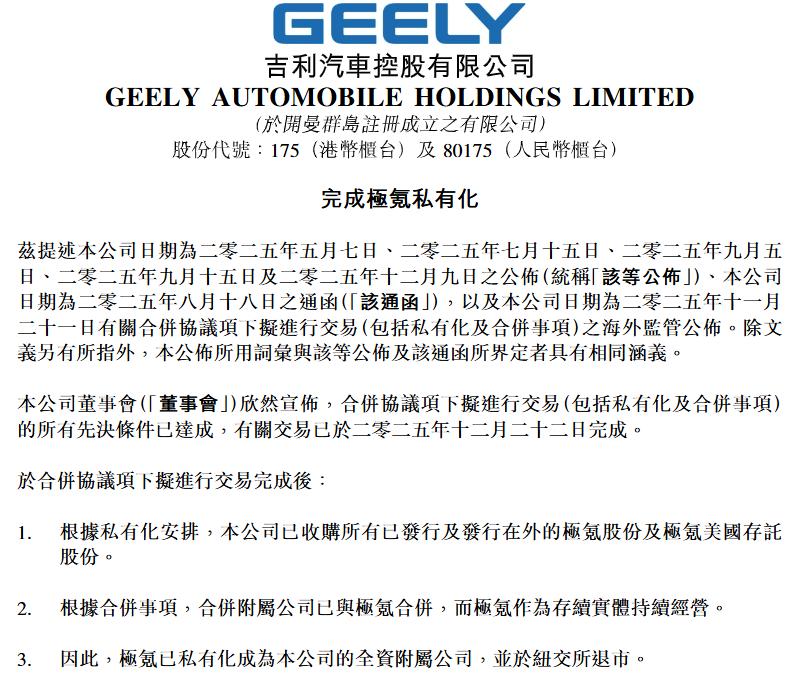
Zeekr, which had been listed for only one and a half years, has delisted from the New York Stock Exchange and returned to Geely's embrace as a wholly - owned subsidiary.
While Geely has helped its "sons", there is also new news about "Jiyue", the "son - in - law" among the "Ji" - branded companies.
Last month, Jiyue, jointly developed by Geely and Baidu, which had been out of the public eye for nearly a year, issued an announcement about initiating the pre - reorganization process to introduce new strategic investors, revitalize existing assets and resources, maintain asset value, and ensure after - sales rights and interests for users.
We just don't know if Geely, with its large business empire, will step in to save it this time?
This article is from the WeChat official account "Intelligent Vehicle Reference" (ID: AI4Auto), author: Jessica, published by 36Kr with authorization.