Ge Weidong has hoarded technology stocks worth 23 billion yuan.
Ge Weidong, a futures tycoon from Guizhou, has now repeatedly "turned stones into gold" in the technology circle. Whether it's the nearly 20 billion yuan in floating profits on the first day of the listing of Muxi Co., Ltd., a rising star in domestic GPU, or his previous heavy investments in UFIDA Network, GigaDevice Semiconductor, and Hygon Information, all these reflect his typical investment strategy of "daring to make heavy investments and taking a long - term view" under the trend of the great development of domestic technology. The reason why Ge Weidong can firmly implement this investment strategy is inseparable from his unique "family alliance" - style investment system.
01
Nearly 20 billion yuan in floating profits on the first day, "cashing out" still needs to wait
Following the crazy "wealth - creation" of Moore Threads, Muxi Co., Ltd., a domestic GPU company, has also become a "lucrative lottery ticket".
Muxi Co., Ltd. officially listed on the Science and Technology Innovation Board of the Shanghai Stock Exchange on December 17th. The issue price per share was 104.66 yuan, and it closed at 829.90 yuan on the first day, with a per - share increase of 725.24 yuan, a sharp increase of 692.95%.
With the sky - rocketing stock price of Muxi Co., Ltd., a group of investors have made a fortune, among which Ge Weidong, a "bullish retail investor", has earned nearly 20 billion yuan in a single day.
The prospectus of Muxi Co., Ltd. shows that after the listing, Ge Weidong and his affiliated company, Hundun Investment, hold 14.3382 million and 12.5957 million shares of Muxi Co., Ltd. respectively, with a shareholding ratio of 3.58% and 3.15% respectively. In addition, Hundun Investment is jointly held by Ge Weidong and his relatives, with Ge Weidong holding 83.26% of the shares.
To put it simply, Ge Weidong and Hundun Investment, which is wholly owned by his family members, hold a total of 26.9379 million shares of Muxi Co., Ltd. after its listing, with a combined shareholding ratio of 6.73%.
Even without considering the relatively low entry prices of Ge Weidong and Hundun Investment before, just calculated based on the issue price, the 725.24 - yuan increase per share on the first day of Muxi Co., Ltd.'s listing has brought Ge Weidong and his family a floating profit of 19.536 billion yuan in a single day.
Therefore, investors are all envious that Ge Weidong's family can make nearly 20 billion yuan in one go.
Although the value of Ge Weidong's family's shareholding has increased sharply, it cannot be cashed out immediately. The listing announcement of Muxi Co., Ltd. shows that the shares held by Ge Weidong personally need to be locked for 36 months from the date of acquisition; part of the shares held by Hundun Investment need to be locked for 12 months from the date of listing, and the other part needs to be locked for 36 months from the date of acquisition.
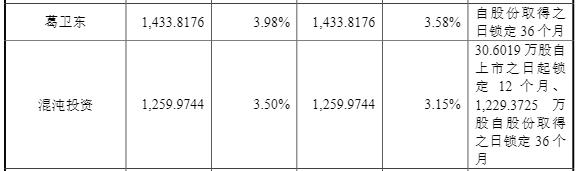
Ge Weidong spent 300 million yuan and 500 million yuan respectively in February and March this year to invest in Muxi Co., Ltd., while Hundun Investment started investing in 2022 and gradually increased its investment later.
That is to say, part of the shares held by Hundun Investment can be cashed out earlier. Ge Weidong's individual shareholding needs to wait longer for cashing out.
In addition to Ge Weidong, a group of public funds also shared the "feast" on the first day of Muxi Co., Ltd.'s listing. For example, E Fund Management Co., Ltd. had a floating profit of 1.48 billion yuan, Southern Fund Management Co., Ltd. had a floating profit of 1.349 billion yuan, and ICBC Credit Suisse Asset Management Co., Ltd. had a floating profit of 1.238 billion yuan. However, compared with Ge Weidong, the floating - profit amounts of these fund companies are just a drop in the bucket.
In the primary market, Matrix Partners China holds a total of 18.4511 million shares, corresponding to a floating profit of 13.381 billion yuan; Sequoia Capital holds a total of 15.0668 million shares, with a floating profit of 10.9 billion yuan. You know, these institutions are investment companies that have been deeply involved in the hard - tech field for many years, but their floating profits are still much less than Ge Weidong's.
After the carnival on the first day of listing, the market sentiment gradually calmed down. Muxi's stock price fell for three consecutive trading days, dropping from 829.9 yuan per share to 703.35 yuan per share at the close on December 22nd, a decline of 15.25%.
Meanwhile, calculated based on the increase after Muxi Co., Ltd.'s listing, the floating profits of Ge Weidong and Hundun Investment have also shrunk to 16.127 billion yuan.
02
Resigned from a state - owned enterprise and started entrepreneurial investment
As a legendary figure in the private - equity and futures circles, too many people are curious about Ge Weidong's growth experience.
Ge Weidong, born in February 1969, is 56 years old this year. In July 1991, Ge Weidong graduated from Sichuan University with a major in economics. Later, he joined Guizhou Cereals, Oils and Foodstuffs Import and Export Corporation, which allowed him to get in touch with the commodity trade.
Later, Ge Weidong resigned from his state - owned enterprise job and opened a metal trading company in Shanghai in 1999, fully engaging in futures trading. This was the period when Ge Weidong first dabbled in investment. Like all "small retail investors", he experienced margin calls, but he also learned risk - coping experience from them. These hard - fought experiences not only helped him accumulate substantial wealth in the following years but also became the confidence for his future entry into the stock market.
In 2005, Ge Weidong founded Shanghai Hundun Investment Co., Ltd., engaging in investment business in fields such as commodity futures, securities, and financial derivatives. This move not only means that his investment is no longer a solo effort but has transformed into a professional institution.
In 2008, the global market was once extremely pessimistic. Many people in China believed that the Shanghai Stock Exchange Composite Index would fall below 1,500 points. At that time, Ge Weidong showed the courage to make a reverse layout and started investing in new - energy - related stocks when the Shanghai Stock Exchange Composite Index was at 2,200 points.
As the market gradually recovered, when the stock index rose to 2,600 points, Ge Weidong judged that in the face of the crisis, gold, as a safe - haven asset, would attract a large amount of funds, and the real - estate sector might also rise. So he switched his positions from new energy to gold and real estate. According to a report in the "Securities Market Red Weekly", this decision made his products increase in value nearly three - fold within a few months in 2008, laying his status as a tycoon in the private - equity circle.
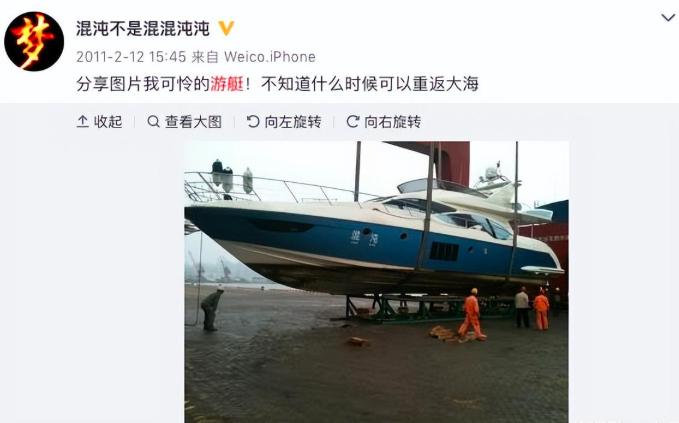
After making huge profits from investment, Ge Weidong owned a luxury yacht. In 2011, he posted a photo of the yacht on Weibo.
After the actual combat in the 2008 investment cycle, Ge Weidong's investment concept became more and more mature, and he soon faced a new investment layout.
In 2013, the banking sector was not favored. In the face of the outside world's pessimism, Ge Weidong spotted the stable cash flow and long - term development potential of the banking industry and chose to make a reverse layout. He bought a large number of Ping An Bank stocks at a low price of 7 - 8 yuan per share. At the peak, he held 274 million shares, ranking as the third - largest shareholder. As the market's valuation was repaired during the bull market from 2014 to 2015, the stock price of Ping An Bank kept rising, and Ge Weidong's floating profit exceeded 2 billion yuan.
Since then, Ge Weidong's investment portfolio has further expanded, and a unique "family alliance" - style investment system has gradually taken shape. Simply put, this "family alliance" is not simply pooling the family's money together. Instead, with Hundun Investment as the core, it forms an investment community relying on blood relations and trust among relatives.
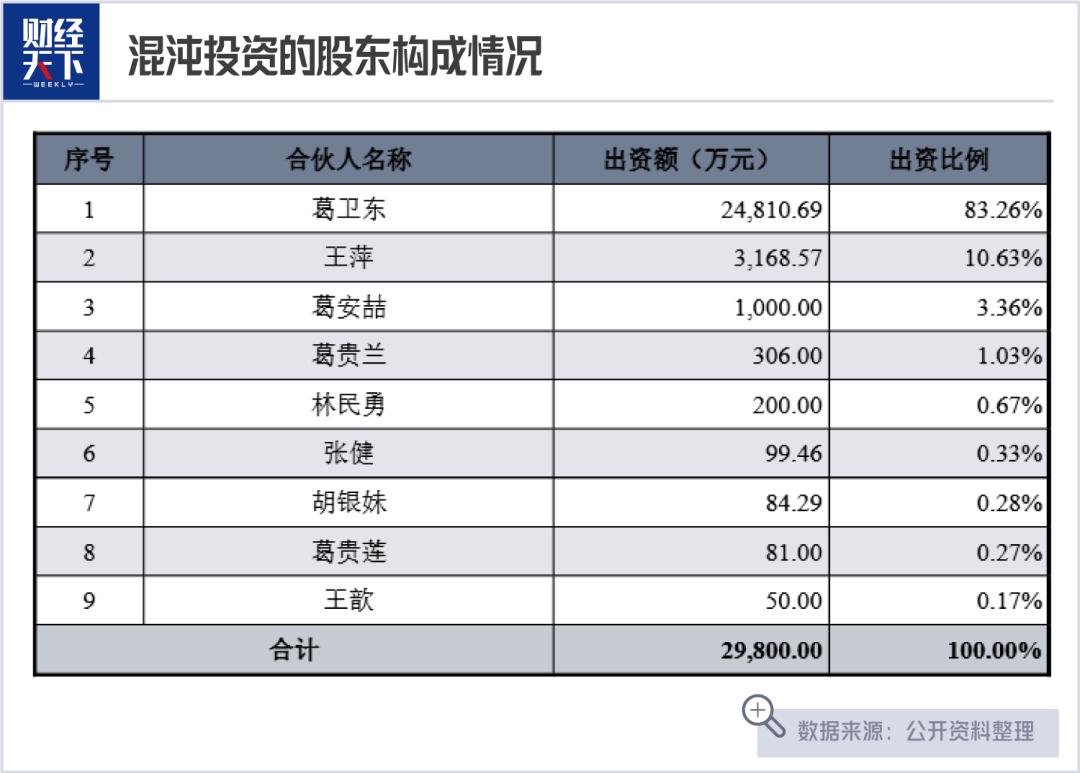
In the shareholder structure of Hundun Investment, Ge Weidong himself holds 83.26% of the shares, and his wife Wang Ping, son Ge Anzhe, sister Ge Guilan and other relatives hold 10.63%, 3.36%, and 1.03% respectively.
This is different from Duan Yongping's "apprentice - based core team" model, Guo Guangchang's "professional manager team" model, and even the operation models of most public and private professional investment and research teams. Bai Wenxi, the deputy director of the China Enterprise Capital Alliance and an economist, said that compared with the former two, the most obvious difference in the family - alliance model lies in "who makes the decision, where the money comes from, and who takes the responsibility for losses".
Bai Wenxi believes that in Duan Yongping's "apprentice - based" model, the core circle consists of "apprentices" trained by him, with highly centralized decision - making, and the funds mainly come from himself and his "apprentices" who follow the investment; Guo Guangchang has a "fleet of professional managers", with a CEO in charge of each industrial sector, and the group uses a large - scale financial model for capital allocation; Ge Weidong ties his wife, son, close relatives, family trust, and Hundun Investment together, using "blood + capital" as a rigid guarantee, forming a family balance sheet that hardly borrows from the outside world.
The greatest advantage of the "family alliance" model is that it shrinks the entire process of "raising, investing, managing, and exiting" within the family - more than 80% of the funds come from self - owned funds or family trusts, without the redemption pressure from external LPs. This means that it is more suitable for the technology track with "high volatility, high - policy influence, and high - capital demand". For example, "it takes 3 - 5 years for semiconductors to go from tape - out to mass production, and the revenue may be zero during this period. Public funds or LPs may find it hard to tolerate, but family funds can be locked in for 5 - 7 years without moving." Bai Wenxi explained by example.
03
A futures tycoon competes in the technology circle
2017 was a turning point in Ge Weidong's investment portfolio. In this year, he gradually reduced his futures positions and shifted his focus to the technology track.
At that time, the domestic economy entered a transformation period, and the policy encouraged the development of emerging industries. More importantly, after the sharp rise and fall of the A - share market in 2015, the room for further growth of financial stocks such as banks was narrowing, and the value of potential stocks in technology sectors such as chips and artificial intelligence was gradually emerging, which allowed him to capture the trend of the transformation of old and new driving forces.
Ge Weidong first opened a position by investing in UFIDA Network, completing the transformation from futures and finance to technology. In the third quarter of 2017, Ge Weidong bought 39.4522 million shares of UFIDA Network. By the end of the second quarter of 2020, his shareholding had increased to 120 million shares, and the market value of his position was as high as 5.314 billion yuan.
Of course, Ge Weidong won't "put all his eggs in one basket". At the end of 2017, Ge Weidong also made a large - scale purchase of iFlytek, an AI application service provider focusing on voice intelligence + large - model - driven, and also the "number - one AI target" at that time. According to the 2017 annual report, Ge Weidong became the fifth - largest shareholder with a 1.70% stake in the total share capital (with a market value of as high as 1.395 billion yuan).
At that time, many media called this investment "the first shot of a futures tycoon's technology transformation" and believed that investing in iFlytek was a typical operation of Ge Weidong's "making heavy investments on the right - hand side and taking a long - term view".
In fact, Ge Weidong has also been quite loyal to the iFlytek stock. By the end of June 2021, Ge Weidong's shareholding in iFlytek had increased to 2.20% of the total share capital, and the market value of his position was as high as 3.305 billion yuan.
Another typical case of Ge Weidong's technology investment is GigaDevice Semiconductor, a chip - design company. In the third quarter of 2018, Ge Weidong only held 2.65 million shares. Later, after continuous increases, by the second quarter of 2021, his shareholding had increased significantly to 29.512 million shares, with a market value of his position as high as 5.545 billion yuan. Although by the third quarter of this year, Ge Weidong's shareholding had dropped to 17.0267 million shares, the market value of his position was still as high as 3.632 billion yuan.
Around 2020, with the accelerated progress of domestic technology and the explosion of fields such as semiconductors and artificial intelligence, Ge Weidong spotted the opportunity and put forward the concept of "investing in great changes". He not only bought technology stocks in the secondary market as an individual but also delved into the primary market through his Hundun Investment to discover unlisted technology companies, forming an investment matrix of "individual + company + family".
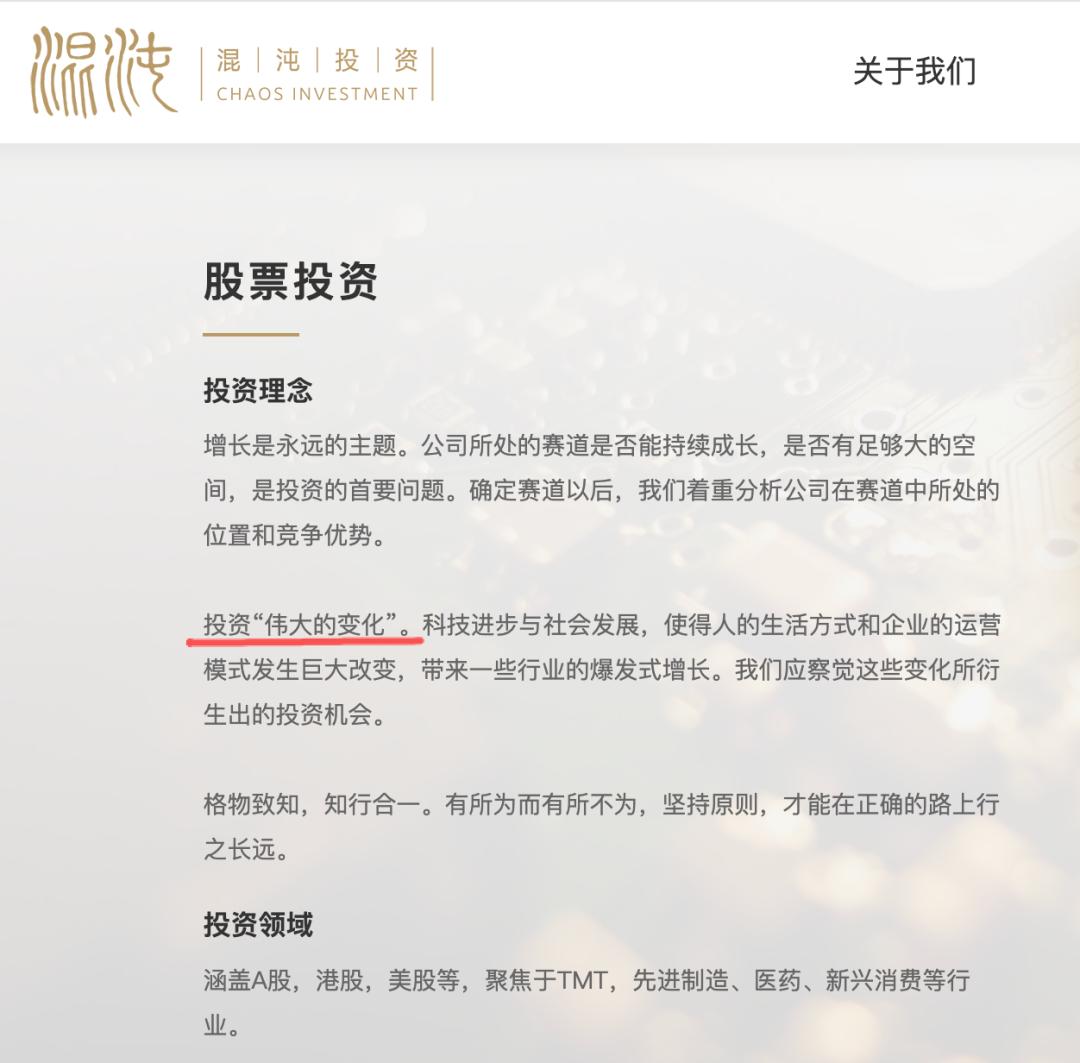
▲ Source/Website of Hundun Investment
So far, his most successful investment case is Muxi Co., Ltd. In addition, investing in Hygon Information in 2020 also allowed him to successfully cash out nearly 2 billion yuan.
In June 2020, Hundun Investment contributed 499 million yuan to subscribe for 44.5909 million shares of Hygon Information. In August 2022, Hygon Information successfully listed on the Science and Technology Innovation Board. As of the end of the second quarter of 2023, the value of the shares held by Hundun Investment had reached as high as 3