Is it an innovation or a risk to use a mobile phone to shoot the HarmonyOS event?
If you are watching the vertical - screen version of the "Harmony Starlight Gala", you may notice that a large part of the pictures you see were taken with mobile phones.
There were a total of 17 vertical - screen direct - shooting camera positions, 13 of which used the Huawei Mate 80 Pro Max for shooting.
This is not common. For a long time in the past, although users have long been accustomed to watching content on mobile phones, it was a pioneering move to use mobile phones as important shooting equipment for a large - scale gala.
Treating the vertical - screen production as a complete and independently operating process, from camera position design, director switching to the final broadcast, the horizontal - screen and vertical - screen systems are two independent ones, rather than one being derived from the other.
This time, mobile phones have stepped into the spotlight.
When content enters the vertical - screen era
In an era of such information explosion, the vertical screen is no longer a new thing.
The rise of short - videos, information streams, and live - streaming platforms has, in fact, reshaped the viewing habits of a large number of users. Mobile phones have become the main viewing scenario for a large amount of content, and the vertical screen has also become a widely accepted form of dissemination.
However, in the content form of large - scale galas, the situation is not that simple.
The shooting of a gala is not a scenario that simply chases the traffic form. It needs to serve the complete presentation of the stage, the director's scheduling, and the TV broadcast standards. The horizontal screen has clear and long - standing rationality here. It is more suitable for showing the stage structure, group scheduling, and overall atmosphere, and it is still the main viewing method on TV and in the living - room scenario.
Therefore, for a long time, even though vertical - screen content has become an important form at the distribution end, it has mostly appeared as a supplementary role in the gala production system. Cameras can shoot vertical pictures and can also output vertical - screen content through cropping or viewfinder adjustment, but these pictures usually serve specific platforms or dissemination needs, rather than a systematically designed production path.
This does not mean that the vertical screen is unimportant. In the complex production of a gala, any new form will lead to overall adjustments in camera position design, director logic, and picture organization. Whether to establish an independent logic for the vertical screen is, in itself, a production - level decision, rather than simply a technical problem.
The changes in the "Harmony Starlight Gala" are taking place at this level.
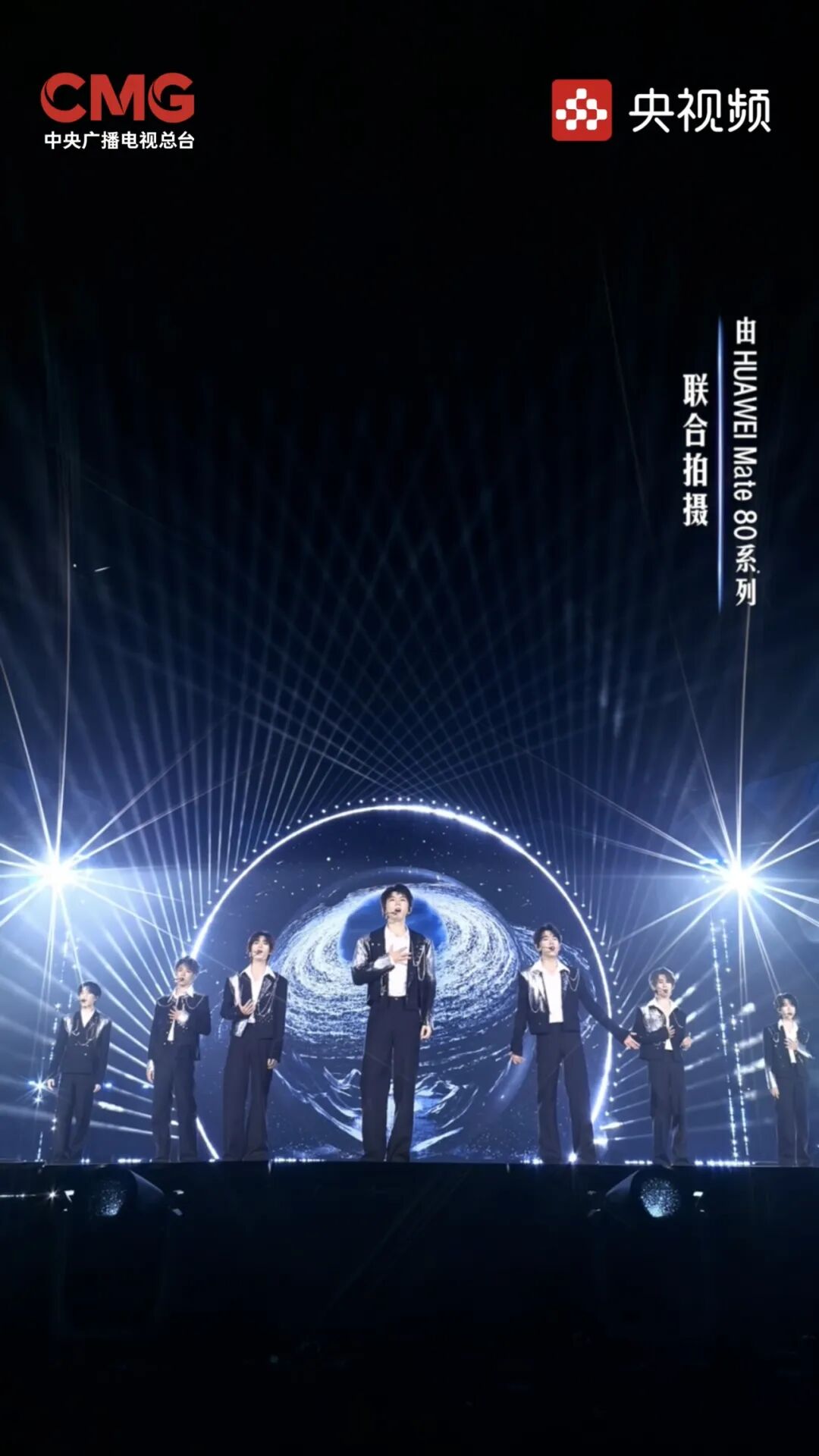
This time, the vertical screen was not regarded as an auxiliary output of the horizontal screen but was included in the overall production plan in advance. Camera positions were set up and director logic was designed around the vertical screen. Mobile phones and cameras each had their own responsibilities and had a clear position at the production stage, rather than being adapted at the broadcast stage.
From a deeper - level perspective, this is an adjustment driven by changes in content - viewing habits. As more and more audiences watch galas on mobile phones, the production end has begun to face the reality of the vertical screen as a form of dissemination and tries to establish a more stable production path for it in high - standard scenarios.
It should be emphasized that the core of this change does not lie in a certain device but in the adjustment of the production logic itself. It is only under this premise that the re - allocation of the role of mobile phones as shooting equipment is worth further examination and discussion.
Why can mobile phones step into the spotlight this time?
After the vertical screen was included in the overall production plan, the production end first had to face a more realistic judgment: how to obtain vertical - screen pictures while ensuring the gala production standards.
Mobile phones are very common at the shooting sites of large - scale events and galas. However, before, they were mostly used for behind - the - scenes recording, supplementary angles, or the collection of non - core pictures and did not really enter the main shooting process of galas. The core reason is that the requirements of large - scale galas for equipment are much higher than those of daily content production. Once any equipment enters the director system, it means that it needs to be controllable, reliable, and predictable throughout the entire production cycle.
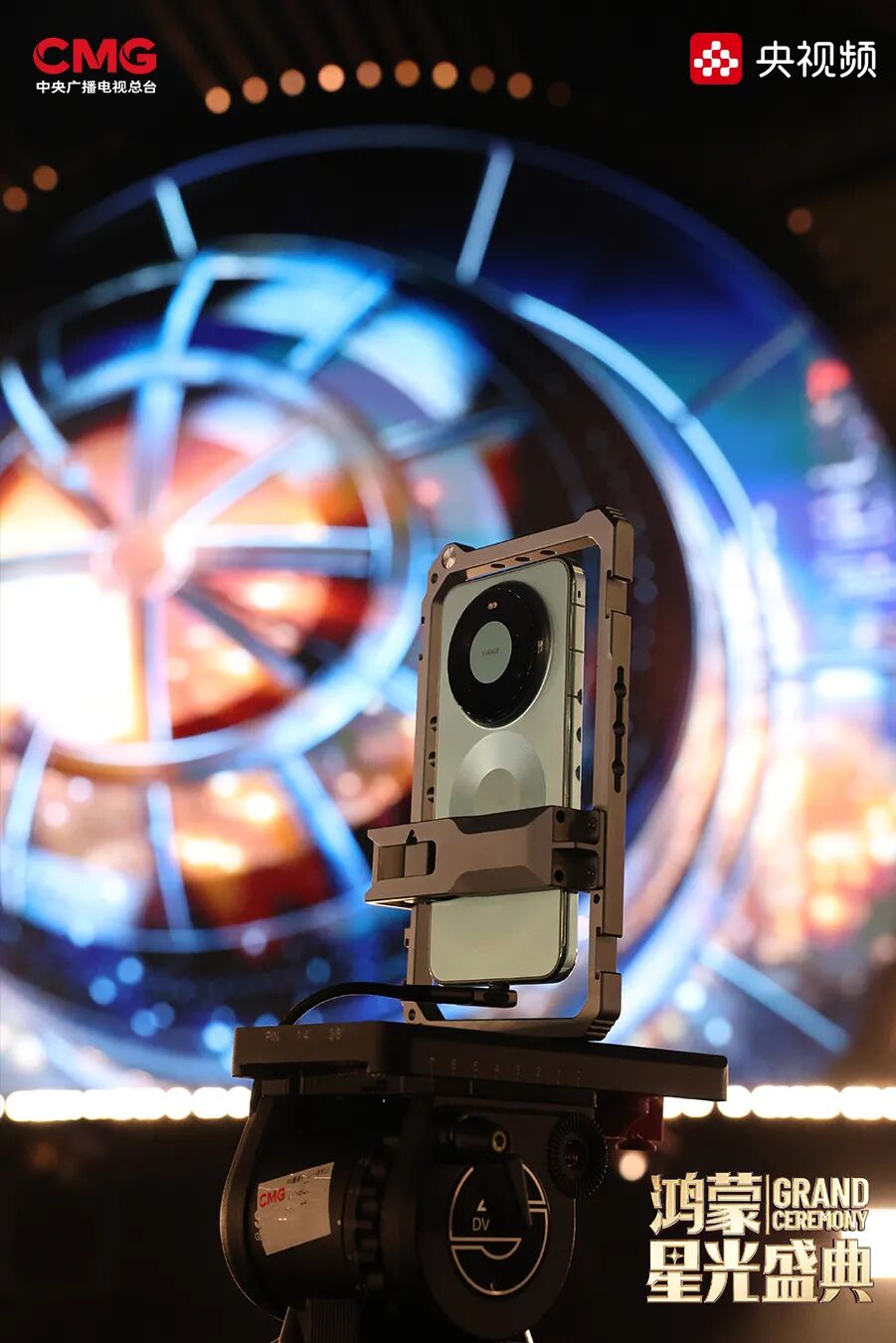
In the vertical - screen production process of the "Harmony Starlight Gala", 13 Huawei Mate 80 Pro Max phones were responsible for shooting. The pictures were transmitted back in real - time and participated in the director switching according to the studio standards.
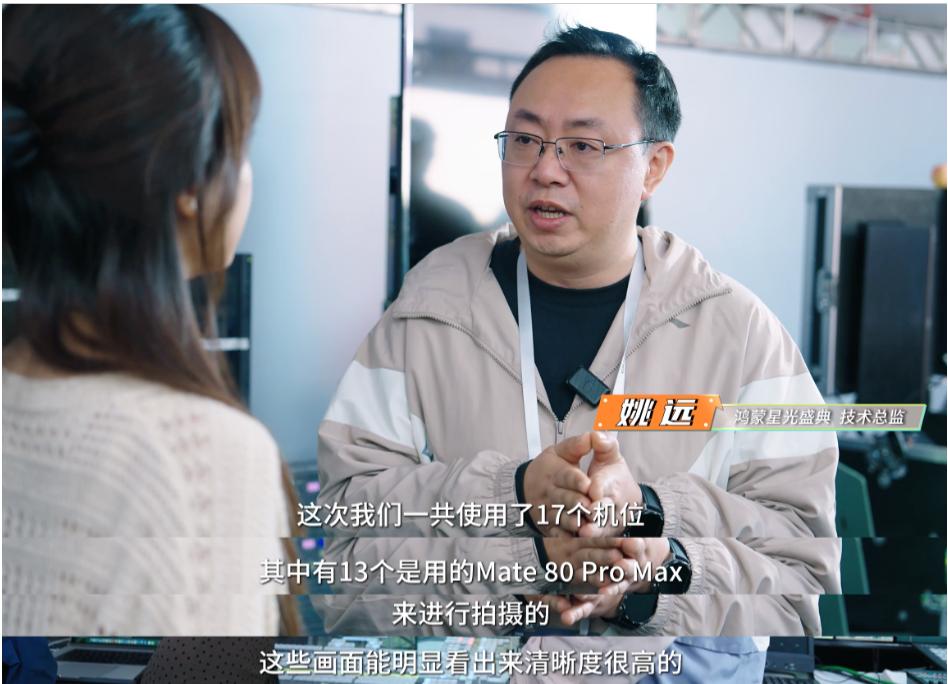
In the gala environment, vertical - screen pictures often have to face more frequent lighting changes and more concentrated character compositions, which put forward higher requirements for the color consistency and dynamic performance of the pictures. The Mate 80 series has clearly optimized its imaging system for high - dynamic range and color restoration. Its color - accuracy control and HDR performance can cover the high - contrast scenarios common in stage shooting, so that there will not be an obvious gap when switching pictures between different camera positions.
At the same time, shooting is not a one - time task but a long - term working process throughout rehearsals and formal recordings. The equipment needs to run continuously under high - load conditions to avoid affecting the picture output due to performance fluctuations or overheating. The heat - dissipation structure and overall performance stability of the Mate 80 series are important prerequisites for mobile phones to be included in the shooting arrangement.
In addition to single - point capabilities, the more crucial factor is still the cooperation at the system level. In an environment where multiple camera positions are working simultaneously, the shooting equipment needs to be stably connected to the existing production process to complete the transmission and switching of pictures. The design of the HarmonyOS in multi - device collaboration and system stability enables mobile phones to be integrated into the overall production chain as one of the shooting nodes, rather than being a temporary tool outside the system.
Therefore, it is not accidental that the Huawei Mate 80 series has become one of the important shooting equipment. After the demand for vertical - screen shooting is clear, the production end faces a very real problem: how to obtain vertical - screen pictures while ensuring the overall production standards. Cameras can certainly shoot vertical - screen content, but they are not always the best solution in terms of camera - position flexibility, layout cost, and picture scheduling.
Its value is highlighted in this context. After the vertical - screen production has been established, with its advantages in imaging ability, size, and deployment method, it has been included in the shooting system and undertakes the shooting task of some vertical - screen pictures. Therefore, the two are not in a replacement relationship but a division - of - labor choice under the same production goal.
When the content - dissemination form changes, the production end begins to adjust the production logic; when the production logic changes, the roles of the equipment are also re - allocated.
Looking deeper, it is the change in users' content - consumption habits that has driven the production end to face the reality of the vertical screen as a form of dissemination and try to establish a more stable production path for it in the high - standard scenario of galas.
The real change occurs on the user side
When the vertical screen was first treated as an independent production object, the changes did not only occur at the technical and process levels. The more direct impact actually fell on the users.
For a long time in the past, users have already completed the migration of their viewing habits: using the horizontal screen to watch professional content such as sports events and using the vertical screen to browse information streams and short - videos. However, relatively professional content production has always retained an "old order". The horizontal screen is the default option, and the vertical screen is mostly a compromise solution. Users constantly adapt to the content at the consumption end, while the content does not seriously adapt to the users in return.
What is really different about the vertical - screen production of the "Harmony Starlight Gala" is that it acknowledges a long - ignored fact: The viewing method itself is worth being regarded as a part of the production logic.
From a specific experience perspective, the vertical screen is not just a change in the picture ratio. It directly affects the relationship between the camera and people and also changes the way audiences enter the stage. On the mobile - phone screen, people are more likely to become the center of the picture. The vertical composition naturally focuses the attention on the performers; the upward - shooting or medium - close - range camera positions are closer to the viewing experience of the audience sitting in the front row. These changes are obviously more in line with the intuitive reactions of users when watching on mobile phones.
In the past, users often had to compensate for this intuition themselves.
When horizontal - screen pictures are compressed into the vertical screen, the audience needs to actively find the focus, adapt to the rhythm, and even psychologically accept that "this is content prepared for TV". This time, the vertical - screen pictures were taken seriously at the production stage, and this extra adaptation cost was significantly reduced.
In the vertical - screen production of the "Harmony Starlight Gala", mobile phones were included in the shooting process and took on the role of important shooting equipment. The pictures directly entered the director system and participated in the final presentation. They are no longer just auxiliary recording tools but are regarded as a part of the production chain and can be trusted as output results.
In this sense, the Huawei Mate 80 series and the HarmonyOS do not play the leading role in the narrative but are the basic conditions for achieving this alignment. They have not changed the users' viewing habits but have, for the first time, fully responded to the existing viewing habits in high - standard content such as large - scale galas.
It is precisely at this point that the change begins to spread to the user side. For ordinary users, this change does not need to be clearly perceived. You don't have to know how many camera positions and how many processes have been redone. You only need to realize one thing: you watch content in the most familiar way, and the content begins to be produced according to your way.