From 0 to 43 million users, how does Qpon break through in the local lifestyle market in Southeast Asia?
At Central Park Mall in Jakarta, crowds flock there every weekend. If you step into a chain café or restaurant, you'll witness this scene: young people skillfully use the standardized QR code payment system (QRIS), and the infrastructure for mobile networks and payments is already in place. This scenario seems almost identical to the highly popular digital consumption experience in China.
However, when consumers decide "where to eat" or "where to play", they still tend to be influenced by popular content on Instagram or TikTok. Then they jump to Google Maps to check the address and ratings. Finally, they may even need to contact the merchant via WhatsApp to confirm the business hours or availability of seats.
This is a microcosm of the digital consumption market for local life in Indonesia: the infrastructure is mature, but there are still gaps in software services.
It is in such a market niche that an app called Qpon has quietly emerged. According to official disclosures, within just one year of its launch, it has over 43 million users. The average daily orders exceeded 660,000 in the past year. It has 54,000 active merchant stores and ranks No. 1 in the lifestyle category on Google Play in Indonesia. Notably, Qpon is a startup incubated by OPPO, a Chinese mobile phone manufacturer with years of experience in Southeast Asia.
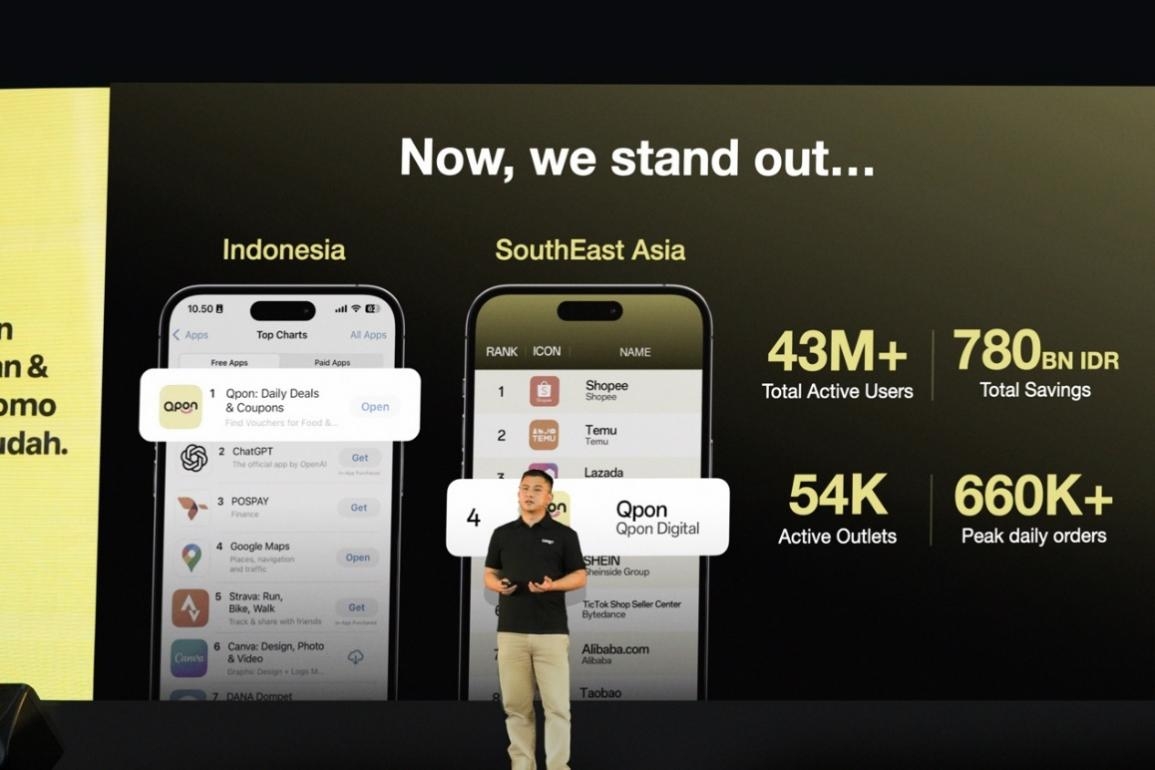
The rapid rise of this "dark horse" is not accidental. It precisely captures and validates the industry rule that the popularity of mobile payment triggers the explosion of local life services. Qpon's practice shows that in the Southeast Asian market where digital payment is popular and online consumption habits are well - established, the time to reconstruct the local life service system has come.
The "road" is built, but there aren't enough "cars"
Looking back at the development history of China's mobile Internet, the boom in local life services often follows the popularization of mobile payment. Now, Indonesia is at this critical juncture.
As the fourth - most populous country in the world, the penetration rate of smartphones in Indonesia has exceeded 75%. More importantly, the government - led standardized QR code payment system (QRIS) has covered tens of millions of merchants across the country, from large shopping malls to street - side Warungs (similar to small convenience stores in China). Cashless consumption has become the norm. Years of efforts by giants like Grab and Gojek have also made instant logistics services readily available.
However, the "road" is built, but there aren't enough "cars".
Data shows that although the scale of the retail market in Indonesia reaches $183 billion, the online rate of merchants is only 20% (far lower than 90% in China). Many merchants have connected to electronic payment, but they still rely on traditional marketing models. 70% of merchants still rely on distributing flyers to attract customers, which is not only inefficient but also unable to accumulate user assets.
The maturity of infrastructure and the lack of service supply have created a huge vacuum. The market urgently needs a super - entry platform like "Dianping" or "Meituan" in the past, which can aggregate information, facilitate transactions, and complete the closed - loop. Based on this industry judgment, Qpon avoids the crowded food - delivery track and enters the blue - ocean market of "in - store services", which is high - frequency, a rigid need, and relatively lightweight in operation.
"Down - dimensional" application and "localization" of Chinese experience
The current situation of the Indonesian market is similar to the early stage of China's Internet market: a large population base, high price sensitivity, and unmet offline social needs. Qpon doesn't simply copy the Chinese model. Instead, it deeply integrates the proven and mature experience in the Chinese market with the local characteristics of Indonesia, achieving extremely high growth efficiency.
In the overseas market with high customer - acquisition costs, Qpon's background of being incubated by OPPO is the key to breaking the situation. Relying on OPPO's large local mobile phone user base and offline channel network, it can acquire users at low cost through system - level entry, establishing a significant advantage in startup efficiency.
Acquiring traffic is just the first step. How to retain and convert users?
Facing price - sensitive local users, the platform borrows the classic "explode popular products" strategy from Chinese e - commerce. Through high - frequency and low - price strategies such as "7K coffee" and "1K first - order discount", it quickly establishes the cognitive anchor of "saving money" in users' minds. At the same time, Qpon seizes the characteristics of the Indonesian society that attaches great importance to offline gatherings and has active social interactions. Through mechanisms such as invitation codes and friend - bargaining that fit the local culture, it embeds the "saving money" need into acquaintance social networks, achieving a snowball - like growth in user scale.
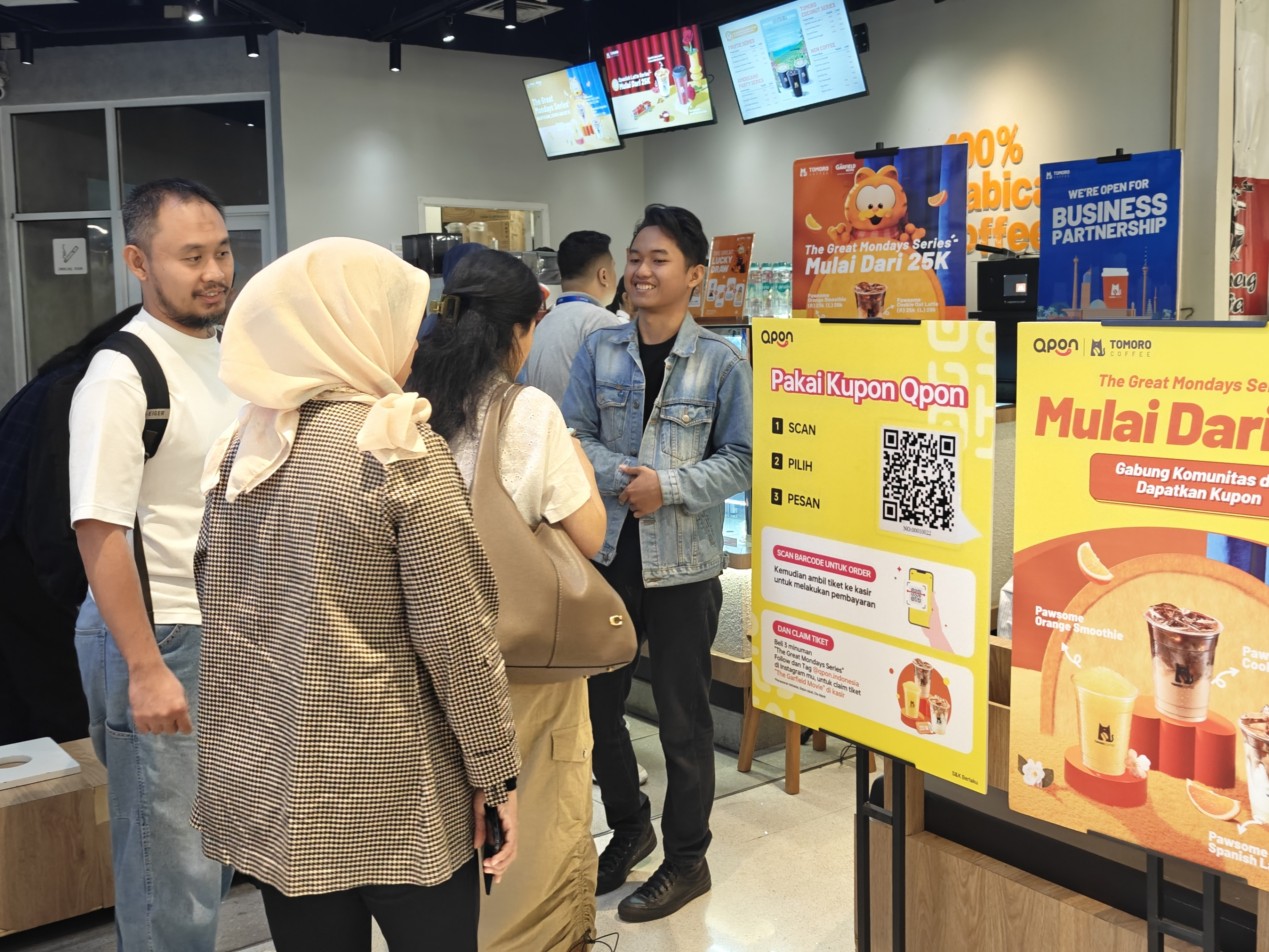
This way of transforming "personal saving" into "social currency" not only reduces the marginal customer - acquisition cost but also, to some extent, replicates the exponential growth logic of China's early mobile Internet, proving that "Chinese experience" still has strong vitality after adapting to local culture.
AI reconstructs data, moving from "connection" to "intelligence"
If the early "coupon - issuing" was the key for Qpon to enter the market, then the systematic application of AI technology is becoming the core engine for it to build long - term barriers and upgrade its model.
There has long been a pain point in the local life market in Southeast Asia: the high degree of unstructured information. A large amount of information about merchants' dishes, prices, and environments is scattered on social media in the form of pictures or videos, making it difficult to be effectively retrieved and matched, resulting in low efficiency in supply - demand matching.
Qpon is committed to systematically solving this problem through AI technology and is building a new digital infrastructure for the industry. The upcoming upgraded "QponX" search and selection function relies on AI to clean up data across the network. AI can automatically analyze from a picture that "this is a Spanish dish in Bali", automatically extract prices and dishes, and even correct the vague address on Google Maps (pinpointing it to the 5th floor of a shopping mall).
Based on the data cleaned and reconstructed by AI, Qpon has further established a QRATE system similar to the "Must - eat List" on Dianping. This mechanism combines user ratings, platform reviewers, and overall online reviews and popularity to give comprehensive scores, allowing users to have a more objective and comprehensive view of selected good stores. With this structured information processing, users can make quick decisions even without a large number of reviews for reference, just like referring to the "Must - eat List".
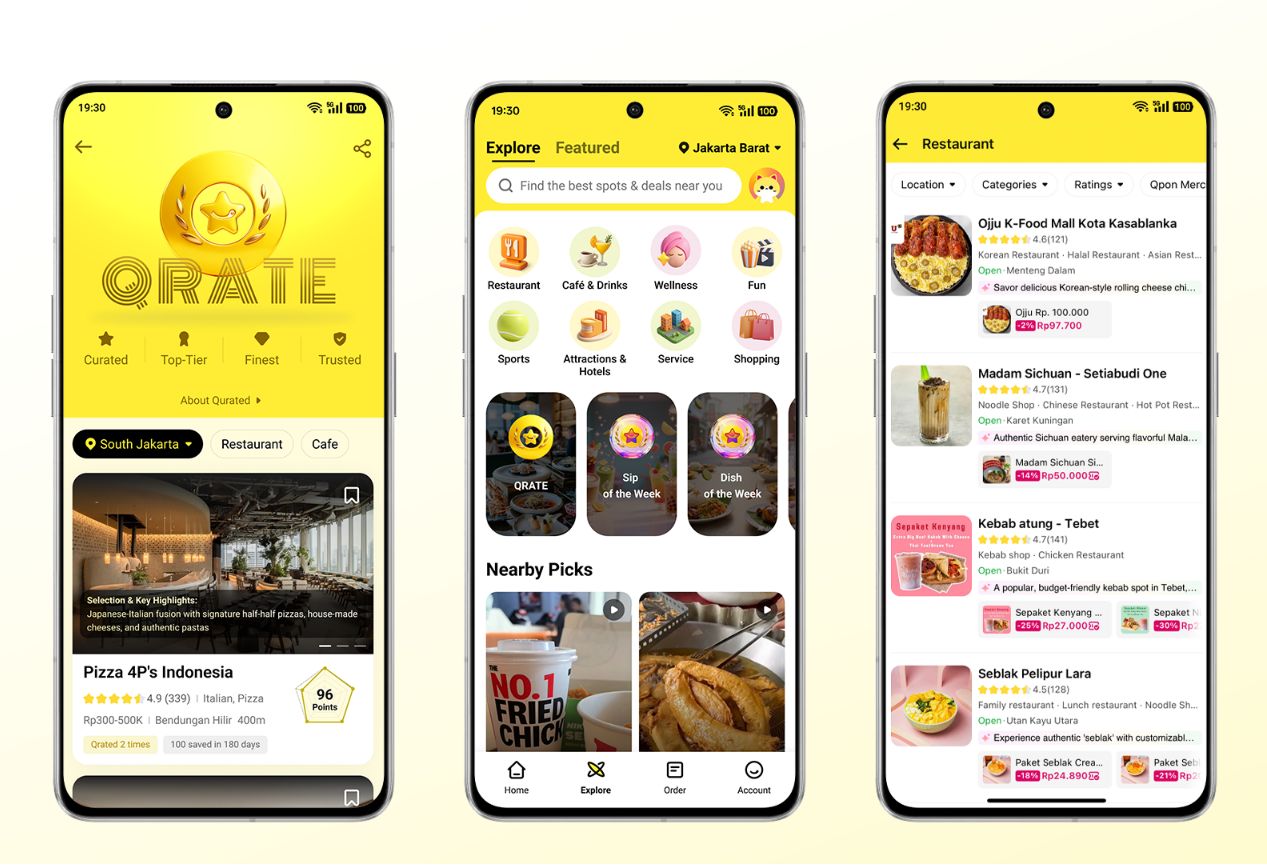
The newly launched "Qpon Adviser" intelligent advisor function is a key step for Qpon to move from being "useful" to being "easy - to - use". Through this function, users can directly ask questions in natural conversations. The system retrieves information in real - time based on the POI database and supports multi - round interactions to refine requirements. This changes the traditional complex "search - filter" path, making decision - making more intuitive and simple. In the Southeast Asian market where the overall cognitive level is lower than that in China, more straightforward interactions through AI can stimulate the needs of most users. This is also a new exploration of the future form of local life.
For merchants, the value of this data - intelligent analysis is also significant. The platform can provide merchants with auxiliary decision - making suggestions on intelligent pricing, creating popular products, and marketing rhythm based on real - time data such as regional passenger flow, competitor dynamics, and consumption trends. It helps small and medium - sized merchants, especially those without professional data - analysis capabilities, to achieve more refined operations. Building AI capabilities on commercially viable scenarios is also an important entry - point for Qpon. In essence, what Qpon is exploring is a growth and operation path that replaces "human - power density" with "algorithm efficiency". In the Southeast Asian market with low labor costs but scattered regions and diverse cultures, this technology - driven path may have more scalability and long - term competitiveness. For Qpon, AI is no longer just an optimization tool but the core driving force for it to reconstruct the local life service chain and build a new generation of "digital infrastructure".
Conclusion
Qpon's growth in Indonesia is the result of both "seizing the market opportunity" and "verifying the adaptable model". It has seized the window of opportunity for service explosion after the maturity of payment infrastructure and demonstrated the vitality of Chinese Internet experience after in - depth localization.
More importantly, its investment in AI and data technology reveals a new direction for competition in the local life market: the real opportunity lies not in simply connecting supply and demand but in improving the matching efficiency and operation level of the entire industrial chain through technological means.
In the trillion - dollar Southeast Asian market, whoever can systematically solve the problems of "information fragmentation" and "service gaps" may define the competition rules for the next stage. Qpon's exploration shows that successful overseas expansion is no longer just about copying models but about deeply understanding and creatively reconstructing the business ecosystem of the target market. As the dividends of payment infrastructure are gradually exhausted, a deeper - level competition centered on "service intelligence" and "industrial digitalization" is unfolding.