All stand up! Here comes the post-2000s big boss.
Valued at 207.9 billion RMB and with an annualized revenue exceeding $1 billion, Anysphere, an AI programming company founded just three years ago, has been hailed by Silicon Valley as "one of the fastest-rising enterprises in history" due to its astonishing growth rate.
The CEO of this up-and-coming company, Michael Truell, is actually a member of the post-2000 generation. Three years ago, he was still hopping between internships at various companies, but now he has joined the ranks of billionaires and become a rising star pursued by investors.
In the era of AI, "capital favors young people under 35," which has become a popular consensus in the venture capital circle recently.
Leading institutions such as Sequoia Capital, Hillhouse Capital, and BlueRun Ventures have all invested in post-2000 entrepreneurs. Industry titans like Zhang Yiming, Liu Qiangdong, and Wang Xing have also intensively invested in startups founded by post-2000 entrepreneurs. Xu Xiaoping's ZhenFund has even launched the "Post-2000 Tough Guy Plan" to target the new generation.
A Chaozhou Genius Shakes Silicon Valley
In early October 2025, an explosive piece of news came from Silicon Valley: Axiom Math, a startup, completed its first-round financing of $64 million (approximately 456 million RMB), and its post-investment valuation exceeded $300 million.
However, this company has no products and no customers, and its founder is a 24-year-old post-2000 woman from Chaozhou, China - Hong Letong.
Why are Silicon Valley investors so generous in betting on Hong Letong? The answer lies in her almost "cheat code-like" growth trajectory.
Hong Letong showed extraordinary mathematical talent at an early age. She attended South China Normal University Affiliated High School, a prestigious school in Guangdong, and became one of the four female students in the Guangdong Provincial Mathematical Olympiad Team. She achieved remarkable results in many top-level competitions such as the "Hua Luogeng Gold Cup" and the National High School Mathematics League.
In 2019, she entered the Massachusetts Institute of Technology (MIT) to pursue a double degree in mathematics and physics. She completed all the courses in just three years and additionally took 20 advanced courses at the master's and doctoral levels.
During her undergraduate studies, she had already published many high-quality papers in professional fields such as number theory and combinatorial mathematics.
Her outstanding academic ability has earned Hong Letong numerous awards: the "Morgan Prize," known as the highest honor for North American undergraduate mathematics students; the "Schafer Award for Excellence in Mathematics," which specifically recognizes top female undergraduate mathematicians in the United States; and the Rhodes Scholarship from the University of Oxford, known as the "Nobel Prize for undergraduates" (only four Chinese students worldwide received this honor that year), among others, have all been added to her collection.
With the Rhodes Scholarship, Hong Letong went to the University of Oxford to pursue a master's degree in neuroscience, and then entered Stanford University to pursue a doctorate in mathematics and a doctorate in law simultaneously.
In 2024, Hong Letong made a decision: to drop out of school and start a business.
This stemmed from a in-depth conversation she had with Shubho Sengupta, an engineer at Meta, in a coffee shop near Stanford, focusing on "using AI to solve complex mathematical problems." Shortly after this meeting, she officially founded Axiom Math.
At that time, ChatGPT o3 was exposed to have a "cheating" suspicion in a mathematics test, causing an uproar in global public opinion.
Hong Letong sharply commented on social media: "The excellent performance of the OpenAI large model in the mathematics test is most likely because the test questions were leaked in advance in the training data. In some tests, although the accuracy rate of the large model's answers is as high as 96%, once the reasoning process is presented, the scoring rate drops to 5%."
This is precisely the core problem that Hong Letong is determined to solve. She believes that the existing training methods have limitations, and she wants to create an "AI mathematician" that can not only absorb all the existing mathematical knowledge but also reason independently and even put forward mathematical conjectures independently.
Why is mathematics so important that AI is needed to solve complex mathematical problems?
Ren Zhengfei once told a story. Huawei had a young Russian employee who was usually taciturn and only buried himself in doing mathematical problems for more than a decade. One day, this employee suddenly announced that he had broken through the core algorithm from 2G to 3G. This breakthrough helped Huawei lead the world in the radio field ever since and laid the foundation for subsequent 5G technology.
Climbing to the top of the technology tree often relies on innovation in basic research. Ren Zhengfei once sighed: "Just throwing money is useless. We also need to 'invest' in mathematicians and physicists."
Therefore, solving complex mathematical problems is often the key to human innovation.
The goal of the AI mathematical model that Hong Letong wants to build is to achieve fundamental breakthroughs in fields such as scientific research, chip design, and financial modeling. This idea has attracted many top talents in the fields of mathematics and AI to join:
Shubho Sengupta, who once led the Meta FAIR team; François Charton, a French mathematician who was the first to apply Transformer to solve complex mathematical problems; Hugh Leather, an AI developer who was the first to apply deep learning to code generation...
This luxurious lineup is also the core reason why Silicon Valley investors dare to invest real money in supporting Axiom.
Not only the large AI models but also the emerging fields of embodied intelligence and the robotics industry are becoming the tracks where post-2000 entrepreneurs are flocking to.
"Unconventional" Entrepreneurs
On July 26, 2025, a special mahjong game kicked off at the World Artificial Intelligence Conference.
Three technology elites were sitting at the four sides of the mahjong table: Zhi Huijun, the founder of Zhiyuan Robotics, known as a "Genius Youth at Huawei"; Hu Yuhang, a doctor from Columbia University; and Chen Yuanpei, the co-founder of Lingchu Technology. They were playing against the fourth player - the robot "Xiaoling".
In this "silicon-based vs. carbon-based" confrontation, the robot Xiaoling smoothly picked up, arranged, and melded the mahjong tiles with its "dexterous hand". Someone joked: "We don't have to worry about not having enough players for mahjong anymore."
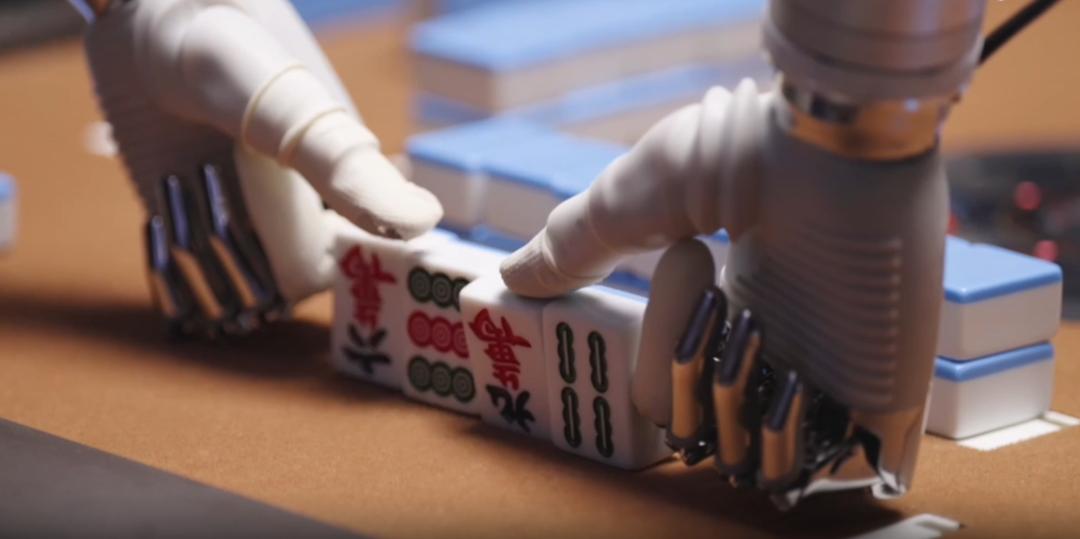
▲Source: Lingchu Intelligence official website
The creator of "Xiaoling" is Chen Yuanpei's team. At the age of 24, Chen Yuanpei was successfully included in the Forbes 30 Under 30 Asia 2025 list and is the youngest AI entrepreneur on the list.
Few people know that this technology genius was once a "problem student" who often skipped classes during his studies at South China University of Technology.
In 2022, after participating in the RoboMaster robot competition, Chen Yuanpei, who was originally majoring in civil engineering, became completely obsessed with the research of dexterous hands.
"It's really cool to make a robot have a hand as flexible as a human's. I'll teach myself robotics even if I have to skip classes."
For this reason, he skipped classes and devoted himself to the laboratory, being deeply involved in research and development.
This seemingly "unconventional" self-study experience allowed him to knock on the door of the Institute of Artificial Intelligence at Peking University and study under Professor Yang Yaodong, an authority in reinforcement learning.
During his time at Peking University, Chen Yuanpei achieved a major breakthrough: for the first time in the world, he used reinforcement learning to control both arms and hands simultaneously to complete multi-skill operations in a real environment.
However, Chen Yuanpei was not satisfied with this. He wanted to explore the most cutting-edge embodied intelligence technology. In 2023, he went to the United States as a visiting scholar and joined the famous "AI Godmother" Fei-Fei Li's team.
One year later, while his peers were still writing their graduation theses, Chen Yuanpei received an offer from Huawei's "Genius Youth" program and an invitation to continue his studies at Stanford. However, unexpectedly, he chose a third path - to start a business.
"Although publishing papers is important, I hope to turn technology into products with my own hands."
Recommended by Professor Yang Yaodong, Chen Yuanpei met Wang Qibin, who has more than 20 years of hardware experience, and Dr. Chai Xiaojie, an expert in robotics and autonomous driving. They jointly founded Lingchu Intelligence, which is known as "the startup with the highest density of scientists".
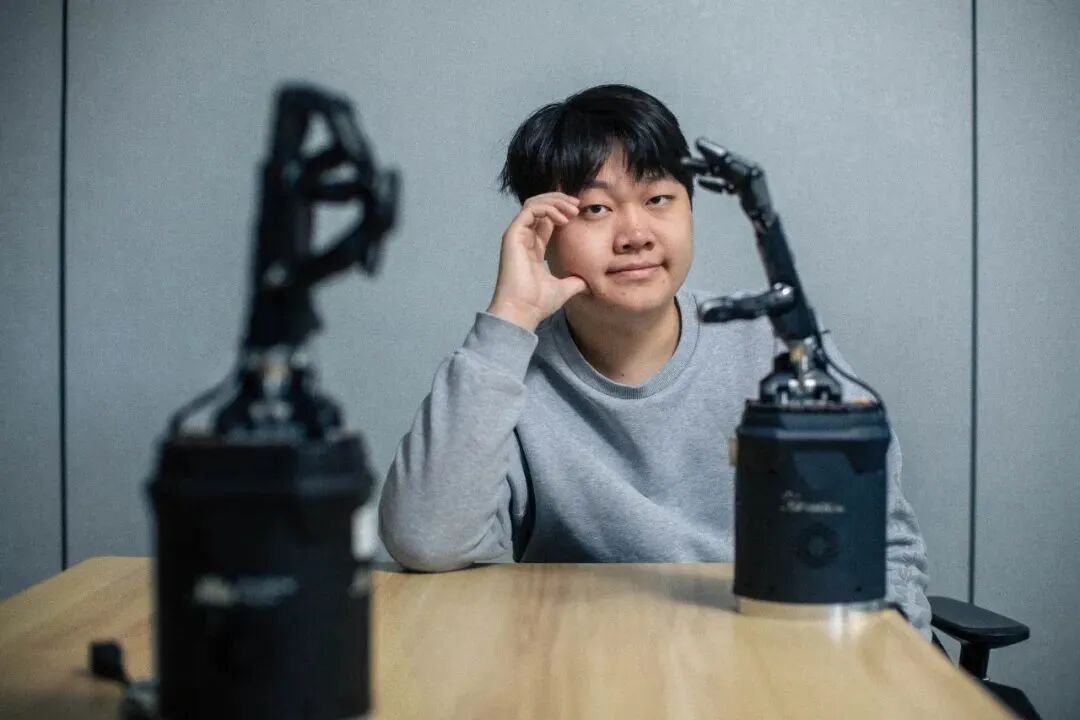
▲Source: Lingchu Intelligence official website
Elon Musk once asserted: "The real challenge in robot research and development lies in hardware design, especially the complex engineering problems of hands and forearms. A human hand has about 27 or 28 degrees of freedom, and to make a robot a truly general-purpose robot, the problem of the 'hand' must be solved."
This is also the breakthrough point that Lingchu Intelligence is targeting. Shortly after its establishment, the company launched its first 21-degree-of-freedom dexterous hand, which can stably grasp a paper cup full of water without spilling a single drop.
This attracted the attention of NVIDIA, and the two sides announced that they would carry out in-depth cooperation in the field of simulation training. Meituan also followed suit and invited them to jointly develop the last-mile delivery robot "Little Yellow Bee".
In early 2025, Lingchu Intelligence completed its angel-round financing led by Hillhouse Capital and BlueRun Ventures, and its valuation exceeded 100 million RMB.
Currently, the market for embodied intelligence robots continues to heat up. According to the prediction of the Development Research Center of the State Council in the "China Development Report 2025", the scale of China's embodied intelligence industry will reach 400 billion RMB in 2030 and exceed one trillion RMB in 2035.
On this emerging track, in addition to Chen Yuanpei's team, a group of post-2000 entrepreneurs are emerging.
Min Yuheng, a 25-year-old AI master's graduate from Tsinghua University, founded Zero Dimension Robotics. Just six months after its establishment, the company received 100 million RMB in financing and orders worth tens of millions of RMB. 80% of the R & D personnel in the team come from the top two universities in China.
There is also Dr. Yang Fengyu, the founder of Urichi, who is of the same age. After taking a leave of absence from Yale University and returning to China, he focused on the research and development of nanny robots. The company has completed angel-round financing of hundreds of millions of RMB and signed orders worth tens of millions of RMB. The company's chief scientist is Professor Wang Hesheng from Shanghai Jiao Tong University, a global robotics expert.
The "Water Seller" in the Gold Rush
While these post-2000 entrepreneurs choose to focus on AI and robotics, another peer decided to blaze a new trail - to be the "water seller" in the AI gold rush. He is Fu Zhi, the founder of Gongji Technology.
Fu Zhi was born in a rural area in Tongren, Guizhou. His parents are ordinary people without higher education. In his childhood, he witnessed the hardships of migrant workers in Huaguo Garden in Guiyang, which inspired his belief in "making the world a better place through entrepreneurship".
In 2018, he was admitted to Tsinghua University and became the first college student in his village. When he first entered Tsinghua University, Fu Zhi became somewhat inferior. "I felt that every classmate around me was better than me."
But just a few years later, he became the "2024 Tsinghua Annual Figure" and the "2025 Beijing Youth Role Model".
It all started in the winter of 2022.
That winter, an urgent research project required Fu Zhi to complete 40 days' worth of calculations in 7 days. Facing the dilemma of "insufficient computing power", he borrowed 8 computers here and there and finally completed the task before the deadline.
Inspired by this experience, Fu Zhi simply developed a simple shared computing power platform and posted it on Bilibili to help people solve the problem of temporary insufficient computing power. Unexpectedly, the daily registration volume of the website reached 7,000 - 8,000 people, and there were 5 paying customers.
This small attempt made Fu Zhi's concept of a shared computing power platform more and more formed. In his opinion, small and medium-sized enterprises and individual developers have a large amount of elastic demand for AI computing power, just like passengers all over the streets. On the other hand, China has 570 million personal computers, and 67% of their computing power is idle in daily life, just like empty vehicles.
The current situation of the computing power market is just like the taxi market before the emergence of ride-hailing services. Fu Zhi wants to build a stable, low-cost, and elastic shared computing power platform and be the "Didi in the computing power industry".
At the beginning of the startup, he convinced two Tsinghua geniuses to join: Xu Zhongziheng, a dual doctor in mechanical engineering and computer science from Tsinghua University, who had the highest score in his grade in the School of Mechanical Engineering in the past decade and once cracked a "bottleneck" technical problem in the national military industry in two nights; and Huang Li'ang, a doctor from the Institute for Interdisciplinary Information Sciences at Tsinghua University, who won the first place in the Asian Supercomputing Competition.
Although the team is so professional, when presenting the project, Fu Zhi received more doubts. Some investors even bluntly said: "You can't make this happen. Someone tried it in the 1980s and couldn't make money."
Compared with ride-hailing sharing, computing power sharing does have many technical difficulties and monetization challenges, but the investors clearly underestimated the perseverance and strength of this post-2000 team.
To save costs, Fu Zhi's team started their "garage-style startup" in a residential house in Haidian. After two years of intensive research and development, they completed more than 80 product iterations and finally achieved a 99.9% stability rate, and 90% of the devices can be connected with one click.
Although the technical problems have solutions, the financial pressure is also a reality that this young team has to face. In the summer of 2023, Fu Zhi faced the most difficult moment, and the team was on the verge of disbandment.
Until one day at the end of August, when Fu Zhi was taking a walk in Hainan, he accidentally saw a "colorful cloud". The next day, he received a call from Lu Qi, the former president of Baidu, and got 300,000 US dollars in seed investment, which relieved the urgent need.
Now, the demand for AI computing power is growing explosively, and Gongji Technology has also opened up a new situation. Local governments in Qinghai, Hebei and other places have even actively approached the company for cooperation, and the company has completed angel financing of tens of millions of RMB.
As of now, Gongji Technology has connected hundreds of thousands of devices. The computing power of these devices running together is equivalent to the sum of the computing power of two Yangtze River Delta Intelligent Computing Centers. In the first half of 2025, the company achieved a revenue of 20 million RMB.
An investor once told Fu Zhi: "Read 'On Protracted War' in Mao Zedong's Selected Works. There is the top - level strategy."
According to the prediction of the Ministry of Industry and Information Technology, the scale of China's computing power market will exceed one trillion RMB in 2030, of which the proportion of elastic computing power will exceed 100 billion RMB. For Fu Zhi, the battle