Is it a sure - fire way to make money by doing a side business with a 3D printer?
If you've visited a creative market on the weekend, you may have noticed that 3D printing stalls are becoming increasingly common. There was a time when 3D printing was just a hot concept in tech news. Now, the price of a decent entry - level 3D printer has dropped to two or three thousand yuan, and there are even options available for less than a thousand yuan.
The affordable price, simplified operation, and abundant free model resources have encouraged more and more people to give it a try. Some have even turned it into a side business, setting up stalls at markets, taking online orders for "print - on - demand" services, or offering customized modeling services for specific needs. From children's toys like ankylosaurs and snakes, to delicate figurines and props of popular IPs, and daily items such as keychains of anime characters, almost any creative idea can be transformed from a digital model into a tangible object that can be held in hand and sold.
But can you really make money from 3D printing as a side business?
Who is manufacturing, and who is buying?
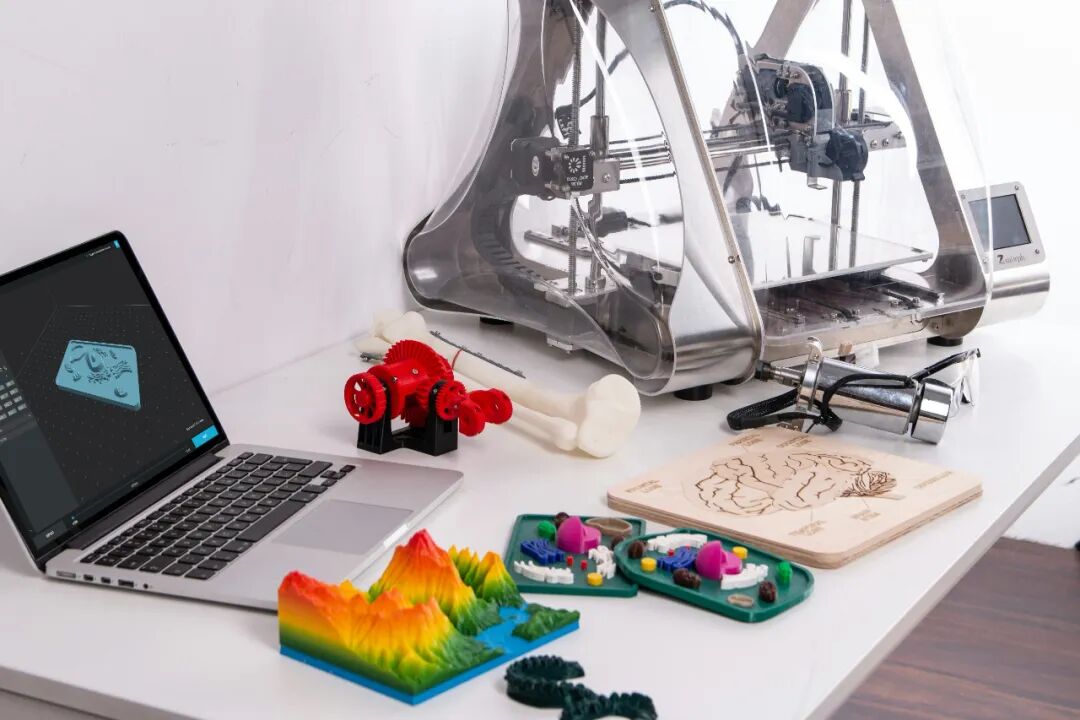
3D printing, also known as additive manufacturing, is a technology that uses adhesive materials to build a physical object layer by layer based on a digital model file. Simply put, as long as you can design a 3D model on a computer, it can turn the digital model into a physical object - from delicate figurines, practical household ornaments to personalized accessories, with almost no restrictions on the shape.
Initially, 3D printing technology was mainly applied in professional fields such as industry, aerospace, and medicine. Subsequently, it gradually expanded to industries such as education, film, and gaming. In recent years, 3D printing has stepped out of the professional circle and integrated into daily life, becoming a creative tool that ordinary people can use.
Driven by domestic brands such as TROXY and Creality, the price of 3D printing equipment has now dropped to the thousand - yuan level. As the operation process of the equipment becomes increasingly simplified, free model resources continue to grow, and AI modeling tools are gradually popularized, the technical threshold and cost have been significantly reduced.
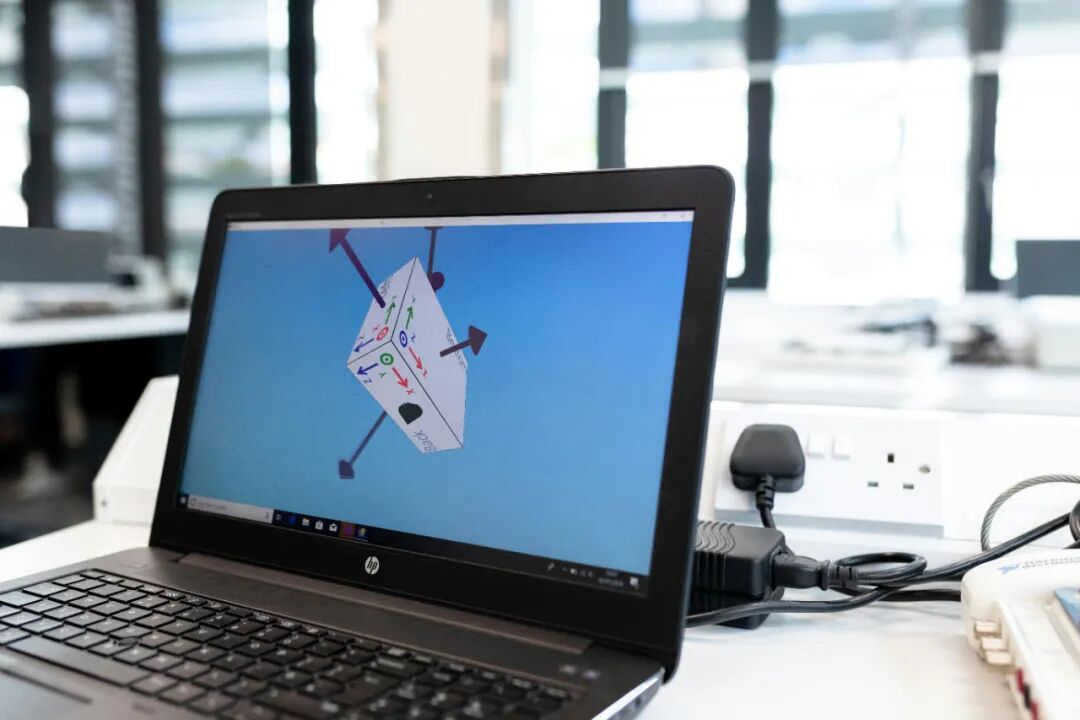
The audience for 3D printing is also very wide: there are individual enthusiasts who enjoy the fun of creation, and family users who use it for parent - child education. At the same time, this technology has also given rise to new income models. In addition to professional "printing farmers" who take large - scale orders, more and more people are starting to combine 3D printing with side businesses to expand their income channels. For example, selling printed works at creative markets, taking "print - on - demand" orders on various platforms, or providing personalized customization services through self - learned modeling.
Among them, setting up a stall has become one of the most common forms of side businesses. Amy is a typical example. In September last year, Amy accidentally saw a 3D printing stall during her trip to Qingdao, which was her first encounter with 3D printing. "I immediately did some research after I got back and bought a 3D printer in October," she said.
Amy's first 3D printer, the TROXY A1C, cost her nearly 2,500 yuan. Later, there was a small incident. Ten days later, the same model went on sale online, and the price dropped to 1,877 yuan, more than 600 yuan cheaper than what she paid. Amy then bought another one and resold the first one for 2,299 yuan, making a profit of 377 yuan on the spot. During the "Double Twelve" promotion, she bought the higher - end P1SC of the same brand for 4,555 yuan (while the same model was only sold for about 2,400 yuan during this year's "Double Eleven"). She joked that she "bought it at the most expensive and popular time." Later, she also added a mini - printer that cost about a thousand yuan.
After getting the printing equipment, Amy mainly collected model files from the TROXY official website and its community, printed them into physical objects, and started to test the waters at different places such as her own neighborhood, free markets, and paid markets in scenic spots. The items she sold included toys popular among children, such as ankylosaurs and retractable swords, as well as trendy ornaments in the shapes of Nezha, Labubu, Ultraman, and pandas. The unit price ranged from 5 yuan to 35 yuan, and the profit margin was approximately maintained at 65%.
Stall - keepers like Amy are not rare across the country. You can see their 3D printing stalls at specialized cultural and creative markets or on the streets. However, there is also a divide within this group. In addition to self - employed stall - keepers like Amy who buy their own equipment and print and produce independently, there are also many stall - keepers who are actually "middlemen." They either source finished products directly from wholesale channels or adopt a mixed model of "partial self - printing + partial outsourcing" to organize their goods.
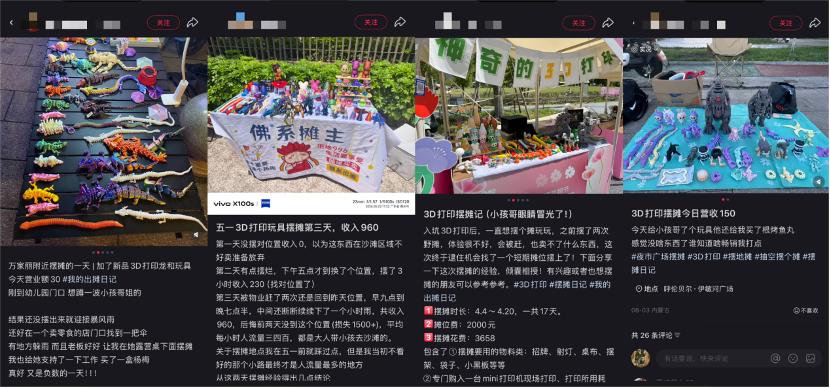
*Image source: Screenshot from Xiaohongshu
In fact, the motivation of ordinary consumers to buy 3D - printed products has long gone beyond "trying something new" and is based on real and specific needs. Juzisang initially bought 3D - printed products to customize storage accessories for the board game "7 Wonders Duel." "This board game does have some original storage, but the space structure is unreasonable and the quality is poor, which is almost the same as having none. There are also many cards and tokens and other props, and it takes a long time to organize them. If there is a suitable storage, it can reduce the organization time and quickly start the game," she added. She also said that the props of this game are all non - standard sizes and are not suitable for standard small boxes for storage. Since board games are relatively niche and do not support mass production by large manufacturers, 3D printing has become the most suitable option.
Juzisang told Jingzhe Research Institute that communicating with the seller about the customization requirements was very smooth. "I felt that the seller knew more about board games than I did. I guessed that the seller should be a player in the circle." She finally spent 30 yuan to customize the storage accessories, and both the price and the physical object met her expectations. "The storage slots are very well - fitted, and the workmanship and quality are very solid." In addition, she also bought some general board - game accessories made by 3D printing, such as dice towers (20 yuan each) and scorekeepers (10 yuan each). "They are all for improving the game efficiency and playing experience."
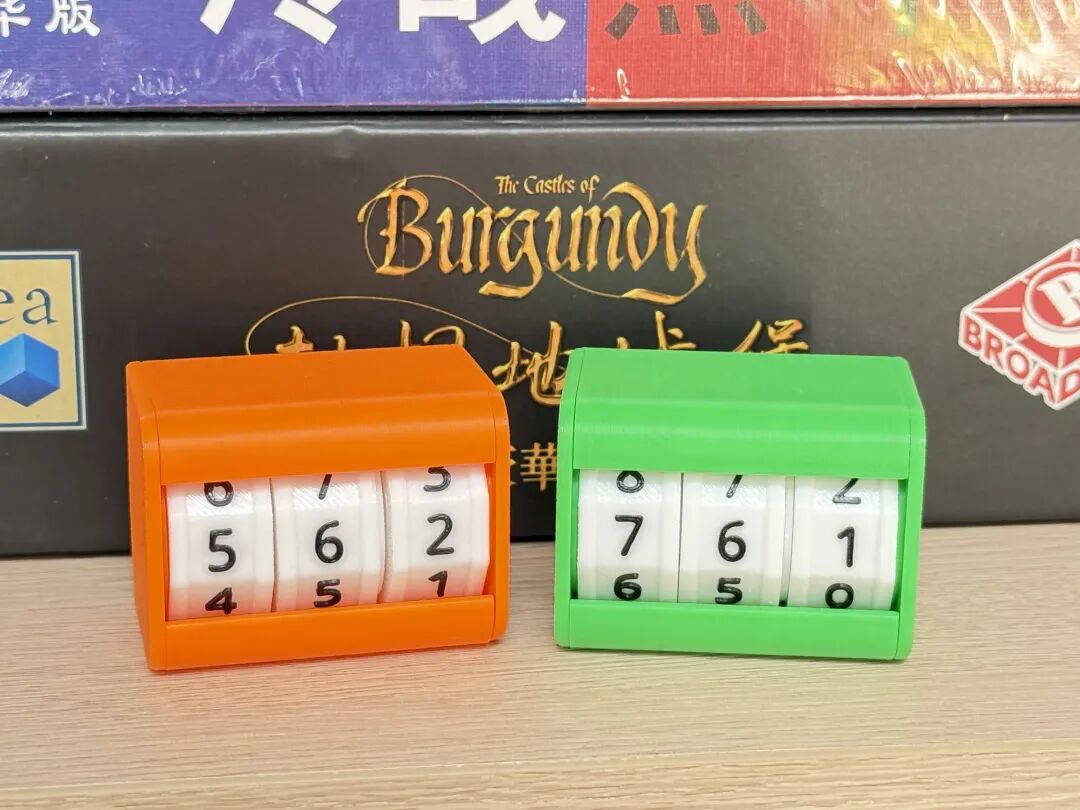
*3D - printed scorekeeper (Provided by Juzisang)
When the filter fades from 3D printing
Although the popularization of 3D printing technology has greatly lowered the manufacturing threshold and given rise to new consumption forms and career possibilities, it has not reduced the difficulty of achieving business success. Starting a side business with just one or two 3D printers may not be an easy way to make money.
After about half a year of setting up a stall, Amy decided to quit. During this half - year, she moved around a dozen stalls and deeply felt the reality of this business. "The entry threshold for 3D printing is low, the competition is fierce, and the stall fees are high. It's very difficult to recoup the costs," Amy told Jingzhe Research Institute. The stall fees at markets vary depending on the popularity. In less - popular places, it costs 300 yuan for three days with a 100 - yuan deposit. In slightly more popular places, it costs 2,000 yuan for two weeks with a 500 - yuan deposit. She also said that as the number of 3D - printing stall - keepers increases, popular markets often "control the products." Only one stall is allowed to operate the same category of products, and you have to be quick to sign up. If you're late, you won't be able to register. However, in markets without product control, customers will be picky, the business will be difficult to do, and it's easy to fall into a price war, and in the end, no one can make money.
"I can recoup the costs, but I can't make much money," Amy revealed to Jingzhe Research Institute. Her net profit during the stall - setting period was about 10,000 yuan. She didn't set up stalls very often and mainly relied on holidays. "It often rains in Hangzhou, and I can't set up a stall when it rains." More importantly, 3D printing itself is a time - consuming and labor - intensive process. "For example, printing a common 30 - cm small dragon takes four hours. If it's a large - sized, multi - colored, or more delicate model, it may take even longer, maybe several days. Some models also require manual material and tray changes in the middle."
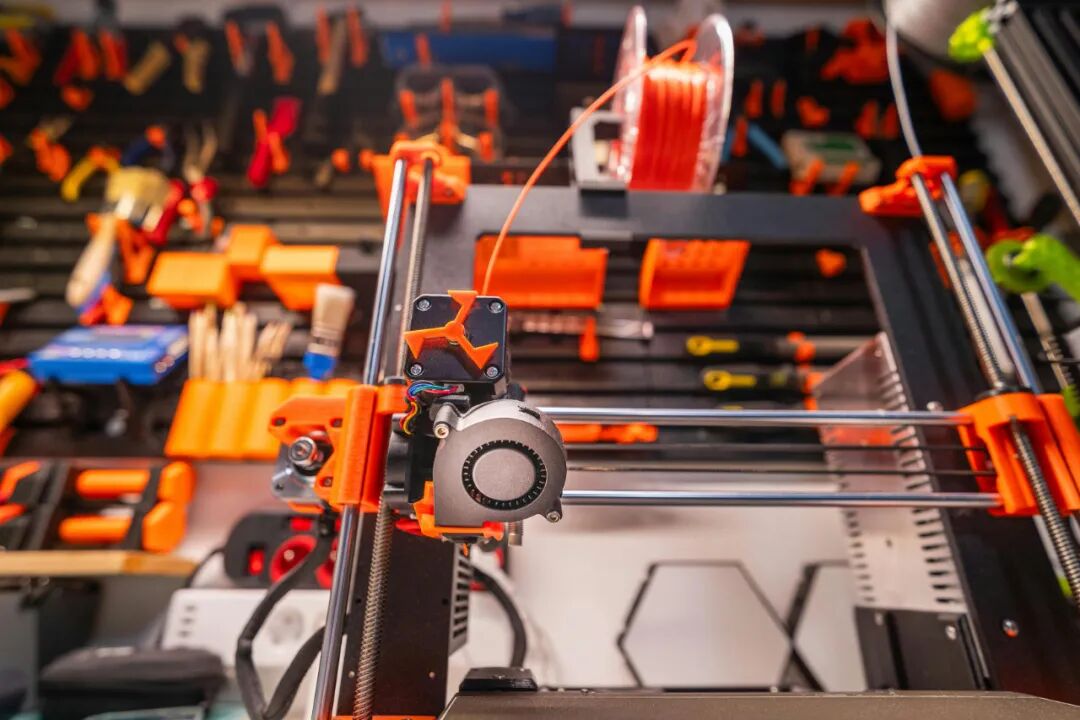
With a busy daily job and the need to take care of her child on weekends, her time was already limited. Coupled with the increasing saturation of similar stalls in Hangzhou, it was becoming more and more difficult to sign up for a high - quality market close to home. There is a lot of rain in Zhejiang, and it often rains on holidays. Outdoor stall - keeping also means enduring the cold in winter and the heat in summer. Under these multiple pressures, Amy decided to end her stall - keeping business. She finally sold her overstocked inventory at half of the cost price to someone else. "The other person took it away and planned to set up a batch of stalls during the summer vacation."
However, Amy didn't completely give up on the 3D - printing business. She switched to taking "print - on - demand" and customized modeling orders and also started to design and share models openly. "I can do 'print - on - demand' and customization at home more casually and take orders as they come."
Dai Yan's 3D - printing side business also started in October last year. "It was recommended to me by a friend at first. He thought it was profitable and introduced it to me." Dai Yan's first piece of equipment was the TROXY A1, which he bought for 1,659 yuan. He admitted that he initially just bought it for fun and to earn some pocket money and wasn't familiar with this industry.
Different from Amy, Dai Yan has always focused on online business. In the early stage, he mainly sold finished products that he printed and post - processed on Xianyu. The models were from the open - source resources on the TROXY official website. As he became more familiar with the equipment and the process, he started to take "print - on - demand" orders (customers provide model files) and customized orders on Xiaohongshu. For customized orders, he needed to do the modeling himself. The items he sold through customization included weapon props, Cosplay accessories, and trendy ornaments.
"I'm basically making finished products now, including printing, assembling, sanding, painting/hand - painting. 'Print - on - demand' is just for convenience," Dai Yan said. His first deal was a "Destined One" suit from "Black Myth: Wukong," which was sold for 108 yuan and took more than two days to complete. "I didn't know much about it at the beginning, and there were cases where the model was printed badly. This 108 - yuan price was actually quite low because it was very difficult to remove the supports from this model, and it took a long time. Also, silk material was used." He told Jingzhe Research Institute that the initial price of this suit was actually 158 yuan, but no one bought it, so he lowered it to 108 yuan with the intention of making the first deal.
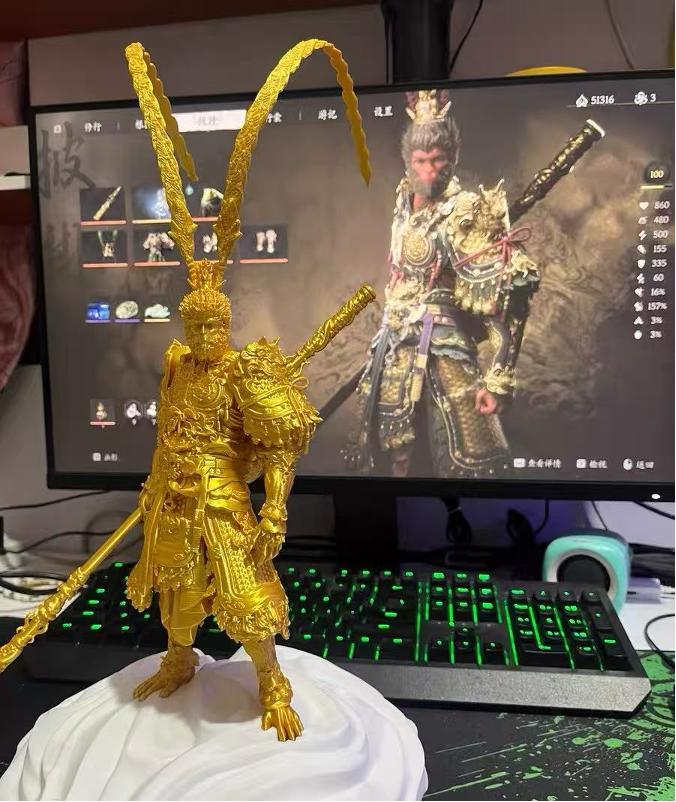
*3D - printed "Destined One" suit (Provided by Dai Yan)
Dai Yan mainly does his printing on weekends and after work. "Some models take a long time to print, and it's normal for it to take 15 - 20 hours." He said that if labor costs are not counted (including consumables, electricity bills, and machine depreciation), the profit can exceed 50%. But he also emphasized, "Actually, most of the money earned is labor fees because I do everything myself." According to him, this side business brings him about 2,000 yuan of income per month, but the customer source is not stable.
From consumers to creators
On social media, in the comment sections of many posts about 3D - printing side businesses, you can always see netizens reminding those who are eager to "join the game" to just treat it as a hobby. Some even joke that the "first pot of gold" earned from this industry may very well be the money recovered from selling the equipment in the end.
The reality is that if you only have one or two pieces of equipment, the profit margin is often limited, and the income mainly depends on the time and energy you personally invest. For example, the simple "print - on - demand" business can mostly only earn you some pocket money. To earn a considerable income from "print - on - demand," large - scale operation is usually required - investing a large number of equipment, establishing a stable "printing farm," and having the ability to continuously obtain orders. However, for most office workers who use 3D printing as a side business, they usually only have one or two pieces of equipment, and their spare time is limited. It's very difficult to take this capital - intensive path.
In Amy's opinion, if you have the time, ideas, are willing to make efforts, and can do modeling, 3D printing can be a good choice as a side business. But she also pointed out that "more and more people are joining the game now, and there are also many experts who are good at modeling. Unless you are willing to spend time making Cosplay props and creating popular models by yourself, it will be very difficult to succeed if you don't have outstanding advantages."
Anyway, 3D printing is continuously integrating into daily life. It is no longer a profound technology but has become a tool that ordinary people can use to truly create real objects. For consumers, the experience brought by this technology is becoming more and more tangible and vivid. For example, children will love 3D - printed interesting toys, and parents are also willing to pay for such creative products. Or, like Juzisang, by customizing exclusive board - game accessories, they can get a more