The Ministry of Industry and Information Technology has issued another document, no longer tolerating "inhuman designs". The new national standard specifically addresses hard-to-use doorknobs.
On December 16th, the Ministry of Industry and Information Technology officially released the draft for approval of the "Safety Technical Requirements for Automobile Door Handles" (hereinafter referred to as the "Requirements"), putting an abrupt stop to the design of hidden door handles.
Wei Jianjun, the chairman of Great Wall Motors, also added fuel to the fire last night. He presented a set of data: To reduce the vehicle's drag coefficient by just 0.001, a complex hidden door handle mechanism might add an extra 8 kilograms to the vehicle's weight. "So, we later decided that all our future vehicles must use traditional physical door handles. We should prioritize the reliability and safety of the products."
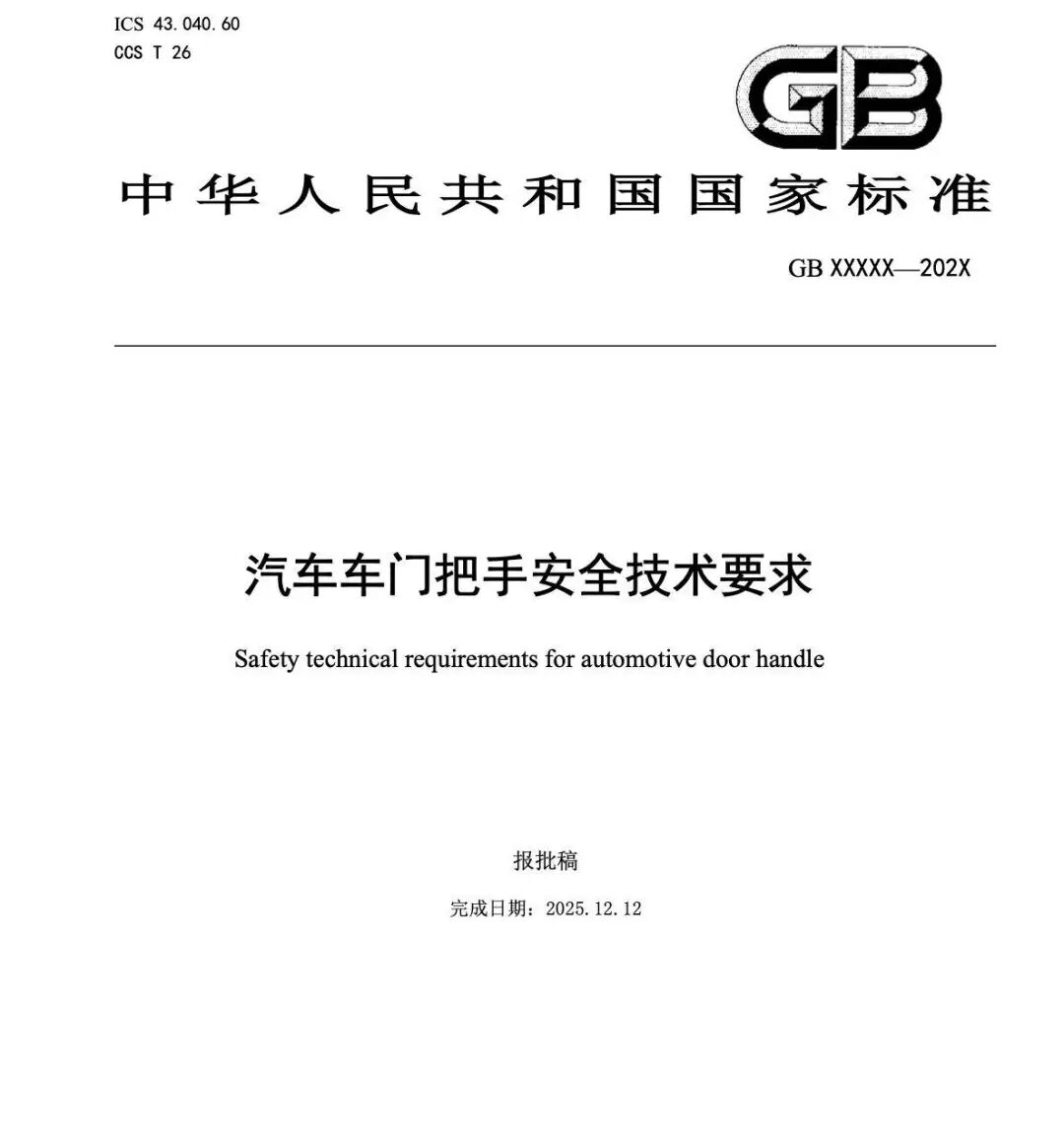
Everyone knows the drawbacks of hidden door handles. In the north, frozen door handles turn getting into the car into an "ice-breaking operation"; at accident scenes, door handles that fail to pop out are truly alarming. We're not the only ones suffering from this sacrifice of user experience for the sake of design. Tesla across the ocean has recently faced a lawsuit in the United States due to similar issues.
This time, the Ministry of Industry and Information Technology was quite firm in its compilation notes, directly pointing out four major flaws in the existing design: insufficient strength, potential control logic issues, difficult identification, and failure due to power outage.
This time, the Ministry of Industry and Information Technology is like the voice of countless users on the Internet.
The Incomprehensible Minimalist Design Requires an "Ugly" Instruction Manual
The new regulations have provisions for both interior and exterior door handles. Let's start with the interior ones.
Looking through Chapter 4.1.2 of the "Requirements", the drafting group almost used the "exhaustive method" to block the way for those counter - intuitive designs.
The document clearly stipulates that, except for traditional mechanical handles such as "straight - handle, ring - type, and vertical - handle" with a single operation direction, all other fancy forms, especially the currently popular electronic buttons, must be equipped with "permanent signs".
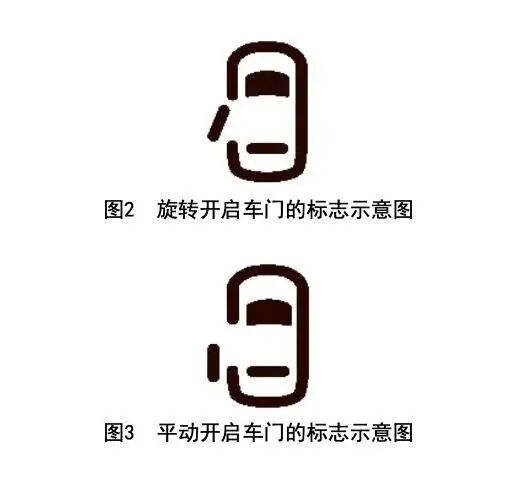
That's not enough. The "Requirements" then delivered a heavy blow in Clause 4.1.2.4:
If the operation method of your interior door handle is not intuitive (for example, the operation direction is unconventional, or you need to operate it multiple times to open the door), then the automaker must add a "Chinese or pictorial instruction with a height of no less than 6mm" near the handle.
Imagine having to stick an instruction like "Pull twice in succession" on the door panel of a luxury car that boasts a sense of the future. The sense of sophistication painstakingly created by the designer collapses instantly in the face of this mandatory "instruction manual".
In fact, this is a choice. Either design the door handle in an easy - to - understand way, or accept sticking an ugly patch in the most prominent part of the interior.
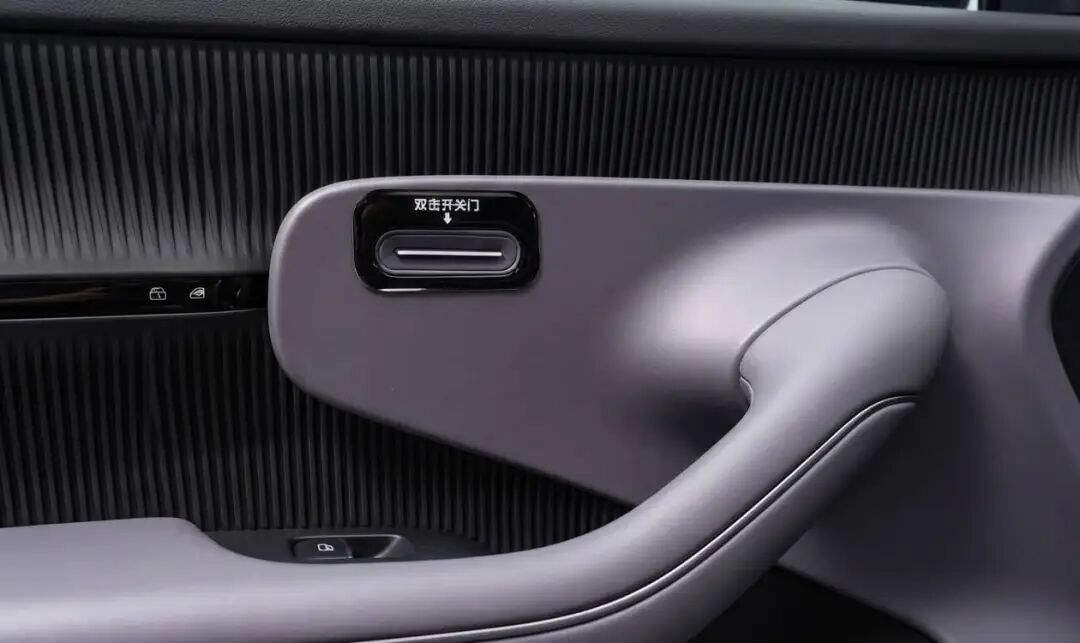
This image was generated by AI based on the requirements of the new regulations. It is only for effect demonstration and not a real - vehicle photo.
While we need to "eliminate illiteracy" inside the car, the exterior door handles can no longer play "hide - and - seek".
To pursue a sleek appearance and low drag, current hidden door handles often fit flush with the car door when retracted. Once the vehicle runs out of power or the motor malfunctions and the handle fails to pop out, people outside the car are at a loss and can only be anxious. They may even need tools like suction cups or pry bars to open the door.
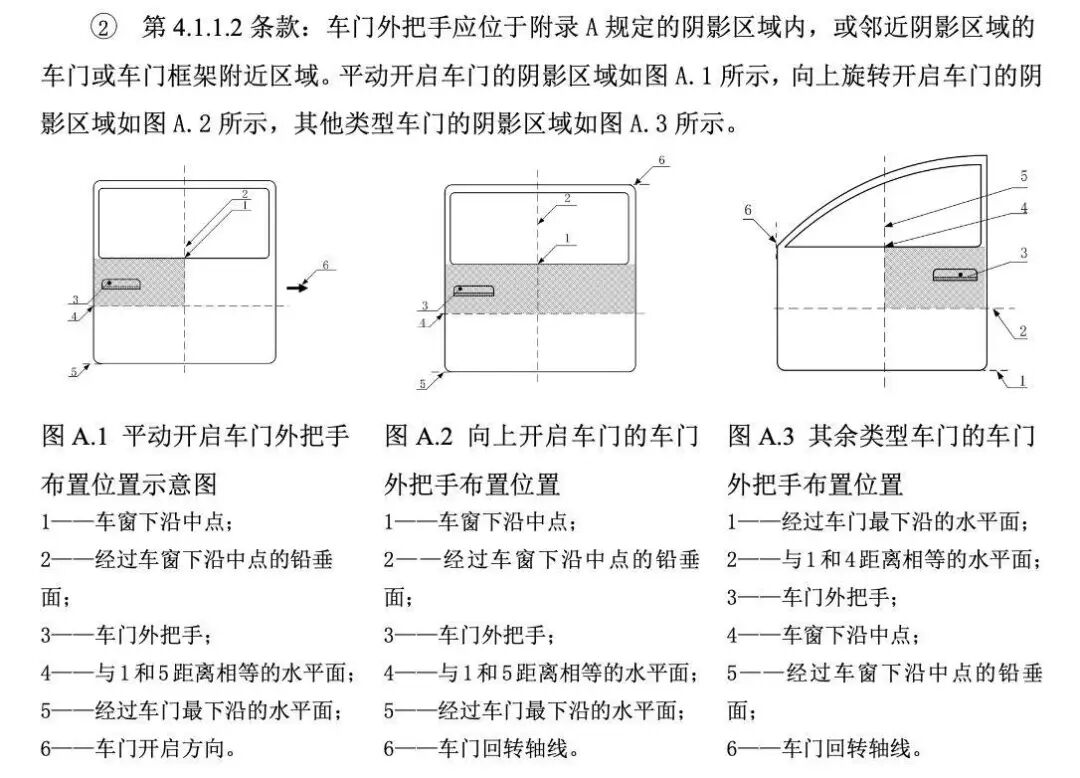
This time, Clause 4.1.1.1 of the "Requirements" directly blocked this path, clearly stating that after an accident or an event such as battery thermal runaway, the exterior door handle must be mechanically released to open the door "without the aid of tools". Other designs will no longer be compliant.
The standard also quantifies the "ability to insert a hand". In Clause 4.1.1.3, the new regulation requires that the exterior door handle must have enough space for a hand to insert and operate the mechanical release in any state, and it should also be able to accommodate a standard "hand operation space module".
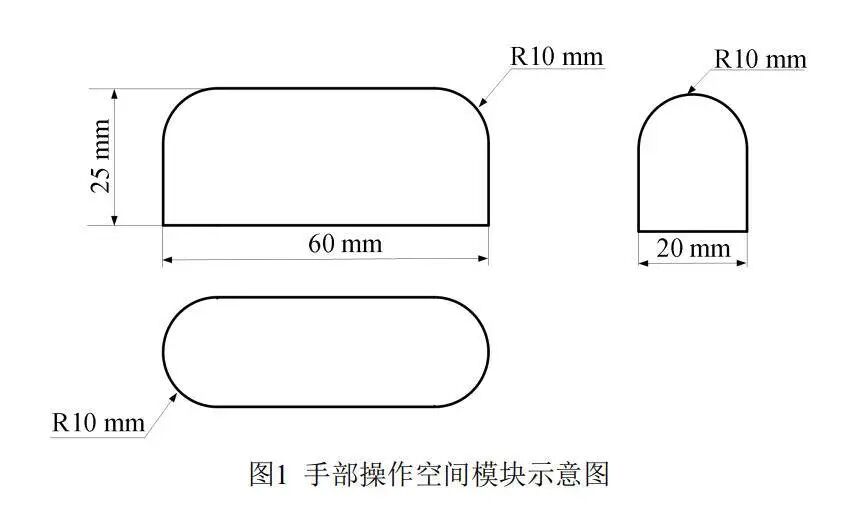
The door handle is finally no longer just a decorative item.
The Last Line of Defense after Electronic Failure
After solving the problem of "how to open", the next step is to solve the problem of "whether it can be opened".
Modern cars are becoming more and more like electronic products, but car door locks should not be purely based on electronic logic. Many new energy vehicles rely heavily on the 12V low - voltage power supply. In a serious side - impact or rear - end collision, once the small battery is damaged or the circuit is cut off, the all - electronic door lock will be completely locked due to power loss. Without a reliable mechanical connection, people inside the car can't get out, and people outside can't get in. This is the greatest source of fear.
To address this pain point, the "Requirements" have drawn a very specific "line of life and death": 70 milliseconds.
In Clause 5.1.4 of the "Requirements", the test conditions are set extremely strictly: Starting from the moment when the vehicle collides and the airbag deploys (irreversible restraint device activates), the low - voltage auxiliary power supply is forcibly cut off 70ms ± 5ms later. These 70 milliseconds simulate the last window period when the electronic system can still function normally at the moment of an accident.
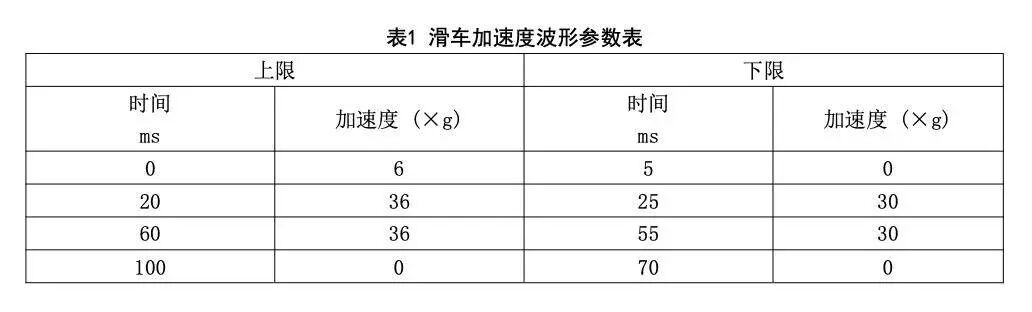
The requirements of the new regulation are uncompromising. At 1 minute and 5 minutes after the power outage, the door must be able to be opened by mechanically releasing the exterior door handle. Moreover, Clause 4.1.1.1 of the standard specifically emphasizes that no tools should be used during the entire opening process.
This means that regardless of how advanced the vehicle's electronic architecture is or whether there is a so - called "backup capacitor", a set of pure mechanical physical redundancy, such as a cable or a linkage, must be a standard configuration. Previously, designs that hid the mechanical lock cylinder under a decorative cover to pursue minimalism and required a long time to operate with a fingernail or even special tools will no longer meet the requirements of the new regulation.
In the verification tests conducted by the drafting group, we can see the necessity of this "mandatory redundancy". A test vehicle coded 01#, although equipped with an electronically released door lock, could still open the door smoothly during the power - outage test because it retained a mechanical cable backup. However, those solutions that rely solely on electric power and have no mechanical backup couldn't pass this test.
Besides the issue of whether the door can be opened, the drafting group is also concerned about the durability of the door handle.
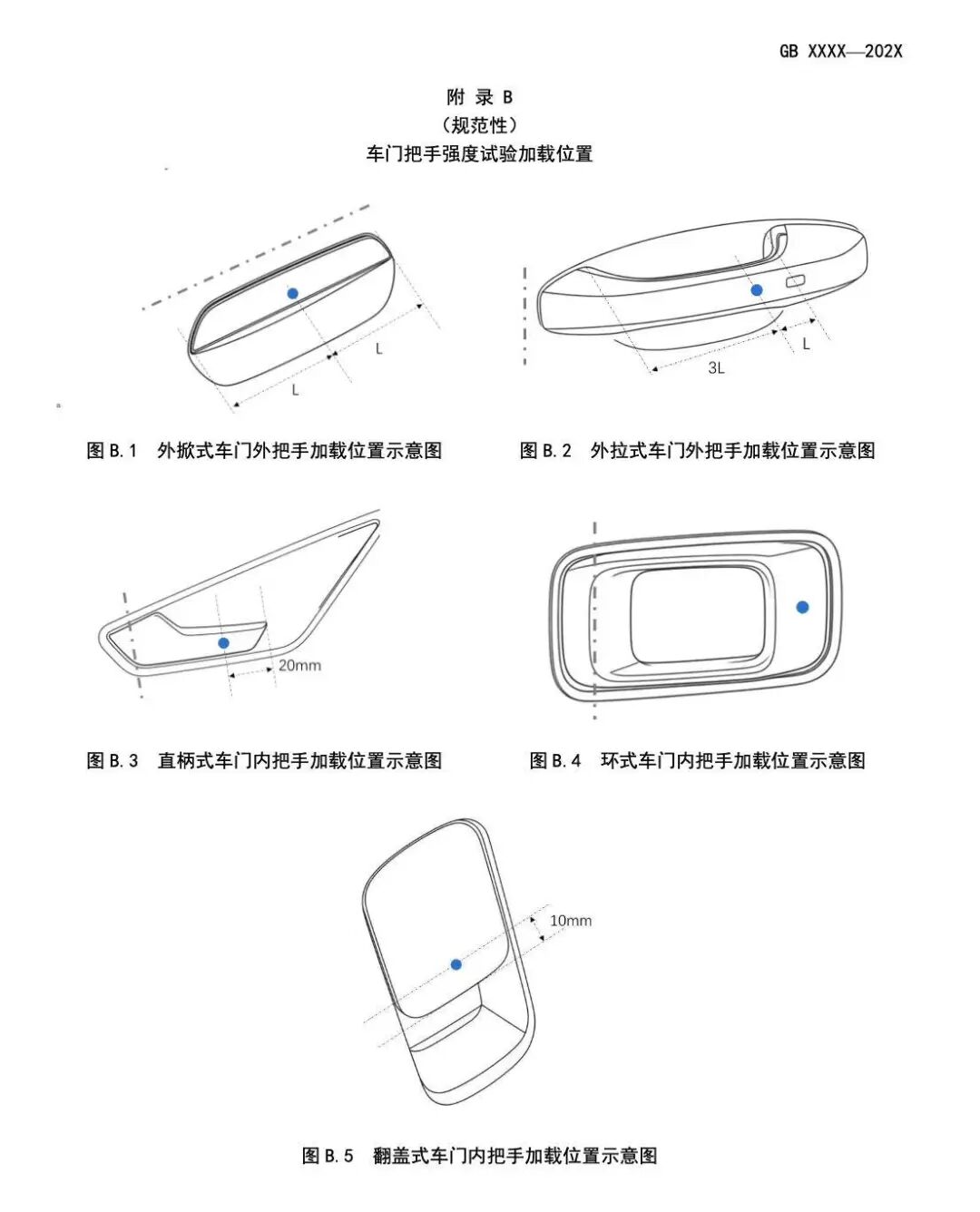
During emergency rescues, rescuers often pull the car door forcefully. If the door handle is a flimsy plastic one that breaks easily, the consequences would be unimaginable. Therefore, Chapter 5.4 of the "Requirements" specifically sets a strength threshold: The exterior door handle should be able to withstand a pulling force of 500N, and the interior handle should withstand 200N, and it should not break or fall off during the test.
Automakers have actually paid a heavy price for the imperfect "electronification". As Wei Jianjun complained, to reduce the drag coefficient by 0.001, a complex hidden electronic mechanism might add an extra 8 kilograms to the vehicle's weight. This complexity not only adds weight but also reduces reliability. The collision test data from the China Insurance Automotive Safety Index shows that for vehicles equipped with electronic door handles, the probability of the door popping open successfully after a side - impact is only 67%, while for traditional mechanical door handles, this figure is as high as 98%.
For automakers, the good news is that they still have a relatively long time to make corrections. According to the suggestions in the "Compilation Notes", newly - applied - for vehicle models will be required to comply starting from January 1st, 2027. For existing models on the market, there is a two - year grace period, and they will be required to comply by January 1st, 2029.
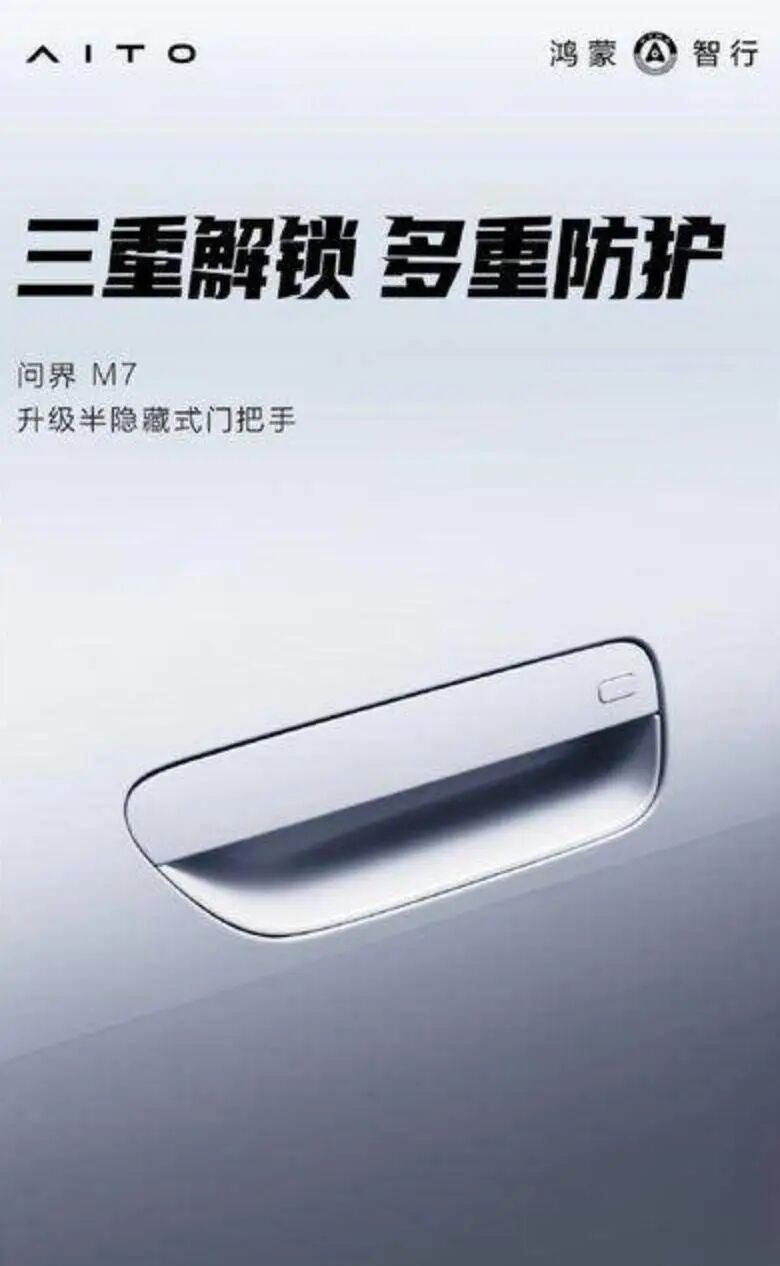
However, this doesn't mean that everyone will wait until the last moment. The market is often more sensitive than regulations. We've already seen that the new - model AITO M7, Geely's Zeekr 9X and 8X, and even Wei Jianjun's statement from Great Wall Motors all point to a common trend: The industry is quietly changing door handles back to semi - hidden types or simply returning to traditional ones.
The absurd era when you needed a hammer to knock on the door and read an instruction manual before getting in the car is finally coming to an end.
This article is from the WeChat official account "Dong Che Hui". The author is Li Hua. It is published by 36Kr with authorization.