AI Webtoons in 2025: Technological Surge, Cost Revolution, and Incremental Space
As we stand at the end of 2025, it is certain that AI technology will continue to iterate and update at a pace that ordinary people can hardly keep up with. The balance between the production cost and content quality of comic dramas will continue to be adjusted, eventually reaching a critical point that the entire industry cannot ignore.
While micro - short dramas are gradually starting to worry about the soaring salaries of leading actors, just like long dramas, AI comic dramas, as a brand - new content track, achieved a remarkable leap in 2025.
In terms of popularity, the comic drama market has achieved in one year what the short - drama market took three to four years to achieve. Many market research reports believe that the scale of the comic drama market is expected to exceed 20 billion yuan this year. Data disclosed by ByteDance in August showed that from April to July 2025, the supply of comic dramas achieved a compound growth rate of 83%, and the playback volume and likes achieved compound growth rates of 92% and 105% respectively. The data from Kuaishou Keling is even more astonishing. In the third quarter of 2025, the daily revenue of the AI comic drama industry increased by 900% compared with the fourth quarter of 2024, and the number of monthly - produced comic drama episodes increased by 567%.
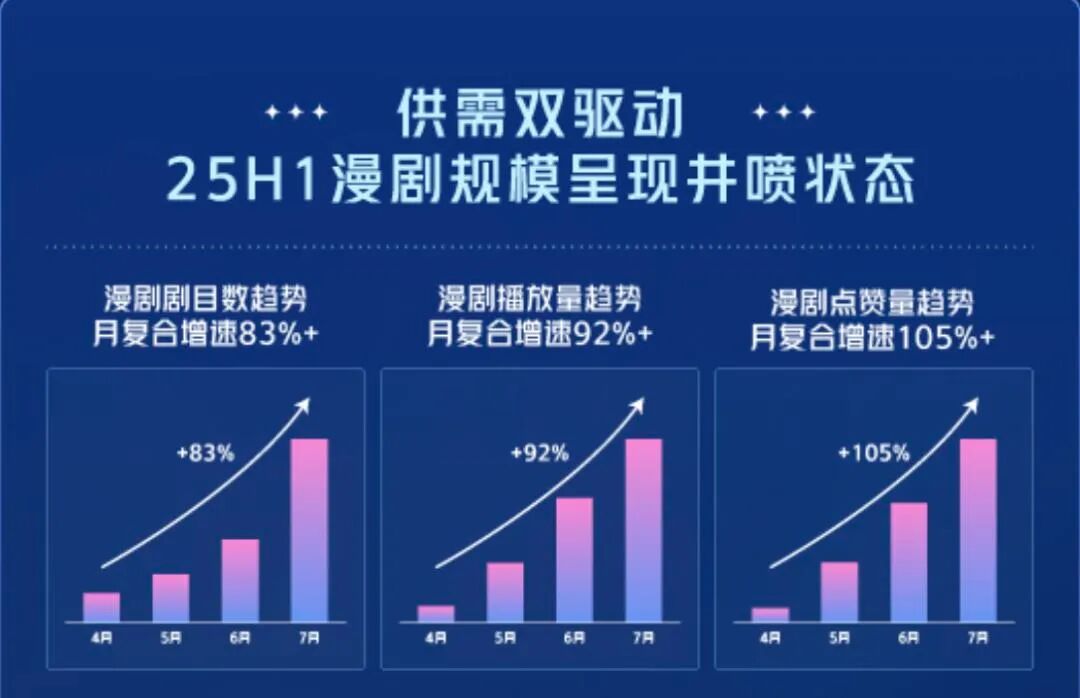
Moreover, the enthusiasm of major video platforms to enter the market also shows the importance of AI comic dramas as a rapidly growing "new field". On November 3rd, Hongguo launched its independent app, Hongguo Comic Drama App. Qimao Novels under Baidu announced the establishment of Qimao Comic Drama, and iQiyi also announced the launch of a comic drama channel. At the same time, almost all video platforms and IP platforms have launched their own comic drama support programs, offering extremely high revenue - sharing ratios to production companies.
Looking back at its development trajectory, the rapid rise of AI comic dramas is not accidental but an inevitable result of the dual effects of technological iteration and market demand. From the early "silly - style comics" mainly featuring "panda - head" emojis to today's fully AI - enabled comic drama creation, the driving force behind this transformation is, on the one hand, the transformation of content production methods by the rapid technological upgrade, and on the other hand, the growing micro - short drama market and the soaring costs related to live - action short dramas, which force market participants to seek more ways to increase revenue and reduce expenditure.
Perhaps, comic dramas have caught up with such a "double - windfall" of technology and the market.
Technological Explosion Drives the Rapid Development of AI Comic Dramas
So far, about four content forms of comic dramas have emerged:
Silly - style comics are the early form, centered around minimalist images such as emojis and panda heads, featuring absurd and funny plots with dense meme fusions and rapid reversals. Dynamic comics are based on static comic IPs. Through camera panning, zooming, and dynamic processing of key frames, and by adding AI voice - overs and voice - over explanations, they retain the visual style of the original comics and are transformed into a unit - drama mode. Novel dramas use voice - over narration of online novels, combined with simple scene animations and text special effects, to achieve rapid content transformation, roughly equivalent to a "video version of audiobooks".
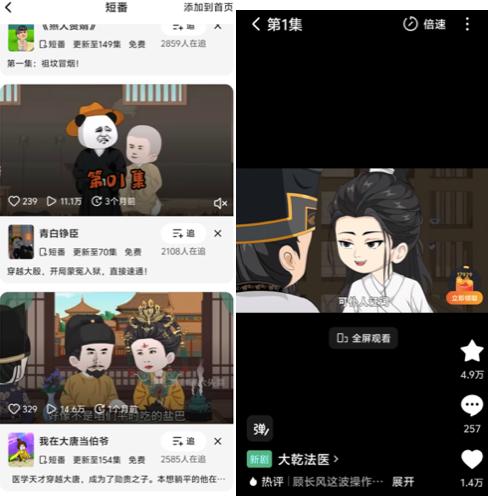
These three forms of comic dramas already existed in large numbers in the short - video content market before the intervention of AI production capacity. Silly - style comics are closely related to the secondary - creation ecosystems of platforms such as Bilibili, Douyin, and Kuaishou, while dynamic comics and novel dramas efficiently utilize the existing assets of IP owners, quickly establishing the commercial feasibility of video - converting comic and online - novel assets, and becoming the preferred path for the lightweight development of some non - top - tier IPs.
The latest AI comic dramas are produced through AI tools in the entire process. The finished products are as close as possible to traditional 2D and 3D animated dramas. The complexity of the pictures is gradually increasing, the story continuity is strong, and they have independent narrative capabilities. The storyboards, characters, and scenes generated by AI also maintain a high degree of consistency. It is reported that AI technology runs through the entire process of script generation, storyboard design, character animation, and voice - over translation. The production cycle has been compressed from several months in the traditional mode to a few days. A ten - person team can complete a 100 - minute drama within ten days, and the cost can be reduced to 1/5 or even lower of the traditional mode.
In the drama list of the Hongguo Short Drama Platform, most are already high - quality AI comic dramas, with each episode lasting 1 - 3 minutes and the entire work having 60 - 120 episodes, giving a viewing experience similar to mainstream short dramas.
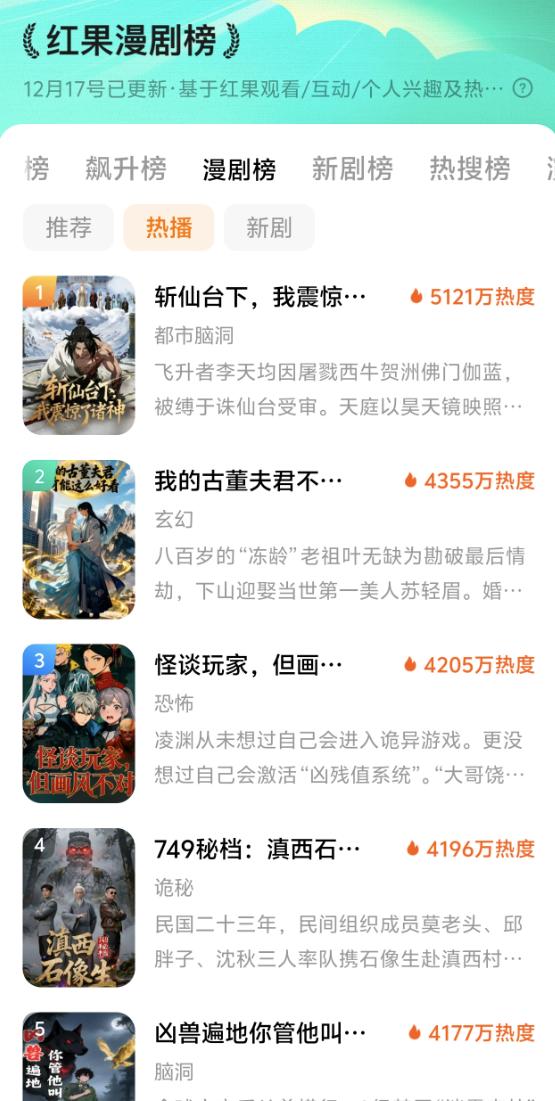
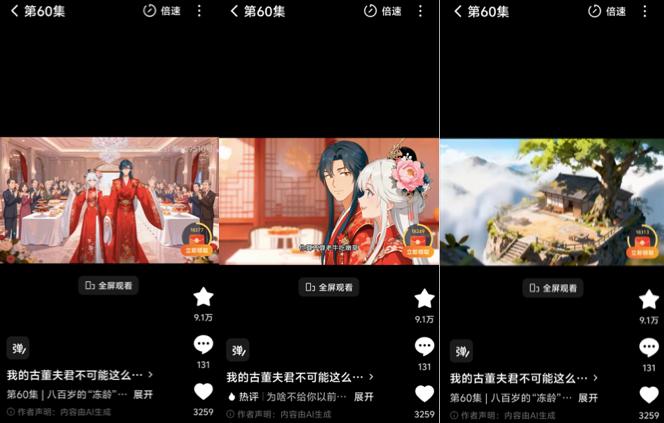
The top two recently popular dramas on the "Hongguo Comic Drama List" are "I Shocked the Gods at the Immortal - Beheading Platform!" and "My Antique Husband Can't Be This Good - looking". These two works are quite representative. The former is a typical male - oriented theme, while the latter is a typical female - oriented theme.
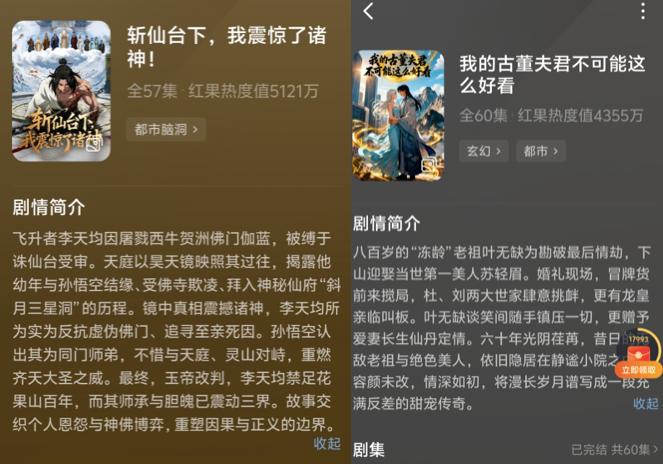
The story of "I Shocked the Gods at the Immortal - Beheading Platform!" combines the worldviews of "Journey to the West" and "Investiture of the Gods", and is a traditional mythological deconstruction story similar to "Black Myth: Wukong". The protagonist, Li Tianjun, was taken to the immortal - beheading platform for slaughtering Buddhist arhats. During the trial, his astonishing identity as the junior brother of Sun Wukong and the truth of his resistance against the hypocritical gods and Buddhas were revealed through the Haotian Mirror. The characteristic of this work lies in its strong - conflict narrative with a high - octane start, deeply integrating national IP elements such as "Journey to the West", and resonating with the audience through its "anti - routine" plots and high - density emotional highlights, thus becoming a phenomenon - level hit.
"My Antique Husband Can't Be This Good - looking" tells a sweet and fantasy story about an 800 - year - old "ageless" ancestor, Ye Wuque, who descends the mountain to overcome the love tribulation and marries Su Qingmei, the most beautiful woman of the time. After dealing with various provocations at the wedding, he lives in seclusion with his lover for sixty years.
The visual performance of "My Antique Husband Can't Be This Good - looking" is significantly better than that of "I Shocked the Gods at the Immortal - Beheading Platform!". It has a large number of continuous action shots and more fluent full - body movements of characters, with richer scenes and more complex interactions. It is said that about 80% of the content of this drama is automatically generated by "Jurilu Agent", achieving high - quality output with continuous character movements and smooth long - shots, making it a representative of Agent becoming a mature productive force in comic dramas.
One can't help but sigh that the technological iteration in the AI era can no longer be measured in "years" or even "months". It really gives a feeling of "one day in heaven, one year on earth". In March this year, when the author was writing the article "2025: The Eve of the Explosion of AI Short Dramas", it was summarized that the content of AI short dramas at that time had "insufficient continuity, the average duration of a single shot was generally less than 5 seconds, relying on rapid editing to avoid action - logic defects, with a single shot language and a serious sense of dynamic PPT splicing... Currently, AI short dramas are still in the stage of 'existence', but ordinary audiences care about whether they are good - looking or not."
Now, AI comic dramas that look decent and have a viewing experience comparable to many small - and medium - budget animations in the past are everywhere.
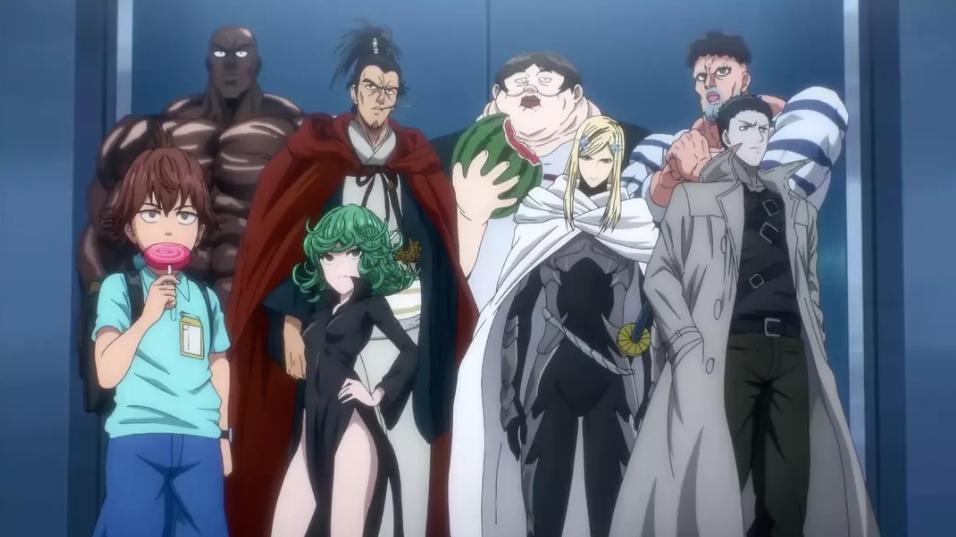
Meanwhile, recently, the Japanese animation "One - Punch Man Season 3" has been severely criticized on the Internet for its poor production quality, being full of static PPTs. Many audiences said that what they can make with AI is better than what J.C. Staff has done, and this is not an exaggeration at all, showing the huge impact of AI on traditional work processes.
At the beginning of this year, AI - generated videos still faced a severe challenge of "character consistency". Creators generally encountered problems such as distorted proportions of characters in generated videos and the "face - changing" of the protagonist under multiple shots, making it difficult to achieve complex camera movements and unable to support continuous narratives like traditional animations. However, now, multi - modal large models have made substantial progress in key technologies such as character consistency and action continuity. AI technology can run through the entire chain of comic drama production, including scriptwriting, storyboard design, video generation, and voice - over sound effects. The usability of almost all mainstream video - generating large models has made a qualitative leap.
For example, Kuaishou Keling in China launched a new version in November 2025, supporting the generation of high - quality videos over 30 seconds and specially optimizing the character - consistency function. Its "character memory" technology enables the same character to maintain visual unity in different scenes, solving the long - standing problem of "character - setting collapse" in AI comic dramas. ByteDance's Jimeng also completed a major upgrade in October 2025, supporting 1080P video generation and batch - production functions. Its "intelligent storyboard" system can automatically generate storyboard scripts based on the script, reducing manual intervention.
Looking back, 2025 is called the "Year of Comic Dramas", and the core driving force behind its explosion must be the rapid iteration of AI video - generation technology in the past six months. This level of technological evolution directly solves the fundamental contradiction in content production - the opposition between efficiency and quality. Even if AI cannot generate excellent animations above 80 points in batches, if it only needs to reach 60 - 70 points, the current technology is completely sufficient. In fact, animations of this level also have a large market space. In the ecological niche of a large number of third - tier Japanese anime dramas and small - budget domestic animations in the past, AI has almost completely defeated the traditional mode.
The "Double Temptation" of Cost Control and Incremental Market
In addition to technological iteration, in 2025, there may be some other factors behind the explosive growth of AI comic dramas that cannot be ignored, such as the cost pressure brought by the high - end development of live - action short dramas and the incremental space opened up for the Z - generation user group.
Looking back at the development trajectory of the short - drama market, from 2022 to 2025, the production cost of live - action short dramas has increased significantly. The trend of high - end development has become a reality. More creative plots instead of simple and straightforward ones, the refinement of costumes, props, and sets, the acting skills and stardom of actors, and the cinematic feel of scenes have become the standard. As the actors in live - action short dramas are becoming more and more like "stars", the availability of good actors' schedules is insufficient, and good scripts are even harder to come by.
According to a report in the 21st Century Business Herald, in 2025, the production cost of ordinary short dramas has generally risen to 400,000 - 700,000 yuan per drama. Singers of Zhou Shen's level will also sing the theme song for a short drama. The specifications of top - tier short dramas are getting closer and closer to high - quality long dramas.
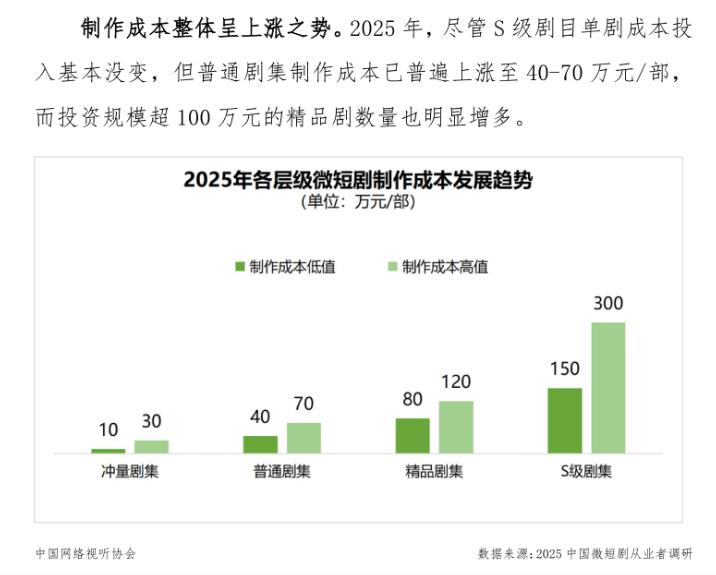
The optimization of the cost structure has upgraded AI comic dramas from an "optional option" to a "must - choose option". As the production cost of live - action short dramas continues to rise and the platforms' requirements for content quality are also increasing, the cost advantage provided by AI comic dramas has become a direction that many small and medium - sized content production companies must consider for survival.
Another important factor is the difference in the audience. Compared with traditional short dramas, the user profile of AI comic dramas shows an obvious trend of youthfulness, opening up a new growth point for the entire short - drama market.
According to a research report by CSC Financial in October, the user profiles of comic dramas and live - action short dramas are different. The audience of comic dramas is mainly male, with the core being young people of the Z - generation, while the audience of live - action short dramas is relatively older. The two user groups also have differences in needs and preferences. The audience of comic dramas is keen on super - realistic themes such as "counter - attack" and "fantasy cultivation", while the audience of live - action short dramas prefers emotional themes closer to reality such as "dominant CEO" and "sweet romance".
Data disclosed by Kuaishou's Magnetic Engine Business Insights in November showed that the consumption and paying population of comic dramas are unique. The overlapping proportion of paying users between comic dramas and short dramas is 38%, and comic dramas can bring 62% of incremental paying users.
That is to say, a considerable part of the user group of comic dramas actually comes from outside traditional short dramas. It is a large number of young users who complete content consumption during fragmented time such as commuting and lunch breaks. They also need content that can be watched anytime and anywhere, with a compact plot and high emotional density, just in the form of anime rather than short dramas. The narrative rhythm and theme selection of comic dramas clearly meet this user demand in depth.
As we stand at the end of 2025, it's certain that AI technology will continue to iterate and update at a pace that ordinary people can hardly keep up with. The balance between the production cost and content quality of comic dramas will continue to be adjusted, eventually reaching a critical point that the entire industry cannot ignore.
By then, the core competitive difference