The "hand" that's giving Musk a huge headache. This Chinese company started laying the groundwork nine years ago.
Musk has been choked by an "invisible hand."
On October 23rd, during Tesla's Q3 earnings conference call, Musk announced that the mass - production plan for Optimus had been postponed again. The core reason behind these repeated delays in mass production is the "dexterous hand" of the humanoid robot.
The dexterous hand is a high - degree - of - freedom robotic end - effector that mimics the functions of a human hand. It is an important research direction in the embodied intelligence industry chain. It is also regarded as the "last mile" for robots. However, issues such as high cost, susceptibility to damage, and great engineering difficulties have plagued the global robotics industry, including Tesla.
"Could you be the one to solve Musk's headache?" When China Entrepreneur posed this question to Cai Yingpeng, the founder and CEO of InTime Robotics, his response was, "It depends on the stage and scale of the enterprise. Given Tesla's industrial status, it has strict selection criteria for suppliers and is likely to prefer contract manufacturers with strong production capabilities." But he also expressed his hope for future cooperation with Tesla.
In 2016, Cai Yingpeng founded InTime Robotics. The company's core products mainly focus on micro servo electric cylinders and five - finger dexterous hands. With the heating up of the humanoid robot industry, by the end of 2025, the sales volume of InTime's dexterous hands had reached 10,000 units, five times the total annual shipments in 2024.
In addition to the dexterous hand business, InTime Robotics' micro servo electric cylinders were mass - produced in 2020, and their commercial applications have gradually expanded to fields such as biomedicine, automation, 3C manufacturing, semiconductors, new energy, and scientific research and education. Cai Yingpeng positions the company in the robotics industry chain as a provider of micro - precision motion actuators and dexterous operation end - effectors for the robotics and advanced manufacturing fields.
"We have two labels: First, we are the earliest domestic manufacturer to mass - produce and commercialize dexterous hands; second, we are currently the manufacturer with the highest dexterous hand shipment volume in the industry." Cai Yingpeng said.
Hitting a Bottleneck
Among robotics entrepreneurs, Cai Yingpeng belongs to one of the earliest generations.
In 2005, during his freshman summer vacation, Cai Yingpeng volunteered at the Asia - Pacific Broadcasting Union Robot Contest (ABU Robocon). It was his first formal encounter with robots, which sparked his interest. In his junior year, he started participating in various relevant competitions with the school's robotics club.
As a senior, Cai Yingpeng became the captain of the school's robotics team and led his teammates in competitions. Later, he went to the Robotics Research Institute of Beihang University for postgraduate studies. In his second year of postgraduate studies, Cai Yingpeng and his roommate set up a studio and began to take on external projects. "Making money was secondary. The main thing was to gain experience in project management and accumulate some industry connections," Cai Yingpeng said.
When he graduated in 2011, considering practical factors, Cai Yingpeng and his roommate did not start a business immediately but found jobs instead. However, they didn't abandon their robot projects. They spent their days working at their jobs and nights working on robots.
By early 2012, Cai Yingpeng gradually started receiving some "big orders." Different from the previous scattered projects, these orders required a formal company entity to sign contracts. He decided to resign and start his own business.
In September of the same year, Cai Yingpeng officially founded his first company, continuing the previous business model and taking the ODM customized robot route. At that time, he was the only full - time employee in the company for a long time. To save costs, he rented a small residential - commercial property as the office. Other partners still worked at their original units, and they collaborated on a project - by - project basis. When there was an order, they would work together, and after completing a project, they would share the dividends.
There were not many robotics companies in Beijing at that time, but the market demand for new - type robots was considerable. Although Cai Yingpeng was the only one in charge of business orders, he could still receive many orders, such as for collaborative robots, medical robots, inspection robots, and educational robots.
Cai Yingpeng recalled, "At that time, the cost of developing a robot by the team might be around 50,000 RMB, and it could be sold for about 200,000 - 300,000 RMB. Due to very limited manufacturing capabilities, just a few people were manually assembling in the living room. At most, they could only produce a little over 30 sets of one product. 'Because the precision of the 'manual production' was insufficient, when installing the bearings, sometimes the bearings couldn't fit into the holes. In the middle of the night, we had to run downstairs and use a hammer to pound, and the whole neighborhood could hear the noise. We got a lot of complaints from the neighbors," Cai Yingpeng said.
By the end of 2015, the company's revenue had reached several million RMB. At this time, some investors came to discuss cooperation. This team, inexperienced in capital operations, realized that a market opportunity had arrived and that they could expand their business through financing.
Besides considering capital, the team also discovered industry bottlenecks. "After developing so many robots, we found that no matter what the requirements were, when it came to components, there were very limited options in the market. If there is little variation in components themselves, the whole machine can only be modified in terms of appearance, and it is difficult to achieve qualitative breakthroughs in performance, functionality, and cost." Cai Yingpeng said.
After nearly half a year of discussion, Cai Yingpeng and the team decided to transform and completely adjust the business model to do something more meaningful.
In May 2016, InTime Robotics was established, and it focused on the field of robot components (micro servo electric cylinders).
The team noticed that at that time, there were mature solutions for rotary actuators (the core components in robots that convert energy into rotary motion, installed at the joints of robots to drive joint rotation and enable flexible movements). However, there were only two companies in Canada and South Korea producing micro linear actuators, and their products were still at a toy level: with plastic casings, a load capacity of only 3 - 5 kg, and an accuracy of about 0.2 mm. After disassembly and analysis, Cai Yingpeng believed that if they could, based on their own technological accumulation, increase the load capacity to over 10 - 20 kg, improve the accuracy by an order of magnitude, and address issues such as service life and heat generation, they would have a chance to break through the high - tech barriers in this field.
The team judged that this type of product was in line with the general trend of future technological development. However, the difficulty was that it was hard to imagine specific application scenarios at the moment. They often faced setbacks when explaining the product's value and business logic to investors. In addition, the team was not familiar with the rules of the capital market. Although the robot concept was quite popular at that time, the progress in financing was slow.
Pangu Venture Capital was the angel - round investor of InTime Robotics. Cheng Qiwen, a partner of Pangu, recalled that since 2014, the institution had started to pay attention to the robotics track. In December 2015, the Pangu team first met Cai Yingpeng, but at that time, they did not fully understand InTime's technological direction. At the end of June of the following year, Cai Yingpeng's team adjusted their product ideas and prepared a prototype. Cheng Qiwen and others met and communicated with Cai Yingpeng again. "In the early stage of the robotics industry, we didn't have enough information to judge the specific product direction." But Cheng Qiwen emphasized, "They valued Cai Yingpeng's qualities and potential as a serial entrepreneur more." Based on the logic of "investing in people" in early - stage investments, in July 2016, Pangu Venture Capital decided to invest.
Overcoming the Commercialization Hurdle
As soon as the financing arrived, InTime Robotics' primary expenditures were on purchasing equipment and recruiting personnel.
Due to the complex precision - manufacturing process of micro servo electric cylinders (hereinafter referred to as electric cylinders), the external supply chain at that time could not meet the requirements. Cai Yingpeng also insisted on keeping the key technologies and production capabilities in his own hands. Therefore, they invested a large amount of money in purchasing machine tools and processing equipment for independent R & D and production.
Soon, a prototype of the electric cylinder was successfully developed, but the cost was as high as over 10,000 RMB, far exceeding expectations. Cheng Qiwen admitted that this was five or six times higher than their expectation. "A prototype is completely different from a product that can be sold and mass - produced," Cai Yingpeng said.
To reduce costs, the team advanced on two fronts. On the one hand, they continuously optimized the process. On the other hand, the team was also actively looking for practical application scenarios for the electric cylinders to increase production volume and reduce costs through economies of scale.
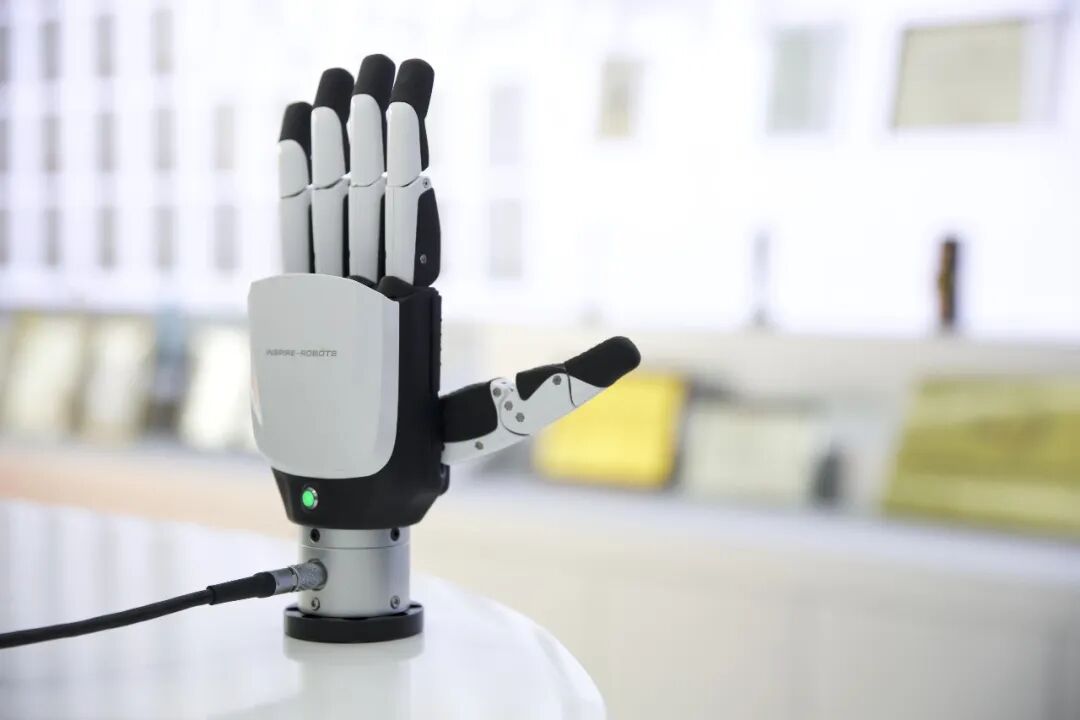
At that time, Cai Yingpeng and the team only had the idea that the electric cylinders must have many applications, but they didn't have a detailed concept of the specific application market. Therefore, the team held an internal brainstorming session, hoping to "use them" to show customers. Based on their rich experience and in - depth understanding of robots, they came up with the idea of "overcoming the 'Achilles' heel' of the robotics industry - the dexterous hand - to let the industry recognize the value of micro servo electric cylinders" and quickly launched the project. In the year of its establishment, they assembled the first - generation all - metal "dexterous hand" using electric cylinders.
Cheng Qiwen recalled that after the release of the first - generation electric cylinders, although they attracted many customers, most customers only purchased one or two electric cylinders for testing. "Customers were also waiting and seeing. They were not sure whether they could integrate the electric cylinders into their own products and whether the performance of the electric cylinders was stable. Moreover, the entire cycle of R & D, design, testing, mass production, and promotion of customers' products was also very long," Cheng Qiwen said.
From 2017 to 2019, InTime Robotics only sold a small number of electric cylinders and dexterous hand samples, with a maximum annual revenue of only one million RMB. In the eyes of investment institutions, this was almost equivalent to no commercialization.
By the end of 2018, the robot boom began to cool down. Although InTime's team initiated a new round of financing, they were unable to succeed until the first half of 2019.
Cheng Qiwen recalled that at the shareholders' meeting on December 31, 2018, Cai Yingpeng presented a table showing that after paying employees' salaries on January 3, the company's cash balance would be - 310,000 RMB. To overcome the immediate crisis, Cai Yingpeng had to lend most of his savings to the company for turnover.
Cai Yingpeng and the old shareholders were looking for new financing together. At the same time, the company also started to shift from a "R & D - oriented" to a "customer - oriented" approach. Cheng Qiwen said that although InTime had hundreds of customers at that time, the order volume was generally low, which kept the team extremely busy but with low profits. They began to screen out the customers most likely to generate large - scale orders first to obtain positive profit feedback.
A turning point came in mid - 2019. Through the extensive communication of the old shareholders, ZhongSai Investment and the old shareholder Feituo Venture Capital each invested 2 million RMB, completing a new round of financing.
Cai Yingpeng pointed out that in 2019, the company experienced three key turning points: in addition to the above - mentioned financing, it also included receiving more than one million RMB in funds from a national key R & D project and being attracted to settle in Changshu, Jiangsu, with the support of several million RMB in funds from the local government.
"After these three funds arrived, we finally got back on our feet," Cai Yingpeng said. "The product was on the verge of commercialization at that time, and this support helped us complete the final stage of mass - production preparation."
With the financial support, InTime's team began to accelerate the commercialization of the products. By screening more than 150 customers they had visited before, they identified the first application field with mass - production potential - the medical aesthetics industry. Cheng Qiwen recalled that at that time, the company's electric cylinders were mainly used as upstream supply - chain components, that is, the "push rods" acting on the face in beauty devices. Although this component accounted for a small proportion in the whole machine, it opened up market development space for InTime.
Since 2020, InTime's products have been mass - produced, and the revenue has increased and started to generate profits.
Although the company's survival problem has been solved, the development problem still remains. In 2021, the company completed a Series A financing led by Fengrui Capital. This capital enabled InTime to expand its R & D team, strengthen talent recruitment, and launch more active market promotion. This was also the starting point for the acceleration of InTime's business.
At the end of 2022, Shunwei Capital also participated in investing in InTime. With the increase in the capital scale, InTime hopes to further explore potential application scenarios for electric cylinders and reduce its dependence on a single large customer and a single large industry. Introduced by a friend, they approached Jiuqian Capital (the financial advisor for InTime's Series B2 and B3 rounds) for strategic consulting to explore more industry implementation directions.
The Jiuqian Capital team told China Entrepreneur, "InTime's goal at that time was to expand into new potential industries outside the fields it had already deeply penetrated." To this end, the Jiuqian team assisted InTime in conducting intensive interviews with many enterprises in the new manufacturing field, in - depth sorting out the production - line links, equipment composition, and existing implementation methods in multiple industries such as energy and manufacturing, and accurately identifying the links where micro - precision electric cylinders could be introduced for optimization and transformation, providing InTime with a research and development and market expansion plan with practical reference value.
InTime's overall business development has significantly accelerated and has gradually expanded to more advanced manufacturing industries, such as lithium - battery, 3C, semiconductors, and drones.
Breakneck Pace and Challenges
With the rise of embodied intelligence driven by the large - model boom in 2023, InTime Robotics has become a popular investment project.
InTime officially selected Jiuqian as its financial advisor to assist in subsequent financing. The Jiuqian team preferentially selected investment institutions with high certainty of transaction completion and strong resource matching. Finally, they promoted a Series B2 financing of over 100 million RMB led by Fortune Capital, joined by state - owned investment institutions such as Shenzhen Capital Group, and participated in by brokerage - affiliated and industrial parties (such as Xinlian and Ecovacs) in October 2024.
To further reserve operating funds, InTime quickly launched a Series B3 financing. Shenqi Capital was the leading investor in the Series B3 round. Yan Yuqi, the project investor of Shenqi Capital, said that after in - depth communication with the team and understanding the data, she found that InTime's development far exceeded expectations. When she investigated downstream robot body enterprises (i.e., InTime's customers), she also found that the industry generally had a high evaluation of the stability and reliability of InTime's products. At the same time, InTime's company performance also achieved rapid growth from 2023 to 2024: the annual performance in 2024 doubled, and its overseas business in 2024 increased 20 times compared with 2023. Yan Yuqi said that this was also one of the important reasons why Shenqi Capital finally decided to increase its investment even in an additional round.
InTime Robotics' dexterous hand business has also achieved rapid growth in the past two years. The annual shipments exceeded 10,000 units in 2025, and the revenue accounted for more than half of the total in 2025.
However, the pressure and challenges for