Crazy NVIDIA, crazily splashing cash
About a year ago, Peter Thiel, the "Godfather of Silicon Valley Venture Capital," made the following assessment when commenting on NVIDIA. He said:
"Judging solely from the flow of funds, 80% - 85% of the current investments in the artificial intelligence field are flowing to a single company - NVIDIA."
The words of the godfather of venture capital are confirmed by NVIDIA's soaring cash - flow reserves.
NVIDIA's financial reports show that its free cash flow soared from $3.8 billion in January 2023 to an estimated $96.5 billion as of January next year, with a compound annual growth rate of 194% over three years, surpassing the growth rates of major technology companies during the same period since 1990.
Analysts predict that by 2030, NVIDIA will cumulatively generate nearly $850 billion in free cash flow, far exceeding that of technology giants such as Google, Meta, Amazon, and Microsoft during the same period.
For NVIDIA, a company with a trillion - dollar market value and a huge cash pool, how to spend money is just as important as making money.
External investment is a common means for large technology companies to find new growth curves, and NVIDIA is no exception.
As of December 15, 2025, according to Crunchbase data, NVIDIA (including direct investments + NVentures) has made a total of 83 investments, involving 76 companies.
NVIDIA also has an incubator called NVIDIA Inception, which invisibly supports thousands of startups around the world.
If we also consider its multiple "cyclical transactions" with Intel, Anthropic, OpenAI, xAI, CoreWeave, etc., NVIDIA has made nearly 90 public investments, approximately 1.6 times the number in 2024.
While accelerating its investment pace, different from the diversified investments of other technology giants, NVIDIA's investments show a high degree of precision:
Build an "AI ecosystem wall" centered around NVIDIA.
Applying Jensen Huang's "Five - Layer Cake" theory, he divides AI into five layers: energy, chips and systems, infrastructure and software, AI models, and applications. These companies precisely form NVIDIA's full - industrial - chain layout in AI.
The "Silicon - based Research Lab" has sorted out the AI landscape composed of nearly 90 investments made by NVIDIA in 2025. Perhaps we have underestimated this giant's investment ecosystem layout compared to its money - making ability.
Connecting with energy infrastructure above and the physical world below
In 2025, NVIDIA's investment mainline was very clear. It always revolved around two key propositions in the AI industrial chain:
Connecting with energy infrastructure above and the physical world below.
In the areas related to energy, such as clean energy development, power grids and energy storage, and data center construction, NVIDIA made more than 10 investments, which also aligns with Jensen Huang's previous judgment: "Without electricity, there can be no data centers, and thus no so - called 'AI factories'."
NVIDIA's attention to energy infrastructure includes both the exploration of cutting - edge clean energy. For example, NVIDIA invested in TerraPower, a nuclear energy company founded by Microsoft founder Bill Gates, and Commonwealth Fusion Systems, a nuclear fusion company. It also includes large, medium, and small enterprises focusing on optimizing data - center power - usage solutions, such as chip, computing power, and power - grid management, like Emerald AI and Utilidata.
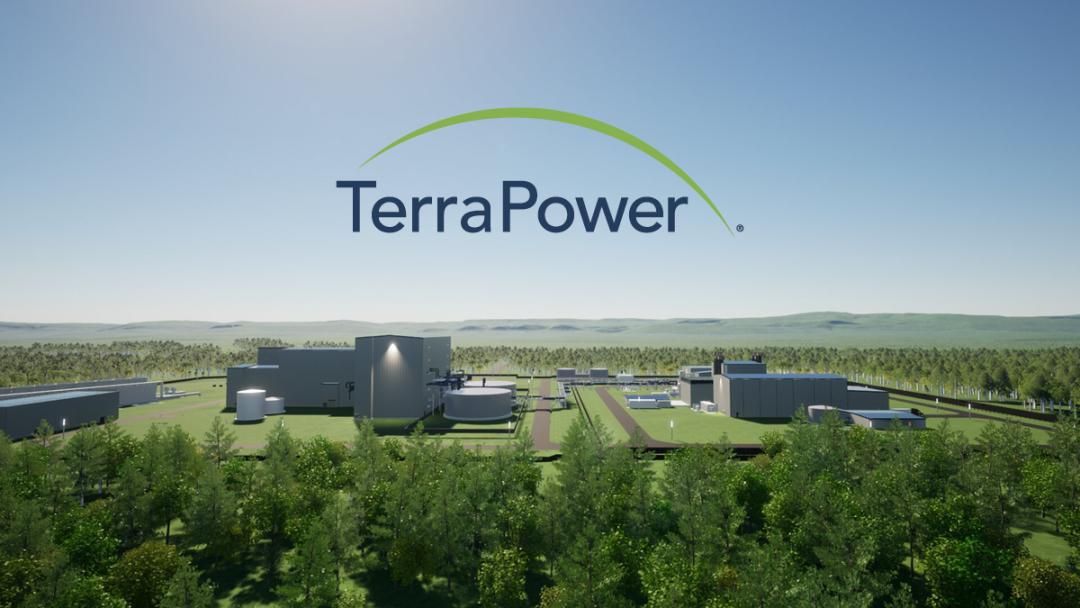
Image source: TerraPower
It is worth noting that thanks to NVIDIA's global "AI Sovereignty Initiative" and AIDC construction, a number of new - type enterprises have emerged, providing supporting energy infrastructure services in local AIDC construction.
The Australian startup Firmus Technologies plans to invest A$4.5 billion with NVIDIA to build a large - scale artificial intelligence data - center cluster powered by renewable energy. This project is named the "South Gate Project." Cassava Technologies, invested in by NVIDIA, announced the establishment of its first AI factory in Africa in April this year.
Behind the surging computing power lies an energy gap.
According to the International Energy Agency's prediction, by 2026, the total power consumption of global data centers will exceed 800 TWh, a 75% increase in four years. However, according to Morgan Stanley's prediction, taking the United States as an example, while power consumption soars, it may face a power shortage of up to 20% by 2028.
NVIDIA saw this long ago. External investment is only part of its "energy circle." To accelerate the establishment of AI factories, NVIDIA also opened its 800V direct - current (VDC) technology - standard rack servers to its partners.
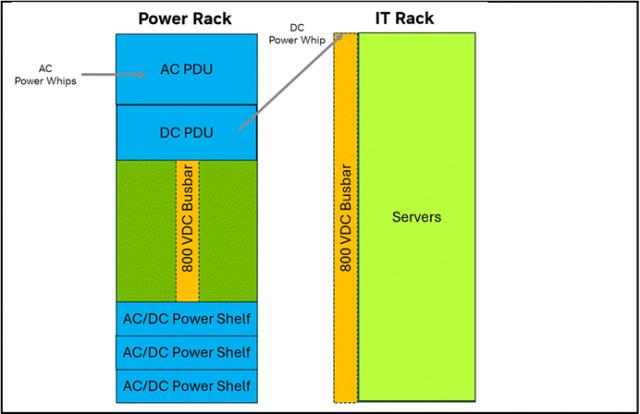
Overview of the 800V MGX rack. Image source: NVIDIA's 800V DC architecture white paper
Connecting with energy infrastructure above, NVIDIA's other "overt strategy" is the physical world, which is the Physical AI frequently mentioned by Jensen Huang.
According to NVIDIA's understanding of Physical AI, it is an AI that can understand the real world and interact and adapt to the surrounding environment seamlessly like a human.
So far, NVIDIA has built a complete technology and computing - power ecosystem in the field of Physical AI, covering core aspects such as simulation, training, and deployment.
On the one hand, on the software side, the Cosmos world foundation model, the Omniverse simulation platform, and vertical and segmented models such as Modulus, Bionemo, and Issac form a cycle of "digital twin, AI training side, and AI deployment."
On the other hand, on the hardware side, NVIDIA's own GPUs provide computing - power support for large - scale physical modeling and simulation.
However, NVIDIA knows that running its own "internal cycle" of Physical AI is far from enough because there is still a long way to go for AI to achieve seamless interaction with the real world.
Therefore, in the past year, NVIDIA has made concentrated investments in 12 Physical AI companies, mainly addressing two issues in Physical AI:
Firstly, find an entry point in the real world for Physical AI. Robots are the key entry point where NVIDIA has made large - scale bets. In the past year, NVIDIA has participated in the financing of 7 embodied - intelligence companies, including Figure, Skild AI, Flexion Robotics, Agility Robotics, Dyna Robotics, Bedrock Robotics, and Generalist AI.
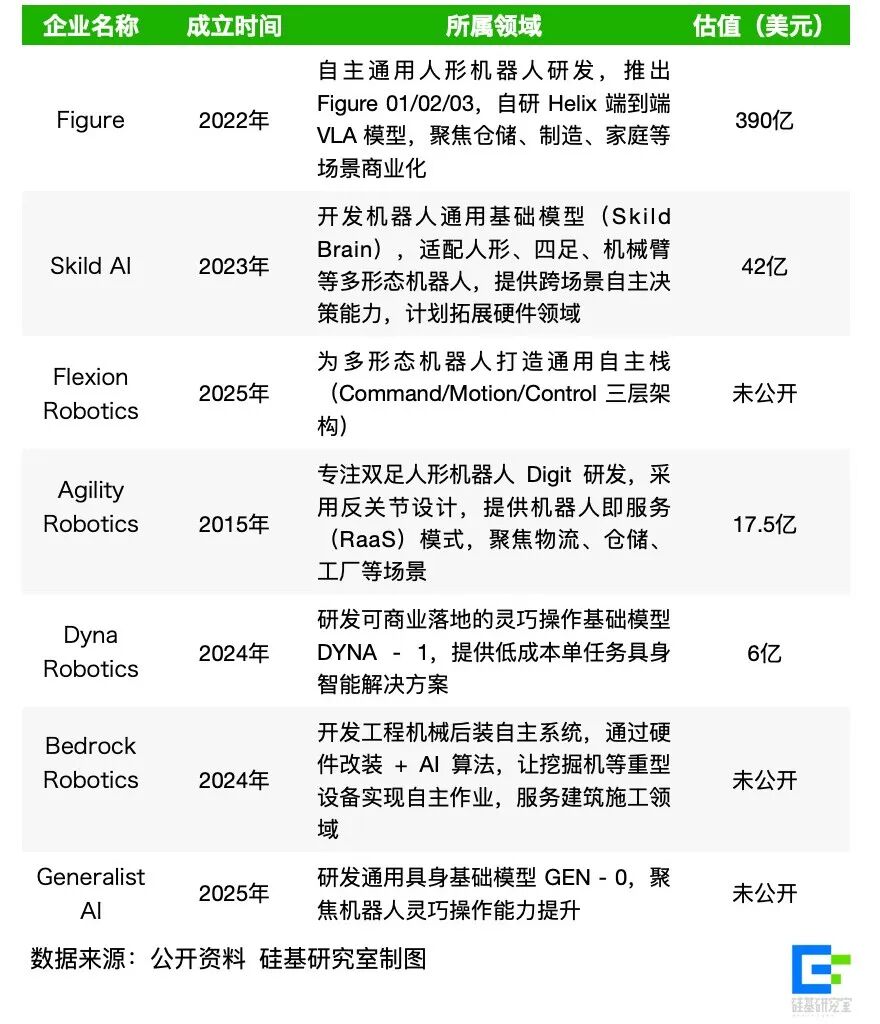
NVIDIA's preference for embodied - intelligence companies is not fixed. For example, there is the star company Figure, Skild AI which does not focus on hardware, and Bedrock Robotics which develops non - humanoid construction - site robots. The diverse corporate profiles also confirm that NVIDIA is good at binding more ecosystem partners through investment.
Secondly, reduce the difference between the simulation environment and the real world. Some "small but beautiful" companies focusing on digital twin technology and building high - quality data in vertical fields have become the key targets of NVIDIA's attention.
For example, in the construction industry, NVIDIA invested in a company called PassiveLogic, which mainly uses physics - based artificial intelligence and quantum digital twin technology to enable buildings to think actively. In the manufacturing industry, Sight Machine, in which NVIDIA has placed a bet, mainly provides professional small - scale models for manufacturing enterprises to solve the data standardization problems of sensors, machines, and systems.
Connecting with energy infrastructure above and the physical world below, this is the NVIDIA that makes bold investments and is also the NVIDIA that focuses shrewdly.
Most fond of "former OpenAI employees and former NVIDIA employees"
As a "chip politician" moving between politics and business, Jensen Huang is very skillful, and his external investments are no exception.
When talking about investing in Elon Musk's xAI, Jensen Huang said without hesitation, "You really want to be involved in almost everything Elon Musk is involved in."
In the field of AI startups, the density of talent is extremely high, which means that how to invest in and identify talent is a delicate art of investment.
After examining NVIDIA's nearly 100 investment maps, an interesting phenomenon is that NVIDIA has a preference for two types of people: former OpenAI employees and former NVIDIA employees.
According to a previous statistic by TechCrunch, the cumulative valuation of 15 AI startups founded by former OpenAI employees has reached $250 billion, forming the OpenAI "gang phenomenon" in Silicon Valley. Among these 15 companies, NVIDIA participated in the financing of 9 companies, accounting for half of the market.
NVIDIA has always been paying attention to entrepreneurs who have left OpenAI.
For example, Periodic Labs, founded by former OpenAI researcher William Fedus; Safe Superintelligence, founded by former OpenAI Chief Scientist Ilya Sutskever, focusing on safe super - intelligence; and Thinking Machines Lab, founded by former OpenAI Chief Technology Officer Mira Murati.

William Fedus (left), Ilya Sutskever (middle), Mira Murati (right). Image source: Internet
To a certain extent, betting on the "OpenAI gang" brings two major benefits to NVIDIA: Firstly, it can help NVIDIA expand its model - layer ecosystem and improve its underlying chip ecosystem layout in a timely manner according to changes in model capabilities. Secondly, "not putting all eggs in one basket" also counter - balances OpenAI.
The other type is the more familiar former NVIDIA employees, and their startup fields also happen to focus on Physical AI.
In the field of embodied intelligence, Flexion, whose CEO and CTO are both former NVIDIA researchers; and Dyna Robotics, whose co - founder is an NVIDIA artificial - intelligence scientist.
Another startup called Moonlake AI mainly uses artificial intelligence to quickly create and generate 3D worlds, and it can provide high - quality data for Physical AI.

The two founders of Moonlake AI. Image source: Moonlake AI
Fan - Yun Sun, the co - founder of Moonlake AI, was once a researcher at NVIDIA, responsible for building virtual worlds to train and evaluate robots.
Compared with OpenAI's keen insight into cutting - edge models, former NVIDIA employees are more familiar with the physical world composed of computing power and data.
Nikita Rudin, the CEO of Flexion, mentioned that his work experience at NVIDIA made him deeply understand the importance of the computing - power and data flywheel, which is the key to the leap of large - language models. Therefore, they also plan to bring such a transformation to the world of physical robots.
NVIDIA's "investment rules"
"We are quite professional investors."
At a JPMorgan Healthcare Conference, Jensen Huang once described NVIDIA's investment philosophy in this way and extended an olive branch to startups: "If you have difficulties in computing or AI, please send us an email, and we are always at your service."
With the title of "Chip Godfather," every move of Jensen Huang attracts much attention, but people tend to ignore another side of him:
A sharp investment and acquisition master.
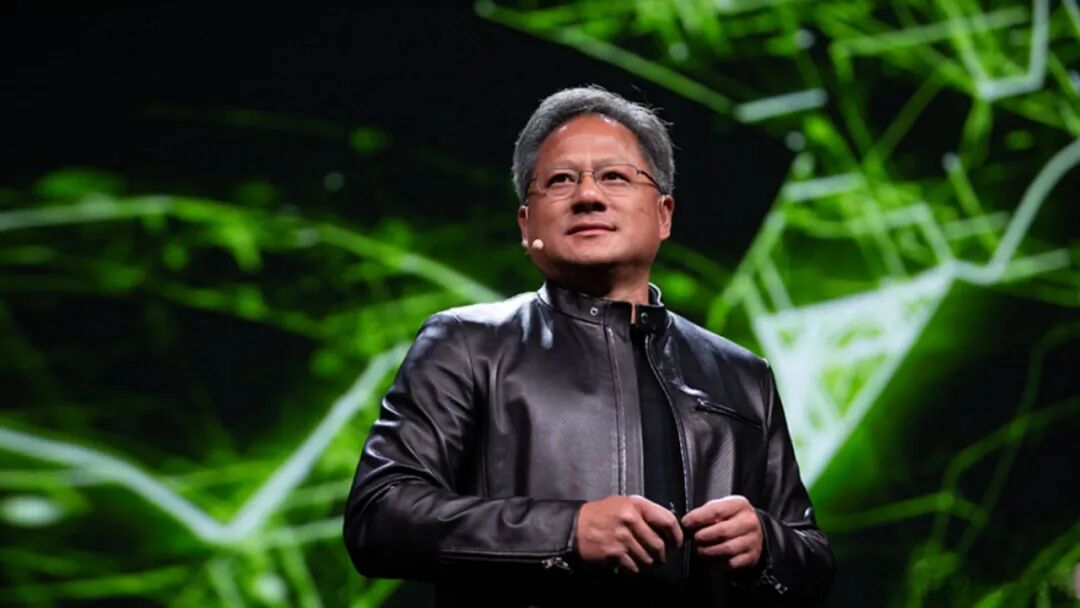
From the acquisition of its competitor 3dfx, which consolidated its position in the graphics - chip market, to the acquisition of Mellanox in 2019 to layout InfiniBand interconnection technology, enabling data centers around the world equipped with NVIDIA GPUs to operate as if they were in one place, realizing the possibility of large - scale creation of "AI factories" as mentioned by Jensen Huang, every important investment and acquisition by NVIDIA is preparing it for the next era.
Eyal Waldman, the founder of Mellanox, once commented: "NVIDIA's market value has soared all the way, which is due to its correct investments in the field of artificial intelligence."
The more crucial question is, what exactly is NVIDIA's investment style?
Firstly, it is still an ecosystem centered around Jensen Huang.
Every investment transaction of NVIDIA is signed by Jensen Huang. When looking for "promising" AI startup acquisition targets, Jensen Huang also participates in demonstration meetings in person.
Of course, these companies need to be closely related to NVIDIA's infrastructure. Vishal Bhagwati, the head of NVIDIA's corporate development, once said: "We will not invest in companies that do not use NVIDIA's infrastructure."
Secondly, generous long - term cooperation and a fast, accurate, and decisive investment rhythm.
On the one hand, NVIDIA's investment is not a scatter - gun approach, nor does it pursue a single financial return. It prefers to understand the next - generation trends of technology through long - term cooperation in the form of investment and quickly improve the iteration of its own software and hardware.
NVIDIA is also relatively generous to startups. A startup that was once selected for the NVIDIA Inception program told us: "With NVIDIA's endorsement, we can directly connect with Silicon Valley investors, and at the same time, we will get discounts on NVIDIA's own products and AWS credits support."
If a startup cooperates deeply enough with NVIDIA, it can also directly access the customer resources in NVIDIA's ecosystem and obtain orders.
On the other hand, while advocating long - term investment, NVIDIA's investment rhythm is also very fast, accurate, and decisive.
The story of Mellanox's acquisition confirms this. In September 2018, when Mellanox became an acquisition target, Jensen Huang did not consider acquiring it. But soon he saw the importance of this asset to NVIDIA's strategy for the next decade, so he joined the bidding in October and finally acquired Mellanox.
Finally, the investment style is highly consistent with NVIDIA's pragmatic corporate culture.
Jensen Huang once said: "Sometimes, having a simple idea that can be perfectly executed is better than having a grand idea that your company cannot execute."