The App Store for humanoid robots has been launched.
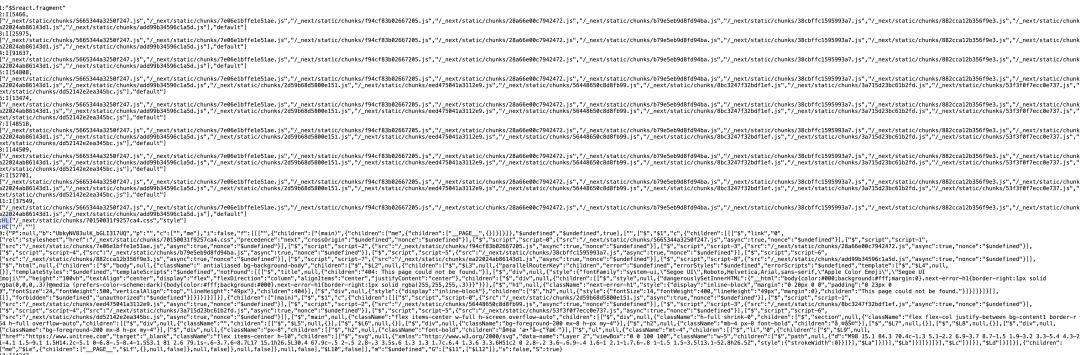
On December 13th, Unitree finally launched the public beta of its humanoid robot App Store, called the Unitree App Store. Simply put, it allows humanoid robot developers and product managers to list their own applications on this app store.
The web version of the App Store is currently available at: https://appstore.unitree.com/?referrer=grok.com
All these apps are humanoid robot applications, launched based on Unitree's own operating system. Currently, the official website has a user plaza, an action library, a personal center, and a developer center.
However, when clicking on the official website now, all relevant function jumps result in error messages. I hope the product managers at Unitree can notice this.
The iPhone Moment for Humanoid Robots
Developers now have the opportunity to earn income, rather than just developing robots for scientific research. These applications can truly be promoted in the industry. Only with income can there be resources for continued investment.
Income provides motivation. Therefore, this has cross - era significance. It goes without saying that it doesn't compete with the App Store and Google Play, as the former has tens of millions of device shipments annually, while the latter currently only has a few hundred thousand.
The gap in terminal devices makes it difficult to gain user dividends. Or developers can't make money through the marginal effect like in the mobile Internet era.
However, as the cost and supply chain of robots become more and more mature, I believe that robots will become the most popular terminal devices, surpassing mobile phones. Undoubtedly, humanoid robots are one form of terminal devices.
Development can be completed based on the officially open SDK platform.
Robot Apps: Dance, Life, and Family Scenarios
It can be seen that the currently listed applications are mainly in the dance category, and there are no specific scenarios yet. So, the boundaries of robot apps are not clearly defined. The official has also provided an action library and a user plaza, and currently, the content of the user plaza is the same as that of the action library.

Users are allowed to directly download such applications to make the robot perform actions. For example, there are videos of the robot imitating Bruce Lee, dancing, and acting like a clown.
I once shared that after generating spatial videos, motion capture can be completed using machine vision technologies like YOLO, and then corresponding robot actions can be produced. These videos don't need to be actually filmed; they can be generated through spatial intelligent models.
Robot App Store: Freedom, System Version, and Robot Terminals
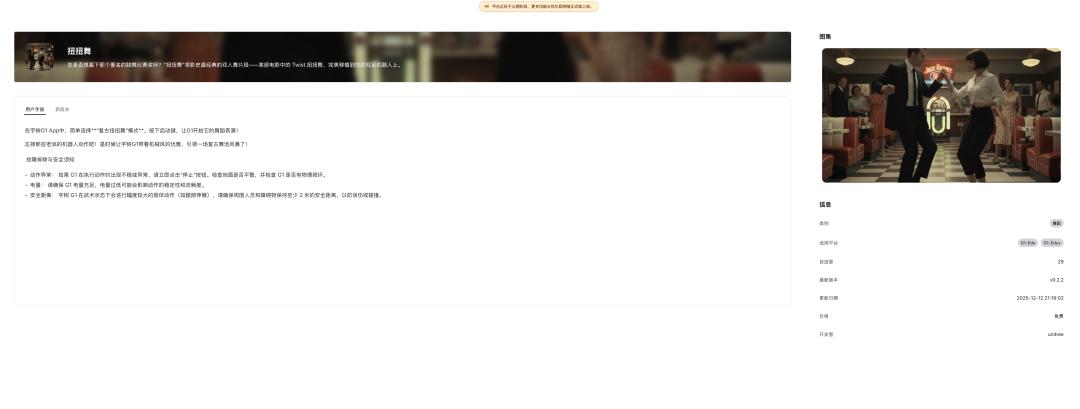
When opening the details of an application, it can be seen that an app mainly includes an application introduction, payment information, version update information, and in addition, there is also an update on the degree of freedom.
Compared with mobile phone applications, this is the only unique feature. Otherwise, it is almost the same as the current mobile app stores.
Considering the current number of terminals and the development threshold, currently, listed applications will definitely receive official recommendations and even in - depth cooperation, unlike the strict review requirements of iOS and Android.
Currently, when opening the platform, there are only 3 applications listed, and they are all entertainment - related.
The Boundary between General Models and Robot Apps
Currently, the development trend of general models is almost towards all scenarios and various capabilities. For example, ChatGPT also has the development of Agent and browsers. So, it's still unclear whether robot apps conflict with the robot models themselves, or whether robot apps and robot models each have their own ecosystems and business models.
The Boundary between Mobile Phones and Mobile Apps: Calls, Text Messages, and Smart Applications
For example, mobile phones have very clear boundaries. Without apps, they can only be used for making calls, sending text messages, and browsing the web. After the emergence of the App Store, various applications can be developed. Developers can use various sensors in mobile phones, allowing product managers to plan products to complete various user tasks, from industry - related tasks to specific life - scenario tasks, ultimately solving problems and getting users to download the apps.
Robots are still at the stage similar to the early mobile phones (like the PHS). It's difficult to clearly define what the "calling" and "text - messaging" functions of robots are to avoid having the developed apps replaced by robot manufacturers.
The App Store Must Run on a Common Operating System
Currently, the App Store must run on a commonly recognized operating system. Unitree is also based on the ROS system, and in the robot world, a commonly recognized system similar to Android is the OM1 system launched by Openmind.
This system is open - source and can run on unrestricted terminal devices. Unitree has now supported OM1.
The Work of Product Managers for Humanoid Robots and Mobile Internet Product Managers
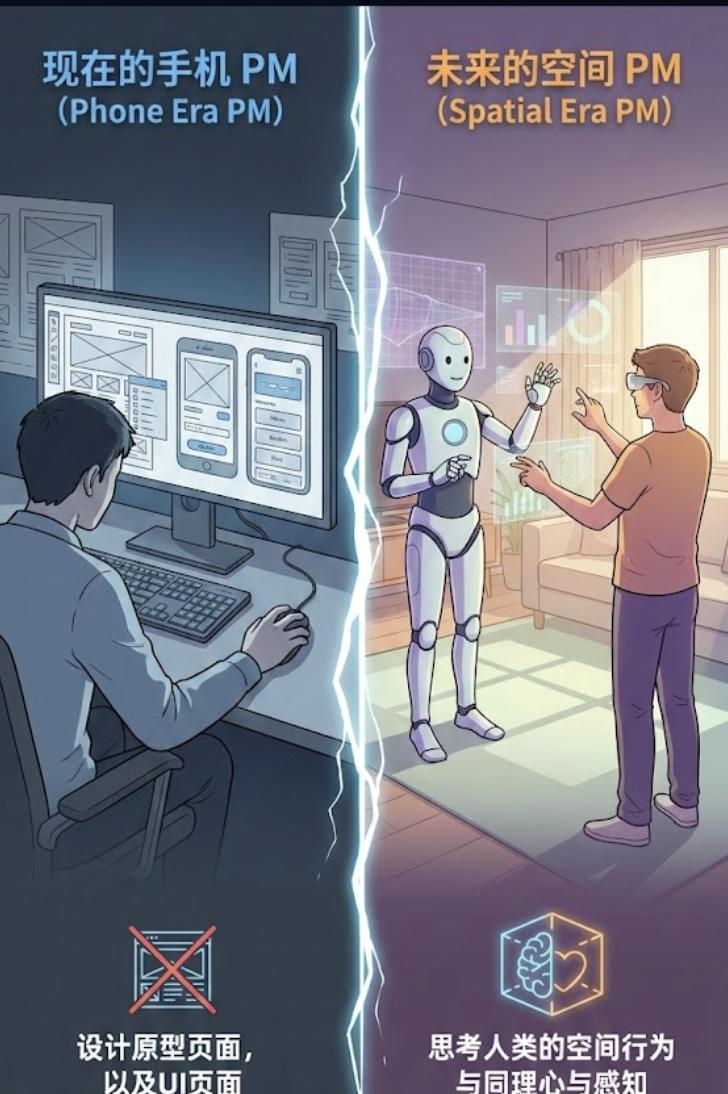
Compared with current mobile phone product managers, the interaction work of humanoid robot product managers is very similar to that of MR glasses product managers. Product managers for spatial computing will consider the user's scenario and geographical location, and there is almost no operation interface. Most operations are in the spatial environment, or there are only a few mobile interfaces.
They consider using multi - modal data such as the user's hands and voice to complete tasks.
Therefore, Product Managers Will Have Significant Work Changes
In the future, product managers will not design prototype pages or UI pages. Instead, they will really think about human spatial behavior, empathy, and perception.
That's all for today's sharing.
This article is from the WeChat official account "Kevin's Little Drops of Changing the World" (ID: Kevingbsjddd), written by "Kevin's Stories". It is published by 36Kr with authorization.